Shark Tank Season 3: All 60 Products, Deals & Updates
Explore all 60 Shark Tank USA Season 3 products by episode, with verified deal follow-ups, company updates and links to detailed product stories.
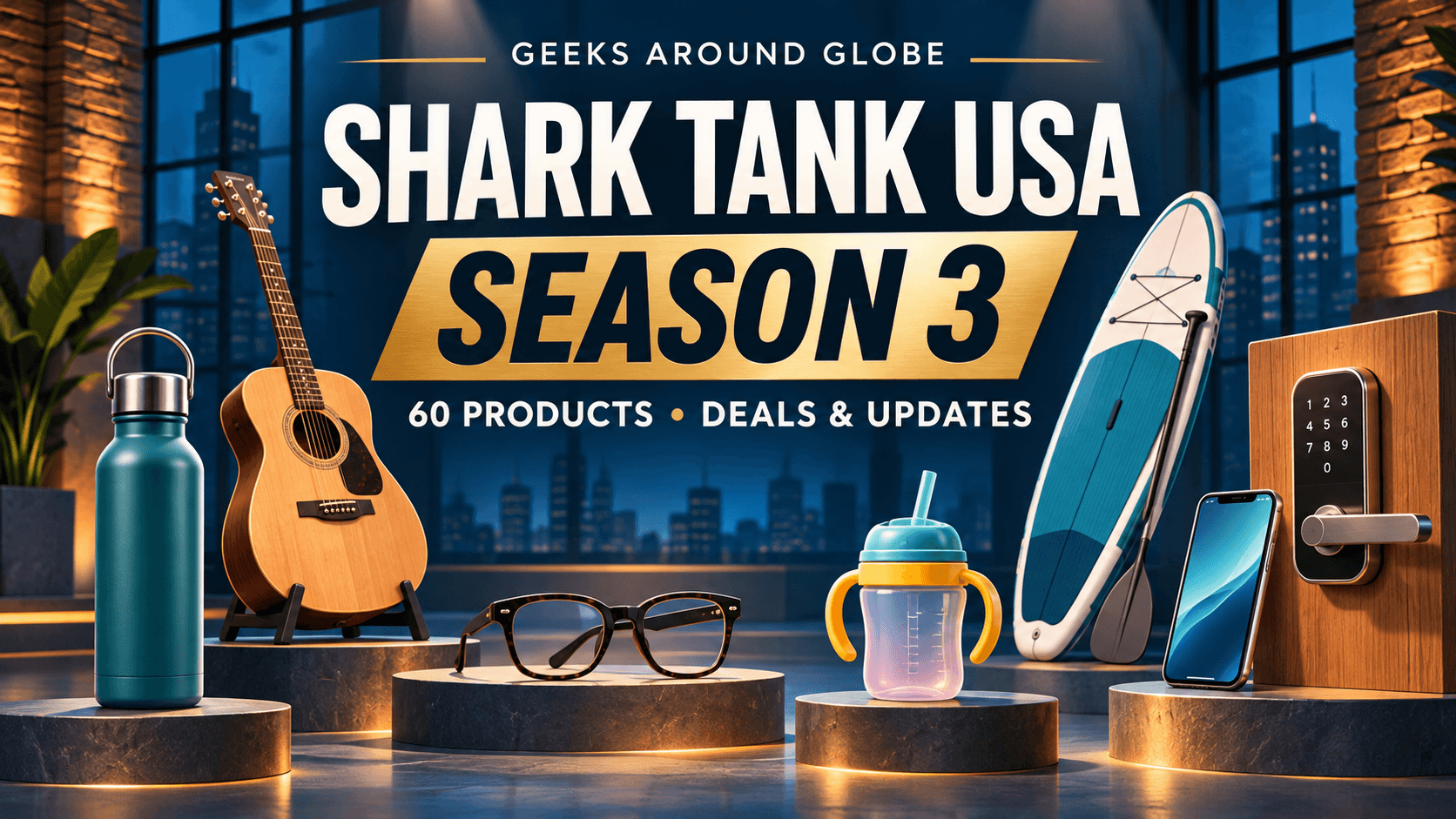
Washing the bottom of a water bottle, keeping glasses from falling off a shirt, and opening a door without finding a key are small problems. Shark Tank USA Season 3 turned them into business proposals, alongside ideas as different as custom cat drawings, dog birthday cakes and a rock band.
The interesting part is what happened after the cameras stopped. Some founders built lasting investor relationships. Others accepted offers that never became investments. A few found manufacturers, buyers or customers outside the Tank. Those differences help explain why a television deal is only one part of a company’s story.
This guide covers all 60 product and company pitches across the season’s 15 episodes, including Copa di Vino’s return. Each entry explains the product, the on-air outcome and the strongest supported follow-up. It also distinguishes a company that has confirmed its closure from one whose current activity could not be verified.
Use the episode directory to find a product, then read the deal and business comparisons for the larger picture. The guide leaves out unsupported net-worth estimates and does not turn old forecasts into current sales.
Shark Tank Season 3: quick answer
Short on time? Season 3 aired on ABC in 2012 and featured 60 pitches across 15 episodes. Its products included Clean Bottle, ChordBuddy, ReadeREST, Tower Paddle Boards, Lollacup and UniKey. This guide counts company pitches, including Copa di Vino’s return, rather than follow-up segments about earlier businesses.
The on-air result and the eventual investment are recorded separately. For example, ReadeREST and Tower have evidence of continuing Shark relationships, while The Smart Baker, REMYXX and UniKey accepted offers that did not close. A rejected pitch also did not automatically end a business.
Current status: The record is mixed. Several brands still have official catalogs or named commercial partners. Others have confirmed closures, changed owners or changed their business model. Where current activity cannot be verified, this guide says so without assigning an unsupported shutdown date.
Season 3 episode directory
The season ran from January 20 to May 18, 2012. The directory uses broadcast episode order. It excludes update segments, and the companies within each episode are grouped for reference rather than presented as a minute-by-minute running order.
All 15 episodes and their four featured pitches
| Episode | Products and companies |
|---|---|
| 1 | Clean Bottle; My Wonderful Life; Business Ghost; EZ VIP |
| 2 | I Want to Draw a Cat for You; Vegas Magic Show / Rick Smith Jr.; Salespreneur; Invis-A-Rack |
| 3 | ChordBuddy; Liquid Money; Tail Lightz; You Smell Soap |
| 4 | The Swilt; ShowNo; Puppy Cake; Wine Balloon / Air Cork |
| 5 | The Last Lid; Ledge Pillow; M3 Girl Designs; Talbott Teas |
| 6 | Five Minute Furniture; The Painted Pretzel; Esso Watches; ReadeREST |
| 7 | The Smart Baker; Kisstixx; The Heat Helper; Technology Enabled Clothing (TEC) |
| 8 | The Original Profender; Litter Jewelry; Rent-A-Grandma; Nardo’s Natural |
| 9 | Tower Paddle Boards; Instant Lifts / Skinnies; Vinamor; Miso Media / Miso Music |
| 10 | The Ave Venice / The Ave Customs; Bark’em’s To Go; Brewer’s Cow Ice Cream; GoGo Gear |
| 11 | Blondie’s Cookies; ViewSPORT; The Sullivan Generator; Copa di Vino (return pitch) |
| 12 | Nail Pak / Grace Nail Company; Debbie Brooks Handbags; TriMi Tank; Lollacup / Lollaland |
| 13 | AirBedz; SkyRide; Boot Illusions; Villy Custom |
| 14 | Wild Squirrel Nut Butter / Wild Friends; CAB20; Mix Bikini / Versakini; Billy Blanks Jr.’s Dance With Me / Dance It Out |
| 15 | Cougar Limited / Cougar Energy; REMYXX / ReKixx; NitroForce Titan 1000; UniKey Technologies |
The Season 3 episode record provides broadcast dates. The company sections below use the separate business research to assess what happened after filming.
Episodes 1–5: all products and what happened next
Episode 1
1. Clean Bottle
Dave Mayer designed Clean Bottle with openings at both ends, making the inside easier to reach when washing it. He accepted Mark Cuban’s $60,000 offer for 8%. The business later changed hands: Split Peak acquired it in 2018, and Ergode records another acquisition in 2023. Those ownership changes matter more than an unsupported estimate of its current worth.
2. My Wonderful Life
My Wonderful Life — Sue Kruskopf and Nancy Bush created My Wonderful Life to help people record funeral and memorial wishes before relatives have to make those decisions. They sought $100,000 for 10% and received no deal. The official website now offers free planning tools, so older descriptions of its pricing should not be treated as current.
3. Business Ghost
Business Ghost helped clients turn their ideas and experiences into books through Michael Levin’s ghostwriting and publishing services. He asked for $200,000 for 10% and left without a deal. A later Entrepreneur founder profile reports a 2018 sale. Levin’s continued writing work under other brands does not establish that the original company still operates.
4. EZ VIP
EZ VIP — Alashe Nelson pitched advance reservations for nightlife venues and reached an agreement with Mark Cuban and Daymond John. A 2012 company announcement named both Sharks as co-owners and introduced a partnership with Pitbull. Accounts differ on the equity percentage, so it is omitted here. A current booking service could not be verified.
Episode 2
5. I Want to Draw a Cat for You
I Want to Draw a Cat for You — Steve Gadlin offered something simple and personal: a custom cartoon cat drawing. Mark Cuban agreed to invest $25,000 for 33%, and later reporting corroborated his involvement. Gadlin’s official site still provides a drawing-booking link. The business illustrates how a founder’s style can be the product, without requiring a complicated invention.
6. Vegas Magic Show / Rick Smith Jr.
Rick Smith Jr. sought $1.5 million for 20% of a proposed Las Vegas magic production. The Sharks declined. His current entertainment business promotes performances, and his work includes school fundraising shows. That continuing career is separate from the Vegas proposal; the research did not establish that the production launched as pitched.
7. Salespreneur
Dave Greco pitched Salespreneur as a system for improving sales skills through guides and coaching. His $90,000 request for 40% did not produce a deal. Contemporary reporting interviewed Greco about the venture, but current operation could not be confirmed. Specific shutdown and revival dates are omitted because the underlying evidence remains incomplete.
8. Invis-A-Rack
Invis-A-Rack — Donny McCall’s Invis-A-Rack folds a cargo rack into housings along a pickup’s bed rails. He received no Shark investment, then found a manufacturing and licensing partner in Dee Zee. The manufacturer still lists the Invis-A-Rack Cargo Management System. A licensing agreement should not be described as a company acquisition.
Episode 3
9. ChordBuddy
Travis Perry created ChordBuddy, a removable aid to help beginners play guitar chords. Robert Herjavec offered $175,000 for 20%, including money earmarked for an infomercial. The company’s account of its Shark Tank experience and later founder interviews support a relationship beyond filming. Current revenue and ownership percentages have not been established.
10. Liquid Money
Liquid Money — Pat McCarthy brought money-themed fragrances to the Tank, but declined Daymond John’s $100,000 offer for 80% of the business. Liquid Money’s official catalog still markets His Money and Her Money. Its continuing product presence supports a more useful update than claims that the fragrance business disappeared after the Sharks passed.
11. Tail Lightz
Kyle Rainey’s Tail Lightz added illuminated designs to clothing and accessories. He sought $50,000 for 50% and received no deal. Current original-brand retail availability could not be verified. The product’s purpose and pitch outcome are clear; a precise closure date and later commercial results are not established well enough to include.
12. You Smell Soap
You Smell Soap — Megan Cummins pitched designer soaps and accepted Robert Herjavec’s offer of $55,000 for 20%, plus $50,000 for first-year living expenses. The investment did not close. Contemporary Inc reporting documented the disagreement over later terms, including Herjavec’s explanation that terms can change during due diligence. Current original-brand sales could not be verified.
Episode 4
13. The Swilt
The Swilt — Ivori Tennelle presented The Swilt, a sweatshirt that unfolds into a blanket. She sought $30,000 for 35% and left without a deal. Its everyday use was easy to understand, but current retail operation could not be verified. The record does not support assigning the business a present value based on its old pitch.
14. ShowNo
Shelly Ehler’s ShowNo towel offered coverage while changing swimwear. She accepted Lori Greiner’s $75,000 offer for 25%. However, Ehler’s later interview described problems with the post-show arrangement. The televised agreement should not be presented as a straightforward completed equity investment. Current original-brand retail operation could not be verified.
15. Puppy Cake
Kelly Chaney, now Kelly Costello, pitched cake mixes made for dogs. Puppy Cake received no deal, but its official store continues to offer dog cake mixes and celebration treats, including Puppy Scoops ice cream mixes. That catalog shows how the original occasion-based product expanded into related products for the same customer.
16. Wine Balloon / Air Cork
Eric Corti’s Wine Balloon placed an inflatable barrier inside an opened wine bottle to limit contact with air. He accepted a $400,000 buyout offer from Lori Greiner and Mark Cuban, but the sale did not complete. Corti retained the business, and the product is now offered as Air Cork. An accepted buyout and a completed sale are different events.
Episode 5
17. The Last Lid
Kevin and Melissa Kiernan designed The Last Lid as a fabric replacement for missing trash-can lids. Daymond John agreed to $40,000 for 60%. A post-show interview with Melissa supports continued work with him after filming. Current product availability could not be verified, and the evidence reviewed does not establish a later buyer or sale price.
18. Ledge Pillow
Ledge Pillow — Amanda Schlechter’s Ledge Pillow was a contoured pillow marketed for chest comfort while lying on the stomach. She sought $30,000 for 25% and received no deal. Current original-brand sales could not be verified. Its intended use can be explained without turning marketing claims about comfort into medical claims or assigning an unsupported closure date.
19. M3 Girl Designs
Maddie, Margot and Diane Bradshaw brought Snap Caps bottle-cap jewelry to the Tank through M3 Girl Designs. They accepted a $300,000 offer for 30% from Mark Cuban, Lori Greiner and Robert Herjavec. Hockaday’s alumni profile documents Maddie’s venture, but completed funding and current original-company retail activity were not independently established in this review.
20. Talbott Teas
Shane Talbott and Steve Nakisher accepted Kevin O’Leary’s $250,000 offer for 35% of their premium tea business. Jamba later announced an acquisition, but the timing needs care: its SEC filing dates the asset purchase to January 27, 2012, before the February broadcast. Filming, airing and closing a transaction do not necessarily happen in that order.
Episodes 6–10: all products and what happened next
Episode 6
21. Five Minute Furniture
Jared Joyce proposed furniture that could be assembled through an interlocking system without tools. He sought $250,000 for 25% and left without a deal. A retail launch of the original Five Minute Furniture system could not be verified. Work on other inventions should not be counted as evidence that this particular product reached customers.
22. The Painted Pretzel
Raven Thomas asked for $100,000 for 25% of The Painted Pretzel, and Mark Cuban accepted. Her July 2012 interview described funding and regular contact with Cuban, supporting an investment beyond the televised agreement. Current sales of the chocolate- and candy-coated pretzels could not be verified; an unavailable website alone does not establish a closure date.
23. Esso Watches
Esso Watches — Ryan Naylor pitched silicone watches with claimed negative-ion benefits, but received no deal. Those benefits are not established here. Reporting from Naylor’s 2015 public talk confirms that the original watch business closed. His later hiring-software work is a separate venture, so it should not be treated as a continuation of Esso Watches.
24. ReadeREST
Rick Hopper’s ReadeREST uses magnets to hold eyeglasses on clothing. He accepted Lori Greiner’s $150,000 offer for 65%. A founder Q&A on the brand’s website supports the subsequent partnership, and the official catalog still offers holders and reading glasses. This is a case where both the investor relationship and continuing product listings have supporting evidence.
Episode 7
25. The Smart Baker
Daniel and Stephanie Rensing pitched baking accessories, including a conversion-chart apron. They accepted Barbara Corcoran’s $75,000 offer for 40%, with a repayment royalty, but the investment did not close. A direct founder interview explains the disagreement over business strategy. The Smart Baker continues to list parchment, cupcake stands and aprons through its own store.
26. Kisstixx
Dallas Robinson and Mike Buonomo paired complementary lip-balm flavors through Kisstixx. Mark Cuban offered $200,000 for 40%. Later founder coverage and a supplier case study support post-show operations and investor involvement. Current original-brand sales could not be verified, so historical business activity should not be presented as current revenue or proof of continued operation.
27. The Heat Helper
Lyle Schuette’s Heat Helper aimed to reuse heat from a clothes dryer. The pitch ended without a deal. ABC’s preview describes the product, but sources conflict on the requested investment, so this guide omits that figure. Current original-brand retail activity could not be verified; the existence of a patent does not establish present availability.
28. Technology Enabled Clothing (TEC)
Technology Enabled Clothing (TEC) — Scott Jordan pitched Technology Enabled Clothing, or TEC, as a licensing business for routing electronics cables through garments. He left without a deal. SCOTTeVEST’s TEC page explains the technology, while the clothing retailer maintains its own store. TEC was not simply renamed SCOTTeVEST: the licensing operation and the retail business were distinct parts of the pitch.
Episode 8
29. The Original Profender
The Original Profender — Tony Devine’s Original Profender simulated a defender during basketball practice. He asked for $75,000 for 15% and received no deal. A contemporary founder interview documented activity after the show, and the company later announced another training aid, ProHand. Current original-brand operations could not be verified, so those historical developments should remain clearly dated.
30. Litter Jewelry
Rachael Mann and Mackenzie Burdick pitched body-chain jewelry through Litter. They accepted $80,000 for 70% from Daymond John and Mark Cuban. Contemporary company and investor interviews support the post-show partnership. Current original-brand sales could not be verified. Sales forecasts made during the business’s early growth should not be republished as actual recent revenue.
31. Rent-A-Grandma
Todd Colby Pliss created Rent-A-Grandma to connect families with experienced older women offering childcare and domestic services. He sought $150,000 for 20% and received no deal. The official site still offers caregiver searches and service requests. That is evidence of a continuing service offering, without establishing booking volume or the size of a franchise network.
32. Nardo’s Natural
Nardo’s Natural — The Mastronardo brothers pitched Nardo’s Natural skincare and accepted Barbara Corcoran’s $75,000 offer for 50%. The partnership continued, but Danny Mastronardo later explained that the final negotiated terms are confidential. The official brand maintains skincare listings. The television percentage should therefore remain labeled as an on-air term, rather than a verified current ownership stake.
Episode 9
33. Tower Paddle Boards
Stephan Aarstol accepted $150,000 for 30% of Tower Paddle Boards from Mark Cuban. The relationship is supported by Cuban’s own company portfolio, alongside founder interviews and Tower’s history. Tower continues to offer paddleboards through its official store. Its direct-sales approach is central to understanding the business; old sales figures are not a substitute for current accounts.
34. Instant Lifts / Skinnies
Nick and Penilopee LaRosa pitched Instant Lifts, adhesive tape intended for cosmetic body shaping. They asked for $100,000 for 25% and received no deal. The product continues under the Skinnies Instant Lifts brand. Describe it as a cosmetic accessory, without converting its marketing into claims of permanent physical change or medically proven benefits.
35. Vinamor
Vinamor — Gary DeJohn’s Vinamor was a by-the-glass wine aerator and pouring accessory. He sought $75,000 for 30% and received no deal. In a 2012 follow-up interview, he discussed continued development and financing outside the show. Current original-brand sales could not be verified; his ownership at that earlier date should not be assumed to remain unchanged.
36. Miso Media / Miso Music
Aviv Grill accepted Mark Cuban’s $300,000 offer for 8% of Miso Media, a music-learning and digital sheet-music venture. The business later ran out of money. Grill discussed that outcome in an Inc interview. Miso’s story gives the season an important counterpoint: an accepted investment offer does not establish that a product business will survive.
Episode 10
37. The Ave Venice / The Ave Customs
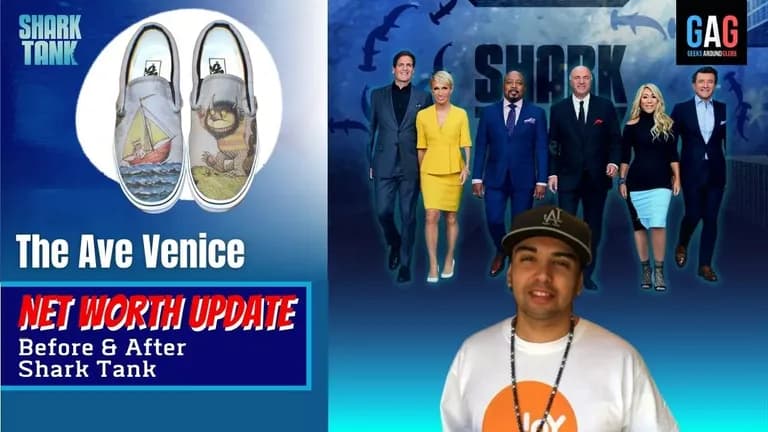
The Ave Venice / The Ave Customs — Nick Romero pitched custom footwear and apparel through The Ave Venice, asking for $125,000 for 15%. He received no deal. The current Ave Customs website describes a different model: footwear decoration and fulfillment through promotional-product distributors. It explicitly says it is not a footwear retailer, making old descriptions of a consumer storefront outdated.
38. Bark’em’s To Go
Blake St. Clair presented Bark’em’s To Go as a portable dog meal kit, with compartments for food, water and accessories. He sought $100,000 for 51% and received no deal. Reports disagree about whether the original product reached commercial sale. This guide therefore does not claim a verified launch, sales total or exact shutdown date.
39. Brewer’s Cow Ice Cream
Steve Albert, Larry Blackwell and Jason Conroy pitched beer-flavored ice cream as Brewer’s Cow. Their $125,000 request for 15% produced no deal. Local reporting documented an ice-cream tasting after the show, supporting continued activity at that time. Current sales could not be verified, and the research did not establish a reliable closure date.
40. GoGo Gear
Arlene Battishill and Desiree Estrada designed protective riding apparel that looked more like everyday clothing. They accepted Daymond John’s $300,000 offer for 65%, but Battishill later confirmed that the investment did not proceed. GoGo Gear’s own website now announces permanent closure. The closure is supported; a precise date and cause are not supplied by that notice.
Episodes 11–15: all products and what happened next
Episode 11
41. Blondie’s Cookies
Blondie’s Cookies — Brenda Coffman asked for $200,000 for 3% of Blondie’s Cookies and left without a deal. The business continued, and its official team information identifies Indiana store locations, alongside an online shop. Its history includes both expansion and store closures, so describing the entire company as either an instant winner or a failed pitch misses the operating business.
42. ViewSPORT
ViewSPORT — Ben Wood’s ViewSPORT apparel reveals hidden designs when the fabric becomes wet. He sought $500,000 for 20% and received no deal. IRONMAN’s own store lists ViewSPORT products, providing a commercial signal beyond the brand’s claims. The shirts’ visible response to moisture should not be described as a clinical measure of workout quality.
43. The Sullivan Generator
Mark Sullivan sought $1 million for 10% of a proposed generator. The Sharks declined. His own research website describes the concept, but the sources reviewed did not establish independently validated commercial output. A proposed mechanism, patent or inventor’s projection should not be treated as proof that a generator performs as claimed.
44. Copa di Vino (return pitch)
Copa di Vino (return pitch) — James Martin returned with Copa di Vino after appearing in Season 2. His single-serving wine business again left without a deal. Later filings document an asset acquisition and licensing arrangements. Splash’s 2026 filing describes discontinued operations at the reporting company; that accounting classification alone does not prove the Copa di Vino brand stopped selling.
Episode 12
45. Nail Pak / Grace Nail Company
Barbara Lampugnale combined nail polish, a file and remover pads in Nail Pak. She accepted Lori Greiner’s $50,000 offer for 40%, and contemporary reporting supports the subsequent investment. In a 2019 founder interview, Lampugnale discussed the later Grace Nail identity. Current checkout availability could not be verified; a definitive earlier closure claim would overlook that later evidence.
46. Debbie Brooks Handbags
Debbie Brooks and Paul d’Auriac pitched artist-designed handbags with interchangeable magnetic decorations. They received no deal. The official handbag collection remains accessible, supporting continued product presentation after the show. Sources disagree on the initial investment request, so that figure is omitted rather than choosing a number without resolving the conflict.
47. TriMi Tank
Lindsay Johnson and Nicole Bilsky created TriMi Tank tops with interchangeable decorative straps. Their $57,000 request for 30% did not produce a deal. A post-show founder interview documented early customer activity, but a current original-brand store could not be verified. A reported shutdown year is omitted because a primary closure announcement was not recovered.
48. Lollacup / Lollaland
Hanna and Mark Lim’s Lollacup uses a weighted straw and valve-free design for young children. They accepted $100,000 for 40% from Mark Cuban and Robert Herjavec, and the partnership continued. Lollaland still offers the cup. One detail needs particular care: the manufacturer’s FAQ says it is not spill-proof, despite descriptions elsewhere that suggest otherwise.
Episode 13
49. AirBedz
AirBedz — Jim Pittman designed AirBedz mattresses to fit around a pickup bed’s wheel wells. He declined Barbara Corcoran’s $250,000 offer for 50% and left without a deal. Pittman Outdoors continues to present the AirBedz range. The practical buying question is model compatibility, rather than an unsupported estimate of how much the business is worth.
50. SkyRide
SkyRide — Scott Olson sought $3 million for 20% of SkyRide, a suspended riding system, but received no deal. The concept later reached cruise passengers: Carnival lists SkyRide on Vista, Horizon and Panorama. A named customer offering the attraction provides stronger evidence of commercial use than a founder’s proposal or a recurring online valuation estimate.
51. Boot Illusions
Boot Illusions — Queenie Davis and Andrew Goodrum’s Boot Illusions used removable covers to give heels a boot-like appearance. They accepted Barbara Corcoran’s $100,000 offer for 55%. However, Davis later confirmed in a direct interview that the deal did not close. She described manufacturing setbacks; current original-brand product sales could not be verified.
52. Villy Custom
Villy Custom — Fleetwood Hicks accepted $500,000 for 42% of Villy Custom from Mark Cuban and Barbara Corcoran. The customized bicycle business later changed ownership: Kent International’s CEO confirmed its acquisition. Villy’s official site now promotes corporate and incentive bicycles. That shift makes its business story broader than selling individually customized cruisers to consumers.
Episode 14
53. Wild Squirrel Nut Butter / Wild Friends
Erika Welsh and Keeley Tillotson accepted Barbara Corcoran’s $50,000 offer for 40% of Wild Squirrel Nut Butter, but the investment did not close. The brand became Wild Friends. Tillotson’s first-person account confirms its 2024 closure. An on-air agreement, a later rebrand and an eventual closure belong at separate points in its history.
54. CAB20
Manager Tom Callahan brought CAB20 to the Tank seeking backing for a band rather than a physical product. He rejected Kevin O’Leary and Robert Herjavec’s $200,000 proposal for 50%. A direct interview with Callahan explains the decision. CAB20 later split; frontman Bert Hoover’s subsequent music work should not be mistaken for an active CAB20 business.
55. Mix Bikini / Versakini
Frank Scozzafava and Adam DiSilvestro accepted Barbara Corcoran’s $50,000 offer for 25% of Mix Bikini’s interchangeable swimwear business. Kelsey Duffy later discussed a website outage and a Versakini relaunch in a 2015 interview. Current original-brand sales could not be verified. Estimates of orders lost during an outage should not be treated as booked sales.
56. Billy Blanks Jr.’s Dance With Me / Dance It Out
Billy Blanks Jr. and Sharon Catherine Blanks pitched a dance fitness program. After initially declining, Billy accepted $100,000 for 50% from Daymond John and Mark Cuban. The program became known as Dance It Out, which announced a Lifetime television show in 2020. Its website remains accessible, but old tour listings do not establish a current schedule.
Episode 15
57. Cougar Limited / Cougar Energy
Ryan Custer’s Cougar Limited marketed an energy shot to women. He sought $150,000 for 30% and received no deal. BevNET’s beverage database now lists the brand as discontinued. That supports a clear product-status update, while the precise closure year and claims about the drink’s health effects remain outside the verified record used here.
58. REMYXX / ReKixx
REMYXX / ReKixx — Gary Gagnon accepted Daymond John’s $50,000 offer for 80% of REMYXX, a sneaker designed to be recyclable. The investment did not close. In a June 2012 interview, Gagnon said John instead advised him. The venture later used the ReKixx name; the original dated closure announcement was not recovered, so no shutdown year is assigned here.
59. NitroForce Titan 1000
NitroForce Titan 1000 — Frank Campitelli and Debrae Barensfeld pitched a home gym using nitrogen-gas resistance, seeking $250,000 for 10%. They received no deal. During this review, EdenPURE’s NitroForce listing displayed an ordering option. That differs from an earlier sold-out observation, but a listing does not independently confirm stock, delivery performance or the manufacturer’s finances.
60. UniKey Technologies
UniKey Technologies — Phil Dumas accepted $500,000 for 40% of UniKey from Mark Cuban and Kevin O’Leary, plus two board seats. He later explained that contract provisions over control caused him to decline. UniKey’s official site now markets mobile-access technology to manufacturers. Its business should be evaluated as a technology platform, without treating funding totals as company value.
What changed after Shark Tank: deals, ownership and availability
Latest update — November 19, 2026: This review found official product catalogs, licensing relationships, acquisitions and explicit closure notices across the season. These are different kinds of evidence. A product listing shows that an item is being presented for sale; it does not reveal the company’s revenue or prove that every order will be fulfilled.
Which accepted deals actually became investments?
A televised handshake begins a process. The following examples have founder, investor or company evidence about what happened afterward. They are not a complete count of every finalized Season 3 investment.
Selected on-air agreements compared with documented follow-through
| Company | Accepted on-air offer | What the follow-up establishes |
|---|---|---|
| ReadeREST | $150,000 for 65%; Lori Greiner | Founder account supports a subsequent partnership. |
| Tower Paddle Boards | $150,000 for 30%; Mark Cuban | Investor portfolio and company history confirm involvement. |
| The Smart Baker | $75,000 for 40%, plus repayment royalty; Barbara Corcoran | Founders say the investment did not close. |
| Boot Illusions | $100,000 for 55%; Barbara Corcoran | Founder confirmed the investment did not close. |
| REMYXX | $50,000 for 80%; Daymond John | Founder described advice rather than a completed equity investment. |
| UniKey | $500,000 for 40%, plus two board seats; Mark Cuban and Kevin O’Leary | Founder declined the contract’s control provisions. |
These distinctions change how a reader should interpret the season. A deal can fail to close because the parties disagree about control, pricing or how to grow the business. That outcome does not, by itself, tell us whether the product failed.
What counts as evidence of a company’s current status?
Different evidence answers different questions
| Company | Evidence reviewed | Supported conclusion |
|---|---|---|
| Clean Bottle | Buyer’s acquisition history | The brand changed ownership; an acquisition is not a closure. |
| Invis-A-Rack | Dee Zee product catalog | A manufacturing partner lists the licensed product. |
| SkyRide | Carnival’s attraction page | A named operator offers the attraction on specified ships. |
| The Ave Customs | Current official business description | The business describes distributor-based decoration and fulfillment. |
| GoGo Gear | Official permanent-closure notice | Closure is confirmed; the notice does not establish a cause. |
| Wild Friends | Cofounder’s first-person account | The company closed in 2024. |
| NitroForce Titan 1000 | Retailer ordering page | A listing offers ordering; actual fulfillment remains unverified. |
The same care applies to money. An asking valuation is the company value implied by the founder’s proposed investment and equity percentage. It is not personal wealth, annual revenue or a verified present-day sale price. This guide does not rank Season 3 businesses using unsupported net-worth figures.
Business lessons from the Season 3 companies
Distribution can matter as much as the invention
Invis-A-Rack found a route to customers through Dee Zee after leaving the Tank without investment. SkyRide reached passengers through a cruise operator. UniKey supplies technology to other manufacturers. These are distinct ways to reach a market: selling a finished item directly, licensing a design, or supplying technology that another business uses.
For a founder, the practical question is who can reliably place the product in front of a buyer. A manufacturing or distribution relationship can deserve as much attention as an investment announcement.
Ownership terms can change the value of an offer
UniKey’s founder rejected contract provisions over control. The Smart Baker’s founders disagreed with the proposed direction of the business. REMYXX’s founder described a shift from an equity offer to advice. Together, these cases show why the cash figure alone is an incomplete way to judge a deal.
Founders need to understand who makes decisions, how products will be priced and what each side will contribute after filming. An offer that looks attractive on television still has to work in practice.
A product can survive through a different name or customer
Wine Balloon became Air Cork. Instant Lifts continues under the Skinnies name. The Ave moved toward serving promotional-product distributors. Villy Custom’s site now emphasizes corporate and incentive bicycles.
Those changes affect how readers should search for a product and how an editor should describe the company. An old brand name or retail model can disappear from view while a related product or business continues elsewhere.
The season’s clearest lesson is to follow the evidence beyond the pitch. An accepted offer is a milestone. Continued sales, a confirmed partnership, a documented acquisition or a founder-confirmed closure tells us what happened next.
Shark Tank Season 3 FAQs
How many products appeared in Shark Tank USA Season 3?
This guide covers 60 product and company pitches across 15 episodes. It includes Copa di Vino’s return pitch and excludes update segments about earlier contestants.
When did Season 3 air?
The season aired on ABC from January 20 to May 18, 2012. Episode numbers here follow broadcast order.
Did every accepted offer become a completed investment?
No. Founder accounts establish that several accepted offers did not close, including those for The Smart Baker, Boot Illusions, REMYXX and UniKey. The guide separates the on-air result from later investment evidence.
Which Season 3 products can still be found today?
The November 2026 research found official listings for products including ReadeREST, Puppy Cake, Tower Paddle Boards, Lollacup, Liquid Money and Air Cork. Check the relevant seller for current stock, delivery coverage and model options before ordering.
Is Copa di Vino a Season 2 or Season 3 company?
It appeared in both seasons. James Martin returned in Season 3 to pitch the single-serving wine business again, so that return belongs in the Season 3 directory.
Which Season 3 company is worth the most?
The research does not establish a reliable, comparable current valuation for all 60 companies. Funding raised, historical sales, an asking valuation and an acquisition price measure different things. They should not be combined into a speculative ranking.
Does an unavailable website mean a company has closed?
No. A site can move, a product can change names or a brand can pass to a new owner. This guide uses explicit closure evidence where available and otherwise identifies current status as unverified.
The weekly question
From obsession to clarity — one original question every week.
We answer one noisy topic at a time, in full. No daily roundup, no thread bait — just the question, the principles, and the system.