ChordBuddy After Shark Tank: Robert’s Deal and the Business Today
ChordBuddy secured Robert Herjavec’s $175,000 offer and remains active with guitar-learning systems, lessons and related products.

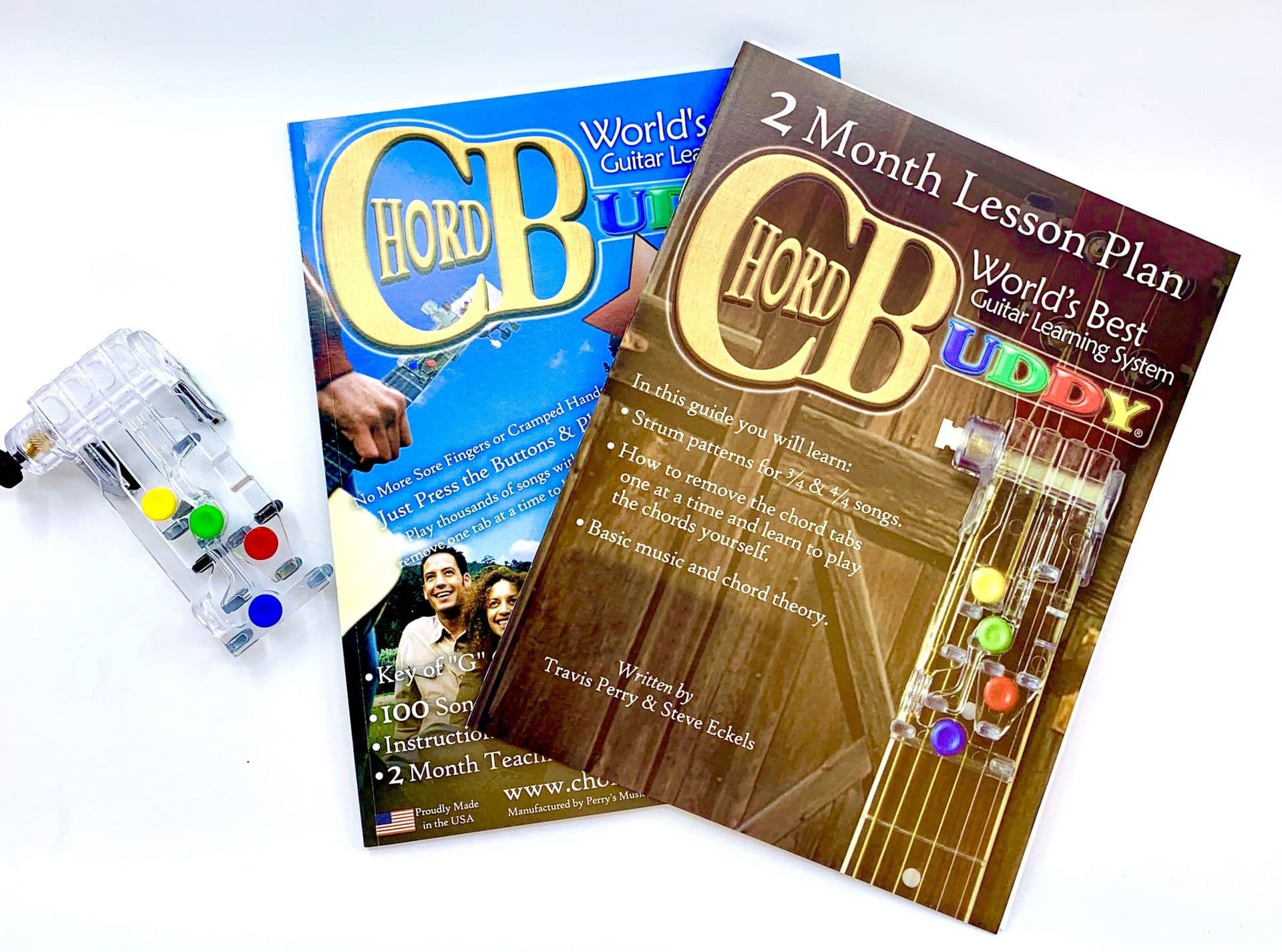
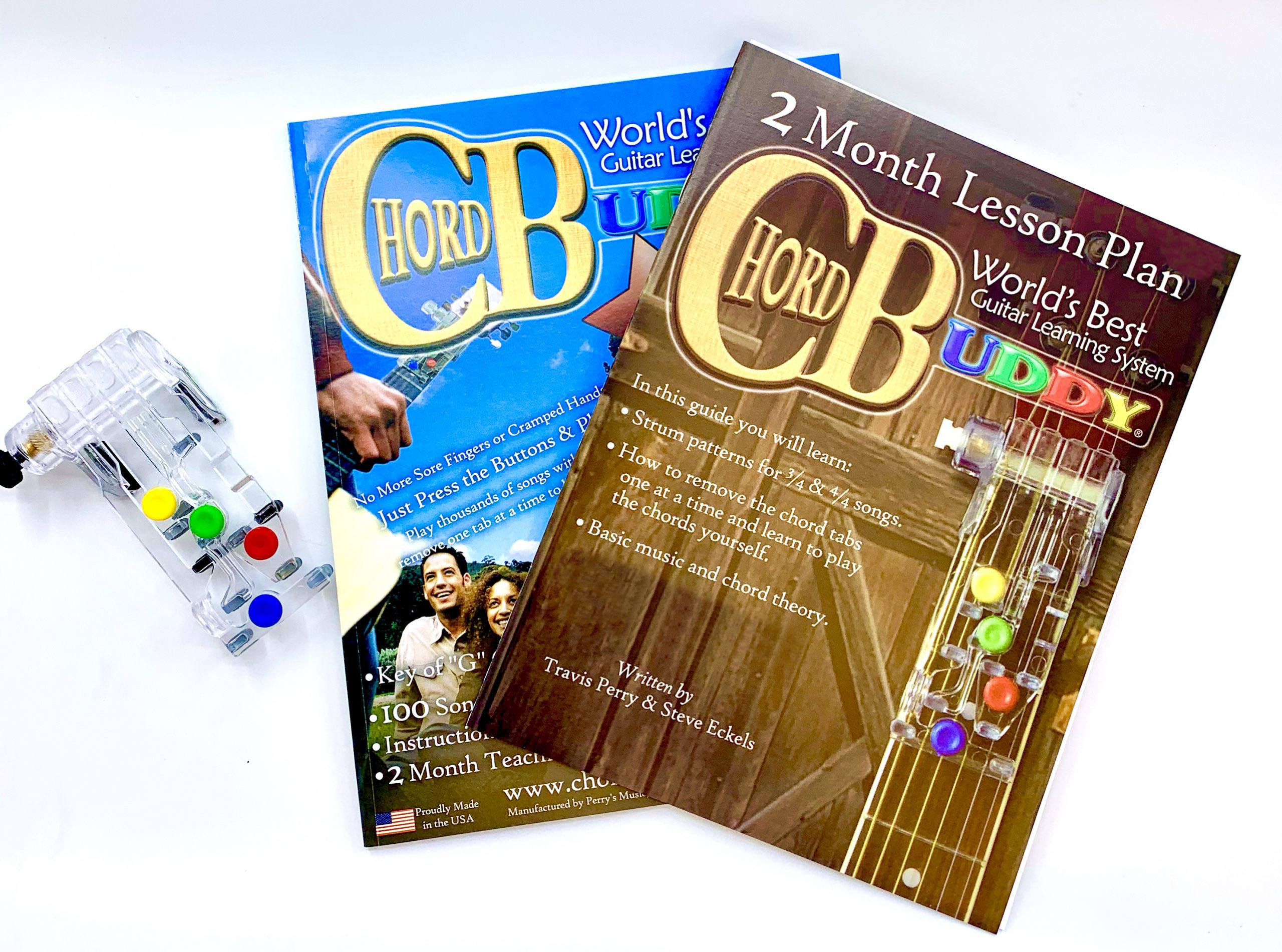
Travis Perry designed ChordBuddy to help beginners play recognizable guitar chords before finger strength and muscle memory caught up with their enthusiasm. The removable device presses chord combinations through colored buttons, while the accompanying lessons gradually teach players to form the chords themselves.
The idea drew four offers on Shark Tank. Perry chose Robert Herjavec’s $175,000 offer for 20%, which included money earmarked for an infomercial. Company history and a later founder interview support an ongoing relationship after filming. ChordBuddy also maintains an active online catalog today, although its current revenue and valuation are private.
Quick answer
ChordBuddy secured a Shark Tank deal with Robert Herjavec. Travis Perry asked for $125,000 for 10%, and accepted Herjavec’s $175,000 offer for 20%, with $50,000 intended for an infomercial. ChordBuddy’s own history and a 2015 interview with Perry support a post-show investor relationship. The official store currently lists guitar-learning systems, songbooks, instruments and accessories. Current status: ChordBuddy is active, but its present sales, valuation and ownership percentages are not publicly verified.
ChordBuddy guitar-learning devices with instructional books. Photo: ChordBuddy
ChordBuddy at a glance
| Detail | Verified information |
|---|---|
| Founder | Travis Perry |
| Product | Removable guitar chord-learning device and instruction system |
| Shark Tank appearance | Season 3, Episode 3 |
| Original ask | $125,000 for 10% |
| Final offer | $175,000 for 20% |
| Investor | Robert Herjavec |
| Special term | $50,000 earmarked for an infomercial |
| Current evidence | Official online catalog remains active |
The original ask implied a $1.25 million valuation. Herjavec’s accepted offer implied a $875,000 post-money value at the time of the deal. Neither figure establishes what ChordBuddy is worth now.
How ChordBuddy works
ChordBuddy attaches near the guitar’s nut and uses color-coded buttons to form common chords. A beginner can press a button and strum instead of immediately holding several strings in the correct positions.
The teaching method is designed to remove the assistance gradually. Players follow lessons and songs, then remove tabs as they learn to make the chord shapes with their own fingers.
The current ChordBuddy product page says the standard system is intended for six-string, full-size or some 5/8-size steel-string and electric guitars. Classical guitars require a different version, and smaller instruments may not fit. Those compatibility details are more useful to buyers than broad claims that the device works for every guitar.
The Shark Tank pitch
Perry asked for $125,000 in exchange for 10% of ChordBuddy. The Sharks saw a product that addressed a familiar beginner problem and had a clear demonstration.
| Pitch point | Outcome |
|---|---|
| Amount requested | $125,000 |
| Equity offered | 10% |
| Accepted offer | $175,000 for 20% |
| Investor | Robert Herjavec |
| Infomercial allocation | $50,000 of the investment |
Perry accepted Herjavec’s offer after receiving several proposals. The company’s official Shark Tank history says four Sharks made offers and credits the show and Herjavec with helping the system grow.
The pitch appeared in Season 3, Episode 3, not Episode 4 as the former article stated. The episode also featured Liquid Money, Tail Lightz and You Smell Soap.
Did the Robert Herjavec deal continue?
The available evidence supports a relationship beyond the broadcast. In a 2015 founder interview, Perry described frequent early communication with Herjavec and credited him with opening doors to major retailers.
That interview also reported historical results: Perry said the business sold more than $2 million in its first eight months after the show, and the article reported about $7 million in cumulative revenue and more than 300,000 units by August 2015.
Those numbers are useful because they are dated and attributed. They should not be repeated as current annual revenue or used to calculate a 2026 valuation.
| Evidence | What it supports |
|---|---|
| Company’s Shark Tank history | Perry accepted Herjavec’s offer |
| Perry’s 2015 interview | Ongoing advice and retailer introductions |
| Active product catalog | Current product presentation and sales route |
| Historical sales statements | Performance through 2015, not current revenue |
No current ownership filing was reviewed, so the article does not assume Herjavec still holds exactly 20% today.
What happened after Shark Tank?
ChordBuddy used the program’s exposure to reach a national audience. The partnership also brought business advice and retail introductions, according to Perry.
The brand expanded beyond the original device into lesson books, video instruction, guitar packages, children’s products, ukulele materials and accessories. Its present catalog gives beginners several ways to combine an instrument with the learning system.
| Date | Development |
|---|---|
| 2007 | Perry revisits the idea while teaching his daughter guitar |
| 2010 | ChordBuddy reaches the market |
| 2012 | Perry accepts Herjavec’s $175,000 offer |
| 2015 | Perry describes continued investor support and post-show growth |
| November 2026 | Official catalog lists learning systems and related products |
The former article claimed a United Kingdom office in 2015 and a two-millionth sale in 2018 without adequate supporting sources. Those claims have been removed.
Is ChordBuddy still in business?
Yes. The official site currently provides a product catalog, shopping controls, support information, video lessons and contact details. It lists standard, classical, worship and digital versions alongside instruments and accessories.
The active catalog supports describing the business as operating. It does not provide audited revenue, profit, order volume or fulfillment data. Prices and stock can also change.
The former article assigned ChordBuddy a $1 million net worth, $1.25 million in annual revenue and Perry an $850,000 personal net worth. No reliable current evidence supported those figures, so they have been removed.
Why the product found a market
ChordBuddy gives beginners an immediate experience of playing a song. That early reward can make practice feel more achievable while the player develops finger strength and learns chord shapes.
| Product advantage | Limitation |
|---|---|
| Makes basic chords accessible quickly | Only fits specified guitar types and sizes |
| Color coding simplifies early lessons | Players still need practice to play unaided |
| Physical device and curriculum work together | Compatibility must be checked before purchase |
| Product can be demonstrated clearly | Learning outcomes vary by student and practice |
The business also benefits from a natural product ecosystem. A customer may need a compatible guitar, tuner, songbook, lessons or replacement accessories. That creates more opportunities than selling a single plastic device.
At the same time, ChordBuddy should be understood as a teaching aid rather than a guarantee. The company’s performance claims come from its own marketing, and individual progress depends on practice, instruction and fit.
What ChordBuddy’s numbers mean
Perry’s $125,000 ask for 10% implied a $1.25 million valuation. Herjavec’s $175,000 for 20% implied a lower post-money value of $875,000, while giving the company more cash.
The 2015 interview’s sales figures show that the business gained meaningful traction after the show. They do not reveal present profit. Revenue must still cover manufacturing, marketing, retailer margins, shipping, staff and product development.
Without current financial statements or a transaction price, a reliable present valuation cannot be calculated. The verified story is already strong: a physical teaching product received a Shark investment, reached retailers and continues to maintain a direct catalog.
Explore the remaining companies in our Shark Tank Season 3 products and episode guide.
Frequently asked questions
Did ChordBuddy get a Shark Tank deal?
Yes. Travis Perry accepted Robert Herjavec’s offer of $175,000 for 20%.
Did the ChordBuddy deal close?
Company history and Perry’s 2015 interview support an ongoing post-show relationship with Herjavec.
Is ChordBuddy still available?
Yes. The official website currently lists several ChordBuddy systems, lesson materials and related products.
Does ChordBuddy fit every guitar?
No. The standard model has neck-size and instrument requirements. Classical and smaller guitars may need another version or may not be compatible.
What is ChordBuddy worth now?
No verified current valuation is public. The former $1 million claim was unsupported.
How much did ChordBuddy sell after Shark Tank?
In a 2015 interview, Perry said the company sold more than $2 million in its first eight months after the show; the article reported roughly $7 million cumulatively by then. These are historical, attributed figures.
What episode featured ChordBuddy?
ChordBuddy appeared in Shark Tank Season 3, Episode 3.
The weekly question
From obsession to clarity — one original question every week.
We answer one noisy topic at a time, in full. No daily roundup, no thread bait — just the question, the principles, and the system.