Shark Tank Season 2: All 36 Products, Deals & Updates
Explore all 36 Shark Tank USA Season 2 products by episode, with founders, on-air outcomes and evidence of what happened after filming.
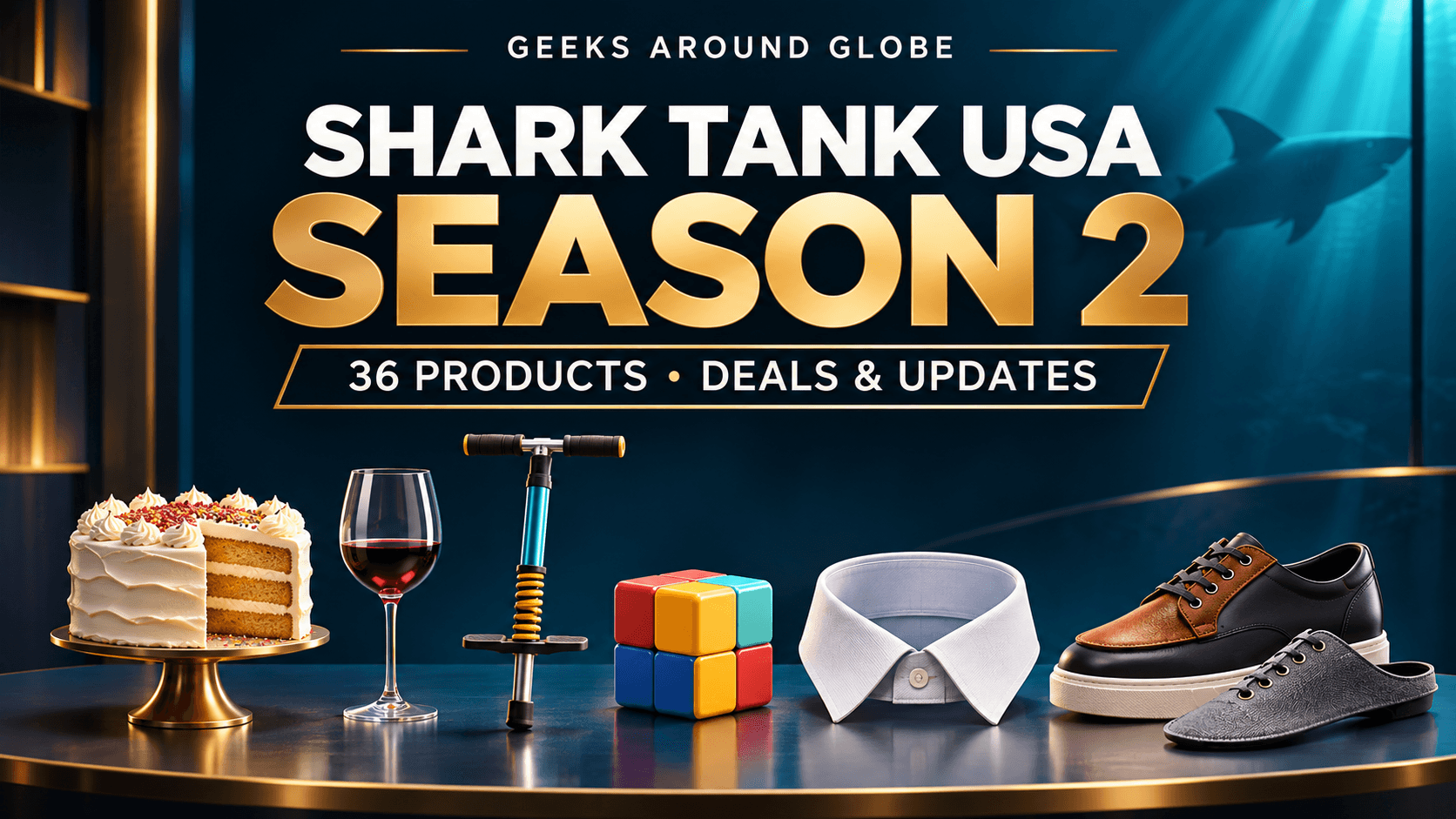
A shirt collar that will not stay flat. Toys children outgrow before they wear out. A cake you want to send across the country. Shark Tank USA Season 2 brought these everyday problems into the Tank, alongside inventions as unusual as a bacon alarm clock and a toilet-training kit for cats.
The 2011 season featured 36 businesses across nine episodes. Some founders wanted money to make more products. Others needed retail introductions, manufacturing help or a partner who understood their customers. Their pitches produced memorable agreements, but the handshake was only the beginning of the business story.
Daisy Cakes developed a lasting relationship with Barbara Corcoran. HyConn accepted a much larger offer that never became a completed investment. Other companies continued without a Shark, changed ownership or stopped selling their original products.
This guide brings those stories together. You will find every Season 2 company in broadcast order, what each product does, the on-air outcome and the strongest available evidence about what happened afterward. Where current trading or final investment terms remain unclear, the guide says so.
Short on time?
Shark Tank Season 2 aired on ABC from March 20 to May 13, 2011. Its 36 original pitches produced 19 accepted on-air offers and 17 no-deal outcomes. Those counts describe the televised results; they do not mean 19 investments closed.
HyConn accepted the season’s largest headline offer, worth $1.25 million, but founder Jeff Stroope later confirmed that it fell through. Daisy Cakes, CitiKitty and One Sole have stronger evidence of continuing Shark partnerships after filming.
Current status: The season has no single success-or-failure verdict. Some brands retain active sales channels, some were acquired or renamed, and others ended. The company sections distinguish those outcomes and identify cases where current availability cannot be confirmed.
Shark Tank Season 2 overview
Season 2 introduced Mark Cuban and Jeff Foxworthy as guest Sharks. Barbara Corcoran, Daymond John, Robert Herjavec and Kevin O’Leary appeared throughout the season, while Kevin Harrington occupied the fifth chair in other episodes.
| Season fact | Details |
|---|---|
| Original US broadcast | March 20–May 13, 2011 |
| Network | ABC |
| Episodes | 9 |
| Original business pitches | 36 |
| Accepted on-air offers | 19 |
| No-deal outcomes | 17 |
| Guest Sharks | Mark Cuban and Jeff Foxworthy |
The counts above come from the original pitches in the Season 2 episode listing. Update segments about earlier companies are excluded.
Episode numbering can be confusing. This guide uses the order viewers saw on television. The April 15 episode was produced during Season 1 but first aired during Season 2, so Fridge Fronts, New Era Brands, Thin Gloss and Lightfilm belong in this broadcast-season directory.
All 36 Shark Tank Season 2 products
Use this directory to find a business by episode, founder or product. “Accepted offer” describes the television outcome. The company updates below explain what is known about the investment afterward.
| Episode | Company | Founder / pitch presenter | Product | On-air outcome |
|---|---|---|---|---|
| 1 | Wurkin Stiffs | Jonathan Boos | Magnetic shirt-collar stays | Accepted offer |
| 1 | Tippi Toes | Sarah Nuse; Megan Reilly | Children’s dance classes | Accepted offer |
| 1 | CBS Foods / Chef Big Shake | Shawn Davis | Shrimp burgers | No deal |
| 1 | Copa di Vino | James Martin | Single-serving wine glasses | No deal |
| 2 | Toygaroo | Nikki Pope and team | Toy-rental subscriptions | Accepted offer |
| 2 | Wake N’ Bacon | Matty Sallin | Bacon-heating alarm clock | No deal |
| 2 | Vurtego | Brian and Bruce Spencer | Air-powered pogo sticks | No deal |
| 2 | First Defense Nasal Screens | Joe Moore | Adhesive nasal filters | Accepted offer |
| 3 | Mod Mom Furniture | Kiersten Hathcock | Wooden toy-storage furniture | Accepted offer |
| 3 | Fitness Stride | Stacy Erwin | Leg-worn resistance bands | No deal |
| 3 | Flipoutz | Johnson family | Bracelets with collectible coins | Accepted offer |
| 3 | PureAyre | James Mitchell | Odor-eliminating spray | No deal |
| 4 | Ride-On Carry-On | Darryl and Randy Lenz | Child seat for rolling luggage | Accepted offer |
| 4 | Uncle Zip’s Beef Jerky | Ken Howell; family business | Family-recipe beef jerky | No deal |
| 4 | HillBilly Brand | Michael Abbaticchio; Shon Lees | Country-lifestyle apparel | Accepted offer |
| 4 | Broccoli Wad | Johnny Gennaro; Vincent Pastore | Money-holding band | Accepted offer |
| 5 | Fridge Fronts | Jan Augenstein | Magnetic appliance coverings | Accepted offer |
| 5 | New Era Brands / Clip N Go | Bob Kroupa | Clip-on gum and mint containers | No deal |
| 5 | Thin Gloss | April Morris | Lip gloss with appetite-related marketing | No deal |
| 5 | Lightfilm / PowerDecal | George Podd; Rolf Schwartz | Illuminated vehicle-window decals | Accepted offer |
| 6 | Hot Mama Gowns | Deidrea Haysel | Maternity hospital gowns | No deal |
| 6 | CaddySwag | Melissa and Ben Fossey | Golf-bag beverage cooler | No deal |
| 6 | Daisy Cakes | Kim Nelson | Mail-order cakes | Accepted offer |
| 6 | Sweep Easy | Shane Pannell | Broom with retractable scraper | Accepted offer |
| 7 | Carsik Bib | Les Cookson | Bib with collection pouch | No deal |
| 7 | Hydromax | Chris Spencer | Football-pad hydration system | Accepted offer |
| 7 | Ecomowers | Andy Humphrey | Manual mower concept and mower retail | No deal |
| 7 | Games2U | David and Stuart Pikoff | Mobile party entertainment | No deal |
| 8 | Origaudio | Jason Lucash; Mike Szymczak | Portable audio products | Accepted offer |
| 8 | Original Man Candle | Johnson Bailey | Novelty scented candles | No deal |
| 8 | The Original Runner Company | Julie Goldman | Custom fabric aisle runners | No deal |
| 8 | HyConn | Jeff Stroope | Quick-connect hose couplings | Accepted offer |
| 9 | CitiKitty | Rebecca Rescate | Cat toilet-training kit | Accepted offer |
| 9 | Samson Martin | Kim Preis | Due-date maternity shirts | No deal |
| 9 | Aldo Orta Jewelry | Aldo Orta | Designer jewelry | Accepted offer |
| 9 | One Sole | Dominique McClain Barteet | Shoes with interchangeable tops | Accepted offer |
Episode guide: what happened to every Season 2 company?
Latest update — November 18, 2026: This review checked company websites, founder accounts, acquisition records and GAG’s article inventory. A live catalogue supports product availability enquiries; it does not independently establish revenue or successful delivery. Companies without clear current evidence are identified below.
Episode 1 — March 20, 2011
1. Wurkin Stiffs
Wurkin Stiffs founder Jonathan Boos created magnetic collar stays to hold shirt collars in place. He accepted $100,000 for 40% from Barbara Corcoran and Daymond John.
Boos later confirmed that the deal did not close. His 2015 interview describes a disagreement over licensing. Wurkin Stiffs nevertheless continued developing accessories, and its official store lists magnetic stays for several shirt styles.
2. Tippi Toes
Sisters Sarah Nuse and Megan Reilly built a business that brings dance classes to children. They accepted Mark Cuban’s $100,000 offer for 30%, then decided against completing it after filming.
Tippi Toes continued through its class and franchise model. That matters because expansion depends on instructors and local operators, as well as the curriculum. Our Tippi Toes update follows the company beyond its televised agreement.
3. CBS Foods / Chef Big Shake
Chef Big Shake founder Shawn Davis pitched shrimp burgers under CBS Foods and left without a deal. His story later extended into Big Shake’s restaurants and other food ventures.
Those activities need to be kept separate. A later restaurant does not establish that the original packaged-food business still sells the same products. The founder’s history explains his food-business journey; current availability of the original CBS Foods line remains unconfirmed.
4. Copa di Vino
Copa di Vino founder James Martin offered wine in a sealed, single-serving glass. He left Season 2 without an investment and returned for a separate Season 3 pitch.
Splash Beverage Group acquired Copa di Vino assets in 2020. Later SEC disclosures describe a licensing arrangement and discontinued operations at the acquiring company. Those filings do not, by themselves, establish that the brand disappeared. Its later ownership and licensing history is more useful than an unsupported current valuation.
Episode 2 — March 25, 2011
5. Toygaroo
Toygaroo presenter Nikki Pope presented a subscription service that let families rent toys and exchange them. She accepted $200,000 for 35% from Mark Cuban and Kevin O’Leary.
Toygaroo received funding but subsequently closed. Technical partner Phil Smy’s firsthand account describes difficulties with sourcing toys and paying shipping costs. His explanation highlights a central problem for rental businesses: every exchange creates another handling and delivery expense.
6. Wake N’ Bacon
Wake N’ Bacon, Matty Sallin’s alarm clock, used the smell of warming bacon as a wake-up signal. The Sharks passed.
Sallin’s original project page traces the idea to a 2004 class project. The research did not establish a mass-market launch or a current retail model. Wake N’ Bacon belongs in the season as an invention pitch, without treating prototype publicity as evidence of a commercial business.
7. Vurtego
Vurtego presenter Brian Spencer pitched the air-powered pogo stick developed with Bruce Spencer. Vurtego left without a deal.
The product subsequently became part of Flybar’s portfolio, and Vurtego models remain listed through Flybar and specialist retailers. Its story illustrates a specialist market: an extreme-sports product can have continuing demand without becoming an everyday purchase for most households.
8. First Defense Nasal Screens
Joe Moore’s adhesive nasal screens attracted an accepted $750,000 offer for 30%, with a royalty, from Mark Cuban, Kevin O’Leary and Daymond John.
The post-show outcome was different. Manufacturer Marian’s account of its work with Moore states that he did not receive the Shark investment. The company retained product and distribution channels afterward. Our First Defense Nasal Screens article covers the business; the product’s existence should not be mistaken for proof of every advertised health benefit.
Episode 3 — April 1, 2011
9. Mod Mom Furniture
Mod Mom Furniture founder Kiersten Hathcock built modern wooden toy-storage furniture from a home workshop. She accepted an offer from Robert Herjavec, but later said the investment did not close.
Mod Mom continued beyond the show and explored licensing. In a January 2024 post, Hathcock said she had closed the business chapter in 2023. Her own account provides a firmer endpoint than old revenue estimates repeated in later recaps.
10. Fitness Stride
Fitness Stride founder Stacy Erwin presented resistance bands worn on the legs during ordinary movement. He did not secure a deal.
The original product’s current availability could not be confirmed. That limits what a buyer-focused update can promise. The pitch established the idea and its intended use, but it does not independently establish weight-loss results or other exercise benefits.
11. Flipoutz
The Johnson family’s bracelets held collectible coins that users could trade and track. The family accepted a joint offer from Daymond John, Kevin O’Leary and Robert Herjavec.
A later milestone is documented more clearly than the final Shark investment: a 2013 SEC filing records Wild Creations’ acquisition of Flipoutz assets. Our Flipoutz update explores the collectible product and its subsequent history.
12. PureAyre
James Mitchell pitched an odor-eliminating product and left without accepting a deal. PureAyre has applications across household, pet, marine and commercial settings.
The brand’s official product and distributor pages remain available. That gives it a more concrete continuing-business signal than a speculative revenue figure. Read our Pure Ayre update for the pitch and product background.
Episode 4 — April 8, 2011
13. Ride-On Carry-On
Ride-On Carry-On founders Darryl and Randy Lenz developed a folding child seat that attaches to rolling luggage. Their airport-travel solution secured an accepted $50,000 offer for 25% from Barbara Corcoran.
Contemporary founder reporting and a later show update support a post-show partnership. Current availability is less clear. Historical listings, including the later SitAlong name, should not be treated as proof that new units are still being manufactured.
14. Uncle Zip’s Beef Jerky
Uncle Zip’s Beef Jerky presenter Ken Howell brought his family’s beef jerky to the Tank and left without a deal. The business grew from the recipes of his father, William “Zip” Howell.
The official family history supplies that background, while the brand’s storefront retains product listings. The enduring story is a family recipe sold as a packaged food product; no reliable current revenue figure is needed to explain it.
15. HillBilly Brand
HillBilly Brand founders Michael Abbaticchio and Shon Lees pitched country-lifestyle clothing and branding. They accepted an offer involving Daymond John, Robert Herjavec and Jeff Foxworthy.
The company’s own account says negotiations continued for months but did not produce a completed deal. HillBilly Brand’s catalogue nevertheless continues to feature clothing and hats. Its history shows how a proposed partnership can fall apart while the underlying brand continues.
16. Broccoli Wad
Broccoli Wad creator Johnny Gennaro brought his money band to the Tank with actor Vincent Pastore. Barbara Corcoran offered $50,000 for 40%, with Pastore’s branding participation built into the arrangement.
The on-air offer was accepted, but a completed investment is not established by the research. Neither is an authenticated current storefront. Broccoli Wad remains a useful example of celebrity branding around a simple product, without a defensible current sales figure.
Episode 5 — April 15, 2011
17. Fridge Fronts
Jan Augenstein’s magnetic appliance coverings gave customers a way to change a refrigerator’s appearance without replacing it. She accepted $100,000 for 50% from Barbara Corcoran and Kevin Harrington.
The successor business’s history explicitly says that the Shark deal did not close. It also identifies the connection between Fridge Fronts and Best! Appliance Skins, which offers made-to-order coverings. Our Fridge Fronts update follows that transition.
18. New Era Brands / Clip N Go
Bob Kroupa pitched clip-on containers for gum and mints, alongside a contact-lens-case concept. New Era Brands left without a deal.
Contemporary trade coverage shows that Clip N Go products existed before the episode. The research did not confirm a current original retail channel. The packaging concept is clear; claims about the company’s precise closure date or later value are not.
19. Thin Gloss
April Morris, also known as April Yvette, pitched lip gloss marketed with appetite-related claims. She left without a deal.
Her current professional site identifies THINgloss as the product she brought to Shark Tank, but current product availability is unconfirmed. The article should preserve an essential distinction: describing a marketing claim does not establish that the gloss reduced appetite or caused weight loss.
20. Lightfilm / PowerDecal
George Podd and Rolf Schwartz pitched illuminated decals for vehicle windows. Lightfilm accepted an investment proposal and was later marketed as PowerDecal.
Its post-show story involved product development and licensing. The precise timing of each Shark’s involvement is not sufficiently clear to reconstruct here. Current ordering and production also remain unconfirmed, so historical sales forecasts should not be presented as today’s revenue.
Episode 6 — April 22, 2011
21. Hot Mama Gowns
Deidrea Haysel’s maternity hospital gowns addressed fit, coverage and access for breastfeeding. She did not accept a deal.
The product belonged to a specific moment in a customer’s life, making customer reach and repeat purchasing important business questions. The research did not establish a current original store or a primary closure announcement, so an exact shutdown date is omitted.
22. CaddySwag
Melissa and Ben Fossey presented an insulated beverage cooler sized to fit inside a golf bag. They left without a deal.
At the research check, CaddySwag’s former official domain redirected to a domain-sale page. That does not prove every business activity ended, but it means the old website cannot support a claim of current sales. Our CaddySwag article provides the product and pitch background.
23. Daisy Cakes
Kim Nelson turned family recipes into a mail-order cake business. She accepted Barbara Corcoran’s $50,000 for 25%, with a per-cake repayment arrangement.
Subsequent founder accounts establish that the partnership continued after filming. Daisy Cakes’ official shop lists whole cakes and smaller formats. Readers interested in the person behind the business can explore our Kim Nelson profile. Shipping a delicate, perishable product made production and delivery central to the company’s growth.
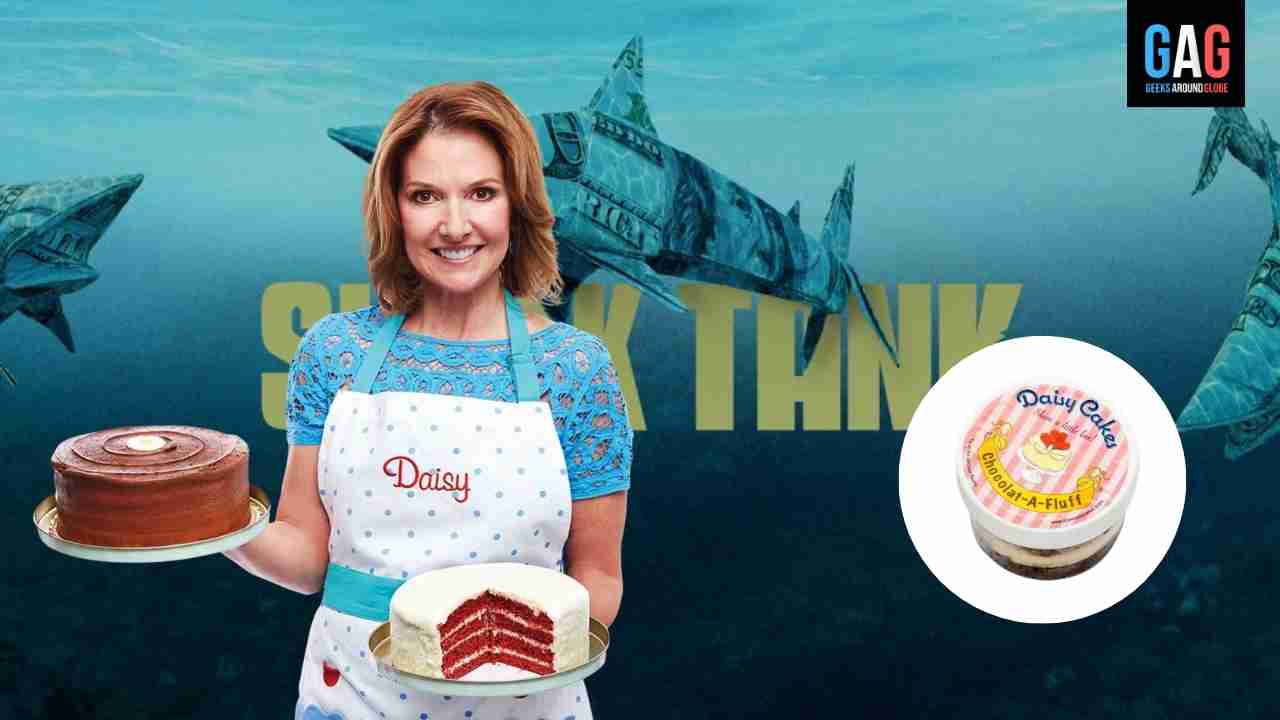
Kim Nelson of Daisy Cakes, one of the businesses in Season 2. Editorial collage: Geeks Around Globe.
24. Sweep Easy
Shane Pannell designed a broom with a retractable scraper to tackle debris that sweeping alone could not remove. He accepted $80,000 for 25% from Daymond John and Kevin Harrington.
Pannell later explained that the investment did not complete, and he continued developing the product. A current official purchase page provides evidence of an available offer. Our Sweep Easy update follows the product beyond the abandoned deal.
Episode 7 — April 29, 2011
25. Carsik Bib
Les Cookson’s bib included a pouch intended to contain the mess when a child became carsick. The Sharks passed.
Cookson later abandoned the bib and returned to Shark Tank with the separate LUCY drawing-tool business. That later appearance should not be counted as another Season 2 pitch or a continuation of Carsik Bib sales. Our Carsik Bib update explains the founder’s change of direction.
26. Hydromax
Chris Spencer’s hydration system attached a water reservoir and drinking tube to football shoulder pads. He accepted an offer from guest Shark Jeff Foxworthy.
The research did not settle the final investment’s closing or establish a current original sales channel. It did establish an important identity distinction: this sporting-goods product is not Hydromax USA, the infrastructure-services company. Our Hydromax article addresses that company mix-up.
27. Ecomowers
Andy Humphrey presented a manual reel-mower concept through his Ecomowers business and left without a deal.
His earlier e-commerce interview describes a business selling other manufacturers’ equipment. That existing retail activity should not be confused with sales of his own proposed mower. Current availability of the original line could not be verified.
28. Games2U
Brothers David and Stuart Pikoff brought mobile entertainment to parties and events through Games2U. They left without an investment.
The official site continues to offer event enquiries and activities. This is a service business as much as an equipment business: the customer pays for an experience delivered locally. Current franchise totals and revenue remain unverified.
Episode 8 — May 6, 2011
29. Origaudio
Jason Lucash and Mike Szymczak pitched portable audio products and accepted Robert Herjavec’s $150,000 offer for 15%.
The brand later expanded into customizable promotional products. HPG acquired Origaudio in 2018, and HPG maintains an Origaudio catalogue. That documented acquisition is a clearer milestone than treating the televised offer as proof of final Shark ownership.
30. Original Man Candle
Johnson Bailey presented novelty candles built around food and humorous scents. The Sharks did not invest.
The brand’s website has carried a statement that Bailey no longer owns or represents the company. Current order fulfillment was not verified. The founder’s original pitch and the later brand presence should therefore be described separately.
31. The Original Runner Company
Julie Goldman’s fabric aisle runners were designed for weddings and events, with non-slip backing and custom designs. She declined a proposal for a controlling stake and left without a deal.
The company’s official shop continues to offer standard runners and custom enquiries. Its business combines a physical product with personalization for a specific occasion. Read our Original Runner Company update for more on the pitch and later business.
32. HyConn
Jeff Stroope demonstrated quick-connect hose couplings and accepted Mark Cuban’s $1.25 million acquisition proposal, which also included employment and royalty arrangements.
Stroope later confirmed that the deal did not close. He also posted about Hy-Conn at an industry event in 2024, making blanket claims of a long-completed shutdown unreliable. Current production remains unconfirmed. Our HyConn update examines the difference between the headline offer and what followed.
Episode 9 — May 13, 2011
33. CitiKitty
Rebecca Rescate developed a kit intended to teach cats to use a household toilet. She accepted Kevin Harrington’s $100,000 for 20%.
A Sony Pictures Television announcement confirms a post-show investment and follow-up. CitiKitty’s official store continues to list the kit. Our CitiKitty update covers that business; Rescate’s later HoodiePillow pitch was a separate venture.
34. Samson Martin
Kim Preis’s maternity shirts displayed a baby’s due month or season. She left without a deal while seeking help expanding her clothing business.
A current original storefront could not be established. That supports caution about present availability, but not an invented closure date or acquisition story. Our Samson Martin update covers the brand and its appearance.
35. Aldo Orta Jewelry
Aldo Orta wanted to bring his jewelry designs to a wider audience. He accepted a combined $180,000 offer for 45% from Barbara Corcoran and Kevin Harrington.
His official biography confirms a later QVC run, and his online collection includes jewelry and commissions. Accounts conflict about whether the Shark investment closed. The documented retail history stands on its own without resolving that uncertainty through guesswork.
36. One Sole
Pharmacist Dominique McClain Barteet developed shoes with interchangeable tops, giving customers different looks from one sole base. She accepted Daymond John’s $500,000 for 35%.
In a 2012 interview, Barteet described John as her partner and discussed his help. The brand retains an official website. Our One Sole update provides the longer story; current revenue is not independently established.
The largest offers and what happened after filming
HyConn’s $1.25 million proposal was the largest headline offer among the season’s original pitches. Comparing it with smaller agreements reveals why an offer ranking alone can mislead.
The table below compares three of the season’s largest accepted proposals. The final column records the available post-show evidence.
| Company | Accepted on-air proposal | Shark(s) | What is established afterward |
|---|---|---|---|
| HyConn | $1.25 million acquisition proposal, with employment and royalty arrangements | Mark Cuban | Founder confirmed it did not close |
| First Defense Nasal Screens | $750,000 for 30%, plus royalty | Mark Cuban, Kevin O’Leary and Daymond John | Manufacturer’s founder-approved account says no Shark investment was received |
| One Sole | $500,000 for 35% | Daymond John | Founder subsequently described an ongoing partnership |
The season also contains smaller agreements with documented follow-through. Daisy Cakes continued working with Barbara Corcoran. Sony’s CitiKitty follow-up described Kevin Harrington’s investment. These examples establish why “accepted an offer” and “received funding” need separate answers.
Which Season 2 businesses continued, changed or closed?
The most useful status question is what evidence exists now. A familiar brand name can survive an acquisition, and a founder can move into a different business.
| Business | Evidence of a later development | What readers can conclude |
|---|---|---|
| Origaudio | HPG acquisition announcement and current HPG catalogue | The brand continued under a new owner |
| Fridge Fronts | Best! Appliance Skins identifies its Fridge Fronts origins | The product business continued under a successor identity |
| Mod Mom Furniture | Founder said she closed the business chapter in 2023 | A dated founder account supports the endpoint |
| Carsik Bib | Founder’s later company said he abandoned the bib | His subsequent LUCY business is a separate venture |
| Copa di Vino | Acquisition and later licensing disclosures | Corporate restructuring does not automatically mean the brand vanished |
| CaddySwag | Former official domain offered for sale at the research check | Current operations cannot be inferred from the old website |
For shopping, start with the current brand channel and confirm stock before ordering. Daisy Cakes lists cakes, CitiKitty lists its training kit, and SweepEasy has a product purchase page. Prices, delivery areas and inventory can change.
A surviving marketplace listing may represent old stock or resale. A missing website may indicate a domain change. Neither observation, by itself, settles whether a company is legally closed.
What entrepreneurs can learn from Season 2
An investment has to work after the cameras stop
Wurkin Stiffs, Tippi Toes, Fridge Fronts and HyConn accepted offers that did not become completed investments. The founders still had to agree on ownership, responsibilities and how the company would grow.
For a founder, the practical question is whether the proposed partner’s approach fits the business. Television exposure cannot resolve a disagreement over licensing or control.
More orders can make an expensive operating model harder
Toygaroo’s rental model required toys to move repeatedly between the business and its customers. Phil Smy’s account describes the pressure created by sourcing and shipping.
That example does not establish why every rental company struggles. It does show why a founder needs to calculate the full cost of serving an additional customer. Revenue growth is less useful when handling, inventory and delivery costs absorb it.
Distribution can change the shape of a business
Origaudio’s path into promotional products and HPG ownership differs from the original consumer-audio pitch. Fridge Fronts continued through a successor brand. Lightfilm became associated with PowerDecal.
A company update therefore needs to follow the product, owner and sales channel over time. Searching only for the original name can miss the more important development.
A no-deal result leaves the business question open
Games2U, PureAyre and The Original Runner Company retain company channels despite leaving without investments. That does not prove the Sharks made a mistake or establish current profitability.
It shows that the television decision was one event. Customers, pricing, delivery and continued execution determine what happens next. For a comparison with a much later lineup, our Season 17 products and episode guide follows another group of founders through those same questions.
Shark Tank Season 2 FAQs
How many products appeared in Shark Tank USA Season 2?
Season 2 featured 36 original business pitches across nine broadcast episodes. Follow-up segments about companies from earlier episodes are excluded.
How many Season 2 companies got deals?
Nineteen companies accepted offers on television, while 17 left without a deal. The accepted-offer count is not a count of completed investments.
What was the biggest offer in Season 2?
HyConn accepted Mark Cuban’s $1.25 million acquisition proposal, with additional employment and royalty arrangements. Founder Jeff Stroope later confirmed that it did not close.
Was Mark Cuban in Season 2?
Yes. Mark Cuban appeared as a guest Shark. Jeff Foxworthy also appeared as a guest investor during the season.
Why do some websites put Fridge Fronts in Season 1?
Its episode was produced during Season 1 but first broadcast on April 15, 2011, during Season 2. This guide follows original broadcast order.
Is Copa di Vino a Season 2 or Season 3 company?
It appeared in both. James Martin’s original pitch belongs to Season 2; his return in Season 3 was a separate appearance.
Which Season 2 products can you still find online?
Examples with company or brand channels found during this research include Wurkin Stiffs, Daisy Cakes, CitiKitty, PureAyre, Vurtego and SweepEasy. Check current stock and delivery terms with the seller.
Did every company with a failed Shark deal go out of business?
No. Wurkin Stiffs and Fridge Fronts continued beyond uncompleted agreements. A failed investment negotiation and a business closure are different events.
Sources and research method
This guide combines the episode roster with individual research on all 36 companies. Historical pitch outcomes were checked separately from later funding, acquisitions and current product channels.
Founder interviews, company announcements and public filings receive priority. Examples include the Mod Mom founder’s closure account, the Flipoutz acquisition filing, and Sony’s CitiKitty follow-up.
Current availability was researched on November 18, 2026. The guide omits unsupported net-worth estimates, disputed pitch figures and unverified closure dates. Where evidence cannot establish an investment’s closing or a product’s present availability, that uncertainty remains visible.
The weekly question
From obsession to clarity — one original question every week.
We answer one noisy topic at a time, in full. No daily roundup, no thread bait — just the question, the principles, and the system.