
Wake N’ Bacon After Shark Tank: Did the Bacon Alarm Ever Launch?
What happened to Matty Sallin’s Wake N’ Bacon? Explore the Shark Tank pitch, no-deal result and evidence on whether the bacon alarm clock ever launched.

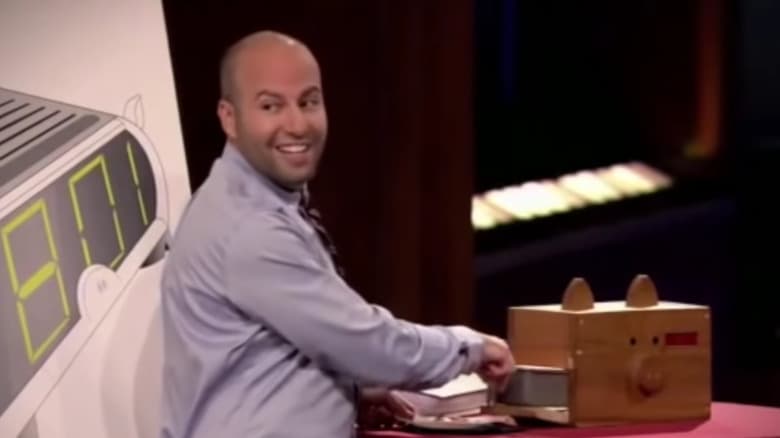
An alarm clock usually gives you a reason to get out of bed: stop the noise. Wake N’ Bacon offered a different incentive. Its pig-shaped wooden prototype warmed bacon so the smell could announce breakfast.
That made Matty Sallin’s invention easy to remember on Shark Tank. It also made the investment question more complicated than the demonstration. A working object in a studio and an appliance that people can buy, leave beside a bed and use every morning are different milestones.
For viewers returning to the pitch, the main question is whether that memorable demonstration became a real retail product. The available record documents the concept and the television appearance. It does not establish a mass-market launch, a current store or a reliable business valuation.
Wake N’ Bacon belongs in the Shark Tank Season 2 product guide as a prototype that left without investment. Its story is about the distance between an inventive idea and a finished consumer product.
Quick answer: Matty Sallin asked the Sharks for $40,000 for 20% of Wake N’ Bacon in Season 2, Episode 2. He did not receive a deal. The product combined an alarm clock with a chamber for warming bacon, but concerns about taking the prototype into consumers’ homes overshadowed its novelty.
Later reporting found no evidence that Wake N’ Bacon reached mass production. Our November 2026 review likewise did not establish an official retail launch or a current place to buy Sallin’s original device. That does not justify inventing a company closure date or treating the pitch’s implied valuation as personal wealth.
Current status: No verified commercial launch or current retail availability for the original Wake N’ Bacon prototype.
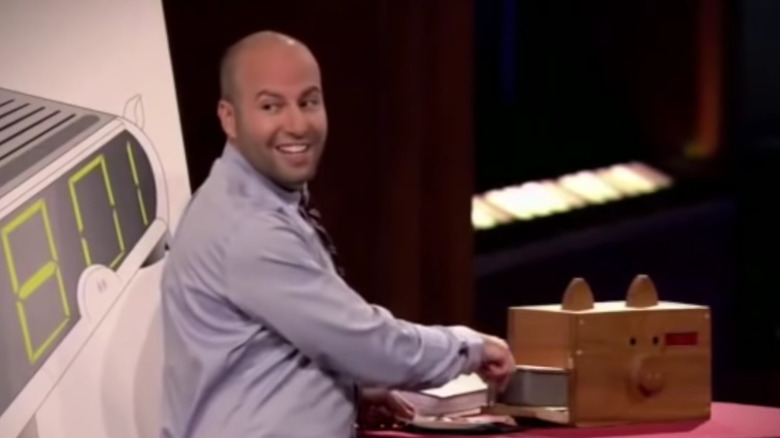
Pitch image: ABC/Shark Tank, via Mashed.
What was Wake N’ Bacon, and who invented it?
Matty Sallin created Wake N’ Bacon. A 2005 interaction-design collection documents the project and credits his 2004 work at New York University’s Interactive Telecommunications Program.
The concept gave an everyday object a sensory twist. Instead of relying only on sound, it linked the wake-up time to the aroma of breakfast. The wooden pig shape made the function visible before anyone explained the electronics.
A 2008 C-VILLE interview with Sallin shows that the idea had attracted attention before Shark Tank. That coverage described the prototype and his interest in finding manufacturing help. The television appearance was therefore a later opportunity to develop an existing design, rather than the invention’s starting point.
The distinction matters when reading summaries that assign Wake N’ Bacon a conventional company history. A documented design project is not automatically a business with customers, employees and annual revenue. The evidence supports Sallin’s role as creator; it does not support filling those other fields with estimates.
What happened during the Shark Tank pitch?
Sallin sought $40,000 for a 20% stake. He left without an investment.
Shark Tank Blog’s pitch account describes the concerns around turning the prototype into a consumer appliance. Its unusual combination of a clock and a heating chamber made product readiness central to the discussion.
| Pitch detail | Verified account |
|---|---|
| Creator and presenter | Matty Sallin |
| Appearance | Season 2, Episode 2 |
| Product | Bacon-warming alarm-clock prototype |
| Investment requested | $40,000 |
| Equity offered | 20% |
| Result | No deal |
| Subsequent Shark investment | None verified |
The proposed investment should be understood as an asking price. Dividing $40,000 by 20% produces an implied $200,000 valuation for the proposed transaction. No investor accepted it on the show, and it is not evidence of the company’s assets, later market value or Sallin’s net worth.
That is a different outcome from the accepted television offers made to Wurkin Stiffs and Tippi Toes. Those stories require a second question about whether an on-air agreement closed. Wake N’ Bacon did not reach that stage.
Why was the prototype difficult to turn into a product?
The pitch created two separate questions: could the device demonstrate its idea, and was there enough evidence to invest in selling it?
A novelty prototype can answer the first without settling the second. Its creator can supervise a demonstration, explain its intended use and adjust the setup. A retail appliance has to work for buyers who were not present during its development.
The following is an editorial assessment of that gap, rather than a claim that Sallin completed or failed a particular test.
| Commercial question | Why it mattered for this concept |
|---|---|
| Repeatable manufacture | A handcrafted demonstration does not establish a production process |
| Everyday operation | Buyers need instructions and predictable performance |
| Product testing | A device incorporating heat needs an appropriate evaluation before sale |
| Maintenance | A food-related device raises practical cleaning and upkeep questions |
| Support | A seller needs a way to address problems after delivery |
These are questions an investor would need answered before turning attention into orders. They also help explain why a funny, memorable product can remain commercially unresolved.
It would go beyond the evidence to claim that every possible design was unworkable. The available record concerns the prototype Sallin presented and the investment he sought. It does not document a finished, independently assessed retail version.
What happened to Wake N’ Bacon after Shark Tank?
Latest update — November 18, 2026: We could not verify a commercial launch, a current official store or mass production of Sallin’s original Wake N’ Bacon.
Mashed’s 2022 follow-up also reported no evidence that the device was being marketed and described it as never having reached mass production. That is a dated report supporting the absence of a documented launch, rather than a financial statement or a formal notice of dissolution.
The original creator-page address cited in earlier coverage was unavailable when checked for this update. A missing page is not proof that a legal company closed on a particular date.
| Stage | What the record establishes |
|---|---|
| 2004 | The credited design-project origin |
| 2008 | Pre-show press coverage and discussion of manufacturing |
| 2011 | A Shark Tank pitch without a deal |
| 2022 | Reporting found no mass-market product |
| November 2026 review | No current retail launch independently verified |
Wake N’ Bacon should therefore be described cautiously: a documented prototype with a television appearance and no verified commercial release. Calling it a company that “closed in 2011” would imply a precise business event the sources do not establish.
Names also need checking. A restaurant or another business using similar bacon-themed wording is not evidence that Sallin’s clock returned to the market.
Can you buy Wake N’ Bacon, and what is it worth?
We could not verify a current retailer selling the original device. This article therefore has no purchase link or recommended seller for it.
A photograph, a television clip or an old product feature proves that the concept existed. None proves that a seller can currently supply a finished unit. A new listing would need to be connected to the actual inventor or a documented manufacturer before it could support a buying recommendation.
There is also no verified current net-worth figure for Wake N’ Bacon. The $200,000 figure sometimes associated with it is simply the arithmetic implied by the investment request.
| Figure or claim | What readers should understand |
|---|---|
| $40,000 | Amount Sallin requested |
| 20% | Ownership offered in that request |
| $200,000 | Implied asking valuation, not an accepted investment |
| Current revenue or profit | Not independently verified |
| Current company value | Not independently verified |
| Founder’s personal wealth | Not established by the pitch |
The financial question is especially easy to misread for a prototype. An asking valuation expresses the terms an entrepreneur wants. It does not establish that an operating business later generated sales.
Compare Chef Big Shake’s post-show story: another no-deal outcome, but one with separately documented later commercial activity. “No deal” alone cannot tell readers what happened next. Each product needs its own evidence.
Frequently asked questions
Who invented Wake N’ Bacon?
Matty Sallin. The project is documented in design material crediting his work at NYU’s Interactive Telecommunications Program.
Did Wake N’ Bacon get a Shark Tank deal?
No. Sallin requested $40,000 for 20%, but no Shark invested during the pitch.
Did the bacon alarm clock ever go on sale?
We have not verified a commercial launch of the original device. Later reporting likewise found no mass-produced retail product.
Was Wake N’ Bacon worth $200,000?
That was the valuation implied by the request, not a confirmed sale price or current net worth.
When did Wake N’ Bacon close?
A formal closure date has not been verified. The evidence supports describing it as a prototype without a documented commercial launch.
Is a business with the same name connected to the Shark Tank invention?
A similar name is not enough to establish a connection. Look for documentation linking it to Matty Sallin and the original alarm-clock project.
The weekly question
From obsession to clarity — one original question every week.
We answer one noisy topic at a time, in full. No daily roundup, no thread bait — just the question, the principles, and the system.


