
The Christmas Carolers After Shark Tank: Barbara’s 60% Deal, Expansion and Current Status
The Christmas Carolers remains active after Shark Tank, but Barbara Corcoran’s deal is unconfirmed. Here is the evidence on expansion, pricing and current status.
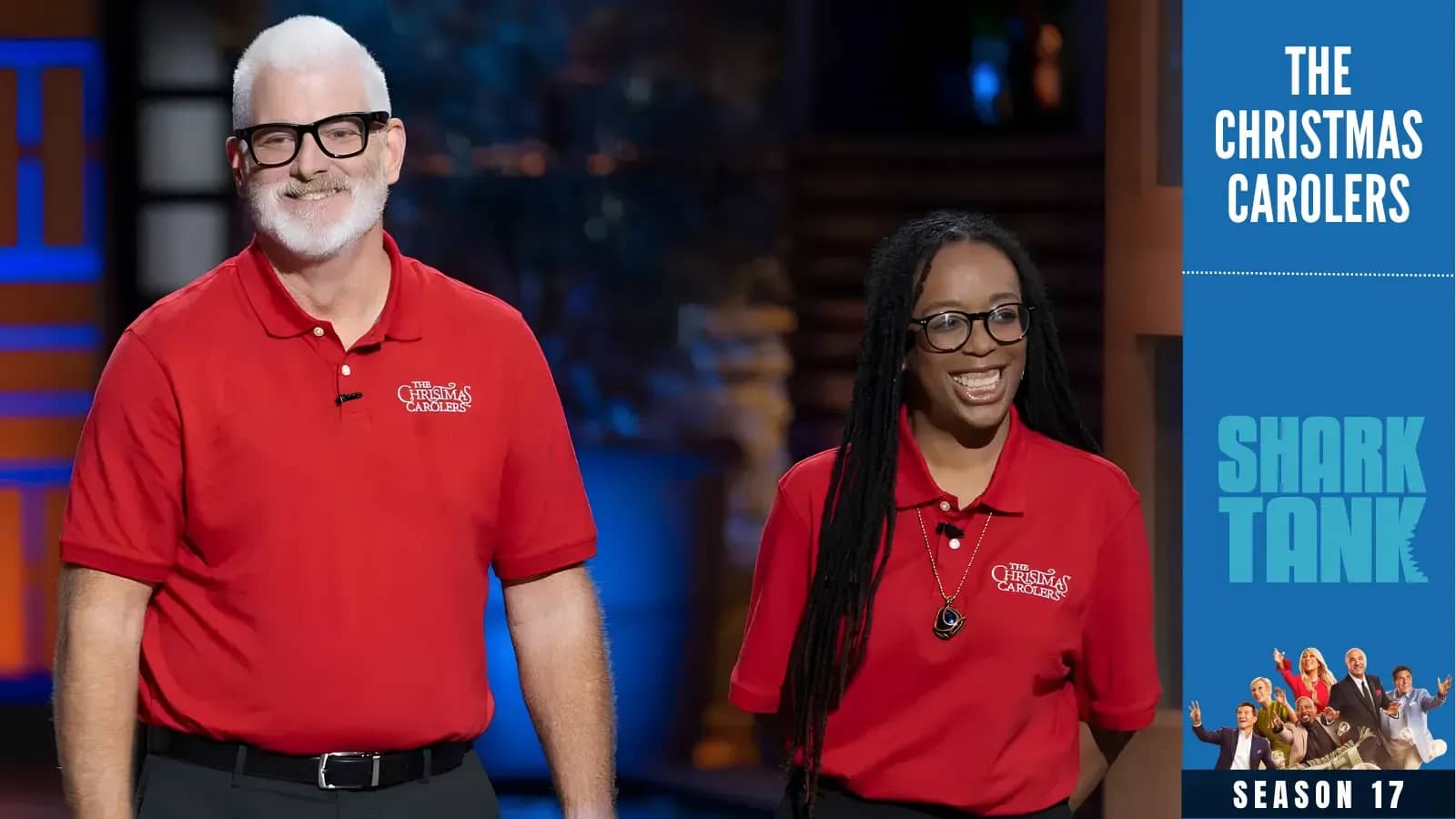
The Christmas Carolers entered Shark Tank as a 29-year-old seasonal business with more passion than marketing reach. Less than a year after its episode aired, the more interesting story is whether the company can reproduce a polished live performance across dozens of local markets.
The available evidence points to meaningful expansion. The company pitched from a 14-city base, while its current website lists 41 operating markets. Company materials promote an even larger 50-plus-city footprint. It also has active booking tools, current leadership pages and dedicated local directors.
The financial picture is less clear. No reliable post-show revenue has been disclosed, and Barbara Corcoran’s televised majority-ownership agreement has not been publicly confirmed as closed.
That makes The Christmas Carolers a useful case study in seasonal demand, local-service scaling and the price founders sometimes pay for an experienced growth partner.
Quick answer: The Christmas Carolers remains active as of October 2026. Its live directory lists 41 cities, and the company is booking quartets, sextets and octets for the 2026 holiday season. Kenyon Ross and Jessica Harris accepted an on-air agreement giving Barbara Corcoran 60% of the business for $125,000, plus a $125,000 line of credit. However, no reliable public source confirms that the agreement completed due diligence.
Product snapshot
| Field | Details |
|---|---|
| Company | The Christmas Carolers, LLC |
| Founder | Kenyon Ross |
| Sales manager | Jessica Harris |
| Customer service manager | Izzy Ross |
| Product | Professional Victorian-style a cappella carolers |
| Industry | Live entertainment and event services |
| Shark Tank episode | Season 17, Episode 7; December 10, 2025 |
| On-air agreement | $125,000 for 60% plus a $125,000 line of credit from Barbara Corcoran |
| Deal status | Agreed on air; closing unconfirmed |
| Current status | Active and expanding; current revenue unverified |
| Website | The Christmas Carolers |
Latest update — October 2026
The active location directory lists 41 cities. Company marketing claims a broader 50-plus-market footprint. The website is accepting 2026 event bookings. New sales, customer-service and social-media roles appear on the team. No verified post-show revenue or deal-closing announcement has surfaced.
What Is The Christmas Carolers?
The Christmas Carolers supplies professional singing groups for corporate parties, hotels, shopping centers, private celebrations and community events. The standard product is not simply live music. It combines four-part a cappella harmony with coordinated Victorian-style costumes and a recognizable holiday presentation.
Customers can book four-, six- or eight-person ensembles. The quartet is positioned as the standard option, while larger groups suit ballrooms, festivals and high-traffic venues.
Current local booking pages show a standard one-hour quartet starting at $700. Premium holiday dates can start at $1,400. Customers may also pay travel charges when performers travel beyond the included service radius.
The product solves a coordination problem. An event planner does not have to find four compatible singers, confirm musical arrangements, source costumes and manage rehearsals. The company packages those tasks into one booking.
That convenience explains why corporate events matter more than spontaneous door-to-door caroling. An individual household may view $700 as a luxury. A hotel or employer can treat the same fee as part of a larger entertainment budget.
The service fits the wider group of holiday businesses featured in Shark Tank Season 17, including McMiLLER, Bauble Stockings and Edible Architecture.
Who Founded The Christmas Carolers?
Kenyon Ross started The Christmas Carolers in Birmingham, Alabama, in 1996. ABC’s Episode 7 profile says the original group included 40 singers from Samford University.
The company’s current leadership page identifies Kenyon Ross as owner, Jessica Harris as sales manager and Izzy Ross as customer service manager. The company’s press materials separately credit Kenyon and Ami Ross as its original founders, which appears to describe the business’s origin rather than its current staff titles. Jessica joined Ross in the Tank as a key sales representative.
During the pitch, Ross said he still worked full-time in medical sales and did not take a salary from the caroling business. Harris said she worked part-time and handled the sales calls and customer communication. Ross told the Sharks he planned to make her an owner and bring her into a larger role.
That division of labor exposed an important operating challenge. The company was growing, but Ross still had a separate full-time job and Harris was part-time at filming. The current leadership page shows a clearer division of responsibility: Ross owns the business, Harris leads sales and Izzy Ross manages customer service.
| Period | Milestone |
|---|---|
| 1996 | Company begins in Birmingham with a Samford University singing group. |
| 2022–2024 | Pitch-reported annual sales rise from about $60,000 to $255,000. |
| 2025 | Ross and Harris pitch together on Shark Tank. |
| 2026 | Ross and Harris remain listed in company leadership as the network expands. |
What Happened on Shark Tank?
Ross and Harris asked for $250,000 for 20%, valuing the business at $1.25 million. Their performers demonstrated the service in costume, assisted by an Ebenezer Scrooge character.
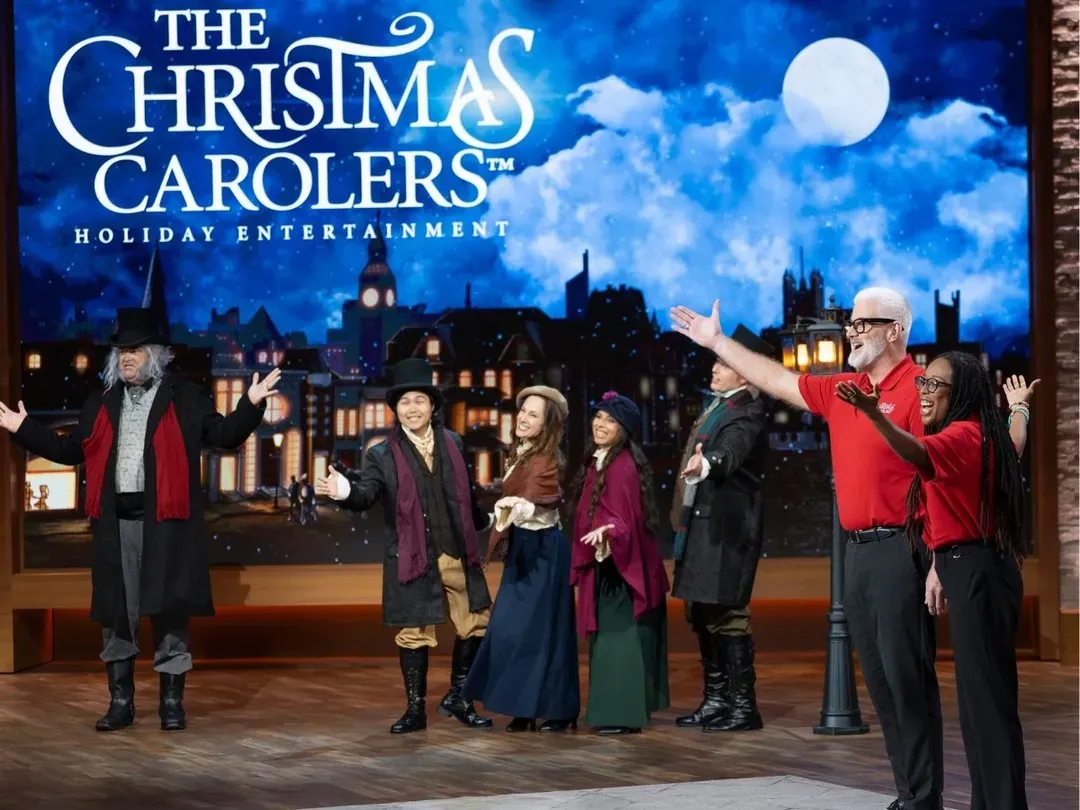
The singing won attention. The financial history created the harder conversation.
Ross reported more than $1 million in lifetime sales since 1996. Recent results were stronger: approximately $60,000 in 2022, $90,000 in 2023 and $255,000 in 2024. He also reported a 20% net margin in 2024, equivalent to roughly $50,000.
The Sharks questioned whether a business earning about $50,000 could justify a $1.25 million valuation. They also challenged a plan to jump from 14 cities to 50 while the company had only hundreds of social-media followers.
I think this is really beautiful, but it’s not really investable.
Daniel Lubetzky
I’m really looking for an investor. I’m not willing to give away ownership of the business.
Kenyon Ross
Barbara Corcoran saw a different opportunity. She already understood seasonal entertainment through Hire Santa, another company in her portfolio. Instead of accepting Ross’s valuation, she offered to purchase the entire company for $125,000 and provide a separate $125,000 loan.
Ross refused to surrender the business. The final televised structure gave Barbara control while keeping Ross and Harris involved.
| Deal point | Terms |
|---|---|
| Original ask | $250,000 for 20% |
| Original implied valuation | $1.25 million |
| Barbara’s first offer | $125,000 for 100% plus a $125,000 loan |
| Final on-air agreement | $125,000 for 60% plus a $125,000 line of credit |
| Announced ownership | Barbara 60%, Ross 30%, Harris 10% |
| Closing status | Unconfirmed |
The headline “$250,000 deal” needs context. Only $125,000 purchased equity. The remaining $125,000 was debt capacity for the company.
How Does The Christmas Carolers Make Money?
The company operates as a managed local-service network. Central operations attract customers, provide quotes, collect deposits and maintain the brand. City directors and local singers fulfill each event.
This structure avoids flying one national cast around the country, but every additional city requires reliable talent and supervision.
| Component | Analysis |
|---|---|
| Customers | Corporations, hotels, retailers, event planners, municipalities and private hosts. |
| Value proposition | A coordinated, costumed live performance from one booking. |
| Revenue | Performance fees, ensemble upgrades, premium dates, travel charges and multi-event contracts. |
| Sales channel | Direct online booking and event marketplaces. |
| Fulfillment | Local singers managed through city directors. |
| Risks | Seasonality, local quality control, cancellations, recruitment and weak name distinctiveness. |
The model can generate attractive short-term cash because customers usually book before an event. Current terms require a 50% deposit or full payment to secure a date.
However, the compressed calendar raises risk. A missed December booking cannot be replaced easily in March. Weather, illness and performer shortages can affect a large percentage of annual revenue within a few weeks.
The company also needs strong local quality controls. A customer is buying the national brand, even though a local cast delivers the experience.
What Happened After Shark Tank?
The company’s geographic expansion is the clearest post-show result. At filming, Ross and Harris described a 14-city business. By the December 2025 broadcast, ABC described more than 25 cities and nearly 300 performers. As of October 2026, the live location directory identifies 41 cities.
The company’s promotional materials claim 50–52 markets. The difference may reflect markets under development, duplicate South Florida territories or locations that have not yet received complete public pages. For that reason, 41 is the safer count for confirmed website locations.
| Evidence | Finding |
|---|---|
| Website | Active |
| Booking tools | Active |
| Confirmed location pages | 41 |
| Wider company claim | 50–52 markets |
| Product availability | Quartets, sextets and octets bookable |
| Leadership | Ross and Harris remain listed |
| Post-show revenue | Not disclosed |
| Barbara deal | Closing unconfirmed |
| Classification | Growing operationally; financial results unverified |
| Year | Milestone |
|---|---|
| 1996 | Company begins in Birmingham. |
| 2022 | Approximately $60,000 in pitch-reported sales. |
| 2023 | Approximately $90,000 in pitch-reported sales. |
| 2024 | Approximately $255,000 in pitch-reported sales. |
| 2025 | Company pitches from a 14-city base. |
| December 2025 | Episode airs; ABC reports more than 25 cities. |
| 2026 | Live directory reaches 41 cities. |
No reliable source confirms that Barbara became the legal majority owner. The continued use of “owner” beside Ross’s name does not prove the deal failed; titles can remain informal after an investment. Without an announcement or founder interview, the correct classification is unclear.
Where Can You Hire The Christmas Carolers?
The best place to begin is the company’s official website. Customers can choose a city, ensemble size, date and performance length.
A current local pricing page shows a four-person quartet starting at $700 for one standard hour, premium-date pricing from $1,400, ensembles of four, six or eight singers, discounts for large multi-hour bookings and additional travel charges outside the included radius.
Buyers should request a final quote because prices vary by city, date, duration and travel. They should also discuss sound equipment. A cappella singers may be difficult to hear in a crowded ballroom without microphones.
Public reception is encouraging but limited. The company’s Birmingham GigSalad listing shows a 4.78 rating from 14 reviews and 60 verified bookings.
Lessons From The Christmas Carolers’ Journey
The company’s first lesson is that seasonality does not automatically make a business weak. A short selling season can still work when customers book in advance and the operation keeps year-round fixed costs controlled.
The second lesson is that geographic reach is not the same as scale. Publishing a city page is easy. Recruiting dependable singers, generating local demand and preserving quality are the real work.
Third, social media was a genuine weakness, but it was not the whole business. Search traffic, event planners, referrals and repeat corporate clients may produce more valuable bookings than a large passive following.
Finally, founders should examine what a headline investment actually buys. Ross asked for growth capital while retaining 80%. The final on-air agreement offered less equity cash, introduced debt and transferred control. He preserved a role in the company, but not the control he initially defended.
The Christmas Carolers appears healthier operationally than it did in the Tank. Its current market footprint supports that conclusion. Yet expansion alone does not establish profitability, and Barbara’s ownership remains unconfirmed.
The strongest conclusion is measured: this is an active seasonal service that appears to be scaling, not yet a verified post-Shark Tank financial success.
Frequently Asked Questions
Is The Christmas Carolers still in business? Yes. The company has an active website, current booking tools and local service pages as of October 2026.
Did Barbara Corcoran’s deal close? The closing remains unconfirmed. Ross and Harris accepted Barbara’s terms on television, but no reliable post-show source located during research confirms completed due diligence.
What was The Christmas Carolers’ Shark Tank deal? Barbara offered $125,000 for 60% ownership and a separate $125,000 line of credit. Ross would retain 30%, while Harris would receive 10%.
How much did the founders originally ask for? They asked for $250,000 for 20%, implying a $1.25 million valuation.
Who founded The Christmas Carolers? Kenyon Ross founded the company in 1996. Company press materials also identify Ami Ross as an original founder. Jessica Harris later became the sales manager.
How much does it cost to hire The Christmas Carolers? Current local pages show a four-person quartet starting at $700 for one standard hour. Premium dates, larger ensembles and travel can increase the price.
How many cities does the company serve? The live directory listed 41 cities in October 2026. Other company materials claim 50–52 markets, so some locations may still be under development.
How does the company make money? It charges for live performances and earns additional revenue from larger ensembles, premium dates, longer bookings and travel-related fees.
The weekly question
From obsession to clarity — one original question every week.
We answer one noisy topic at a time, in full. No daily roundup, no thread bait — just the question, the principles, and the system.
More from Shark Tank USA Season 17
All season pitches
Shark Tank USA
Bauble Stockings After Shark Tank: Barbara’s Deal, Current Status and the Premium-Brand Risk

Shark Tank USA
McMiLLER After Shark Tank: Daniel Lubetzky’s Deal, Retail Growth, and the Viral-Game Risk
Shark Tank USA