
Don’t Worry Snacks After Shark Tank: Why Lori Greiner Asked for a Third
Santiago and Diego Arroyo asked for $500,000 for 5% and accepted the same check for a third of their snack brand. The product’s tiny serving size tells its own story.
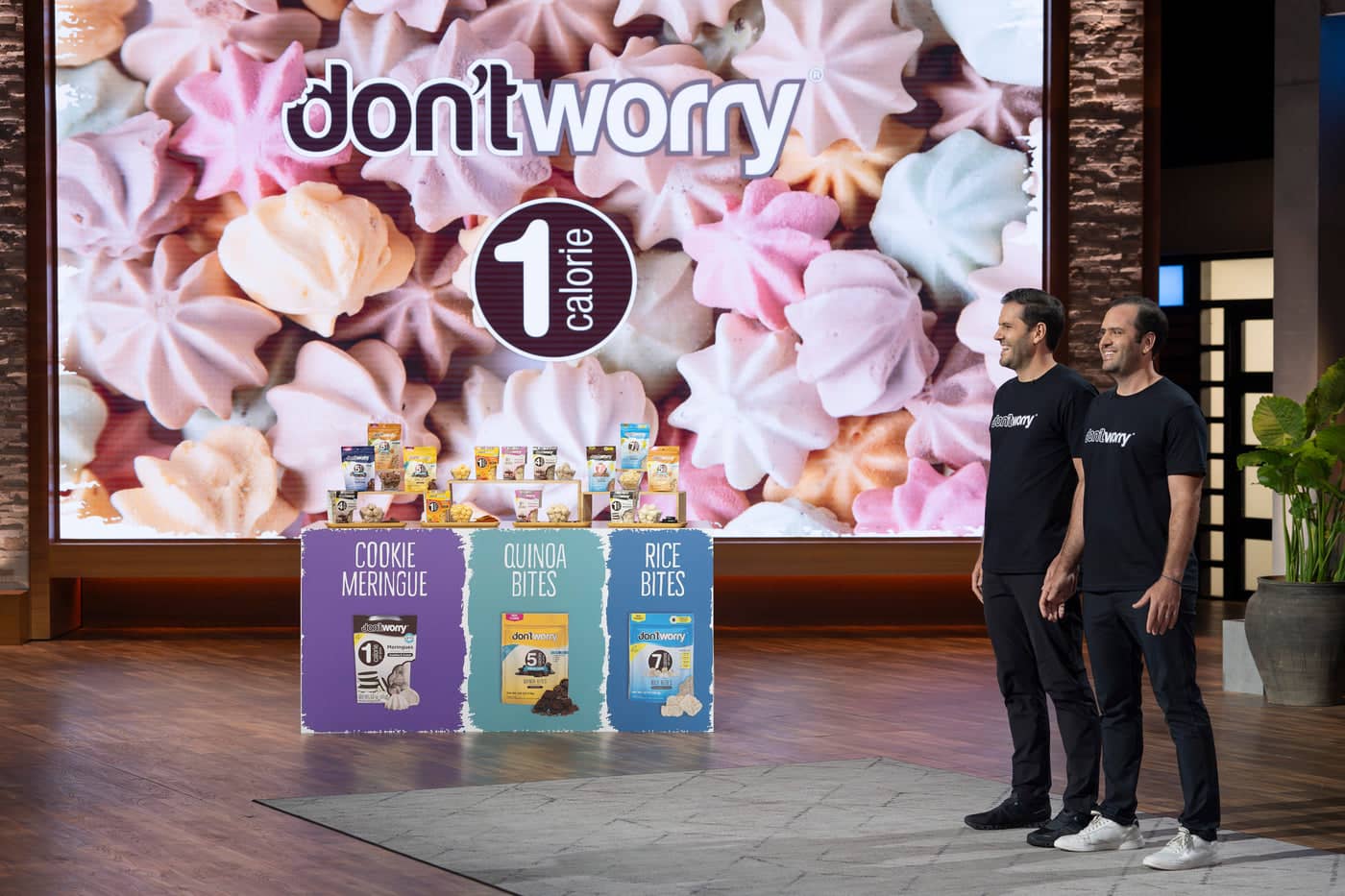
One calorie sounds like an astonishingly small number for a cookie. The missing word is piece. Don’t Worry Snacks makes miniature meringues, and the brand distinguishes its classic one-calorie pieces from filled versions with more calories. That distinction is simple once someone sees the product, making a bag of the snacks particularly well suited to an on-camera demonstration.
Brothers Santiago and Diego Arroyo Calero took the concept to Shark Tank asking for $500,000 for 5%. They accepted the same investment for approximately a third of the business. The product stayed the same throughout the conversation; the price attached to ownership changed dramatically. Understanding why means separating the brand’s existing sales from what the founders hoped a distribution partner would help it achieve.
On-air deal
Pitch outcome
$500,000 for approximately one third of the business with Lori Greiner.
$500,000 for 5%
Opening ask
Terms sought on Shark Tank.
1 calorie per piece
Product detail
The advertised figure for classic meringues, not a whole bag.
Product snapshot
| Field | Details |
|---|---|
| Company | Don’t Worry Snacks |
| Founder or founding team | Brothers Santiago and Diego Arroyo Calero |
| Product | Miniature meringues and other sweet snacks |
| Industry | Packaged snacks |
| Shark Tank episode | Season 17, Episode 18 • April 22, 2026 |
| Current status | The official collection lists classic and filled meringues. |
How does Don’t Worry Snacks work?
Meringue’s light texture lets the company sell small individual bites. The current meringue collection advertises classic pieces at one calorie each and chocolate-centered varieties at four. A shopper choosing a flavor should check the full serving size and the label on that specific bag. The individual-piece number is not the calorie count for a handful or a whole package.
The ability to show a single piece also creates a marketing advantage. A buyer does not need a lengthy explanation of how the product differs from a conventional cookie. They can see its size and try the texture. Whether they will buy another bag at full price is a separate test.
Who built Don’t Worry Snacks?
The brand’s origin story traces the concept to a family kitchen in Mexico in 2009. The brothers brought it before the American panel years later. The distinction matters because the episode was a financing and distribution opportunity for an existing food business, not the first attempt to discover whether anyone liked the product.
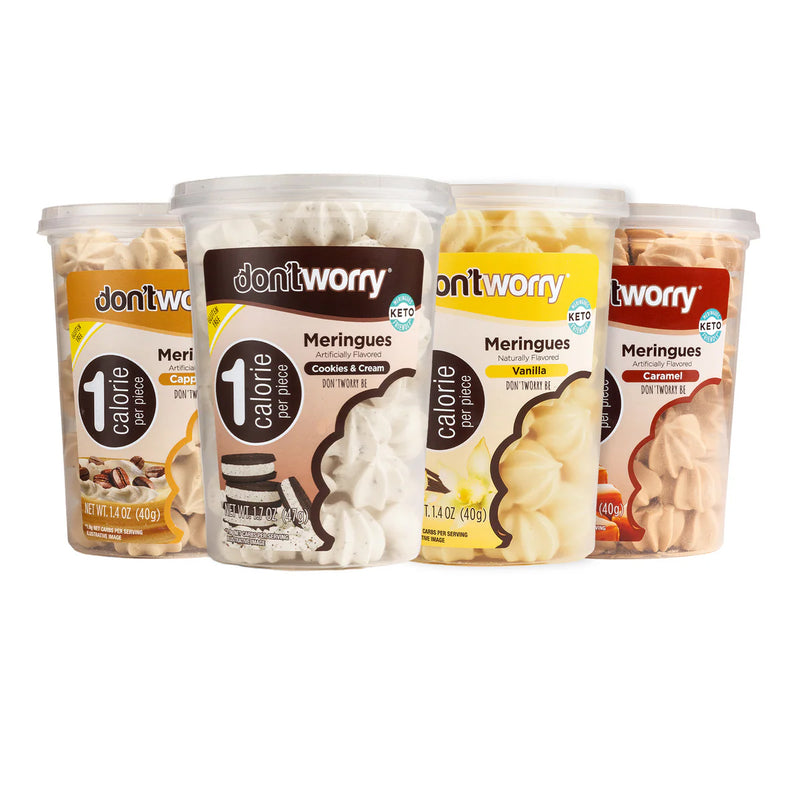
The Sweet Escape assortment featured in the brand’s episode collection.
“One calorie a piece” — Don’t Worry Snacks’ description of its classic meringues.
What happened to Don’t Worry Snacks on Shark Tank?
The original ask priced the company at $10 million post-money. The brothers discussed sales growth and an ambitious projection; pitch analysis describes the gap between prior results and a projected $7 million in sales as a source of skepticism. A projection belongs in a forecast, even when retailers or prospective partners have expressed interest.
Lori Greiner’s final offer was $500,000 for about 33.3%. The brothers accepted. The same check therefore implied approximately $1.5 million post-money instead of $10 million. Neither amount measures the company’s current net worth. What changed on television was the share the founders were prepared to give up for the capital and partner. Episode reporting.
Deal snapshot
| Negotiation point | What the evidence supports |
|---|---|
| Asked | $500,000 for 5% |
| On-air outcome | $500,000 for approximately one third of the business with Lori Greiner. |
| Key negotiating point | The equity increased from 5% to roughly one third without increasing the check. |
A tiny snack still has to support a full-size distribution business
A piece of meringue may weigh very little, but the business sells bags and bundles. Bags need packaging that protects the product, enough volume in a case to make transport worthwhile and a retail price that leaves money for the store. A high piece count can make the offer feel generous without telling an investor anything about the contribution per shipped case.
Online bundles let customers compare flavors and raise the amount spent in one transaction. A grocery shelf serves a different purpose: it can introduce the product to someone who would never search for it online. The case for a distribution partner depends on which channel can generate repeat purchases without excessive promotion.
Business model snapshot
| Business question | Answer |
|---|---|
| Product | Miniature meringues and other sweet snacks |
| Sales channel | Direct-to-consumer bundles, retail and specialty-food trade exposure. |
| Buyer decision | Compare bag weight, serving size, flavor and delivered cost. |
| Business question | Do in-store trials or bundled orders lead to profitable repeat purchases? |
What happened after Shark Tank?
Latest update — November 12, 2026. The current catalog offers several varieties and bundles. The brand also has a 2026 Summer Fancy Food Show exhibitor listing.
An exhibitor listing supports trade activity but does not confirm a new retail contract. Likewise, the company’s Shark Tank promotion included an April end date. Shoppers should use the live product price rather than assume that a launch-week discount is still available.
Current status evidence
| Evidence | What it establishes |
|---|---|
| Official offering | The official collection lists classic and filled meringues. |
| Pitch evidence | $500,000 for approximately one third of the business with Lori Greiner. |
| What is still unknown | Current profit, individual retail contracts and final private investment documents. |
Company timeline
| Date | Milestone |
|---|---|
| 2009 | The company traces its origins to a family kitchen in Mexico. |
| April 22, 2026 | The brothers agreed to Greiner’s one-third stake on air. |
| 2026 summer trade show | The brand appeared in the exhibitor directory. |
| November 2026 | Classic and filled meringue varieties remain listed online. |
What should a buyer check?
Pick the texture and flavor you want, then compare the nutrition panel per serving rather than treating the headline one-calorie claim as the serving size. Check the ingredient and allergen information for the exact filling. A mixed bundle can be useful for discovering favorites, while a single flavor makes it easier to compare cost by weight.
What can founders learn from Don’t Worry Snacks?
When a pitch relies on a small, memorable number, specify its unit. Here that principle applies twice: one calorie per piece, and half a million dollars for one third of the company. Leaving out the denominator changes the meaning of both the product and the deal.
The Season 17 episode guide lists the other pitches. Readers following the other investment decisions in this part of Season 17 can also find Parrot Finance, HUNDY!, Hot Girl Soda.
Frequently asked questions
Who presented Don’t Worry Snacks on Shark Tank? Brothers Santiago and Diego Arroyo Calero
What did the founders ask for? $500,000 for 5%.
What happened in the negotiation? $500,000 for approximately one third of the business with Lori Greiner.
Is Don’t Worry Snacks still operating? The official collection lists classic and filled meringues.
Are all the products one calorie per serving? No. The classic claim is per individual piece; filled varieties and full servings differ.
The weekly question
From obsession to clarity — one original question every week.
We answer one noisy topic at a time, in full. No daily roundup, no thread bait — just the question, the principles, and the system.
More from Shark Tank USA Season 17
All season pitches
Shark Tank USA
The Christmas Carolers After Shark Tank: Barbara’s 60% Deal, Expansion and Current Status
Shark Tank USA
pi00a After Shark Tank: How the Stein Family Took Deaf-Owned Pizza From Restaurant to Freezer
Shark Tank USA