
HUNDY! After Shark Tank: No Deal, Then a Different Group of Investors
The Sharks passed on HUNDY!’s frozen fruit pops. Co-founder Michelle Schor later named the backers who came aboard, including NBA player Trae Young.
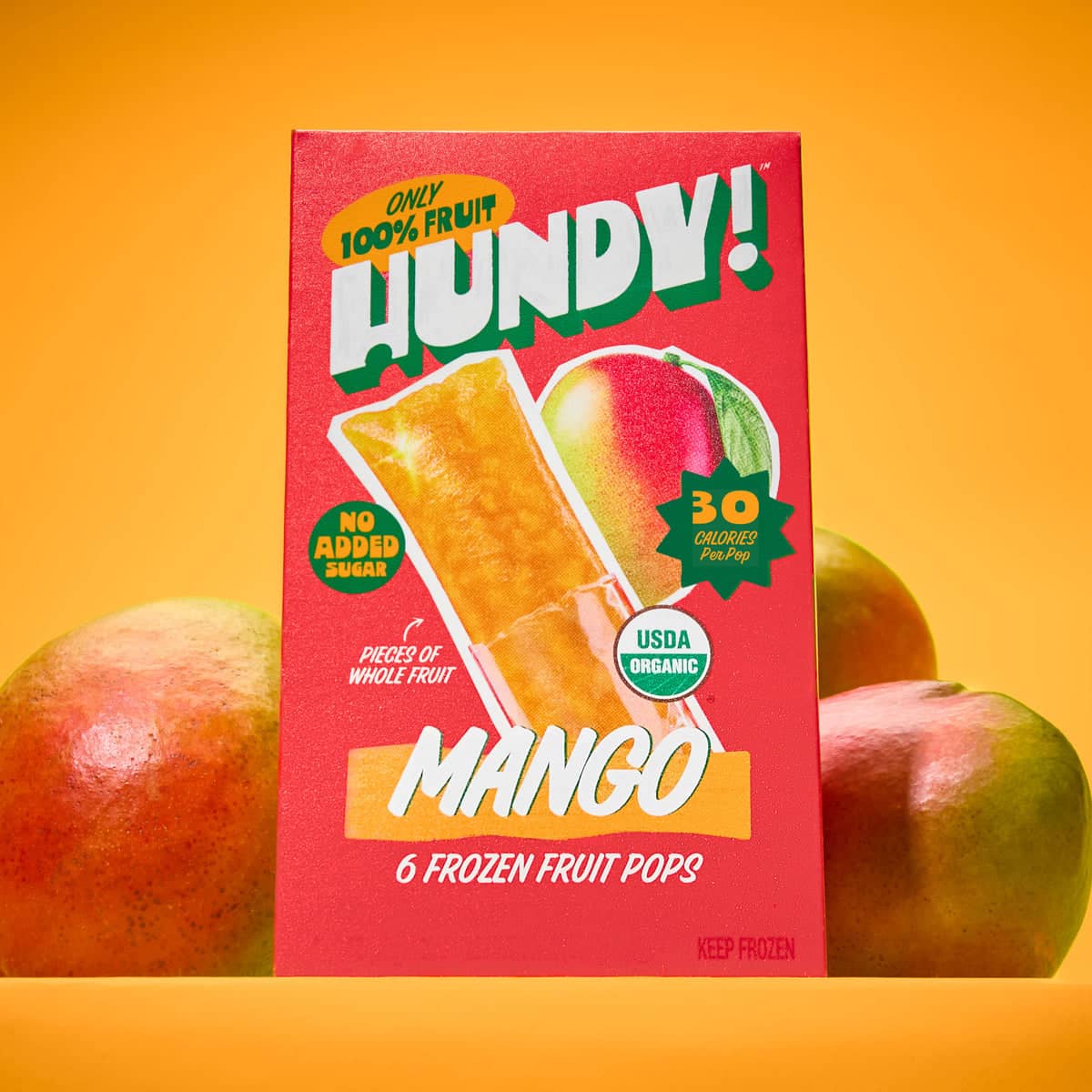
An ingredient list can fit on one line and still hide a difficult business. HUNDY! sells whole fruit in a frozen pop. Mangos and pineapples do not arrive with identical sweetness or texture, and once the finished product is frozen it has to stay that way all the way to the shopper’s freezer. The founders took an easy-to-explain snack and put it into one of the less forgiving parts of the grocery store.
They asked the Sharks for $300,000 and left without a deal. That was not the end of the fundraising story. In a later interview, co-founder Michelle Schor said the company raised money elsewhere and identified backers including basketball player Trae Young. The two events belong in the same case file, but they were not the same transaction.
No deal
Pitch outcome
No deal
$300,000 for 10%
Opening ask
Terms sought on Shark Tank.
One ingredient
Product detail
The brand’s central proposition is whole fruit without added sugar.
Product snapshot
| Field | Details |
|---|---|
| Company | HUNDY! |
| Founder or founding team | Co-founders Michelle and Aviv Schor pitched with business development partner Jayna DeCarlo. |
| Product | Frozen pops made from organic whole fruit |
| Industry | Frozen food |
| Shark Tank episode | Season 17, Episode 16 • April 8, 2026 |
| Current status | HUNDY! lists fruit pops and links to retail channels. |
How does HUNDY! work?
The official HUNDY! site describes organic whole-fruit pops with no added sugar. Its storefront includes mango and pineapple options and links to its retail and QVC presence. For shoppers, the difference lies in what goes into the pop: whole fruit rather than a flavored ice made primarily from sweetened liquid. No added sugar does not mean fruit contains no naturally occurring sugar.
For a manufacturer that promises a very short ingredient list, fruit variation is an operational challenge. Michelle explained that maintaining consistency across different fruit lots is part of the work. Extra ingredients that might otherwise smooth out differences are not part of the brand’s pitch.
Who built HUNDY!?
Michelle and Aviv Schor developed the concept after moving to Austin. In a firsthand interview with One Potato, Michelle recalled looking at the frozen novelty aisle and seeing space for a whole-fruit product. She traveled to film the show two weeks after giving birth. The Austin Business Journal identifies Jayna DeCarlo as a partner and vice president of business development alongside the two co-founders.
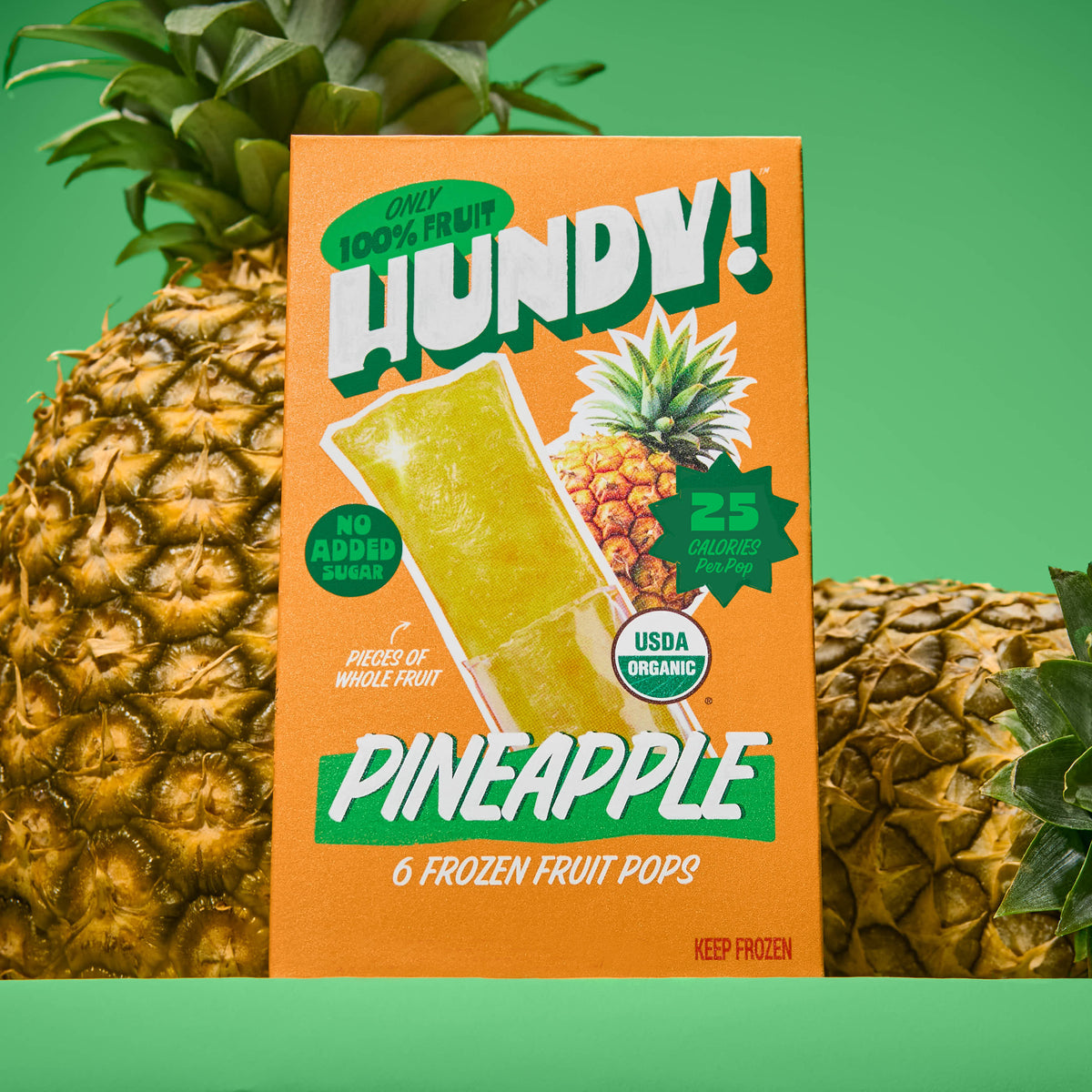
Pineapple pops from the brand’s product range.
“Cold chain is the hardest part of the business, harder than shipping a bag of chips.” — Michelle Schor, One Potato.
What happened to HUNDY! on Shark Tank?
The team asked for $300,000 for 10%, implying a $3 million post-money value. Episode reporting describes about $300,000 in sales and distribution in hundreds of stores. The Sharks questioned the valuation and how clearly the company had identified its core buyer. They did not make a deal.
A retail door is an opportunity to sell, not a guarantee of continued shelf space. For a frozen brand the distinction is especially important because freezer space is finite, and a case that moves slowly occupies space a buyer could give another product. Episode reporting.
Deal snapshot
| Negotiation point | What the evidence supports |
|---|---|
| Asked | $300,000 for 10% |
| On-air outcome | No deal |
| Key negotiating point | The panel questioned the price of the business and the core customer. |
A simple ingredient list meets a complicated cold chain
Whole-fruit positioning helps a parent understand the pop quickly. But the route to market involves sourcing fruit, processing, consistent freezing, storage, refrigerated transport and a retail freezer. Each step affects the economics of a product sold in individual servings. The brand has to earn enough across a case to cover more than the fruit itself.
A retailer may want evidence that households return after the first trial. An investor familiar with food distribution could help the founders solve a different set of problems from a celebrity who mainly brings awareness. That distinction gives context to Michelle’s report that the team looked for more specialized backers after the show.
Business model snapshot
| Business question | Answer |
|---|---|
| Product | Frozen pops made from organic whole fruit |
| Sales channel | Retail freezer aisles, brand bundles and a QVC shopping link. |
| Buyer decision | Compare pack size, delivered cost and whether the selected flavor fits the ingredient preference. |
| Business question | Can the brand maintain consistent fruit quality and profitable frozen distribution? |
What happened after Shark Tank?
Latest update — November 12, 2026. Michelle Schor says the company subsequently raised money and names Trae Young, Randy Spelling and Dr. Scott Cohen among the backers. The Austin Business Journal also reported a post-show sales spike and a celebrity investor.
The later investment was separate from the television negotiation. Michelle described a better valuation but did not publish the amount or ownership terms in the interview. The company’s site currently includes QVC as a shopping channel; a television retail placement is not the same thing as a Shark investment.
Current status evidence
| Evidence | What it establishes |
|---|---|
| Official offering | HUNDY! lists fruit pops and links to retail channels. |
| Pitch evidence | No deal |
| What is still unknown | Terms of the later financing and current profit per retail account. |
Company timeline
| Date | Milestone |
|---|---|
| 2020 | The Schors moved to Austin and began exploring the frozen-food opportunity. |
| April 8, 2026 | HUNDY! appeared on Shark Tank and left without a deal. |
| April 13, 2026 | Local business reporting documented investor interest and a sales response. |
| Later in 2026 | Michelle discussed the subsequent financing and named backers. |
What should a buyer check?
Check the ingredient label of the exact flavor and compare the number of pops per pack. Frozen shipping can make online and local grocery prices difficult to compare without calculating the full cost. If the draw is the short ingredient list, distinguish whole fruit from the separate question of how sweet a particular fruit tastes.
What can founders learn from HUNDY!?
A simple front-of-box claim can require considerable technical work. Investors and founders should follow the product past the tasting table: through production, cold storage, transport, retail turnover and repeat purchase. HUNDY!’s later fundraising also shows why a no-deal broadcast need not settle whether specialized investors will fund the company.
The Season 17 episode guide lists the other pitches. Readers following the other investment decisions in this part of Season 17 can also find Bloom, 9 STRAP, Nude Foods Market.
Frequently asked questions
Who presented HUNDY! on Shark Tank? Co-founders Michelle and Aviv Schor pitched with business development partner Jayna DeCarlo.
What did the founders ask for? $300,000 for 10%.
What happened in the negotiation? No deal
Is HUNDY! still operating? HUNDY! lists fruit pops and links to retail channels.
Did Trae Young invest as a Shark on the episode? No. Michelle names him among later backers, separate from the no-deal pitch.
The weekly question
From obsession to clarity — one original question every week.
We answer one noisy topic at a time, in full. No daily roundup, no thread bait — just the question, the principles, and the system.
More from Shark Tank USA Season 17
All season pitches
Shark Tank USA
The Christmas Carolers After Shark Tank: Barbara’s 60% Deal, Expansion and Current Status
Shark Tank USA
pi00a After Shark Tank: How the Stein Family Took Deaf-Owned Pizza From Restaurant to Freezer
Shark Tank USA