
Bloom After Shark Tank: Why Buy a Physical Key for a Phone App?
Bloom’s founders sold Daniel Lubetzky on a physical screen-time key. The product works by making a familiar decision less convenient.
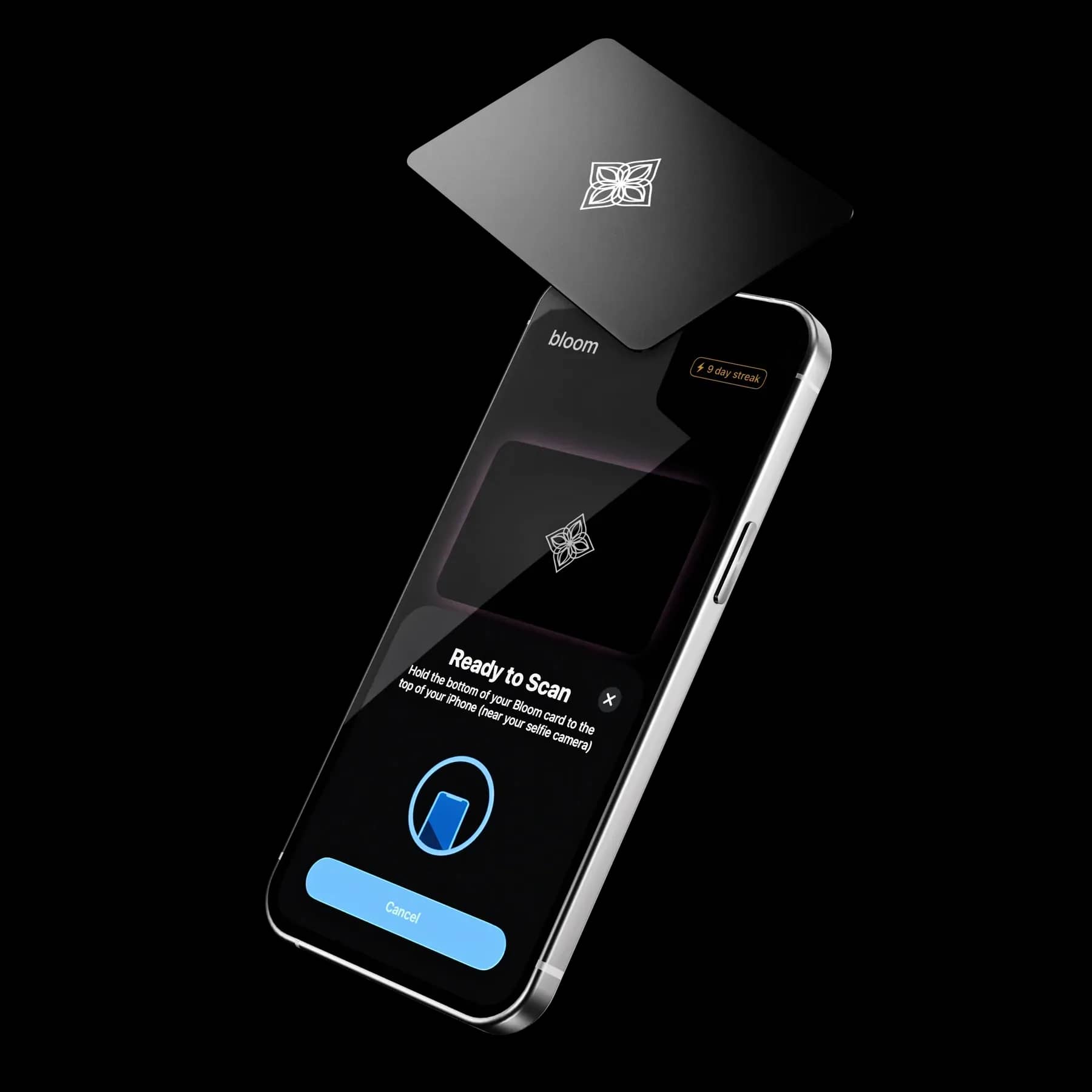
A phone can remind its owner that an app’s time limit has expired. It can also put the override button under the same thumb that opened the app in the first place. Bloom’s founders built their business around that second detail. Their metal card moves a decision off the screen: if the key is in another room, undoing a block takes more than a tap on a warning.
Giancarlo Novelli and Danny Chmaytelli brought the device to Shark Tank and accepted $75,000 from Daniel Lubetzky. They gave up four times the ownership they originally proposed. The case for the investment depends on whether customers value a deliberate inconvenience enough to buy a physical product for a job their phone can partly do for free.
On-air deal
Pitch outcome
$75,000 for 20% with Daniel Lubetzky.
$75,000 for 5%
Opening ask
Terms sought on Shark Tank.
No subscription
Product detail
The manufacturer describes its companion app as free.
Product snapshot
| Field | Details |
|---|---|
| Company | Bloom |
| Founder or founding team | Giancarlo Novelli and Danny Chmaytelli |
| Product | Physical key and companion app for blocking selected phone apps |
| Industry | Consumer technology and screen-time management |
| Shark Tank episode | Season 17, Episode 16 • April 8, 2026 |
| Current status | Bloom lists its Card and Pod and supports iOS and Android. |
How does Bloom work?
The official Bloom site pairs a physical card or magnetic pod with an app. Users select the distractions they intend to block and use the hardware to control access. The specific advantage is separation: a card left on a desk can be inconvenient to reach from a sofa, while a conventional screen-time setting lives on the very device a person is trying to put down.
A buyer is choosing how much friction to introduce. Carrying the card everywhere may be useful when traveling, but it also makes an impulsive override easier. The design cannot determine how someone will use it after the novelty wears off.
Who built Bloom?
Novelli and Chmaytelli made a common frustration visible by giving the override a physical form. ABC’s episode page identifies Bloom as the screen-time product on Episode 16. The founders did not have to convince viewers that distracting apps exist. They had to explain why a keycard was a better tool for a particular user than a timer already installed on the phone.
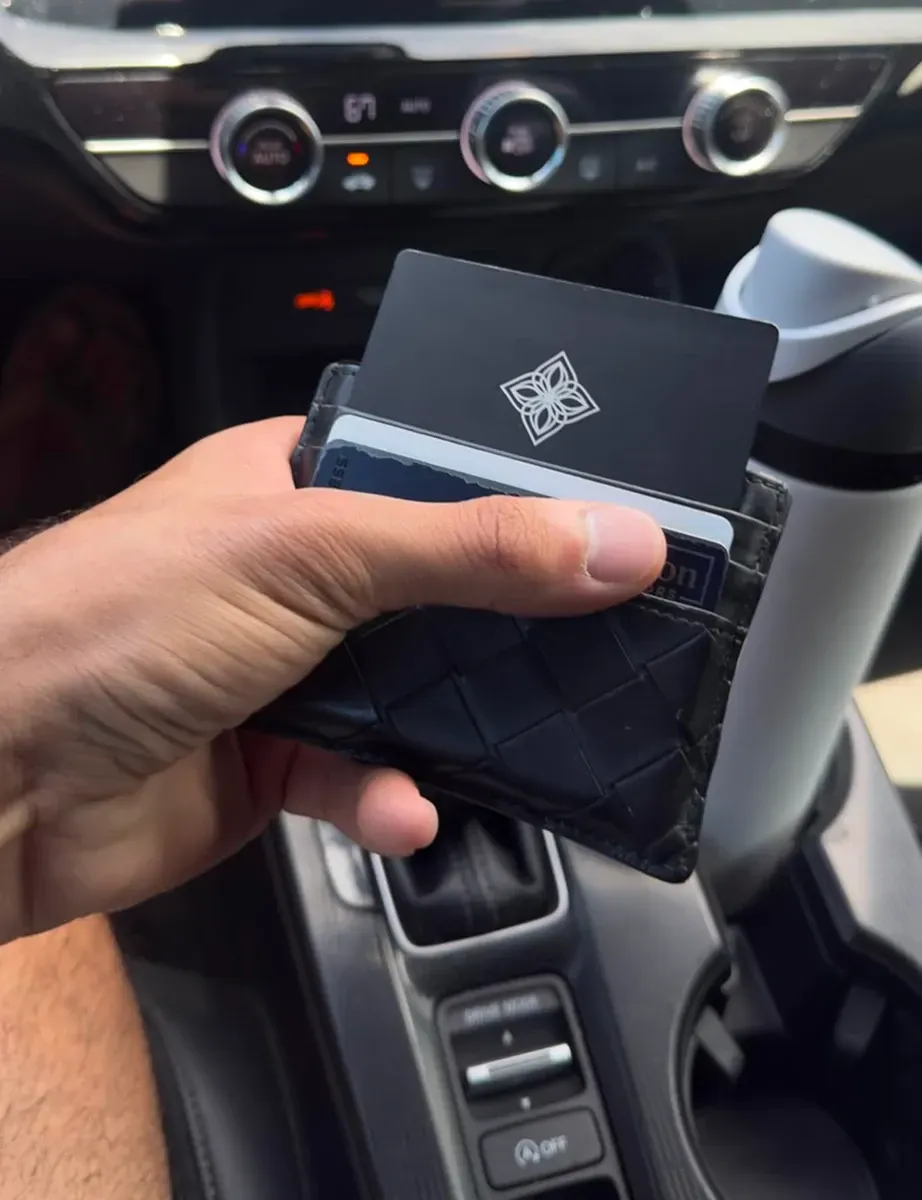
A Bloom Card stored in a wallet. Photo via Bloom.
“Free app, no subscription” — Bloom’s description of the companion software.
What happened to Bloom on Shark Tank?
The founders asked for $75,000 for 5%, an implied $1.5 million post-money value. They reported about $220,000 in sales and $60,000 in profit in six months. Those numbers supported paid demand, but they did not show whether customers continued using the device six months after buying it.
Kevin O’Leary made a competing offer. Daniel Lubetzky saw potential with younger users and ultimately secured the deal at 20%. The same $75,000 therefore implied a $375,000 post-money price. That is the agreed price for the on-air stake, not a current company valuation. Episode reporting.
Deal snapshot
| Negotiation point | What the evidence supports |
|---|---|
| Asked | $75,000 for 5% |
| On-air outcome | $75,000 for 20% with Daniel Lubetzky. |
| Key negotiating point | Lubetzky received four times the original equity for the requested amount. |
Can a one-time hardware sale support a software product?
The manufacturer promotes a free app without a subscription. For customers tired of recurring charges, that simplifies the purchase decision. For the company, it means the hardware sale must help pay for software updates, operating-system changes, support and fulfillment. A keycard is cheap to carry around, but a companion app takes work to maintain.
This also changes which metrics matter. App downloads alone can include people who never purchase hardware. Hardware sales can include people who try the system once and put it away. Evidence of sustained product value would connect devices sold with ongoing use and customer recommendations. No public figure reviewed here establishes that relationship.
Business model snapshot
| Business question | Answer |
|---|---|
| Product | Physical key and companion app for blocking selected phone apps |
| Sales channel | Direct hardware sales with companion software. |
| Buyer decision | Compare the card or pod, operating-system compatibility and current app requirements. |
| Business question | Can one-time device sales fund continued app support? |
What happened after Shark Tank?
Latest update — November 12, 2026. The company now advertises iOS and Android availability, a card and a magnetic pod. These product details come from the current company site rather than an early episode recap.
The product catalog supports an active commercial presence. It does not prove a particular reduction in screen time or that a user cannot find another way around a block. People looking to manage a shared or school-issued device should also check whether they control the permissions the app requires.
Current status evidence
| Evidence | What it establishes |
|---|---|
| Official offering | Bloom lists its Card and Pod and supports iOS and Android. |
| Pitch evidence | $75,000 for 20% with Daniel Lubetzky. |
| What is still unknown | Long-term use per device, current profit and final private investment terms. |
Company timeline
| Date | Milestone |
|---|---|
| Before filming | The founders reported six months of sales and profit. |
| April 8, 2026 | ABC featured Bloom in Episode 16; the founders accepted Lubetzky’s offer. |
| November 2026 | The official site lists Card and Pod hardware and two mobile platforms. |
What should a buyer check?
Identify the exact habit you want to change and decide where the key would live. If you regularly dismiss a bedtime limit while lying in bed, leaving a physical key outside the bedroom gives the product a specific job. If a built-in timer already works for you, the extra device may add little. Check compatibility with your phone before ordering.
What can founders learn from Bloom?
A product does not always have to make something faster. Bloom’s entire premise is that a few extra steps at the right moment can be valuable. The strongest demonstration therefore shows both sides: the software block and the physical distance that makes overriding it a deliberate choice.
The Season 17 episode guide lists the other pitches. Readers following the other investment decisions in this part of Season 17 can also find Screen Skinz, R1SE, Everything Blocks.
Frequently asked questions
Who presented Bloom on Shark Tank? Giancarlo Novelli and Danny Chmaytelli
What did the founders ask for? $75,000 for 5%.
What happened in the negotiation? $75,000 for 20% with Daniel Lubetzky.
Is Bloom still operating? Bloom lists its Card and Pod and supports iOS and Android.
Is there a recurring app fee? Bloom currently describes its companion app as free with no subscription.
The weekly question
From obsession to clarity — one original question every week.
We answer one noisy topic at a time, in full. No daily roundup, no thread bait — just the question, the principles, and the system.
More from Shark Tank USA Season 17
All season pitches
Shark Tank USA
The Christmas Carolers After Shark Tank: Barbara’s 60% Deal, Expansion and Current Status
Shark Tank USA
pi00a After Shark Tank: How the Stein Family Took Deaf-Owned Pizza From Restaurant to Freezer
Shark Tank USA