
Screen Skinz After Shark Tank: Inside the $1 Royalty and the Belkin Partnership
Screen Skinz announced a $300,000 Shark Tank investment and a Belkin partnership. Here’s how the disappearing logo works and what the royalty costs.
A sports fan can put a team logo on almost every part of a phone. The case, the lock screen and the strap are all fair game. The one place a logo can be a nuisance is right over the display. Nobody wants to read a text message through the Dallas Cowboys star.
Screen Skinz took that objection as its design brief. Its founders put artwork into the screen protector itself. Set the phone down with the screen off and the design shows. Wake the display and the illuminated screen takes over. That change gives customers a reason to choose a particular piece of glass in a market full of nearly interchangeable options.
It also gives a sports licensing business something new to sell. For Clay Canning and RaShaun Brown, the business question became how much of a protector’s selling price would remain after paying for production, the right to use a logo, distribution and the investors’ cut.
$300,000
Investment announced
Kevin O’Leary and Alexis Ohanian agreed to invest for 15% plus a per-unit royalty.
$900,000
Cap on the $1 royalty
At $1 per qualifying unit, 900,000 sales would reach the cap.
Belkin
Post-show partnership
Screen Skinz announced the consumer electronics partnership. Financial terms remain undisclosed.
Product snapshot
| Field | Details |
|---|---|
| Company | Screen Skinz |
| Founder or founding team | Clay Canning and RaShaun Brown |
| Product | Tempered-glass phone screen protector with a design visible when the screen is dark |
| Industry | Mobile accessories, personalization and licensing |
| Shark Tank episode | Season 17, Episode 10 • January 21, 2026 |
| Current status | Active online store and announced Belkin partnership |
What makes the Screen Skinz design disappear?
The company etches an image directly onto tempered glass. The etching stays in place when the phone wakes up. What changes is how easily the eye sees it against the lit display. There is no need to open an app, change the wallpaper or switch the design on and off.
Screen Skinz sells two kinds of personalization. A shopper can pick a licensed design, such as a team logo, or submit a custom design. For a gift buyer, a licensed design is the simpler order: choose the right team and phone model. For an organization buying a batch, the ability to reproduce a particular design may be more important than the sports catalog.
Who built Screen Skinz?
Canning began by selling screen protectors on Amazon. Working with an accessory customers already understood gave him a starting point for experimenting with personalization. At Screen Skinz he focuses on the product, production and the software that helps turn a design into a finished order.
Brown brought a different background. He studied sports administration at Ohio University and worked in athletics and fundraising. That experience matters because a physical product and the right to put a team’s logo on it are separate assets. A manufacturer can own an etching process and still need permission to sell a particular team design. Together the founders could address both sides of the order. Screen Skinz founder profiles
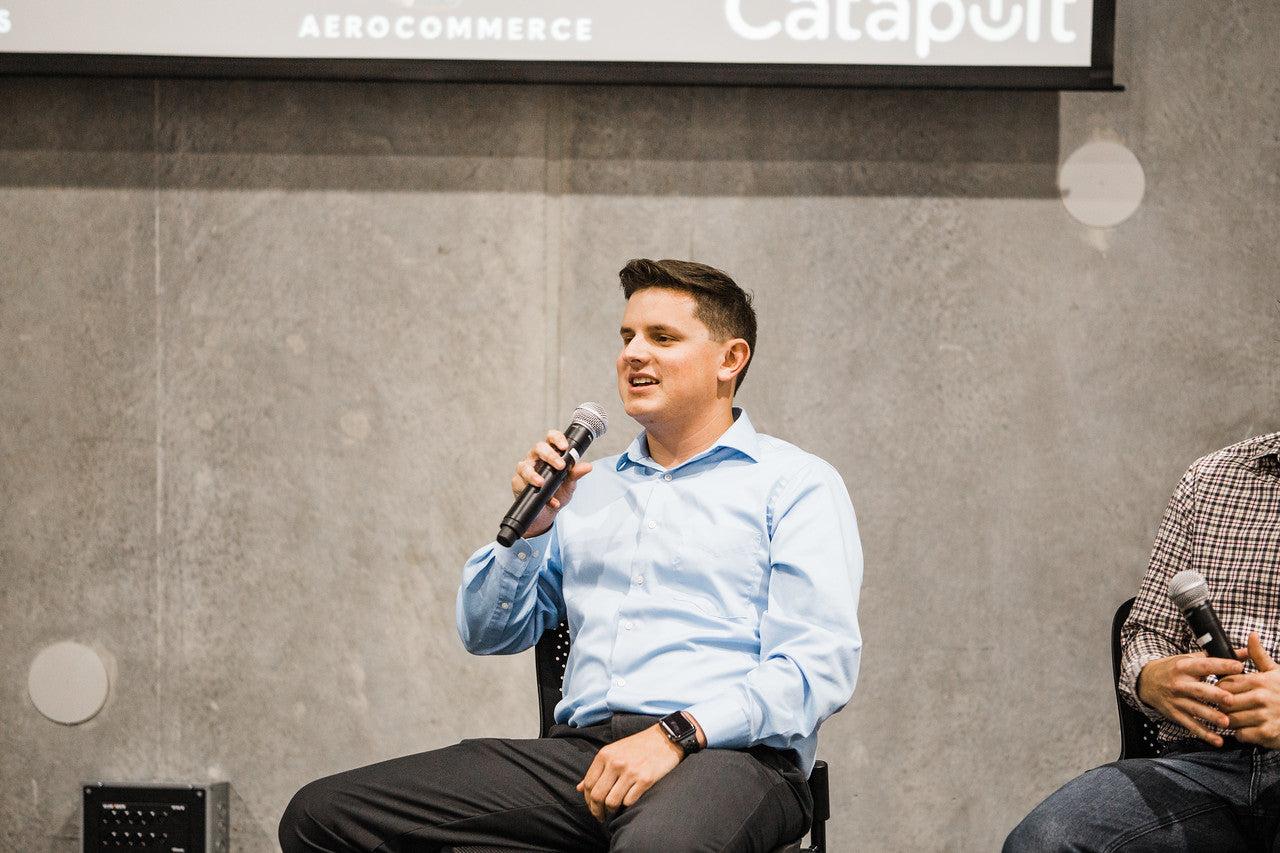
Clay Canning, who developed the personalized protector. Photo: Screen Skinz.
What happened to Screen Skinz on Shark Tank?
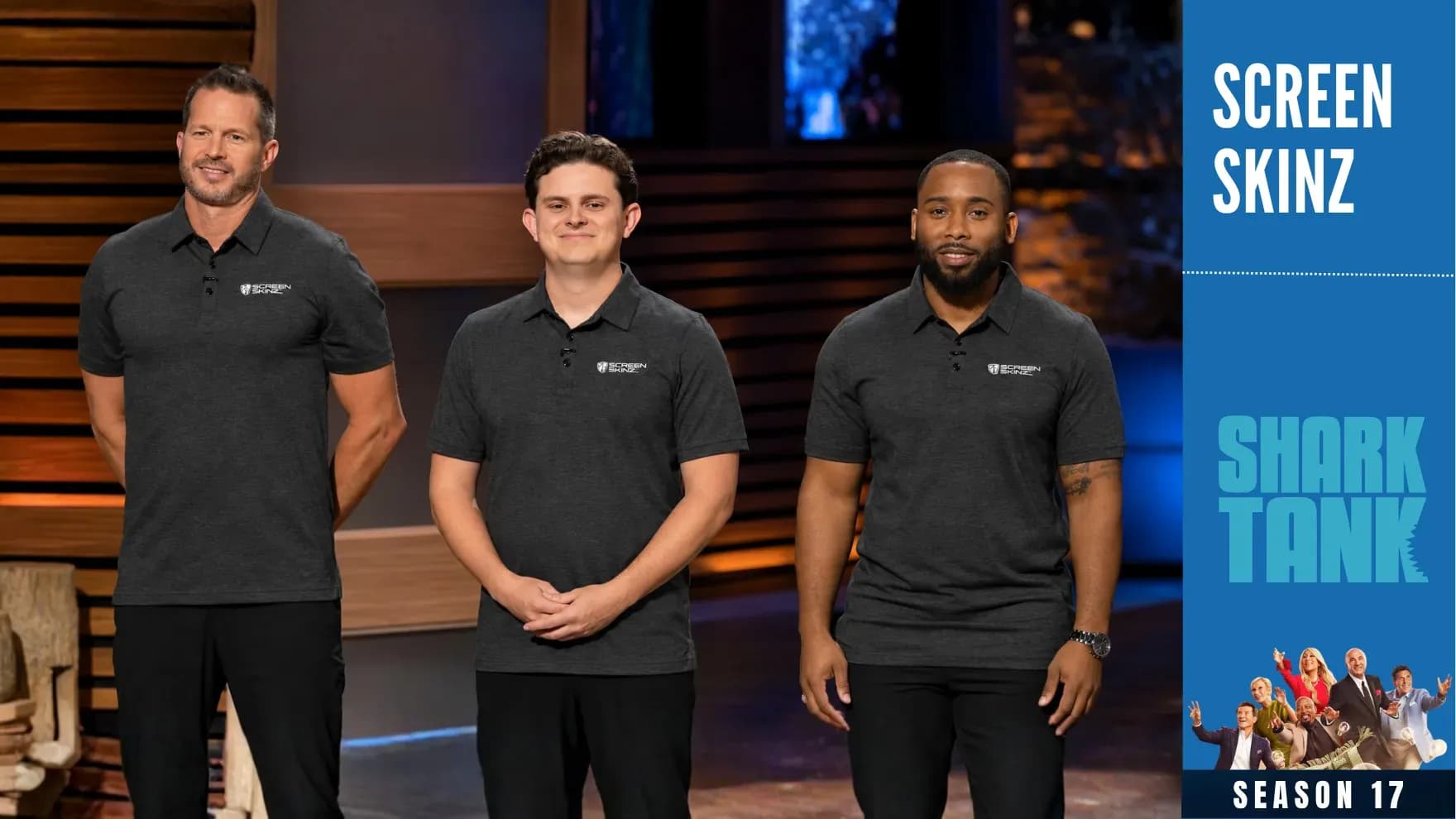
Canning and Brown appeared alongside adviser Wayne Pfeffer. Their opening ask was $300,000 for 7.5%, or $4 million after investment on those terms. They showed the change from a dark screen to a lit one and described the sports licenses behind the catalog. At filming, the company reported more than 28,000 units sold and more than $850,000 in revenue since launch. Those are pitch-era figures, not a current sales total.
A reported manufacturing cost of about $3 against a $30 to $50 retail price left an attractive gap. That gap had to cover more than glass. The panel also had to decide whether the company could turn the assortment, the licenses and the manufacturing setup into lasting profit. Kevin O’Leary and Alexis Ohanian negotiated both equity and payments tied to individual sales. Pitch breakdown
Deal snapshot
| Negotiation point | What the evidence supports |
|---|---|
| Original ask | $300,000 for 7.5%, implying a $4 million post-investment valuation |
| Accepted equity component | $300,000 for 15%, implying $2 million on the equity terms alone |
| Royalty | $1 per unit until the investors receive $900,000 in royalties |
| Subsequent evidence | Screen Skinz publicly announced the investment in April 2026. Amount actually paid in royalties remains undisclosed. |
What does the royalty mean for each protector?
A dollar is a fixed charge. Its effect depends on the revenue Screen Skinz receives for the unit, which can differ from the price a shopper sees. On a $40 direct sale, the dollar equals 2.5% of the selling price. If the manufacturer receives less per unit through a distribution partner, the same dollar takes up a larger share of its receipts.
The cap is easier to understand in units. It would take 900,000 qualifying unit sales at $1 each to pay $900,000. That number describes the contract arithmetic. It is neither a sales forecast nor evidence that the investors have earned that amount. The equity stake and the royalty have different jobs in the agreement: one gives the investors ownership, the other returns cash as qualifying products sell.
Business model snapshot
| Business question | Answer |
|---|---|
| Customers | Fans, gift buyers and people ordering personal designs |
| Revenue | Direct accessory sales, licensed assortments and a technology partnership |
| Distinctive assets | The etching process, design catalog and permissions to use recognizable marks |
| Operating constraints | Phone fit, licensing terms, per-unit charges and the cost of winning each order |
What happened after Shark Tank?
Latest update — November 12, 2026. The online store lists licensed privacy protectors for $39.99 and a personalized protector at a promotional $44.99. Screen Skinz has also announced a partnership with Belkin.
The strongest evidence about the investment comes from the founders’ own company after the broadcast. In an April 2 statement, Screen Skinz announced the two-Shark investment and its relationship with Belkin. That gives the story a second date beyond the January broadcast. It also introduces another way for the technology to reach buyers beyond orders placed on the Screen Skinz website. Company announcement
Belkin’s role matters because screen protection is partly a distribution business. A shopper choosing accessories while buying a phone may never separately search for a personalized protector. Working with an established accessory company could put the technology closer to that decision. That is the commercial opportunity. The announcement does not give minimum orders, the number of participating retailers or revenue earned from the partnership.
The direct store provides a more tangible view of what shoppers can buy. It lists team designs alongside player and entertainment properties, including LeBron James, the Los Angeles Dodgers and Hello Kitty. A broader catalog can reach more tastes, but every listing also needs the right artwork, license and compatible phone models. A long list of designs alone cannot show which ones sell repeatedly.
Current status evidence
| Evidence | What it establishes |
|---|---|
| April company release | Investment and Belkin partnership announced |
| Official catalog | Current prices and named designs are visible |
| Profit and royalties | Current profit, partner revenue and cumulative royalty payments remain unverified |
Company timeline
| Date | Milestone |
|---|---|
| Late 2022 | Business launched, according to pitch reporting. |
| January 21, 2026 | The founders presented the protectors on Shark Tank. |
| April 2, 2026 | The company issued a post-show investment and partnership announcement. |
| November 2026 | Personalized and licensed protectors continued to appear in the official catalog. |
Where can you buy Screen Skinz?
The official store lets shoppers choose a phone family and design. The personalized protector was listed at $44.99, reduced from $59.99, when checked. Several named privacy protectors listed at $39.99. A team name alone is insufficient to specify the order. Check the phone model, the privacy or standard finish and the preview of the design before purchasing.
The company also advertises a warranty. For a buyer comparing a personalized protector with an inexpensive multipack, the practical questions include what replacement costs, whether the design can be reproduced and whether a new phone will fit the same protector. Consult the terms for the specific order.
What can founders learn from Screen Skinz?
Screen Skinz shows why a small physical change can have consequences well beyond manufacturing. A blank protector competes on fit, installation, price and protection. Put a team mark on it and the buyer also cares about authenticity. Give an investor a dollar per sale and the business has to track the economics of each channel separately.
The founders’ partnership with Belkin offers a way to test the value of the underlying process as distinct from the value of the direct store. If another accessory business wants to use the technology, the founders have something to sell even when somebody else has the relationship with the shopper. What remains to be seen is how much revenue that route produces and how much Screen Skinz keeps after its obligations.
The Season 17 episode guide lists the other pitches. Readers following other Episode 10 pitches and design-led businesses can also find Crowd Compass, Left Field, Makers Social.
Frequently asked questions
Who invested? Kevin O’Leary and Alexis Ohanian.
Does the design actually come off? The etched design stays on the glass. It becomes difficult to see when the display is lit.
Did the founders announce the deal afterward? Yes. Screen Skinz issued a company announcement in April.
Does Belkin own Screen Skinz? The companies announced a partnership. The cited announcement does not describe an acquisition.
Has the royalty cap been met? The public sources reviewed give no cumulative payment figure.
The weekly question
From obsession to clarity — one original question every week.
We answer one noisy topic at a time, in full. No daily roundup, no thread bait — just the question, the principles, and the system.
More from Shark Tank USA Season 17
All season pitches
Shark Tank USA
The Christmas Carolers After Shark Tank: Barbara’s 60% Deal, Expansion and Current Status
Shark Tank USA
pi00a After Shark Tank: How the Stein Family Took Deaf-Owned Pizza From Restaurant to Freezer
Shark Tank USA