Crowd Compass After Shark Tank: What Does It Cost to Keep a Festival Group Connected?
Chris Dimoff accepted $150,000 for 20% on Shark Tank. See how Crowd Compass finds friends without cell service, what a pair costs and what the deal established.
At a music festival, telling a friend you’re by the stage works until thousands of other people can say exactly the same thing. A map pin helps if it arrives. On a crowded cellular network, the person you’re trying to find may have moved by the time your message goes through.
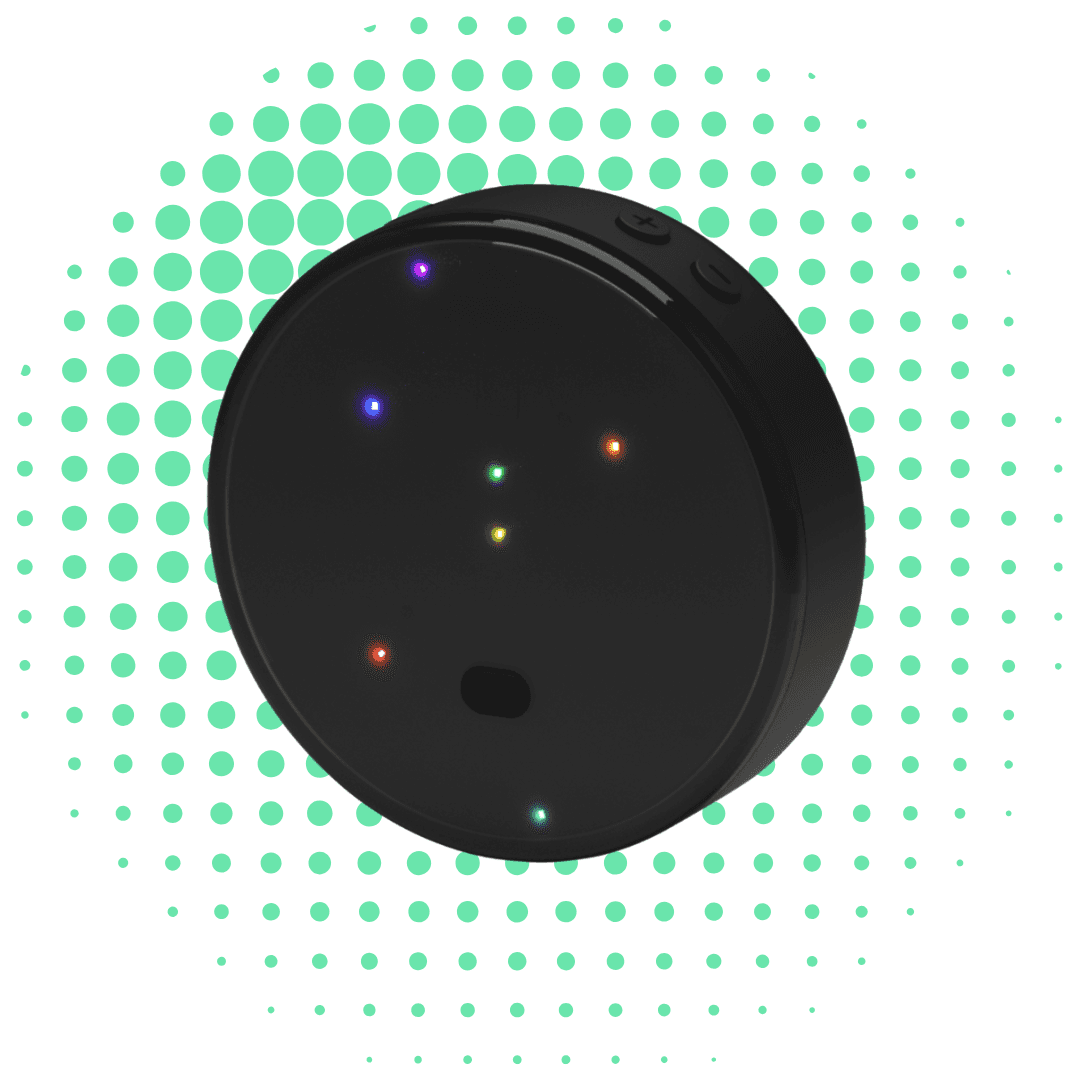
Christopher Dimoff ran into that problem at Shambhala Music Festival. His answer was a small device with colored lights. Pair it with a friend’s device before you split up, and a light shows which way to walk when you want to meet again. Two people can go to different sets without agreeing in advance which landmark they’ll return to or whose phone has the better signal.
That simple interaction conceals a demanding sale. A customer who orders one Crowd Compass still needs someone else in the group to carry another. The difference between the price of one device and the cost of reconnecting a group helps explain the business Dimoff brought to Shark Tank Season 17.
$150,000
Investment sought for 10%
Christopher Dimoff pitched Crowd Compass in Season 17, Episode 10.
20%
Stake accepted on air
Daymond John and Kendra Scott teamed up. Completion of the investment remains publicly unverified.
$218
Advertised cost for two
The official store lists $109 per device for two or more, before tax and any delivery charge.
Product snapshot
| Field | Detail |
|---|---|
| Company | Crowd Compass |
| Founder | Christopher Dimoff |
| Product | Battery-powered group locator using GPS, radio and colored lights |
| Industry | Consumer electronics and festival accessories |
| Episode | Shark Tank USA, Season 17, Episode 10, January 21, 2026 |
| Current status | Available through the company’s online store at crowdcompass.io |
How does Crowd Compass find someone without cell service?
Each person carries a paired device. GPS supplies a position, and the radios exchange location information. The lights show the direction of the other members of the group, each represented by a color. Rotating the device changes which way the lights point relative to the person holding it. The user can change the display scale as the group gets closer together.
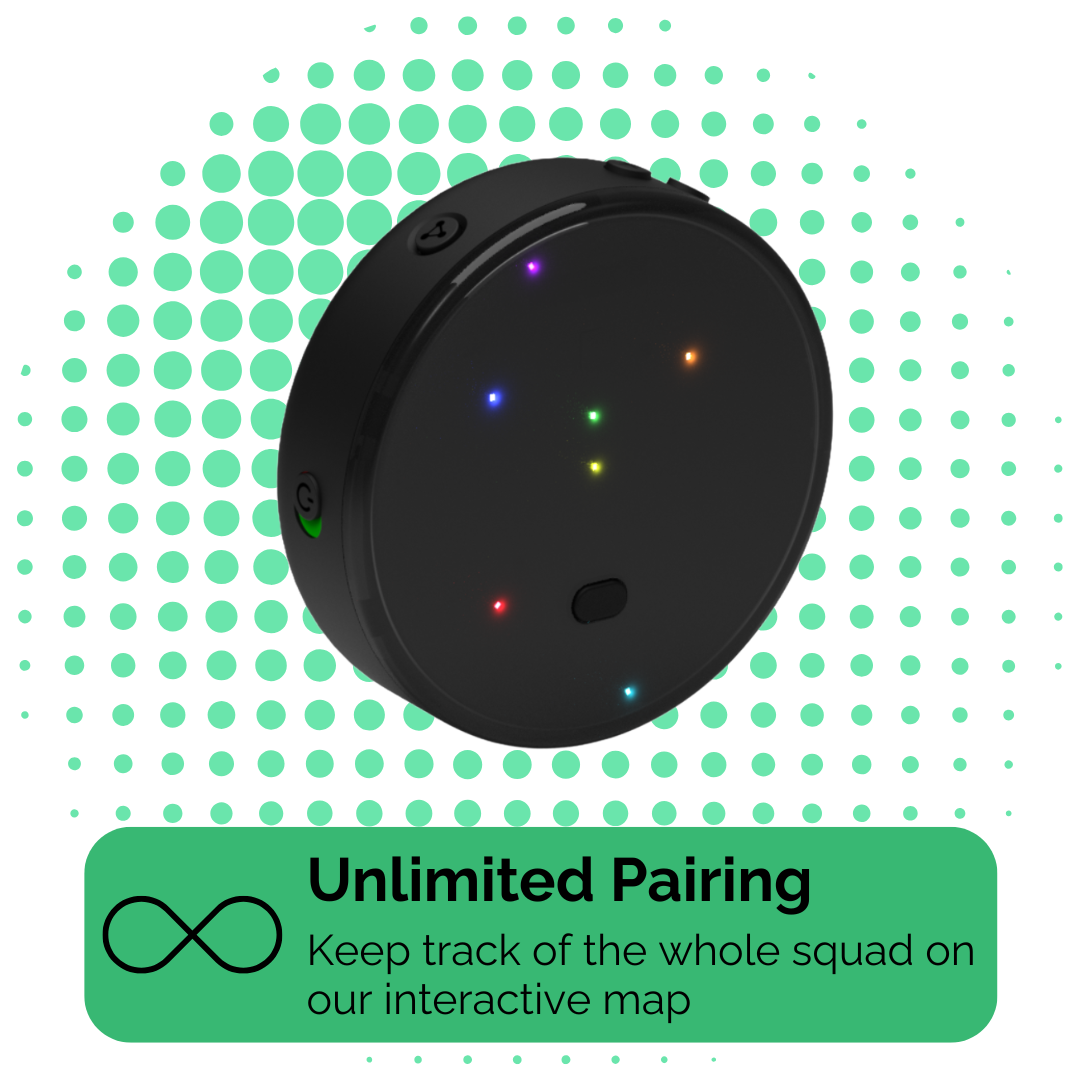
The portable friend finder is designed for use in paired groups. Source: Crowd Compass.
The distinction between GPS and cellular service is what makes the device useful. A phone may know where its owner is while lacking the network connection needed to tell a friend. Crowd Compass supplies its own route for that second step. Nearby units can relay encrypted information through a mesh network. The company advertises up to three miles of direct range depending on the surroundings, so a festival site, a building and an open field need not give the same result.
There’s a second detail worth knowing before buying. The manufacturer specifies location updates every two minutes over the radio network. The lights can respond to the direction you turn even while a friend’s last reported position is aging. If both people are walking quickly in a dense crowd, picking one person to stay put can make the last stretch easier. The companion phone app adds features, while the device itself can send preset messages.
Who founded Crowd Compass?
Christopher Dimoff started the project in 2022. He asked friends and festivalgoers what would help them reconnect, built early prototypes in his home office and took the hardware back into the environment that inspired it. The company documents a prototype at Shambhala in 2023 and a second version at the festival in 2024. Crowd Compass founder history
“I wandered off to explore on my own and couldn’t reconnect with my group.”
— Chris Dimoff, discussing Shambhala in a SXSW Innovation Awards finalist interview
The choice of a light instead of a map makes more sense in that setting. A person looking for friends between sets can glance down briefly and keep walking. There is little space to type a detailed description of the surroundings, and the two people may use different names for the same stage. Agreeing on a color before splitting up removes one decision at precisely the moment communication gets difficult.
What deal did Crowd Compass get on Shark Tank?
Dimoff asked for $150,000 for 10%, valuing the company at $1.5 million after investment. He reported a retail price of about $200 and a landed cost of roughly $51 per device. The gap suggested room to fund a hardware business, but a festival group would have to pay for several units to get the benefit shown in the demonstration. Pitch reporting
Daymond John and Kendra Scott ultimately offered the requested cash for twice the equity. Dimoff accepted. Scott had also backed Cabana Boys Events, another business whose customer often organizes an experience for several friends. The difference here is that the organizer must persuade those friends to carry the hardware.
Deal snapshot
| Stage | Cash | Equity | Implied post-investment valuation |
|---|---|---|---|
| Opening ask | $150,000 | 10% | $1,500,000 |
| Accepted on air | $150,000 | 20% shared by John and Scott | $750,000 |
The investment amount stayed the same while the implied valuation fell by half. The company promotes its televised deal. The available primary sources do not establish the closing date, final documents or present ownership split.
How does Crowd Compass make money?
Crowd Compass sells hardware directly to consumers. Its volume discount addresses an unusual obstacle. For many gadgets, buying the second unit is optional. For a pair of friends who both want the standalone experience, the second unit is what makes the first purchase useful. One friend who already owns a device can make the purchase more attractive to someone joining the group.
At the pitch-era retail and landed prices, the difference was roughly $149 per single unit before fulfillment, marketing, returns, warranty service and company overhead. That arithmetic cannot establish net profit. The lower prices now advertised make another distinction important. Applying the old production cost to the current selling price would combine figures from two different periods. The company has not disclosed an updated unit cost.
Business model snapshot
| Business question | How it works |
|---|---|
| Who buys? | Groups attending festivals or other places where cellular connections may be unreliable |
| Why pay? | Friends can separate and reunite without waiting for a phone message |
| How is it sold? | Direct device sales with a lower per-unit price on orders of two or more |
| What supports adoption? | One purchase can bring several users into the same paired group |
| What limits adoption? | Group cost, the need to carry another device and range that varies with conditions |
There is a useful comparison within the season. Makers Social lets friends choose different activities at the same table. Crowd Compass lets friends choose different activities at the same festival. In both cases, whoever proposes the outing has to explain the value to everyone else. The company selling hardware also has to make sure the group pairs and understands the devices before reaching the gate.
What happened after Shark Tank?
Latest update — November 12, 2026. The official store lists single devices and discounted group orders. It publishes instructions, display ranges and battery-life specifications. Current annual revenue, profit and completion of the televised investment remain unverified.
The TV appearance came after the product had already reached customers. TIME dates the commercial launch to 2024 and included the device in its Best Inventions of 2025. That chronology matters. National television introduced viewers to an existing product that had already earned editorial recognition. Assigning the launch or the TIME selection to the broadcast would reverse the order of events. TIME’s 2025 selection
The current store makes a different kind of progress visible. A prospective buyer can see how to pair units, what the display represents, how often positions update and what two or more devices cost. Those details answer the practical questions that the television demonstration leaves behind. They also let a group decide whether its event is a good fit before making a purchase.
Current status evidence
| Evidence | What readers can verify |
|---|---|
| Product page | Single and multiple-device pricing, plus an ordering option |
| Published specifications | Radio location updates, an optional app and an environment-dependent range claim |
| Company’s deal announcement | The company acknowledges reaching a deal on the show |
| Financial disclosures | The sources reviewed give no current annual profit or independently confirmed closing terms |
Company timeline
| Date | Milestone |
|---|---|
| 2022 | The Shambhala experience prompted Dimoff to develop a friend finder. |
| 2023 | A prototype returned to Shambhala for testing. |
| 2024 | The product launched commercially. |
| 2025 | TIME selected Crowd Compass for its Best Inventions list. |
| January 2026 | Dimoff accepted the joint offer from Scott and John on television. |
| November 2026 | The official store advertised single units and group pricing. |
What does it cost to buy Crowd Compass today?
The official store lists one unit for $119 or two or more for $109 each. At those advertised prices, two friends starting from scratch would pay $218 for hardware. Four people buying together would pay $436. The store identifies these as promotional prices. Taxes and any shipping charge depend on the order. Official product listing
A group comparing options should agree on who needs a device, whether the venue suits the advertised range and when to pair them. Someone joining friends who already use Crowd Compass faces a different purchase decision from someone equipping an entire group for one weekend.
What can founders learn from Crowd Compass?
For a product designed to connect people, the meaningful price is what it costs to complete the first connection. A $119 headline describes the unit. A $218 pair describes what two first-time customers can actually do together. Showing both numbers helps buyers understand the offer and gives the company a better way to measure how many groups it has equipped.
The second lesson comes from the early field tests. A radio that performs well on a workbench still needs an interface that makes sense in a field of moving people. Taking prototypes to Shambhala gave Dimoff a chance to learn what users would look at, how they would hold the device and where the original problem reappeared. Those are the questions a buyer is paying the finished product to solve.
Frequently asked questions
Who invested? Daymond John and Kendra Scott agreed on air to invest $150,000 for a combined 20%.
Is Crowd Compass still available? Yes. The manufacturer lists it for direct purchase.
Does every friend need one? Each person who wants standalone directional tracking needs a paired device.
Does it need a phone? The core device works independently. A companion app adds features.
How far does it work? The company advertises up to three miles of direct range under suitable conditions.
What is the company worth today? The televised deal implied $750,000 after investment at the time. A current valuation remains undisclosed.
The weekly question
From obsession to clarity — one original question every week.
We answer one noisy topic at a time, in full. No daily roundup, no thread bait — just the question, the principles, and the system.