Hot Girl Soda After Shark Tank: Why the Shape of the Can Mattered
Aarica Griner and Nick Murray pitched an aloe-infused soda. A guest Shark saw a problem before anyone even opened a can: where would it fit?
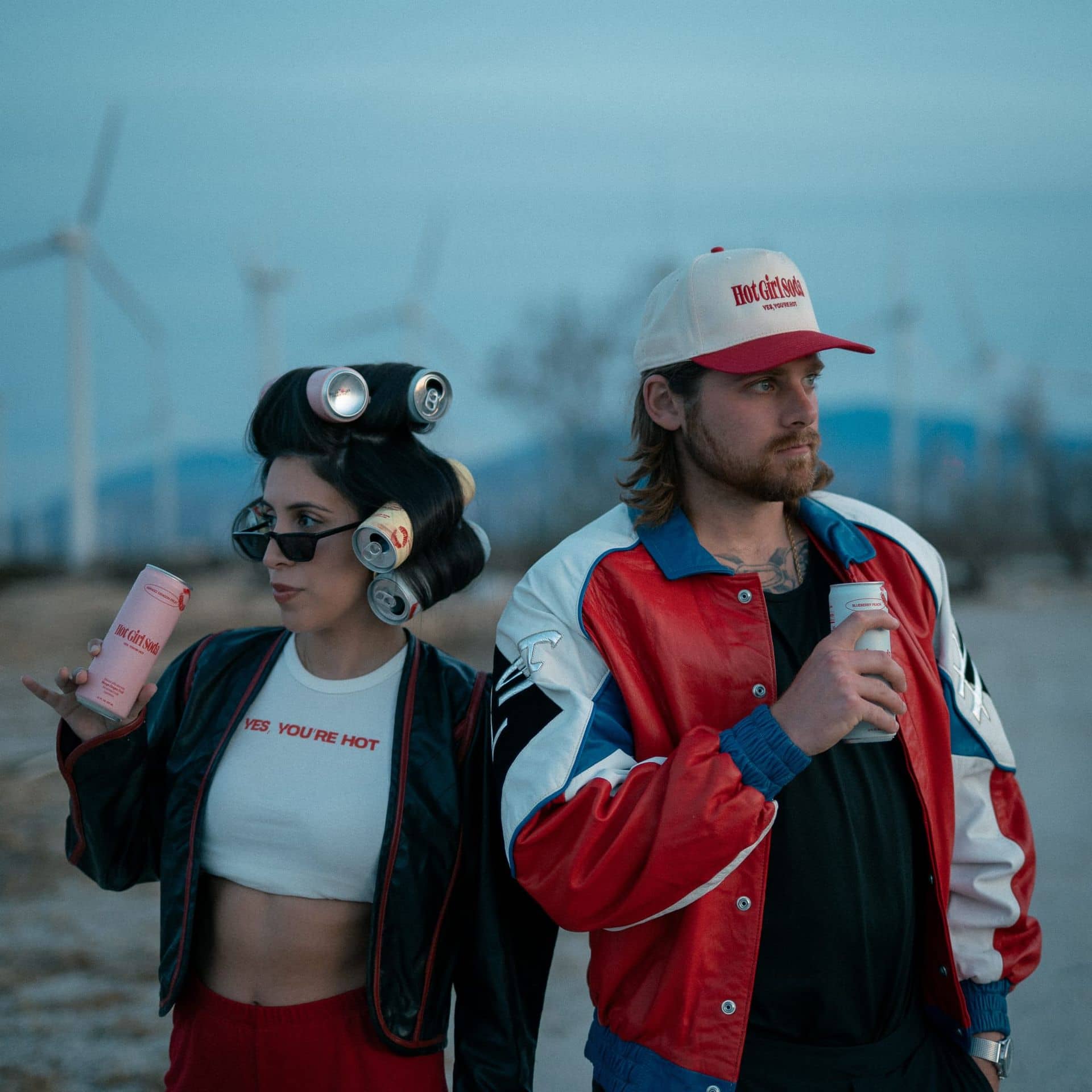
A brightly colored, narrow can can do its job perfectly on a phone screen and still be the wrong shape for a supermarket shelf. That was the unusually practical problem Hot Girl Soda ran into when its founders pitched on Shark Tank. Guest investor Allison Ellsworth, who knew the soda aisle from building Poppi, looked past the name to ask how a retailer would actually display the drink.
Aarica Griner and Nick Murray left without a deal. Their aloe-infused soda remains on sale, and the brand now highlights Cherries and Cream alongside its other flavors. The business question raised on television was never just whether people liked the taste. It was whether a young company could build enough demand to earn, and keep, space in a crowded beverage aisle.
No deal
Pitch outcome
No deal
$100,000 for 10%
Opening ask
Terms sought on Shark Tank.
March 2025
Product detail
Official commercial launch date.
Product snapshot
| Field | Details |
|---|---|
| Company | Hot Girl Soda |
| Founder or founding team | Aarica Griner and Nick Murray |
| Product | Aloe vera-infused prebiotic soda |
| Industry | Beverages |
| Shark Tank episode | Season 17, Episode 13 • March 11, 2026 |
| Current status | The brand lists flavored sodas for sale. |
How does Hot Girl Soda work?
The idea began with aloe vera juice, fruit juice and sparkling water mixed at home. The commercial version is a flavored, lightly carbonated drink marketed as a prebiotic soda. ABC’s episode guide identifies the low-sugar aloe drink as one of four businesses on the episode. The founders used aloe to distinguish it from the many competing cans already making wellness-oriented pitches.
That distinction is a formulation and branding choice. It should not be read as evidence that the finished drink treats a skin condition or produces a particular wellness outcome. A customer can judge flavor, sweetness and the ingredients on the actual can without relying on a founder’s personal experience.
Who built Hot Girl Soda?
In the founders’ account, Griner dates her kitchen experiments to 2022. She called the homemade mixtures her hot girl drinks. The nickname stuck. A conversation with Murray about a pink vending machine helped narrow the idea: what they actually wanted to make was the drink that would go inside it. They developed the product in Southern California and officially launched in March 2025.
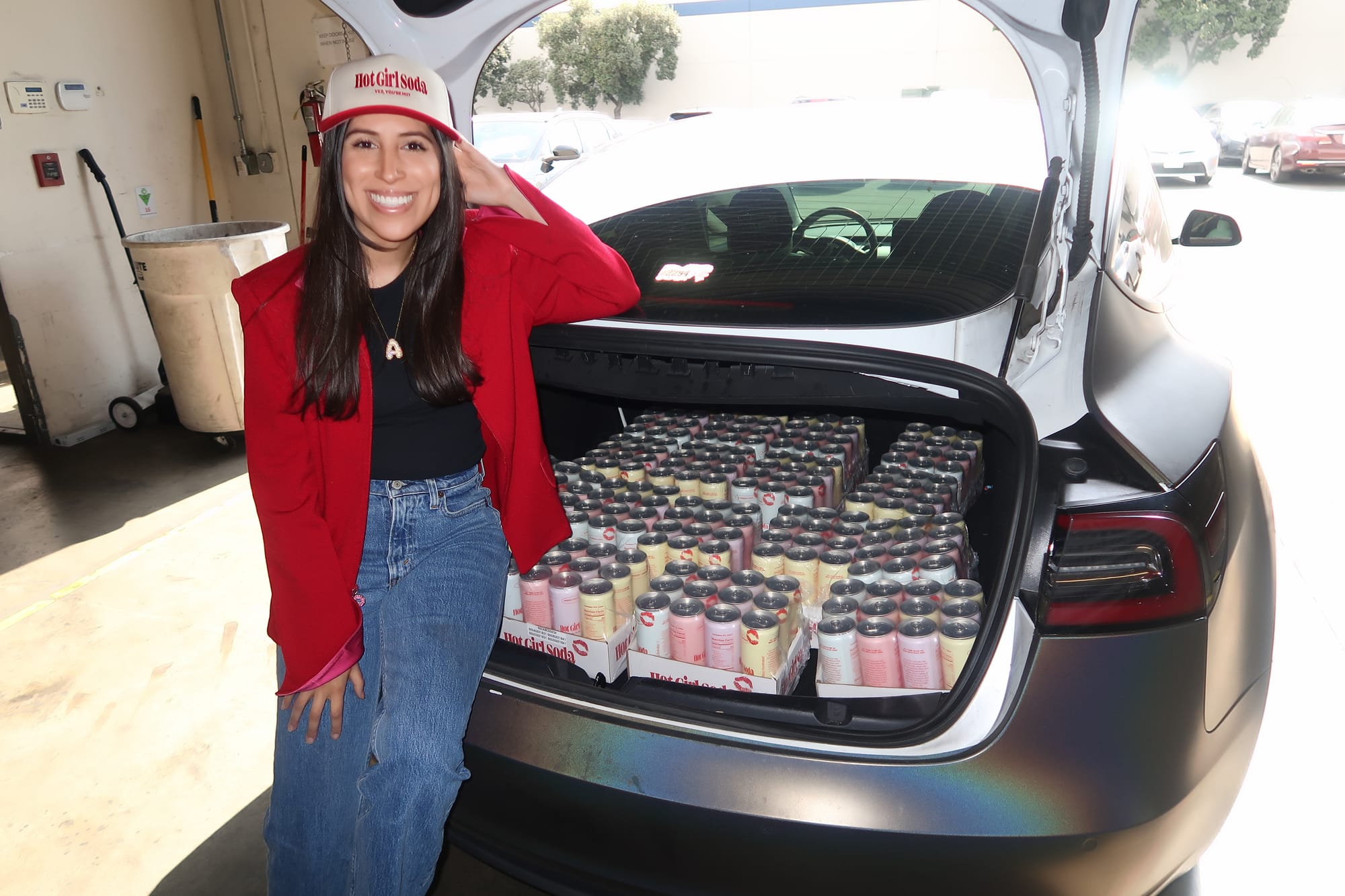
An early delivery pictured in the company’s founder story.
“We needed to create the drink.” — Aarica Griner, Hot Girl Soda’s founder story.
What happened to Hot Girl Soda on Shark Tank?
The team asked for $100,000 for 10%, implying a $1 million post-money value. At filming the product had been selling for roughly two and a half months, with about $8,500 in Amazon sales reported. They described $120,000 in personal funding, including money made available by a second mortgage taken out by Griner’s mother. That commitment established how much the family had risked; it was not evidence that the business had already earned back that money.
Robert Herjavec’s reaction was partly a matter of taste. Ellsworth raised the more structural objection: slim cans can be awkward for stores set up around standard beverage dimensions, and competing for shelf space takes substantial spending. None of the Sharks invested. Episode reporting.
Deal snapshot
| Negotiation point | What the evidence supports |
|---|---|
| Asked | $100,000 for 10% |
| On-air outcome | No deal |
| Sales at filming | Approximately $8,500 on Amazon, according to pitch reporting. |
| Key objection | Shelf fit and the cost of gaining distribution. |
Why the retailer sees a different product from the shopper
A shopper buys a cold drink. A retailer gives up a slot that could hold something else. A can that looks distinctive individually still has to work in a case, on a shelf and in a cooler. To justify continued space, it must sell quickly enough for the store to reorder. A brand can attract its first stockist with a good story and still lose the placement if customers do not come back.
Online sales give Hot Girl Soda room to explain the aloe and offer mixed flavors without first convincing a national buyer. They also mean shipping liquid. A direct order and a store purchase therefore test different things: one shows a customer deliberately sought out a case, the other can show whether a single can wins an impulse purchase beside established competitors.
Business model snapshot
| Business question | Answer |
|---|---|
| Product | Aloe vera-infused prebiotic soda |
| Sales channel | Online sales and brand-led promotion. |
| Buyer decision | Flavor, ingredients and the delivered cost per can. |
| Business question | Do first-time buyers reorder often enough to justify the cost of distribution? |
What happened after Shark Tank?
Latest update — November 12, 2026. The official storefront highlights Cherries and Cream. The founder story and product pages remain available after the appearance.
The flavor listing is direct evidence that the business is still marketing beverages. It does not reveal current sales, the share sold in stores or whether the slim can proved to be a lasting problem. The $8,500 discussed in the pitch belongs to the company’s earliest months; repeating it as current revenue would be as misleading as treating a new flavor as proof of profitability.
Current status evidence
| Evidence | What it establishes |
|---|---|
| Official offering | The brand lists flavored sodas for sale. |
| Pitch evidence | No deal |
| What is still unknown | Current revenue and repeat purchase rates by channel. |
Company timeline
| Date | Milestone |
|---|---|
| 2022 | Griner began mixing aloe drinks at home. |
| March 2025 | The commercial soda launched. |
| March 11, 2026 | The team appeared on Shark Tank and left without a deal. |
| November 2026 | The official site features Cherries and Cream. |
What should a buyer check?
Compare flavor, serving size, fiber and sugar on the current label. If ordering online, divide the full delivered price by the number of cans; the comparison with a single refrigerated can is otherwise misleading. A variety pack can help a household discover a favorite before committing to a full case of one flavor. The founders’ story explains why aloe is there, but taste and the label are better guides to whether a particular can belongs in your fridge.
What can founders learn from Hot Girl Soda?
Prototype the package with the people who have to handle it. Before ordering a large print run, a beverage founder can ask a store buyer to place the sample in an actual cooler and a distributor to handle the shipping case. That small exercise tests a different proposition from a taste panel. Hot Girl Soda’s pitch demonstrated why a founder needs both.
The Season 17 episode guide lists the other pitches. Readers following other businesses from Season 17 can also find CRANEL, The Chair Blanket, Paco & Pepper.
Frequently asked questions
Did Hot Girl Soda get a deal? No. The founders left without an investor.
Who founded it? Aarica Griner and Nick Murray.
What did they ask for? $100,000 for 10%.
When did it launch? The company gives March 2025 as its commercial launch.
What makes the drink different? The brand uses aloe vera in a flavored prebiotic soda.
The weekly question
From obsession to clarity — one original question every week.
We answer one noisy topic at a time, in full. No daily roundup, no thread bait — just the question, the principles, and the system.