
Parrot Finance After Shark Tank: What Investors Are Actually Copying
Lori Greiner and Rashaun Williams backed Parrot Finance on air. Its disclosures explain why copying portfolio holdings does not mean copying returns.
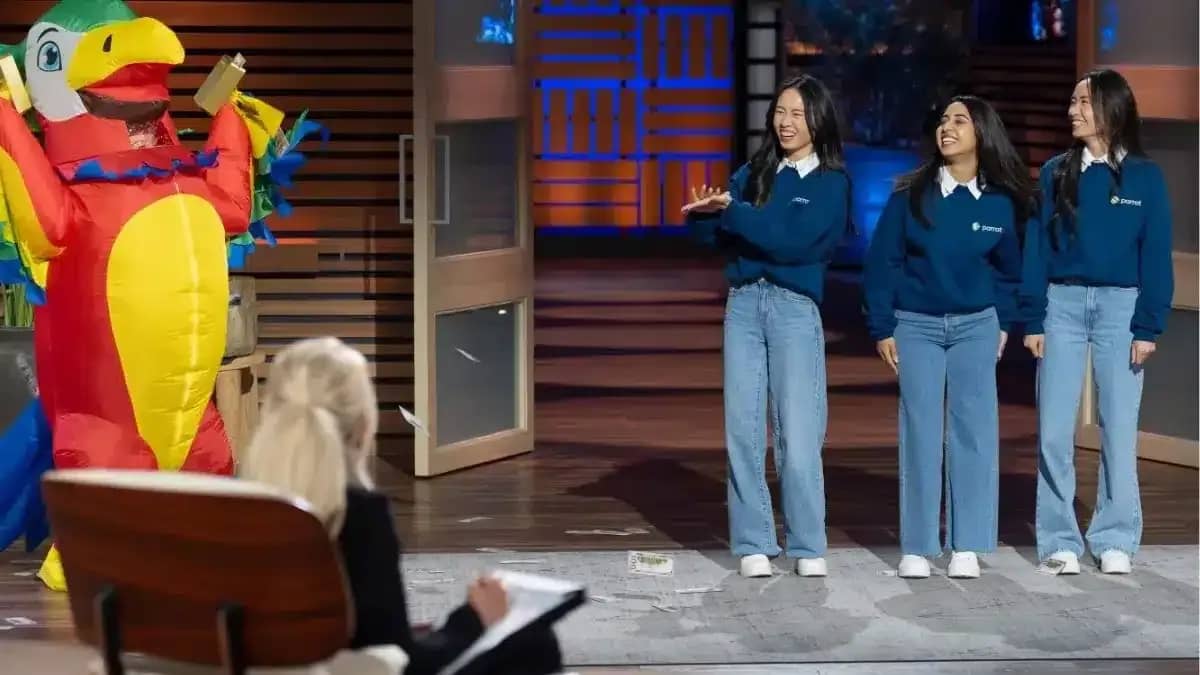
Knowing that a professional investor held a stock is not the same as knowing the price they paid, why they bought it or whether they still hold it. Parrot Finance built an app around the first piece of information. It organizes tracked portfolios, sends alerts and can connect to a brokerage account for people who choose to act on those updates.
Nikki Varanasi, Lucy Yang and Victoria Yang pitched that service on Shark Tank and accepted a joint offer from Lori Greiner and Rashaun Williams. The most useful evidence after the show is not a screenshot of a portfolio’s past performance. It is the firm’s own disclosure of where assets sit, what the subscription covers and what can happen between a published trade and its execution in someone else’s account.
On-air deal
Pitch outcome
$250,000 for 4% plus 2% advisory shares with Lori Greiner and Rashaun Williams.
$250,000 for 2.5%
Opening ask
Terms sought on Shark Tank.
Two share components
Product detail
The cash investment and advisory shares were described separately.
Product snapshot
| Field | Details |
|---|---|
| Company | Parrot Finance |
| Founder or founding team | Nikki Varanasi, Lucy Yang and Victoria Yang |
| Product | Portfolio-tracking app with alerts and optional brokerage-linked automation |
| Industry | Financial technology and investment advisory services |
| Shark Tank episode | Season 17, Episode 18 • April 22, 2026 |
| Current status | Parrot maintains a public product site and advisory disclosures. |
How does Parrot Finance work?
The client relationship summary filed with the SEC describes an app that connects with a brokerage account so users can browse and follow tracked portfolios and receive alerts. The company’s Form ADV disclosures describe optional automation: the broker, rather than the alert itself, executes transactions. Funds and securities are handled through the brokerage firm.
Portfolio information may arrive after the underlying transaction. Prices can change, the tracked investor may hold assets outside the reported portfolio and an individual account can face different costs and taxes. Those are concrete reasons why the same security names do not guarantee the same return.
Who built Parrot Finance?
Varanasi’s St. John’s University alumni profile describes her previous finance experience and identifies her as founder and CEO. The firm’s disclosures name Varanasi and Lucy and Victoria Yang as principal shareholders. The three presented together. What they proposed was a more accessible interface for following portfolio information, not privileged real-time access to every decision an investment manager makes.

Nikki Varanasi. Photo: St. John’s University alumni profile.
“Parrot does not charge any performance-based fees” — Parrot Finance’s advisory brochure.
What happened to Parrot Finance on Shark Tank?
The founders’ opening ask implied a $10 million post-money value. The Sharks examined how a service built partly on public information could attract paying customers and retain an advantage over competing research tools. Greiner and Williams ultimately offered $250,000 for 4% plus another 2% in advisory shares, which the founders accepted.
Describing the entire exchange as a cash purchase of 6% loses a detail: the offer distinguished the shares bought for cash from those tied to an advisory role. Looking only at the 4% component implies $6.25 million, but that calculation does not capture the additional dilution from the advisory shares. Episode reporting.
Deal snapshot
| Negotiation point | What the evidence supports |
|---|---|
| Asked | $250,000 for 2.5% |
| On-air outcome | $250,000 for 4% plus 2% advisory shares with Lori Greiner and Rashaun Williams. |
| Key negotiating point | The deal included 4% for the cash investment plus 2% advisory shares. |
The subscription and the investment account are different businesses
A customer pays for software and advisory access; investment outcomes occur in a separate brokerage account. A subscription can be worthwhile to someone who values organized research even if they never automate a trade. A user who does automate has to evaluate execution, investment risks and costs in addition to the value of the interface.
The disclosures describe a flat subscription and explain that brokerage fees, fund expenses and other costs can be separate. They also disclose a financial incentive involving certain funded brokerage referrals. This matters because a convenient path to open an account can benefit the platform as well as the user. The company’s disclosure page contains different fee schedules in different versions of its brochure; readers should compare the applicable current agreement and checkout terms.
Business model snapshot
| Business question | Answer |
|---|---|
| Product | Portfolio-tracking app with alerts and optional brokerage-linked automation |
| Sales channel | App subscriptions and compatible brokerage connections. |
| Buyer decision | Compare subscription, fund and brokerage costs separately. |
| Business question | Will users pay for clear research and workflow when much of the underlying information is public? |
What happened after Shark Tank?
Latest update — November 12, 2026. Parrot publishes a November 2026 disclosure page describing its services, fees, brokerage arrangements and conflicts. The appearance is also listed in ABC’s episode guide.
These records support an ongoing product and advisory offering. A filing or registration is not an endorsement of investment quality, and the founders’ Shark Tank deal is not evidence of customer returns. None of the sources reviewed supplies an independently audited record showing that subscribers reproduce the results of the people they follow.
Current status evidence
| Evidence | What it establishes |
|---|---|
| Official offering | Parrot maintains a public product site and advisory disclosures. |
| Pitch evidence | $250,000 for 4% plus 2% advisory shares with Lori Greiner and Rashaun Williams. |
| What is still unknown | Private closing documents, current subscriber profitability and individual investor outcomes. |
Company timeline
| Date | Milestone |
|---|---|
| August 2025 | Parrot’s client relationship summary described its advisory and brokerage-linked services. |
| April 22, 2026 | The founders accepted the Greiner–Williams offer. |
| June 2026 | St. John’s University profiled CEO Nikki Varanasi. |
| November 2026 | The company publishes advisory terms and brokerage disclosures. |
What should a buyer check?
Before enabling automation, read which decisions you control, who executes trades, how current the underlying information is, and what your broker charges. Compare tracking a portfolio for research with authorizing trades: they are different levels of commitment. Neither the fame of a tracked person nor past performance establishes that the strategy matches your circumstances.
What can founders learn from Parrot Finance?
In a business built around public information, the value has to come from the work around the data: organizing it, explaining its limits and helping customers use it deliberately. Trust depends on making those limits just as visible as the easy-to-use interface.
The Season 17 episode guide lists the other pitches. Readers following the other investment decisions in this part of Season 17 can also find Bloom, Crowned Skin, HUNDY!.
Frequently asked questions
Who presented Parrot Finance on Shark Tank? Nikki Varanasi, Lucy Yang and Victoria Yang
What did the founders ask for? $250,000 for 2.5%.
What happened in the negotiation? $250,000 for 4% plus 2% advisory shares with Lori Greiner and Rashaun Williams.
Is Parrot Finance still operating? Parrot maintains a public product site and advisory disclosures.
Does mimicking a portfolio guarantee the same returns? No. Disclosure timing, execution prices, holdings, fees and taxes can differ.
The weekly question
From obsession to clarity — one original question every week.
We answer one noisy topic at a time, in full. No daily roundup, no thread bait — just the question, the principles, and the system.
More from Shark Tank USA Season 17
All season pitches
Shark Tank USA
The Christmas Carolers After Shark Tank: Barbara’s 60% Deal, Expansion and Current Status

Shark Tank USA
pi00a After Shark Tank: How the Stein Family Took Deaf-Owned Pizza From Restaurant to Freezer
Shark Tank USA