
Shalom Japan Shark Tank Update: The Ramen Business Behind Barbara’s Conditional Deal
Shalom Japan won Barbara’s backing on Shark Tank, but did its ramen dream become food-truck business? Here’s the update.
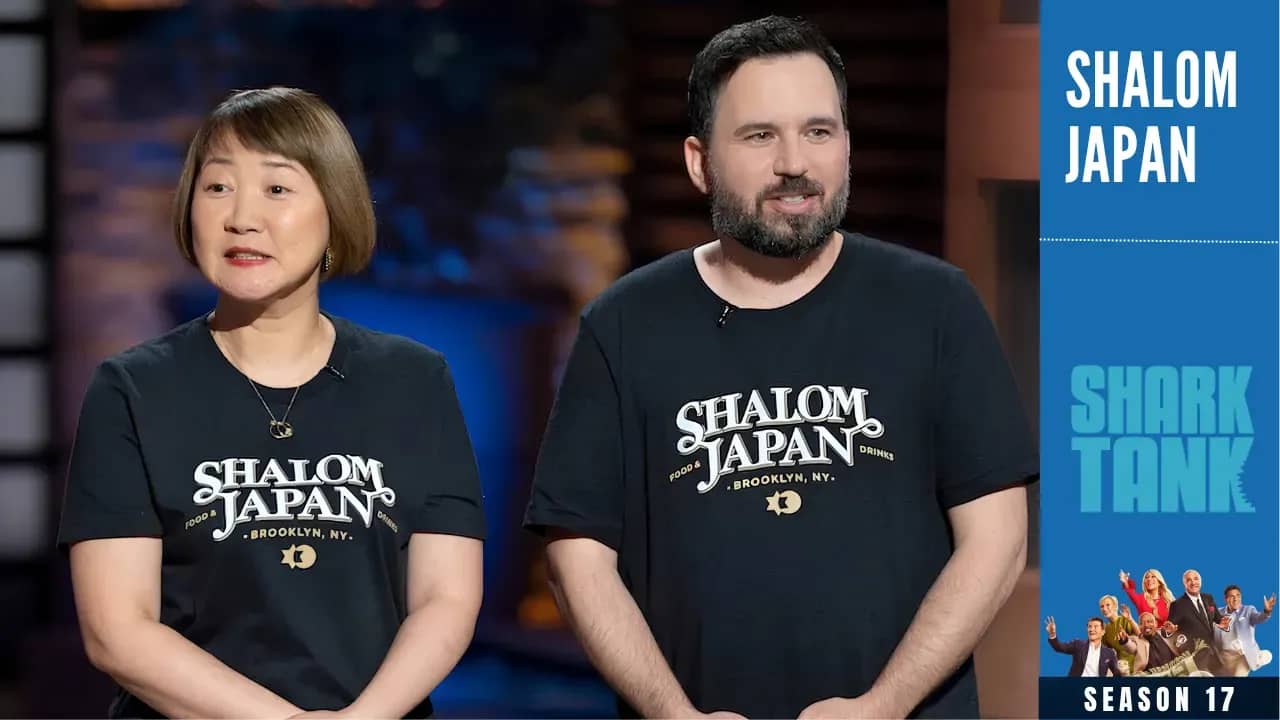
Shalom Japan’s most interesting business problem begins after the first delicious bite. Its matzoh ball ramen already had an audience in Brooklyn. Taking that experience to customers across America introduced a different challenge: making the delivery model as appealing as the food.
A bowl served in a restaurant and a refrigerated kit shipped nationwide carry very different costs. The founders understood the gap. They wanted more people to enjoy their signature dish without paying a premium for packaging and delivery.
That ambition led to one of the more revealing food pitches in Shark Tank Season 17. Barbara Corcoran proposed a change in direction, backing food trucks with experienced operating partners. The resulting handshake created an opportunity, but also a condition that matters when judging what happened next.
As of September 17, 2026, public evidence supports continued restaurant and ramen-kit activity. It does not settle whether the investment closed or the trucks launched. This case file examines the distinction, the economics behind the pitch, and what the founders’ journey teaches about expanding a food business.
| Company | Shalom Japan |
|---|---|
| Founders | Sawako Okochi and Aaron Israel |
| Product | Matzoh Ball Ramen and at-home meal kits |
| Industry | Restaurants and prepared food |
| Shark Tank episode | Season 17, Episode 6; November 12, 2025 |
| Deal status | Conditional on-air agreement; closing unclear |
| Current status | Active; financial performance undisclosed |
| Website | Shalom Japan |
Latest Update — September 2026
- - Restaurant and nationwide kit-ordering information remain accessible.
- - The team’s Tokidoki café also maintains an active website.
- - Tokidoki predates the Shark Tank broadcast.
- - Investment completion, food trucks, and current revenue remain unconfirmed.
What Is Shalom Japan?
Shalom Japan is a Brooklyn restaurant whose food reflects its founders’ Japanese and Jewish backgrounds. Its signature matzoh ball ramen combines familiar comfort foods in a dish with a clear identity.
The at-home version targets people who want the restaurant experience without visiting New York. It also suits gift buyers and curious food lovers. Its appeal rests on flavor, convenience, and the founders’ story.
The classic two-serving kit includes soup, noodles, scallions, and soup mandels. Egg and seaweed are optional additions. Preparation involves heating the soup and cooking the noodles separately.
Cold storage remains part of the product. That requirement helps explain why a successful restaurant dish can face difficult economics when sold through a national delivery channel.
Who Founded Shalom Japan?
Sawako Okochi and Aaron Israel brought substantial kitchen experience to the business. Okochi grew up in Hiroshima and trained at the New York Restaurant School. Her career included Annisa and The Good Fork.
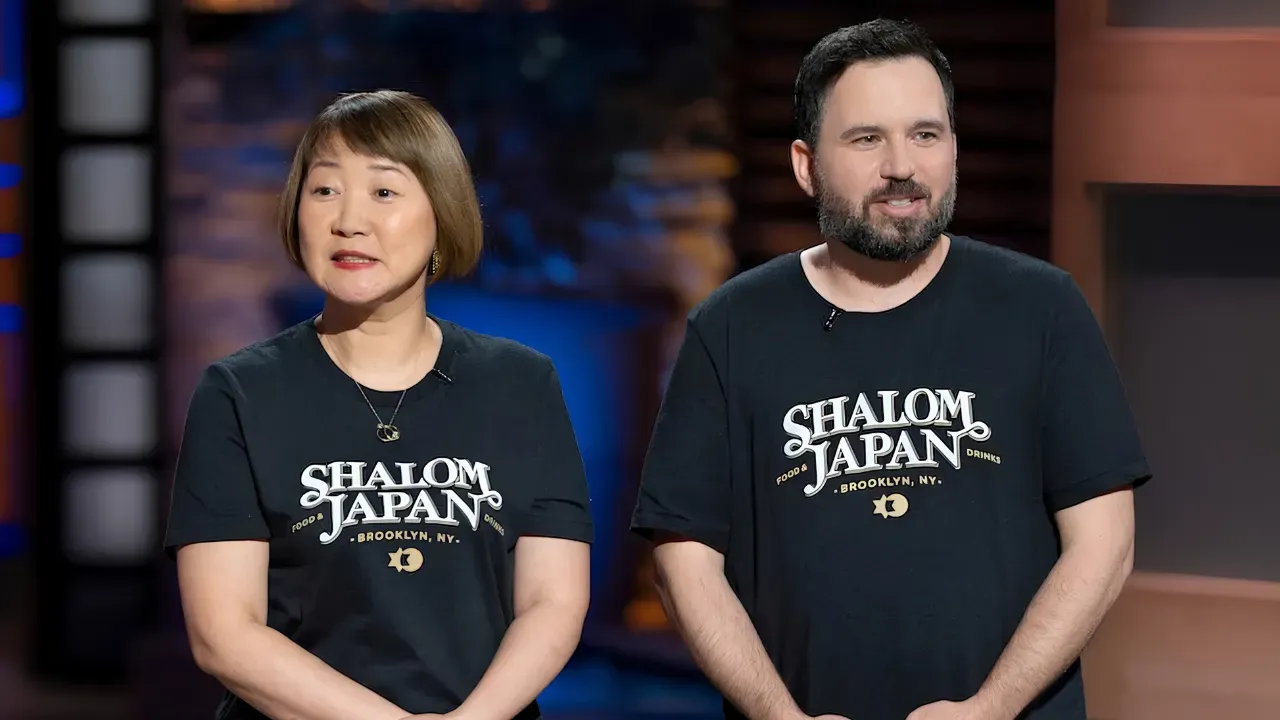
Israel studied painting at Maryland Institute College of Art before building a cooking career. His restaurant experience included Torrisi Italian Specialties and Mile End. A 2013 Discover Nikkei interview documents their paths into professional food service.
During the pitch, the couple described combining Aaron’s family soup with Sawa’s choice of ramen noodles. The resulting dish reflected the food they wanted to share together.
That background gave them useful advantages: cooking skills, restaurant experience, and a story customers could understand. Developing packaged food for national distribution would still require additional capabilities.
| Period | Milestone | Business significance |
|---|---|---|
| Before 2013 | Both founders work in established kitchens. | Builds product and service expertise. |
| 2013 | They open Shalom Japan. | Creates a place to develop their shared culinary identity. |
| 2023 | Love Japan is published. | Extends their work into home cooking. |
| 2024 | The cookbook wins the James Beard U.S. Foodways award. | Adds independent recognition before Shark Tank. |
| 2025 | They pitch expansion beyond the restaurant. | Tests which growth model fits their strengths. |
What Happened on Shark Tank?
The founders requested $200,000 for 20% of the ramen opportunity. They explicitly excluded the restaurant. That distinction separated an established operation from the early-stage business the Sharks would fund.
They reported approximately $17,000 in kit sales and said limited capacity constrained production. Those figures were founder statements during the pitch. No public accounts establish the reporting period or profitability.
The tasting went well. Questions then turned to refrigeration, expensive delivery, retail access, and the work needed to change the recipe for a longer shelf life.
The founders quoted $79.95 for a shipped two-serving kit, compared with $30 when sold from the restaurant. Their desired store price was $20. It was an ambition, not a confirmed retail offer.
Like fellow Episode 6 food business Tantos, Shalom Japan faced questions about the operation behind the product. Positive reactions to a tasting could not answer those questions.
| Ask | $200,000 for 20% |
|---|---|
| Barbara’s offer | $200,000 for 30%, subject to partner participation |
| Founder counteroffer | 25%; Barbara declined |
| Final on-air agreement | $200,000 for 30% |
| Shark | Barbara Corcoran |
| Condition | Cousins Maine Lobster partners joining the food-truck opportunity |
| Implied asking valuation | $1 million post-money; $800,000 pre-money |
| Implied offer valuation | Approximately $666,667 post-money; $466,667 pre-money |
| Restaurant included? | No |
Valuations assume newly issued equity. They describe proposed historical terms, not current company worth.
“I think this is ideal for a food truck.”
— Barbara Corcoran, Shark Tank
Barbara wanted experienced operators involved because trucks would demand substantial work. Her proposal drew on Barbara’s relationship with Cousins Maine Lobster and its founders, Jim Tselikis and Sabin Lomac.
The founders had not tried food trucks. They considered the change, negotiated the equity, and accepted the conditional offer. The other Sharks declined.
How Does Shalom Japan Make Money?
The broader brand has several selling opportunities, including dining, kits, catering, and books. Their individual financial contributions are undisclosed. The Shark Tank investment discussion did not encompass the existing restaurant.
| Customer | Diners, food enthusiasts, gift buyers, and remote fans |
|---|---|
| Value proposition | A distinctive meal connected to an established restaurant |
| Revenue model | Food and related product sales |
| Channels | Local food service and nationwide meal-kit distribution |
| Advantages | Culinary experience, restaurant reputation, recognizable signature dish |
| Risks | Cold-chain expense, limited capacity, channel dependence, and founder workload |
The pitch’s cost figures need careful handling. A $30 selling price less the stated $9.60 kit cost leaves $20.40, or 68% of the price. That calculation only subtracts the quoted production cost.
It does not establish profit. The pitch did not fully allocate labor, facilities, payment costs, spoilage, or customer acquisition. Nor does the $79.95 delivered price reveal how much Shalom Japan retained after platform and fulfillment expenses.
Orka Bar’s frozen-shipping challenge offers a useful comparison. Temperature-controlled delivery adds costs that customers may resist, even when they enjoy the food.
Food trucks could remove individual parcel delivery from each sale. However, vehicles, staff, preparation space, and dependable locations would create another cost structure. The proposal still needed a working pilot.
What Happened After Shark Tank?
The founder confirmed contact, without confirming a closing
In its November 14, 2025 report, New York Jewish Week published a statement from Aaron describing positive work with Barbara and her team.
“We are still in the process of working on what is next for us.”
— Aaron Israel, New York Jewish Week, November 14, 2025
That statement establishes engagement after the show. It leaves the investment’s legal and financial completion unresolved. The review found no clear later confirmation that the partner condition was satisfied.
A signed investment, an operating partnership, and a launched truck are separate milestones. Public evidence should establish each one before readers treat them as completed.
The distinction becomes clearer beside fellow Episode 6 company Surf Skull, whose update includes an explicit founder account of closing. Shalom Japan’s available statement is less specific.
Continued operations are easier to establish
The restaurant’s public presence and kit listing support continued trading activity. A December 2025 Christmas menu also provides a dated operating signal after the episode.
Goldbelly displayed an 87% customer-love score for the shop. Without a visible denominator or detailed review analysis, that figure offers limited evidence about overall satisfaction.
None of these signals measures the television appearance’s financial impact. Current sales, repeat-purchase rates, and profits remain undisclosed.
| Area | Evidence | What remains uncertain |
|---|---|---|
| Website | Restaurant and ordering information remains accessible. | Financial performance |
| Product availability | Classic kit listing remains accessible. | Checkout price, delivery slots, and fulfillment |
| Social activity | A reliable latest-post audit was unavailable. | Posting frequency and audience growth |
| Deal status | Conditional agreement and founder-confirmed follow-up | Completed investment and final terms |
| Latest dated operating asset located | December 2025 Christmas menu | Later dated company milestones |
| Business status | Active operations supported; conservatively classified as stable | Growth rate and financial stability |
Tokidoki belongs in the story, with the correct chronology
The team also operates Tokidoki, an adjacent Japanese café offering items such as onigiri, bento, and sandwiches. Its website supplies evidence of an additional food-service concept.
However, local coverage described the café before the November 2025 broadcast. It should not appear in a list of businesses created by the Shark Tank deal.
That timing makes the case more revealing. The founders were already exploring ways to extend their cooking beyond one dining room. Television introduced another possible route, rather than starting their expansion thinking.
| Date | Milestone |
|---|---|
| August 2013 | Shalom Japan opens in Williamsburg. |
| May 2023 | Love Japan is published. |
| June 2024 | The cookbook wins a James Beard award. |
| By April 2025 | Local reporting documents Tokidoki’s operations. |
| November 12, 2025 | Shark Tank airs the conditional agreement. |
| November 14, 2025 | Aaron describes working on next steps with Barbara’s team. |
| December 2025 | The restaurant publishes its Christmas menu. |
| September 2026 | Public operating evidence remains accessible; deal closure remains unclear. |
| Question | At the pitch | Later evidence |
|---|---|---|
| How would the product expand? | Founders sought retail help; Barbara proposed trucks. | No verified truck or national grocery rollout located. |
| Would Barbara participate? | Conditional on-air agreement | Founder confirms follow-up work, without an explicit closing statement. |
| Was the restaurant included? | Founders said no. | No evidence justifies treating restaurant assets as part of the deal. |
| Can growth be measured? | Approximately $17,000 in kit sales reported. | No comparable current revenue total disclosed. |
Where Can You Buy Shalom Japan Ramen?
For nationwide orders, start with the restaurant’s official ordering route to Goldbelly. For local dining or kit inquiries, contact Shalom Japan at 310 South Fourth Street in Brooklyn.
The $79.95 shipped price belongs to the pitch period. The restaurant’s published catering menu lists a two-serving DIY kit at $30. Neither should substitute for a fresh checkout or direct confirmation.
No verified national supermarket rollout or Shalom Japan subscription was established. Check destination eligibility, delivery timing, and available options before ordering.
Lessons From Shalom Japan’s Journey
Test demand at the price customers actually pay. Restaurant popularity offers useful evidence. Shipping charges can change the buying decision and how frequently customers reorder.
Match the expansion plan to the team. The founders understood cooking and hospitality. Barbara sought operators who could help manage the proposed truck business.
Negotiate the direction alongside the equity. Moving from 20% to 30% mattered. Moving from packaged retail ambitions toward food trucks potentially changed the company’s daily work even more.
Measure the new model before scaling it. A truck pilot would need evidence on service speed, labor, waste, location demand, and repeat customers. Enthusiastic tasting reactions cannot supply those numbers.
Final Take
Shalom Japan’s enduring strength is a distinctive dish built by experienced chefs. Its public operating evidence supports a business that continues serving customers. The unresolved question concerns how far that appeal can travel through a repeatable expansion model.
Barbara’s proposal offered a plausible way forward by pairing the product with operating experience. Whether that proposal became a funded, functioning venture remains unclear. The available evidence cannot support either a declared expansion triumph or a claim that the deal failed.
For entrepreneurs, the practical lesson lies in the work between those outcomes. A new sales channel changes costs, responsibilities, and customer expectations. The next meaningful milestone would be evidence that one of those channels works consistently.
FAQs
Is Shalom Japan still in business?
Yes. Public restaurant and ramen-kit evidence remained active when checked on September 17, 2026.
What was Shalom Japan’s Shark Tank deal?
The founders accepted $200,000 for 30% from Barbara Corcoran, conditional on Cousins Maine Lobster participation.
Did Barbara’s investment close?
That remains unclear. Aaron confirmed post-show work with her team, but public evidence does not explicitly establish a completed investment.
Did Shalom Japan launch food trucks?
No reliable launch confirmation was located during this review. That does not establish that the plan was abandoned.
Who founded Shalom Japan?
Married chefs Sawako Okochi and Aaron Israel founded the restaurant in 2013.
Where can you buy its ramen?
The verified routes are the Brooklyn restaurant and its nationwide Goldbelly kit listing. Confirm current ordering details directly.
What is Shalom Japan’s revenue or net worth?
Current figures are unverified. The approximately $17,000 mentioned during the pitch concerned kit sales, not total restaurant revenue. The deal’s implied valuation is historical.
The weekly question
From obsession to clarity — one original question every week.
We answer one noisy topic at a time, in full. No daily roundup, no thread bait — just the question, the principles, and the system.
More from Shark Tank USA Season 17
All season pitches
Shark Tank USA
Bauble Stockings After Shark Tank: Barbara’s Deal, Current Status and the Premium-Brand Risk
Shark Tank USA
McMiLLER After Shark Tank: Daniel Lubetzky’s Deal, Retail Growth, and the Viral-Game Risk
Shark Tank USA