
Bauble Stockings After Shark Tank: Barbara’s Deal, Current Status and the Premium-Brand Risk
Bauble Stockings’ Shark Tank deal, current status, pricing, growth signals, and the risk of taking a premium holiday brand down-market.
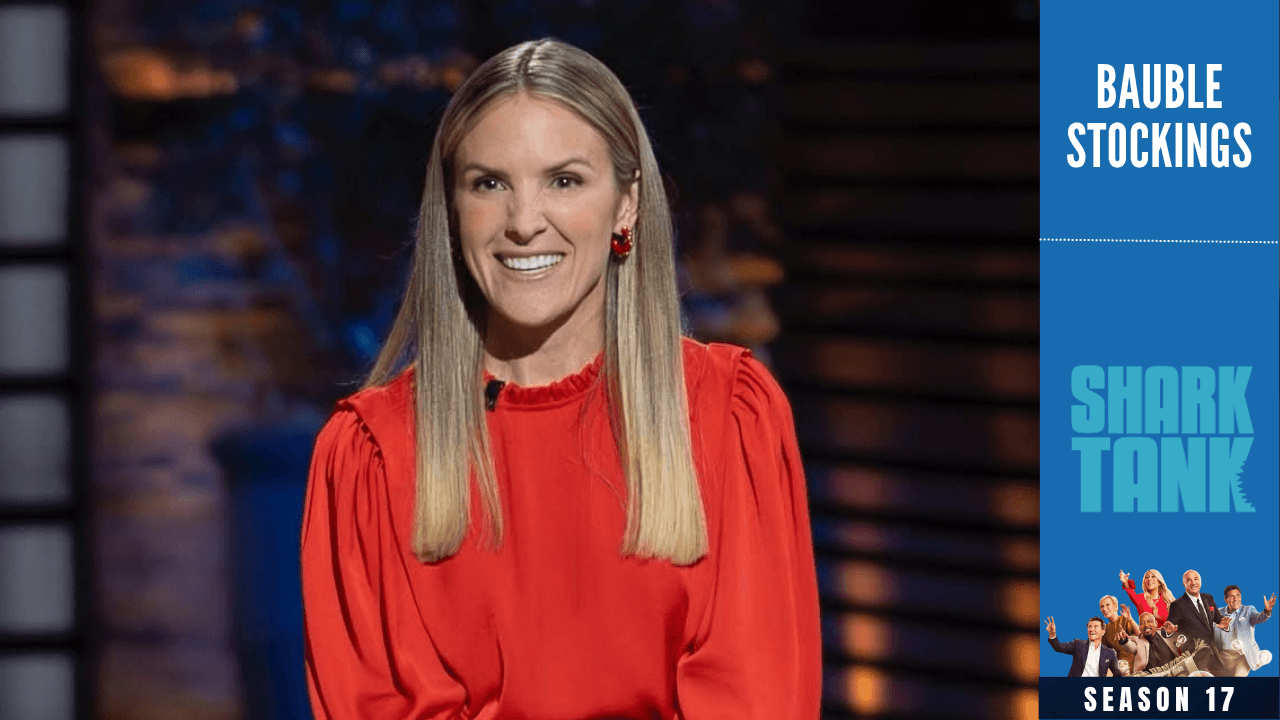
A miniature Christmas stocking priced near $90 sounds like a difficult product to scale. Bauble Stockings turned that apparent weakness into its identity.
Founder Kate Stewart is not selling storage space. She is selling a family ritual. Each ornament-sized stocking holds the final gift of Christmas or a clue leading to it. The product combines emotional storytelling, collectible designs, needlepoint craftsmanship, and fair-wage production in Haiti.
That formula generated $6.3 million in reported sales before Stewart appeared on Shark Tank. It also created the central question in her pitch: should a successful premium brand move down-market to reach more buyers?
As of October 2026, Bauble Stockings remains active. Its catalog has expanded into books, stationery, charms, artist collaborations, and full-size stockings. However, there is still no reliable public confirmation that Stewart’s on-air agreement with Barbara Corcoran completed due diligence.
The result is a useful case study from Shark Tank Season 17: a niche product can become a meaningful business when customers are buying the story around it.
Quick answer: Bauble Stockings is still in business and actively selling products in 2026. Kate Stewart accepted an on-air offer of $250,000 for 20% from Barbara Corcoran. The company promotes the agreement, but no reliable public evidence confirms that the investment legally closed after filming.
| Company | Bauble Stockings |
|---|---|
| Founder | Kate Stice Stewart |
| Product | Hand-stitched mini stockings for a final gift or clue |
| Industry | Holiday gifts, needlepoint, and home décor |
| Founded | 2018 |
| Shark Tank appearance | Season 17, Episode 7; December 10, 2025 |
| On-air agreement | $250,000 for 20% with Barbara Corcoran |
| Deal closing status | Unconfirmed |
| Current status | Active, with growth signals |
| Website | Official Bauble Stockings store |
What Is Bauble Stockings?
A Bauble Stocking is an ornament-sized needlepoint stocking placed on a Christmas tree. It holds a family member’s final gift or a clue that begins a scavenger hunt.
The gift does not need to be the most expensive one. The point is to make it the most personal. Examples include a note, jewelry, concert tickets, art lessons, or directions to a hidden present.
That makes Bauble Stockings an emotional and giftable product rather than a functional stocking. Customers are buying an object, but the real value proposition is the annual ritual it creates.
The core stockings are hand-stitched through Good Threads Needlepoint in Jacmel, Haiti. B Lab’s directory confirms that Good Threads is a certified B Corporation. Its stitchers can work from home and participate in profit sharing.
The standard mini stocking remains the flagship product. However, the company now also sells full-size stockings, a children’s book, scavenger-hunt stationery, engravable charms, and designs for weddings, birthdays, Hanukkah, sports fans, and other occasions.
Who Founded Bauble Stockings?
Kate Stice Stewart founded Bauble Stockings after discovering that a treasured Christmas practice was unique to her family.
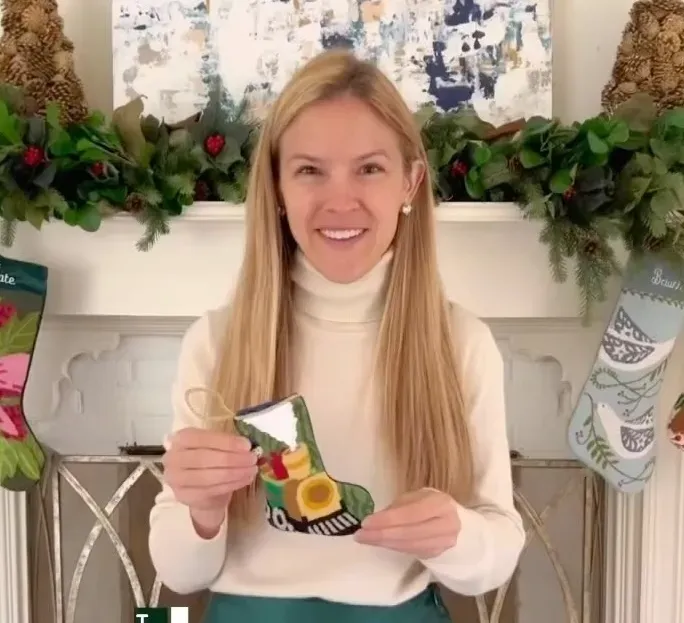
Her father created the tradition to thank Stewart’s mother for making Christmas special. He took Stewart and her brothers shopping, encouraged them to think about their mother as a person, and selected one thoughtful final gift. They hid that gift—or a clue to it—in a miniature stocking.
The name came from jewelry. On a good year, the final present was a “bauble.”
Stewart later asked her fiancé when she would receive her own Bauble Stocking. His confusion made her realize other families did not share the tradition. That gap became the business opportunity.
According to an Atlanta Journal-Constitution profile, Stewart launched the company while working at her father’s real-estate investment business. She was also raising two children. She moved into Bauble Stockings full-time in 2020 and did not start paying herself until 2022.
| Childhood | Helped her father choose her mother’s final Christmas gift |
|---|---|
| College | Studied public relations at Florida State University |
| Early career | Worked at her father’s real-estate investment company |
| 2018 | Launched Bauble Stockings |
| 2020 | Began running the company full-time |
| 2021 | Managed a major Haiti-related inventory disruption |
| 2022 | Began paying herself from the business |
| 2025 | Reached Shark Tank after applying for seven years |
| 2026 | Continued leading an expanded product and artist portfolio |
Stewart’s advantage was not manufacturing experience. It was her understanding of the story, customer, and emotional purpose behind the product.
What Happened on Shark Tank?
Stewart asked the Sharks for $250,000 for 15%, valuing Bauble Stockings at approximately $1.67 million after the proposed investment.
She demonstrated the concept with personalized stockings for each Shark. Kevin O’Leary received a rhyming clue directing him to a gift under his chair.
The tone changed when Stewart revealed the numbers. Standard stockings sold for $89.50 and cost a disclosed $30.49 to make. She also reported $6.3 million in cumulative sales since the 2018 launch.
That implied approximately $59.01 in gross profit on a direct sale, or a 65.9% product-level gross margin. The calculation excludes marketing, shipping, fulfillment, returns, payroll, and overhead.
The concern was not whether customers wanted the flagship product. It was Stewart’s proposed lower-priced velvet stocking and storybook.
Daymond John worried that Bauble Stockings could become trapped between premium and mass-market buyers. Daniel Lubetzky argued that Stewart had not defined what the brand would refuse to compromise. Kevin O’Leary believed the book distracted from the proven product.
“My sense is you haven’t had that conversation yet with yourself.”
— Daniel Lubetzky, during the pitch
Lori Greiner praised Stewart’s results but said she did not need a Shark. Barbara saw the same evidence differently. She viewed Stewart’s history of shifting from retail toward higher-margin direct-to-consumer sales as proof of adaptability.
“You’re willing to pivot when the condition changes.”
— Barbara Corcoran, during the pitch
Barbara offered $250,000 for 25%. Stewart negotiated, and the final reported on-air agreement was $250,000 for 20%.
| Original ask | $250,000 for 15% |
|---|---|
| Ask valuation | $1.67 million post-money |
| Barbara’s opening offer | $250,000 for 25% |
| Final on-air agreement | $250,000 for 20% |
| Final on-air valuation | $1.25 million post-money |
| Shark | Barbara Corcoran |
| Post-show closing | Unconfirmed |
The official ABC episode page confirms Bauble Stockings appeared alongside Edible Architecture, The Christmas Carolers, and McMILLER. All four pitches centered on celebration or holiday experiences, but Bauble Stockings arrived with the strongest disclosed sales history.
How Does Bauble Stockings Make Money?
Bauble Stockings operates as a premium consumer brand with both direct and wholesale channels.
Its website produces the best potential unit economics because the company keeps the retail margin. Wholesale provides broader discovery but requires Bauble Stockings to share that margin with stores.
The original $89.50 stocking also has limited purchase frequency. A well-made heirloom may last for decades. Growth therefore depends on selling to new households, adding family members, releasing collectible designs, and creating adjacent products.
| Customer | Families, affluent gift buyers, needlepoint collectors, wedding buyers, and specialty retailers |
|---|---|
| Value proposition | Turns the final Christmas gift into a repeatable family ritual |
| Revenue model | DTC sales, wholesale, exclusive retail designs, collaborations, and product extensions |
| Core price | Usually $89.50 for a standard mini stocking |
| Channels | Company website, specialty shops, collaborations, and selected online retailers |
| Advantages | Emotional story, craftsmanship, trademarks, artist network, ethical-production positioning, and retail relationships |
| Risks | Seasonality, premium pricing, slow hand production, low repeat frequency, and concentration in Haiti |
| Growth lever | More recipients, occasions, designs, collaborations, and higher-ticket full-size stockings |
The brand has also built an artist-collaboration system. Guest artists contribute designs, while part of the profit supports a selected charity. This gives the company new artwork, a new audience, and a reason to release limited editions.
Barbara’s Season 17 investments crossed very different categories. Fundraiser Blankets and Repaint Tray had little in common with holiday needlepoint. What connected them was demonstrated traction and a founder Barbara believed could execute.
What Happened After Shark Tank?
Bauble Stockings did not abandon the premium product. The standard needlepoint mini remained central to the brand through 2026.
Interestingly, the storybook criticized during the pitch also reached the market. It was listed separately for $14.99 during this audit. That is a more cautious extension than replacing the handmade product with a low-cost bundle.
The company also expanded further up-market. Full-size hand-stitched stockings were listed around $375 to $385, with several 2026 personalization options sold out. The full-size stocking collection also describes a profit-sharing arrangement with Good Threads.
These developments suggest a barbell strategy: keep the $89.50 mini as the core product, use the book and accessories as entry points, sell full-size stockings to high-value customers, and use collaborations to create collectability.
| Evidence | October 2026 finding | What it indicates |
|---|---|---|
| Official store | Active and processing orders | Operating business |
| Mini-stocking catalog | Broad assortment, mostly shown in stock | Ongoing inventory |
| Book | Available separately | Prototype concept partially commercialized |
| Full-size products | 2026 preorders and personalization sellouts | Higher-ticket demand |
| Guest artists | Named 2026 collections | Continued product development |
| Outside retailers | Products still listed by specialty stores | Active distribution |
| Charitable giving | Company reports more than $163,000 donated | Continued collaboration activity |
| Barbara deal | On-air agreement publicized | Closing remains unconfirmed |
| Recent revenue | Not disclosed | Financial growth cannot be quantified |
| 2018 | Launched online and in 32 retail stores |
|---|---|
| 2020 | Stewart moved into the business full-time |
| 2021 | Haiti disruption delayed thousands of preorders |
| 2023 | Full-size expansion discussed; charitable giving passed $95,000 |
| 2024 | Reported presence in 300-plus specialty shops |
| 2025 | Appeared on Shark Tank and accepted Barbara Corcoran’s offer |
| 2026 | Active store, new artists, broader assortment, and full-size preorders |
Did Shark Tank change the company’s trajectory? It clearly provided national exposure. However, the business already had meaningful sales and retail distribution. The available evidence does not support assigning a specific revenue increase to the show.
Where Can You Buy Bauble Stockings?
The official website offers the widest selection and is the best starting point for most buyers.
During the October 2026 audit, standard mini stockings generally cost $89.50. Some licensed designs cost more. The Bauble Stockings book cost $14.99, coordinating stationery commonly cost about $13, engravable charms started around $22.50, and full-size stockings were generally priced around $375 to $385.
Selected specialty stores also carry the brand. Inventory and exclusive designs vary by retailer.
The product makes the most sense for someone who values needlepoint, artisan production, and family traditions. Budget shoppers can find much cheaper decorative stockings elsewhere. That does not necessarily weaken Bauble Stockings; it confirms that the brand serves a narrower premium market.
Lessons From Bauble Stockings’ Journey
1. Customers may buy the ritual, not the object.
A miniature stocking has limited practical utility. The annual final-gift ceremony gives it value. Founders should identify the behavior their product creates, not only the function it performs.
2. Premium brands need guardrails.
Daniel and Kevin identified the central strategic risk. A cheaper product can increase reach, but it can also make the original feel overpriced. The safer approach is to create entry products that explain or complement the flagship.
3. A niche can support a substantial business.
Reported sales of $6.3 million show that a product does not need universal appeal. It needs enough customers who understand the value and will pay the required price.
4. Seasonality magnifies operational risk.
A delayed shipment in March may be manageable. A delayed Christmas product can miss almost its entire selling window. Bauble Stockings’ 2021 disruption shows why seasonal companies need longer lead times and careful preorder policies.
5. Ethical sourcing can be both an advantage and a dependency.
The Haiti partnership differentiates the brand and supports skilled employment. It also concentrates production in a country exposed to political, transportation, and security disruptions.
6. A Shark can offer more than rescue capital.
Lori was probably right that Bauble Stockings did not need investment to survive. Barbara’s potential value was mentorship, publicity, founder coaching, and help deciding which expansion paths deserved attention.
Final Take
Bauble Stockings remains active and commercially credible in 2026. Its strongest achievement is not inventing a miniature stocking. It is turning one family’s private ritual into a premium brand that other families can adopt.
The unresolved issue is Barbara Corcoran’s investment. The on-air agreement is clear, but its legal closing is not. Until stronger evidence appears, it should be described as an accepted on-air deal rather than a confirmed completed investment.
For entrepreneurs, the central lesson is equally clear: growth should extend what customers already value. It should not erase the qualities that made the flagship product worth buying.
Frequently Asked Questions
Is Bauble Stockings still in business?
Yes. The company’s website remains active in October 2026, with mini stockings, books, accessories, collaborations, and full-size stockings available.
Who founded Bauble Stockings?
Kate Stice Stewart founded the company. She based it on a Christmas tradition created by her father to honor her mother.
What was the Bauble Stockings Shark Tank deal?
Stewart asked for $250,000 for 15%. She accepted an on-air agreement of $250,000 for 20% from Barbara Corcoran.
Did Barbara Corcoran’s deal close?
The closing has not been publicly verified. The company announced that it received an on-air deal, but that does not confirm that post-show due diligence was completed.
How much had Bauble Stockings sold before Shark Tank?
Stewart reported $6.3 million in cumulative sales since launching in 2018.
How much does a Bauble Stocking cost?
Most standard mini stockings were priced at $89.50 during the October 2026 audit. Licensed and full-size products may cost more.
Where are Bauble Stockings made?
The needlepoint products are hand-stitched in Jacmel, Haiti, through Good Threads Needlepoint.
Are Bauble Stockings patented?
No patent was disclosed during the pitch or found in this research. However, Greystone Baubles, LLC owns registered trademarks associated with the Bauble Stockings name and branding.
The weekly question
From obsession to clarity — one original question every week.
We answer one noisy topic at a time, in full. No daily roundup, no thread bait — just the question, the principles, and the system.
More from Shark Tank USA Season 17
All season pitches
Shark Tank USA
McMiLLER After Shark Tank: Daniel Lubetzky’s Deal, Retail Growth, and the Viral-Game Risk

Shark Tank USA
Edible Architecture After Shark Tank: Lori’s Deal, Current Status and the Cost of Growth

Shark Tank USA