
Fundraiser Blankets Shark Tank Update: Deal, Growth and Current Status
Fundraiser Blankets turned school spirit into an $8 million business, but did its two-Shark deal ever close after filming?
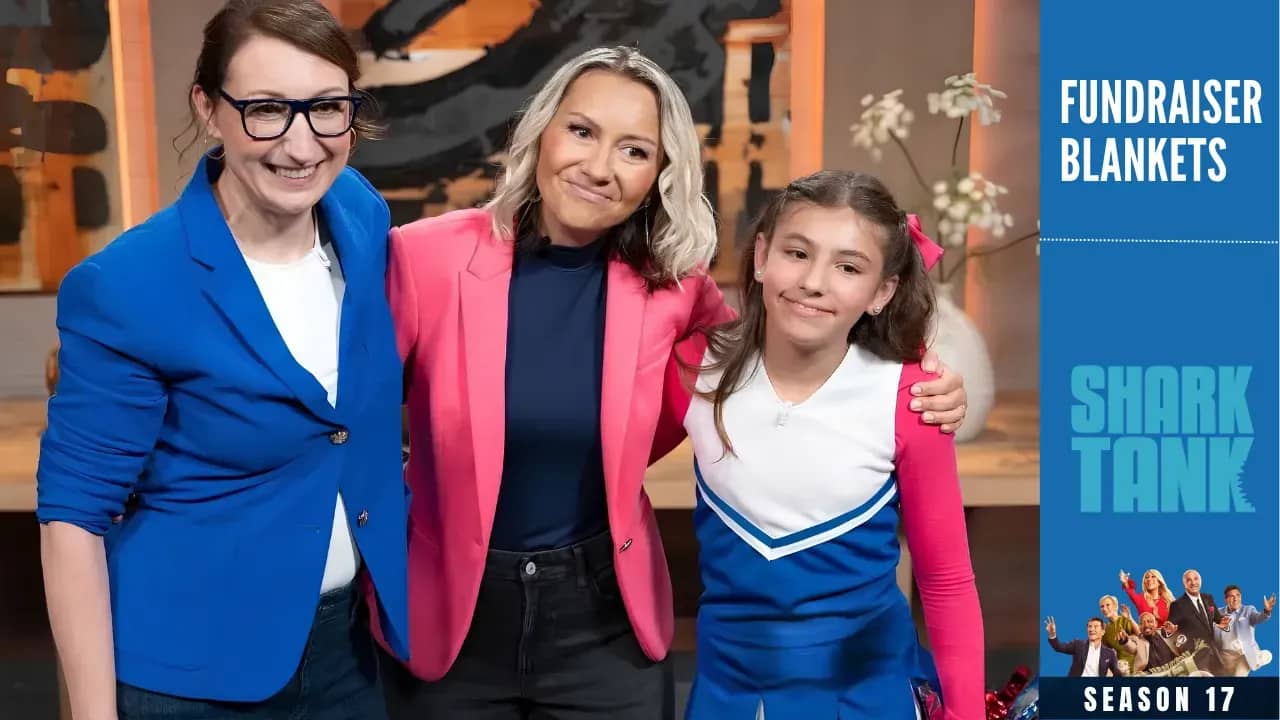
Fundraiser Blankets entered Shark Tank with something more convincing than a cozy product. It already had evidence that schools wanted a different kind of fundraiser.
The Michigan company later ranked No. 157 on the 2025 Inc. 5000, with 2,481% three-year growth. That result matters because custom blankets are not difficult to imitate. The company’s real case study is how two sisters built a specialized service around an otherwise familiar product.
Barbara Kent and Joanna Serra combined wholesale pricing, custom design, presales and school-focused support. Their model gives organizations control over the final selling price. It also avoids some of the frustration associated with candy, popcorn and disposable merchandise.
The founders accepted a joint Shark Tank offer from Lori Greiner and Barbara Corcoran. However, the televised handshake and a completed investment are not necessarily the same thing. This case file examines the agreement, the company’s economics, its current status and the evidence behind its growth.
| Company | Fundraiser Blankets |
|---|---|
| Founders | Barbara Jozwik Kent and Joanna Jozwik Serra |
| Product | Custom blankets and textiles for organizational fundraising |
| Industry | Education fundraising and custom textiles |
| Shark Tank episode | Season 17, Episode 3; aired Oct. 8, 2025 |
| Televised deal | $300,000 for 20% with Lori Greiner and Barbara Corcoran |
| Post-show deal status | Unclear |
| Current status | Growing, provisionally |
| Website | FundraiserBlankets.com |
Latest update — August 2026
- The company website and ordering system remain active.
- The business continues to show recent professional and partner activity.
- Inc. ranked Fundraiser Blankets No. 157 in 2025.
- The company says it worked with more than 6,000 schools during 2025.
- No definitive public confirmation of the Shark Tank investment closing was found.
What Is Fundraiser Blankets?
Fundraiser Blankets supplies custom polyester blankets to schools, sports teams, booster clubs and nonprofits. Each group can add its logo, mascot, colors or artwork and sell the finished product to supporters.
The organization buys at a wholesale price and chooses its resale price. It keeps the difference. This makes the blanket both a fundraising item and a visible piece of community merchandise.
The process also addresses a hidden problem in school fundraising: volunteer workload. Groups can request designs, use a presale model and receive promotional materials. Payment links can send funds directly to the participating organization.
Current Classic Comfort blankets include 50-by-60-inch and 60-by-70-inch options. Advertised prices start at $10.50, although the final cost depends on size, quantity and production method. The company also advertises full-area printing, unlimited colors and free standard shipping.
Fundraiser Blankets appeared in Shark Tank Season 17, Episode 3 alongside GoodEgg, Repaint Tray and Pluck. While those businesses sold consumer products, Fundraiser Blankets presented a wholesale model designed around the needs of schools, teams and nonprofit groups.
Fundraiser Blankets is therefore not just selling warmth. It is selling a fundraising system with a physical product attached.
Who Founded Fundraiser Blankets?
Barbara Kent and Joanna Serra are sisters who immigrated from Poland with their mother in 1988. Their early experience shaped the company’s focus on education and practical community support.

Kent graduated from West Point in 1999. She served as an Army Military Police officer and later medically retired as a service-disabled veteran. Serra studied elementary education and became an award-winning teacher.
The sisters first built Birdy Boutique, a textile company that produced educational products, learning blankets and children’s items. It later expanded into wholesale, private-label and organizational work.
The fundraising idea came from Serra’s experience with schools and parent groups. She wondered whether a custom school blanket could replace expensive food fundraisers.
“Can we put some school-themed things on a blanket and see if we could use it as a fundraiser?”
— Joanna Serra, PBS Start Up
Their first test provided useful proof of demand. According to a PBS profile of the founders, one school sold 750 blankets during two football events. The fundraiser generated more than $10,000 for the organization.
| Period | Founder milestone |
|---|---|
| 1988 | The sisters immigrated from Poland to the United States. |
| 1999 | Barbara Kent graduated from West Point. |
| 2000s | Kent served in the Army while Joanna Serra built her career in education. |
| 2014 | The sisters developed Birdy Boutique as a textile business. |
| 2020 | The business expanded further into B2B and wholesale channels. |
| 2022-2023 | Custom school blankets developed into the Fundraiser Blankets division. |
| 2025 | Serra and Kent appeared on Shark Tank. |
This is strong founder-market fit. Serra understood school budgets and parent volunteers. Kent brought leadership, procurement and operational experience. Their earlier textile company gave them a supply base before the fundraising division accelerated.
What Happened to Fundraiser Blankets on Shark Tank?
Serra and Kent asked for $300,000 in exchange for 10%. The request valued Fundraiser Blankets at $3 million.
The Sharks first examined the product and model. The founders said organizations paid between $10.50 and $19.50 per blanket during the period discussed. A common resale price was about $25.
They also disclosed production costs ranging from $5.30 to $13.80, depending on size. Those figures were presented during the pitch and have not been independently audited.
The sales history changed the tone of the conversation. The founders reported $3 million in 2023 sales and $8 million in 2024. They projected $10 million in 2025 revenue and about $1.5 million in profit.
Kevin O’Leary offered $300,000 for 20% and requested participation in distributions after the founders paid themselves. Lori Greiner offered $300,000 for 15%. Barbara Corcoran then proposed the same financial terms.
Daniel Lubetzky declined because the category did not fit his interests. Chip and Joanna Gaines also stepped aside, despite praising the founders and the product.
Serra and Kent asked Greiner and Corcoran to join forces. The two Sharks proposed a combined $300,000 investment for 20%. The founders tried to reduce that figure to 17%, but the Sharks held firm.
Kevin then reduced his offer to 15%. The founders still chose Lori and Barbara at 20%.
| Item | Terms |
|---|---|
| Original ask | $300,000 for 10% |
| Opening valuation | $3 million |
| Kevin O’Leary’s opening offer | $300,000 for 20%, plus participation in distributions |
| Lori Greiner’s individual offer | $300,000 for 15% |
| Barbara Corcoran’s individual offer | $300,000 for 15% |
| Final televised agreement | $300,000 for 20% |
| Sharks | Lori Greiner and Barbara Corcoran |
| Deal-implied valuation | $1.5 million |
| Post-show closing status | Unclear |
“We have more value in a partner than the amount of money you can give us.”
— Serra and Kent
The founders knowingly chose more dilution. They believed two consumer-business mentors could create more value than the extra 5% they would retain with Kevin’s revised offer.
How Does Fundraiser Blankets Make Money?
The business earns revenue by selling customized textiles at wholesale prices. Schools and teams are the company’s customers, while parents, alumni and supporters are the organizations’ customers.
Consider a simple example. If a school buys a blanket for $10.50 and sells it for $25, the school retains $14.50 before its own expenses. At a $35 selling price, the difference rises to $24.50.
The company’s economics are different. Using the pitch’s $10.50 wholesale price and $5.30 production cost produces $5.20 before design, freight, wages, marketing and overhead. That equals a product-level margin of about 49.5%. It should not be confused with the company’s verified gross or net margin.
| Customers | Schools, PTOs, sports teams, nonprofits and community organizations |
|---|---|
| Value proposition | A customized, useful fundraiser that gives organizations control over their selling price |
| Revenue model | Wholesale sales of custom blankets and related textiles |
| Sales channels | Website inquiries, presales, bulk orders, referrals and repeat customers |
| Customer acquisition | Search traffic, word of mouth, school referrals, certifications and media exposure |
| Advantages | Low advertised pricing, design support, full-area customization, fundraising pages and payment tools |
| Key risks | Easy imitation, production complexity, seasonal demand and dependence on organization-level buyers |
The product itself offers limited protection from competition. Another textile supplier can source and print polyester blankets. Fundraiser Blankets must defend its position through price, service, turnaround time, search visibility and relationships.
This execution-based advantage resembles other simple Shark Tank products whose value comes from distribution rather than technical complexity. Lori Greiner’s work with companies such as Z-Coil footwear also shows why an experienced consumer investor can matter when product positioning and channels are central.
What Happened After Shark Tank?
The business remains active. Its website continues accepting custom-project inquiries and publishes current pricing, production choices and fundraiser pages.
The strongest independent evidence predates the broadcast but confirms that the pitch was not built on television exposure alone. The Inc. company profile ranked Fundraiser Blankets No. 444 in 2024 and No. 157 in 2025. Inc. reported 2,481% three-year growth for the 2025 list.
The company’s professional profile says it partnered with more than 6,000 schools during 2025. Its recent LinkedIn activity also shows continued work with schools, expos and community partners in 2026.
However, post-show financial disclosure remains limited. The $10 million revenue and $1.5 million profit figures were forecasts. No reliable public record confirms that the company reached either number.
| Period | Evidence | How to interpret it |
|---|---|---|
| 2023 | $3 million in sales | Founder-reported during the Shark Tank pitch |
| 2024 | $8 million in sales | Founder-reported and subsequently covered by CNBC |
| 2025 forecast | $10 million in revenue and $1.5 million in profit | Projection made during the pitch, not a confirmed result |
| 2025 Inc. result | No. 157 on the Inc. 5000 with 2,481% three-year growth | Strong independent evidence of rapid growth |
| 2025 reach | More than 6,000 schools | Company-reported operating signal |
| 2026 | Active website and recent professional activity | Confirms continued operations but not current revenue |
| Area | Finding as of August 2026 | Evidence strength |
|---|---|---|
| Website | Active with current product information, pricing and inquiry forms | Strong |
| Product availability | Available through custom orders and participating fundraisers | Strong |
| Social activity | Recent company and partner activity found in 2026 | Strong |
| Inc. recognition | No. 157 on the 2025 Inc. 5000 | Strong |
| Televised agreement | $300,000 for 20% with Lori Greiner and Barbara Corcoran | Confirmed |
| Investment closing | No definitive public confirmation found | Unclear |
| Latest financial result | No confirmed actual 2025 or 2026 revenue disclosed | Unavailable |
| Business classification | Growing, provisionally | Evidence-based assessment |
The official website says the founders accepted the joint agreement. It does not say that due diligence closed. Neither Shark’s public portfolio provided clear confirmation during this review.
Customer evidence is also uneven. Company-hosted testimonials praise softness, vibrant printing and sell-through. Yet no large independent review dataset was found. The safest conclusion is that reception appears positive, while independently measured satisfaction remains limited.
| Year | Milestone |
|---|---|
| 2014 | Birdy Boutique developed as the founders’ textile business. |
| 2020 | The operation expanded further into B2B, private-label and wholesale work. |
| 2022-2023 | The custom school-blanket concept became a focused fundraising division. |
| 2023 | The founders reported $3 million in Fundraiser Blankets sales. |
| 2024 | The founders reported $8 million in sales, while Inc. ranked the company No. 444. |
| 2025 | Fundraiser Blankets reached No. 157 on the Inc. 5000 with 2,481% three-year growth. |
| Oct. 8, 2025 | The Shark Tank episode aired, and the founders accepted a joint deal from Lori Greiner and Barbara Corcoran. |
| 2026 | The website and professional channels remained active, although the investment’s closing status remained unclear. |
Where Can You Buy Fundraiser Blankets?
Organizations should begin through the official website. The company provides a design and sample process rather than a conventional one-click consumer purchase.
Current Classic Comfort prices generally range from $10.50 to $12.50 for the 50-by-60-inch size and $13 to $15 for the 60-by-70-inch size. Quantity, rush production and U.S.-printed options can change the final quote.
Individual buyers usually purchase through a participating school, team or nonprofit. The local fundraiser controls its retail price and distribution.
Groups should review minimum quantities, turnaround time and design approval carefully. Custom orders become nonrefundable after approval and production, according to the company’s current terms.
Lessons From the Fundraiser Blankets Journey
1. Economic value can matter more than product novelty
A blanket is not a new invention. The opportunity comes from giving organizations enough pricing room to raise meaningful funds.
2. Remove work from the least-resourced participant
PTO leaders and coaches are often volunteers. Designs, presale support and payment links reduce their administrative burden. That service layer makes the offer harder to replace than the blanket alone.
3. Founder-market fit can create better product decisions
Serra understood schools because she taught in them. Kent understood disciplined operations and public service. Their background helped them recognize why conventional fundraisers frustrated families.
4. Rapid growth does not eliminate competitive risk
Inc. confirmed substantial growth, but custom textiles remain accessible to competitors. The company must keep winning through execution.
5. The cheapest capital is not always the founders’ preferred capital
Serra and Kent could have accepted Kevin’s revised 15% offer. They instead gave up 20% for two Sharks. Their decision shows how founders may value relationships, access and mentoring alongside valuation.
Final take
Fundraiser Blankets is still operating and has stronger growth evidence than many companies entering the Tank. The Inc. rankings, active ordering system and recent company activity support a provisional “growing” classification.
The unfinished part of the story is the investment. The on-air agreement is clear, but its closing is not. Until the company or Sharks confirm completed due diligence, the responsible description is “televised deal accepted; final status unclear.”
The broader lesson is more durable. Serra and Kent did not need to invent a new category. They redesigned the economics and workflow of an old one. Readers can explore the other companies and deal outcomes in the Shark Tank Season 17 episode guide and products list.
Frequently Asked Questions
Is Fundraiser Blankets still in business?
Yes. Its website, ordering system and professional social activity remained active as of August 2026.
Who founded Fundraiser Blankets?
Sisters Barbara Jozwik Kent and Joanna Jozwik Serra founded the business. Kent is an Army veteran and West Point graduate. Serra is a former teacher.
What did Fundraiser Blankets ask for on Shark Tank?
The founders asked for $300,000 in exchange for 10%, implying a $3 million valuation.
What deal did Fundraiser Blankets receive?
They accepted a televised agreement of $300,000 for 20% from Lori Greiner and Barbara Corcoran.
Did the Fundraiser Blankets Shark Tank deal close?
The closing remains unclear. The company confirms that it accepted the offer, but no reliable public evidence confirms completed due diligence.
How much revenue did Fundraiser Blankets make?
The founders reported $3 million in 2023 and $8 million in 2024. They projected $10 million for 2025, but no confirmed actual 2025 result was found.
How does a Fundraiser Blankets fundraiser work?
An organization chooses a custom design, orders in bulk or uses presales, and sets its own selling price. It keeps the difference between its wholesale cost and retail price.
How much do Fundraiser Blankets cost?
Current advertised Classic Comfort pricing begins at $10.50. Final prices depend on size, quantity and production option.
The weekly question
From obsession to clarity — one original question every week.
We answer one noisy topic at a time, in full. No daily roundup, no thread bait — just the question, the principles, and the system.
More from Shark Tank USA Season 17
All season pitches
Shark Tank USA
The Christmas Carolers After Shark Tank: Barbara’s 60% Deal, Expansion and Current Status
Shark Tank USA
Bauble Stockings After Shark Tank: Barbara’s Deal, Current Status and the Premium-Brand Risk

Shark Tank USA