
GoodEgg Shark Tank Update: Is the Egg-Cleaning Brand Still Growing?
A purpose-built brush for dirty chicken eggs may sound like a tiny business, but GoodEgg entered Shark Tank with more than $2.5 million in reported sales.
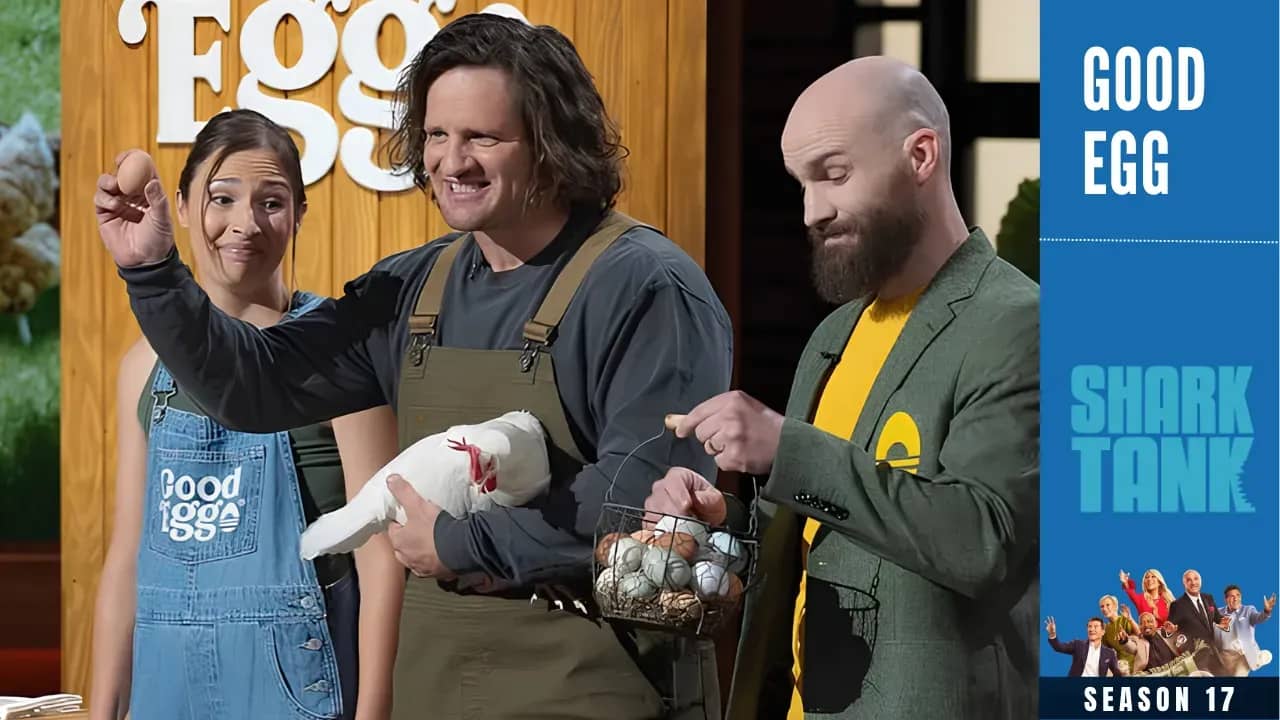
A purpose-built brush for dirty chicken eggs sounds like a very small business. GoodEgg’s reported sales suggest otherwise.
The Utah company turned an unpleasant backyard chore into a branded cleaning system. Its founders told the Sharks they had already generated more than $2.5 million in sales. They also showed attractive product margins and plans to expand beyond egg cleaning into the wider homesteading market.
That combination earned Amy and Bryce Van Leuven and Tim Rowberry an on-air deal with Chip and Joanna Gaines. Yet the most useful part of the GoodEgg story is not the televised handshake. It is the tension between a high-margin tool, a narrow customer group and the need to create repeat purchases.
This case file examines GoodEgg’s current status, its business model and the public evidence behind its growth. It also separates the company’s marketing claims from official egg-handling guidance.
| Product Snapshot | Details |
|---|---|
| Company | GoodEgg / GoodEgg Stuff LLC |
| Founders | Amy and Bryce Van Leuven; Tim Rowberry joined them in the pitch |
| Product | Silicone egg-cleaning brush and enzyme-based cleansers |
| Industry | Backyard poultry and modern homesteading |
| Shark Tank episode | Season 17, Episode 3 |
| Air date | Oct. 8, 2025 |
| On-air deal | $200,000 for 20% with Chip and Joanna Gaines |
| Deal status | Accepted on air; final legal close remains unclear |
| Current status | Active, with stable-to-growing evidence |
| Website | GoodEgg |
Latest update: July 2026
- GoodEgg’s website remains active and is accepting orders.
- The range now includes two brush sizes, multiple cleansers, refills, multipacks and bundles.
- The company offers direct wholesale ordering, Faire and Shopify Collective options.
- Magnolia publicly lists GoodEgg among the small businesses it supports.
- No audited post-show revenue or public deal-closing document was found.
What is GoodEgg?
GoodEgg is an egg-cleaning system designed for people who raise chickens or ducks at home. Its core product is a flexible silicone brush shaped around an individual egg.
The design contains rows of small internal protrusions. A user places an egg inside and moves the brush around its shell. Openings in the brush allow water and debris to drain away.
The brush addresses a simple but specific problem. Homegrown eggs can collect dirt, feathers and droppings in a nesting box. General-purpose sponges and flat brushes are not shaped for the shell and may be difficult to use without cracking it.
GoodEgg pairs the durable tool with enzyme-based washes. That pairing is important to the business. The brush may last for years, while cleanser and concentrated refills can bring customers back.
The current lineup shows how the product has evolved. GoodEgg now sells different brush sizes, standard and heavier-duty washes, refills, multipacks and kits. A single brush was listed at $20 in July 2026. The standard wash was $15, while the Deluxe Egg Cleaning Kit was $55.
Consumers should still follow appropriate food-safety guidance. Penn State Extension’s home-flock guidance says wet cleaning requires controlled water temperatures, food-safe detergent and an approved sanitizer. It also advises against scrubbing the shell. GoodEgg should therefore be viewed as a cleaning tool, not a substitute for agricultural or public-health advice.
Who founded GoodEgg?

Amy and Bryce Van Leuven created GoodEgg after encountering the problem on their own homestead. They kept chickens and ducks but could not find a brush built specifically for cleaning individual eggs.
The couple says it worked with industrial designers and tested about 50 prototypes. Tim Rowberry later joined them in the Shark Tank pitch. Patent records name Bryce Van Leuven and Timothy Rowberry as the brush’s inventors.
The company’s launch was interrupted by a more serious family challenge. Amy said she received a stage 4 breast cancer diagnosis while pregnant with the couple’s second daughter. GoodEgg paused while the family focused on her pregnancy and treatment.
That experience became part of the company’s mission. GoodEgg says it donates 10% of profits to individuals and families affected by cancer.
“Our community stepped up for us, and we want to step up for them.”
— Amy Van Leuven
| Founder Timeline | Milestone |
|---|---|
| Problem discovery | Amy and Bryce struggle to clean eggs from their backyard birds. |
| Product development | The founders work through about 50 prototypes with industrial designers. |
| Launch pause | Amy’s cancer diagnosis delays the planned launch. |
| 2023 | The patent records an April 11 priority date. |
| 2024 | The utility patent issues, and GoodEgg completes what the founders called its first full year. |
| 2025 | Amy, Bryce and Tim pitch GoodEgg on Shark Tank. |
What happened to GoodEgg on Shark Tank?
GoodEgg appeared in Season 17, Episode 3. The founders asked for $200,000 in exchange for 10%, implying a $2 million post-money valuation.
The unit economics immediately caught the Sharks’ attention. The founders said a brush landed for less than $2 and sold for $20. The $55 kit reportedly landed for less than $10. The wash cost $3.79 and sold for $15.
GoodEgg also had meaningful sales for a niche product. The founders reported more than $2.5 million in lifetime revenue. They said the business generated $1.1 million in 2024, its first full year, but finished with only about $50,000 in net profit.
They projected more than $3 million in revenue and about $500,000 in profit for the following year. Those figures were projections made during filming and have not been independently confirmed.
The Sharks’ objections focused on the size of the market and the difficulty of changing customer behavior. Barbara Corcoran could not see enough demand. Lori Greiner liked the product but did not consider herself the right partner. Kevin O’Leary challenged both the valuation and the likelihood that customers would repeatedly buy GoodEgg’s wash.
“You have to prove the model, particularly the sell-through of the wash.”
— Kevin O’Leary
Chip and Joanna Gaines viewed the company differently. Their investment thesis was not limited to an egg brush. They saw a brand that could serve a growing audience interested in backyard animals, homegrown food and modern homesteading.
“I could honestly see this living in our ecosystem.”
— Joanna Gaines
The Gaineses offered $200,000 for 20%. The founders countered with 15%, but Chip and Joanna held firm. GoodEgg accepted the 20% offer.
| Deal Snapshot | Terms |
|---|---|
| Original ask | $200,000 for 10% |
| Original implied valuation | $2 million post-money |
| Gaines offer | $200,000 for 20% |
| Founder counter | $200,000 for 15% |
| Final on-air deal | $200,000 for 20% |
| Final implied valuation | $1 million post-money |
| Investors | Chip and Joanna Gaines |
Readers following other businesses from Shark Tank Season 17 will recognize the trade-off. GoodEgg surrendered twice its proposed equity, but gained investors whose audience aligned unusually well with the company’s target customer.
How does GoodEgg make money?
GoodEgg uses a tool-and-refill model. The brush brings the customer into the brand. Washes and concentrated refills create the possibility of repeat revenue.
This structure solves one weakness of a durable product. If the brush works and survives regular use, owners may not need another for years. GoodEgg must then encourage cleanser purchases, sell additional sizes or introduce products for other homesteading chores.
| Business Model Snapshot | Analysis |
|---|---|
| Customers | Backyard chicken and duck keepers, homesteaders, gift buyers and farm retailers |
| Value proposition | A purpose-built tool for cleaning individual homegrown eggs |
| Revenue model | Brushes, cleansers, refills, kits and multipacks |
| Channels | Direct-to-consumer website, retail stores, direct B2B, Faire and Shopify Collective |
| Advantages | Patent, memorable brand, reported product margins and authentic founder-market fit |
| Risks | Narrow category, premium pricing, substitutes, education costs and uncertain refill retention |
The company’s reported brush economics are strong. A landed cost below $2 against a $20 selling price leaves substantial gross-margin room before advertising, fulfillment, retailer margins and overhead.
Wholesale changes the calculation because retailers take part of the selling price. However, retail also places the product in front of customers already shopping for poultry or farm supplies. That may reduce GoodEgg’s customer-education cost.
The company also owns a verified piece of intellectual property. U.S. Patent No. 12,089,567 covers an apparatus and method for an egg-washing brush. The patent lists Bryce Van Leuven and Timothy Rowberry as inventors and GoodEgg Stuff LLC as the assignee.
A patent cannot remove every substitute. Consumers can still use another brush, a cloth or a dry-cleaning method. GoodEgg’s longer-term defense must therefore combine the patented design with brand trust, distribution and a wider product system.
What happened after Shark Tank, and where can you buy GoodEgg?
GoodEgg remains active. Its official store was accepting orders in July 2026 and offered a broader range than the original pitch.
The expansion includes different brush sizes, concentrated wash refills, a heavier-duty cleanser, multipacks and a Shark Tank bundle. That matters because it suggests the founders are developing higher-value orders and recurring products rather than relying on one $20 tool.
The company also maintains a retail store locator and a wholesale page. Retailers can order directly, connect through Shopify Collective or purchase through Faire.
The strongest post-show partnership evidence comes from Magnolia. GoodEgg appeared in Magnolia’s 2025 Silobration vendor guide. Magnolia also includes the company on its page of small businesses it supports.
Those signals show that the relationship continued beyond the episode. They do not, by themselves, prove that the equity investment legally closed on the televised terms. Until GoodEgg, Magnolia or a public filing confirms completion, the deal should remain classified as unclear.
| Current Status Evidence | Finding | Assessment |
|---|---|---|
| Website | Active and accepting orders | Verified |
| Product availability | Brushes, washes, refills and bundles listed | Active |
| Wholesale | Direct B2B, Faire and Shopify Collective offered | Active |
| Magnolia activity | Support page and Silobration vendor appearance | Strong partnership signal |
| Deal status | No public closing confirmation found | Unclear |
| Business status | Multiple operating and expansion signals | Stable to growing |
| Company Timeline | Event |
|---|---|
| 2023 | Patent priority date and GoodEgg trademark filing |
| 2024 | Patent issues; founders later report $1.1 million in first-full-year sales |
| Oct. 8, 2025 | GoodEgg appears on Shark Tank and accepts the Gaineses’ offer |
| 2025 | GoodEgg participates in Magnolia’s Silobration |
| July 2026 | Expanded catalog, wholesale channels and Magnolia support remain visible |
The official store is the best starting point for buyers because it carries the full product range. Customers who prefer local purchasing can use the company’s store locator, though availability should be confirmed before traveling.
Lessons from GoodEgg’s journey
1. A niche can be large enough if its users care deeply
Several Sharks saw only an egg brush. The founders and the Gaineses saw a growing identity around backyard food production. GoodEgg’s reported sales indicate that a narrow customer group can still support a meaningful business when the problem is frequent and recognizable.
2. A durable product needs a second revenue engine
O’Leary’s refill objection was financially important. A long-lasting brush creates customer value but limits replacement sales. GoodEgg needs cleanser retention, bundles or a broader catalog to raise lifetime customer value.
This is where GoodEgg can learn from Scrub Daddy. The smiling sponge became a platform for a much larger cleaning range. GoodEgg does not need the same scale, but it does need customers to associate the brand with more than one tool.
3. Strategic fit can be worth additional equity
The founders accepted a $1 million implied valuation after proposing $2 million. That looks like a large concession when measured only in dollars.
The trade becomes more understandable when measured against distribution and audience fit. Chip and Joanna already speak to consumers interested in farms, homes, food and purposeful brands. Few investors could offer GoodEgg such a direct connection to its target market.
4. Customer education is both a moat and a cost
GoodEgg must explain why a special egg tool is necessary. Education can build authority, but it also makes every sale harder. Conflicting public guidance about washing or scrubbing homegrown eggs adds another layer of difficulty.
Successful education must remain accurate and restrained. The brand should avoid suggesting that a brush alone can eliminate food-safety risks.
5. A mission strengthens a business only when the economics work
Amy’s story gives the giving program genuine meaning. It also creates a strong emotional connection with customers.
However, the 10% profit commitment does not replace margin discipline. GoodEgg still needs repeat customers, controlled acquisition costs and profitable wholesale terms. Mission can deepen loyalty, but the operating model must fund that mission.
Final take
GoodEgg is still operating and has built more than a post-show landing page. It has an active store, an expanded catalog, wholesale infrastructure, an issued patent and continuing visibility through Magnolia.
The company’s next test is whether it can turn those assets into a broader homesteading brand. The brush has attractive reported economics, but it is durable and serves a specific audience. Long-term growth depends on cleanser retention, retail sell-through and successful product expansion.
The founders’ most important decision may have been accepting investors who understood their customer rather than holding tightly to the original valuation. GoodEgg’s journey shows that a narrow product can open a larger market—but only if the brand builds beyond its first invention.
Frequently asked questions
Is GoodEgg still in business?
Yes. GoodEgg’s website was active and accepting orders in July 2026. The company also maintained wholesale ordering and a retail store locator.
Who founded GoodEgg?
Amy and Bryce Van Leuven created the company after struggling to clean eggs from their backyard flock. Tim Rowberry joined them in the Shark Tank pitch and is named as a patent inventor alongside Bryce.
What deal did GoodEgg get on Shark Tank?
GoodEgg accepted $200,000 for 20% from Chip and Joanna Gaines. The founders had initially asked for $200,000 for 10%.
Did the Chip and Joanna Gaines deal close?
The companies show signs of an ongoing relationship, including Magnolia promotion and event participation. However, no public closing document or explicit confirmation of the completed equity transaction was located.
How much does the GoodEgg brush cost?
The original brush was listed at $20 in July 2026. The company also sold washes, concentrated refills, multipacks and kits at different prices.
Is GoodEgg patented?
Yes. U.S. Patent No. 12,089,567 covers an apparatus and method for an egg-washing brush. GoodEgg Stuff LLC is listed as the assignee.
Where can you buy GoodEgg?
The broadest selection is available from GoodEgg’s official website. The company also lists local retailers and works with wholesale partners.
Should you wash eggs from backyard chickens?
Guidance varies according to the egg’s condition, intended use and applicable rules. Home-flock owners should follow local extension or agricultural guidance concerning dry cleaning, water temperature, sanitizers, refrigeration and cracked eggs.
The weekly question
From obsession to clarity — one original question every week.
We answer one noisy topic at a time, in full. No daily roundup, no thread bait — just the question, the principles, and the system.
More from Shark Tank USA Season 17
All season pitches
Shark Tank USA
The Christmas Carolers After Shark Tank: Barbara’s 60% Deal, Expansion and Current Status
Shark Tank USA
Bauble Stockings After Shark Tank: Barbara’s Deal, Current Status and the Premium-Brand Risk
Shark Tank USA