
Z-Coil Shark Tank Season 17: Founders, Lori Greiner Deal, Product, Updates and Where to Buy
Z-Coil brought spring-heeled pain-relief shoes to Shark Tank Season 17 and landed a dramatic deal with Lori Greiner.
Last updated: May 21, 2026
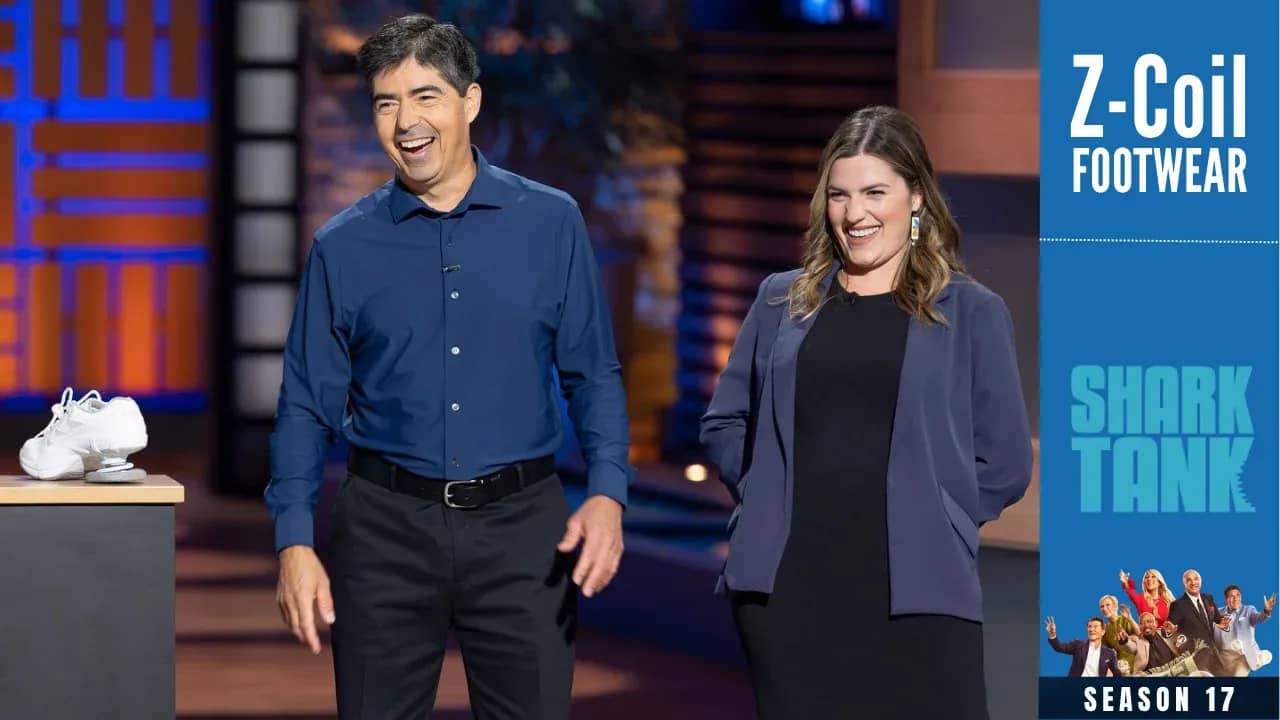
Z-Coil was one of the most unusual products in the Shark Tank Season 17 premiere. The shoes had a visible spring in the heel, a comfort-first promise, and a family story that made the pitch more emotional than a normal footwear segment.
Andres Gallegos and Lindley Gallegos Bach came to the Tank looking for help relaunching a decades-old brand. They left with a dramatic on-air deal from Lori Greiner after every Shark seemed ready to pass.
Quick Answer
Z-Coil, officially styled as Z-CoiL, is a spring-heeled pain-relief footwear brand led by Andres Gallegos and Lindley Gallegos Bach. The product was originally invented by Andres’ father, Alvaro Z. Gallegos, and is designed to reduce walking and standing impact.
Z-Coil appeared in Shark Tank Season 17, Episode 1, asking for $250,000 for 10%. Andres and Lindley accepted an on-air deal with Lori Greiner for $250,000 in exchange for 50% equity.
Product Snapshot
| Item | Details |
|---|---|
| Product | Z-CoiL Pain Relief Footwear |
| Original inventor | Alvaro Z. Gallegos |
| Shark Tank presenters | Andres Gallegos and Lindley Gallegos Bach |
| Episode | Shark Tank Season 17, Episode 1 |
| Air date | Sept. 24, 2025 |
| Category | Comfort footwear / pain-relief shoes |
| Original ask | $250,000 for 10% |
| Shark Tank deal | $250,000 for 50% with Lori Greiner |
| Website / where to buy | Z-CoiL official website |
What Is Z-Coil?
Z-Coil is a footwear brand built around one simple but bold idea: put a spring in the heel of a shoe to reduce impact on the body. During the pitch, Lindley summed up the concept with the line, “We’re putting springs on your feet.”
The shoes are designed for people who spend long hours walking or standing. That includes nurses, warehouse workers, teachers, retail workers, service workers, construction workers, and people who want more shock absorption from their everyday shoes.
Z-CoiL’s design includes several comfort features:
- A visible heel coil that works like a shock absorber
- A built-in Z-Orthotic for foot support
- A rocker-bottom sole to help forward motion
- Thick forefoot cushioning
- A wider toe box
- Replaceable coils on many styles
On its How It Works page, Z-CoiL says its shoes cut impact by up to 50%. The company also says the coil returns energy with each step, which may help reduce fatigue for people who stay on their feet all day.
Who Founded Z-Coil?
Z-Coil’s story starts with Alvaro Z. Gallegos, Andres Gallegos’ father. According to the company’s About page, Z-CoiL is a small family-owned business based in Albuquerque, New Mexico. The shoe idea was born in 1991, and the company took off shortly after.
Andres explained in the Tank that his father was in the shoe business and loved running. After Andres’ mother died, Alvaro raised eight children while still looking for a better way to reduce foot and body pain. That search eventually became Z-CoiL.
The Shark Tank pitch featured Andres and his daughter, Lindley Gallegos Bach. Lindley brought a digital marketing background to the company and had been working to push the brand into a new growth phase.
That father-daughter dynamic became a major part of the pitch. Z-Coil was not a new startup chasing its first proof of concept. It was a family business trying to turn a proven niche product into a broader national brand.

What Happened on Shark Tank?
Andres and Lindley entered Shark Tank asking for $250,000 for 10% of Z-Coil. That gave the company a $2.5 million valuation.
They opened by talking about how much people punish their feet through work, sports, walking, and hiking. Their pitch was that Z-Coil solves the problem “at the foundation” by reducing impact before pain travels into the knees, legs, and back.
The Sharks tried on the shoes, and the reaction was mixed in the most Shark Tank way possible. They liked the feel, but they could not ignore the look. One reaction captured the tension clearly: “The feel is great.” Another concern was just as direct: “They just look really bad.”
Then the business history came out.

Andres said Z-Coil officially started in 1995. He described a hard early period with no salary, credit card debt, and a creative fundraising push. The company raised $5 million in 12 months by giving shareholders $1,000 in retail shoe value when they invested $1,000. Andres said Z-Coil gave away $1.8 million in product, netted $3.2 million, and later grew to $11.8 million in sales.
At one point, Z-Coil had about 450 retail stores, including 12 podiatrist locations. But the 2008 downturn hurt that network badly.
The current numbers worried the Sharks. During the pitch, Andres and Lindley said the company was doing around $1.4 million to $1.6 million in annual sales and expected to lose about $270,000 that year. One model retailed for $279 and cost about $65 to make. Lindley also said about 25% of their customers were in healthcare.
Kevin O’Leary focused on customer acquisition cost and ad performance. When he heard the CAC was around $100, he did not like the direction of the numbers and went out.
Did Z-Coil Get a Deal?
Yes. Z-Coil got an on-air deal with Lori Greiner for $250,000 in exchange for 50% equity.
The path to that deal was dramatic. Several Sharks liked the comfort, but they worried about the business. The core objection was that Z-Coil had already been around for about 30 years. One Shark framed the concern by saying, “The runway has been 30 years.”
Lori was the most torn. She said the shoes “feel phenomenal” and called the product “a better mousetrap.” But she also worried that the brand would be a hard climb. At first, she went out too.
Then, as Andres and Lindley were leaving, Lori called them back.
Her offer was steep: $250,000 for 50% of the company. That changed the implied valuation sharply from the original $2.5 million ask to a much lower valuation. Still, Andres and Lindley accepted.
For Z-Coil, the deal made sense because they did not only need capital. They needed help with branding, design perception, consumer education, direct-response marketing, and a clearer path to mainstream buyers. Lori’s consumer product background matched that need.
Z-Coil accepted Lori Greiner’s $250,000 offer for 50% equity on the show. Shark Tank deals can change after filming, so the final closing status has not been publicly confirmed.
Where Can You Buy Z-Coil Shoes?
The best place to buy Z-Coil shoes is the official Z-CoiL website. The site has active product pages, new arrivals, best sellers, accessories, and a store locator.
Current product categories include:
- Sneakers
- Clogs
- Boots
- Work shoes
- Sandals
- Covered-coil shoes
- Replacement coils
- Socks
- Z-Fit insoles
Prices vary by model. During research, many Z-CoiL shoes were listed around $199.95 to $359.95, while Z-Fit Custom Arch Insoles were listed around $29.95. Popular styles included Freedom Classic Black, Toffler Clog, Outback Hiker, Legend Black Slip Resistant, and Prime Work Boot.
Z-CoiL also promotes a 30-day risk-free trial. Its trial page says customers can try the shoes in real life and return them if they do not meet expectations, though shoppers should always check the current return terms before buying.
The company also lists select U.S. and international retail partners through its retail store locator. Amazon availability may exist, but the official website is the safest buying recommendation because it has the clearest product, sizing, and return information.
Is Z-Coil Still in Business?
Yes. Z-Coil is still in business as of May 21, 2026.
The company’s website is active, product pages are live, and the brand continues to promote its Shark Tank appearance. Z-CoiL also published a post-show update titled “Z-CoiL Spring Shoes on Shark Tank: What Happened After the Deal” in February 2026.
In that update, Z-CoiL said the Shark Tank appearance brought a surge in website traffic, increased online sales, more first-time buyers, more retail and occupational interest, and faster social media growth. The company described Shark Tank as a relaunch moment rather than the end of the story.
Its stated next steps include growing direct-to-consumer sales, expanding healthcare and occupational partnerships, investing in digital marketing, educating customers about the coil system, and expanding product offerings.
Why Viewers Are Interested in Z-Coil
Z-Coil gets attention because it is impossible to ignore. The shoe looks unusual, the product demo is memorable, and the problem is easy to understand.
A lot of people know what it feels like to stand on hard floors all day. Nurses, teachers, warehouse workers, retail employees, servers, and tradespeople often care more about comfort than fashion during a long shift. That gives Z-Coil a clear buyer group.
The pitch also had an emotional pull. Andres and Lindley were not pitching a random gadget. They were carrying forward Alvaro Gallegos’ invention and trying to revive a family business. Lori’s last-minute reversal made the moment feel even bigger.
Business Lessons From the Pitch
The biggest lesson from Z-Coil’s pitch is that a memorable product still needs a scalable business story. The spring heel made the product stand out immediately, but the Sharks wanted proof that more marketing dollars would create profitable growth.
The second lesson is that longevity can help and hurt. Z-Coil’s 30-year history showed that the product had staying power. But it also made investors ask why the company had not already reached a larger market.
The third lesson is that margins are not enough. A $279 retail price and $65 cost suggest room for gross margin, but the Sharks still focused on CAC, ad spend, and the company’s expected loss.
Finally, the pitch showed why the right investor can matter more than clean valuation math. Giving up 50% is painful. But for Andres and Lindley, Lori represented a chance to reposition Z-Coil, modernize the brand, and bring a niche comfort shoe to more people.
Similar Shark Tank Season 17 Products
Readers interested in Z-Coil may also want to explore other Shark Tank Season 17 products:
- Doublesoul Socks: Same episode and another foot-related comfort product.
- Pelagion: Same episode and another product with a major market-education challenge.
- Dad Strength Brewing: Same episode and another company that secured a deal.
- Alchemize Fightwear: Apparel built around fit, identity, and function.
- Snorinator: Another functional product tied to a physical wellness problem.
Final Take
Z-Coil stood out in Shark Tank Season 17 because it was strange, practical, emotional, and risky all at once. The shoes did not win the Sharks over with looks, but they did impress them with comfort.
The Lori Greiner deal was steep, but it matched the company’s real need. Z-Coil did not just need money. It needed a partner who could help turn a proven but unusual product into a clearer consumer brand.
If Z-CoiL can modernize the look, sharpen the message, and reach workers who need real comfort, its Shark Tank appearance could become the relaunch moment the family wanted.
FAQs
What is Z-Coil from Shark Tank?
Z-Coil is a spring-heeled footwear brand designed to reduce impact while walking, standing, or working. The company sells comfort shoes with a heel coil, built-in orthotic, and rocker-bottom sole.
Who founded Z-Coil?
Z-Coil was originally invented by Alvaro Z. Gallegos. Shark Tank featured Andres Gallegos and Lindley Gallegos Bach, the father-daughter team leading the company.
Did Z-Coil get a deal on Shark Tank?
Yes. Z-Coil accepted an on-air deal with Lori Greiner for $250,000 in exchange for 50% equity.
How much did Z-Coil ask for on Shark Tank?
Z-Coil asked for $250,000 for 10%, which implied a $2.5 million valuation.
Why were the Sharks worried about Z-Coil?
The Sharks liked the comfort but worried that Z-Coil had been around for about 30 years without stronger mainstream growth. They also questioned the company’s customer acquisition cost and current losses.
Where can I buy Z-Coil shoes?
You can buy Z-Coil shoes through the official Z-CoiL website. The company also lists select retail partners.
Is Z-Coil still in business?
Yes. Z-Coil is still operating as of May 21, 2026, with active product listings, new arrivals, and Shark Tank updates on its website.
Did Lori Greiner’s Z-Coil deal close after Shark Tank?
The on-air deal is verified, but public confirmation that the deal closed after filming was not found during research.
The weekly question
From obsession to clarity — one original question every week.
We answer one noisy topic at a time, in full. No daily roundup, no thread bait — just the question, the principles, and the system.
More from Shark Tank USA Season 17
All season pitches
Shark Tank USA
The Christmas Carolers After Shark Tank: Barbara’s 60% Deal, Expansion and Current Status
Shark Tank USA
Bauble Stockings After Shark Tank: Barbara’s Deal, Current Status and the Premium-Brand Risk
Shark Tank USA