
Pluck Shark Tank Update: Is the Organ-Meat Seasoning Still in Business?
Provide a catchy lead sentnetnce (120 characters) and a meta description for the article )140 characters)
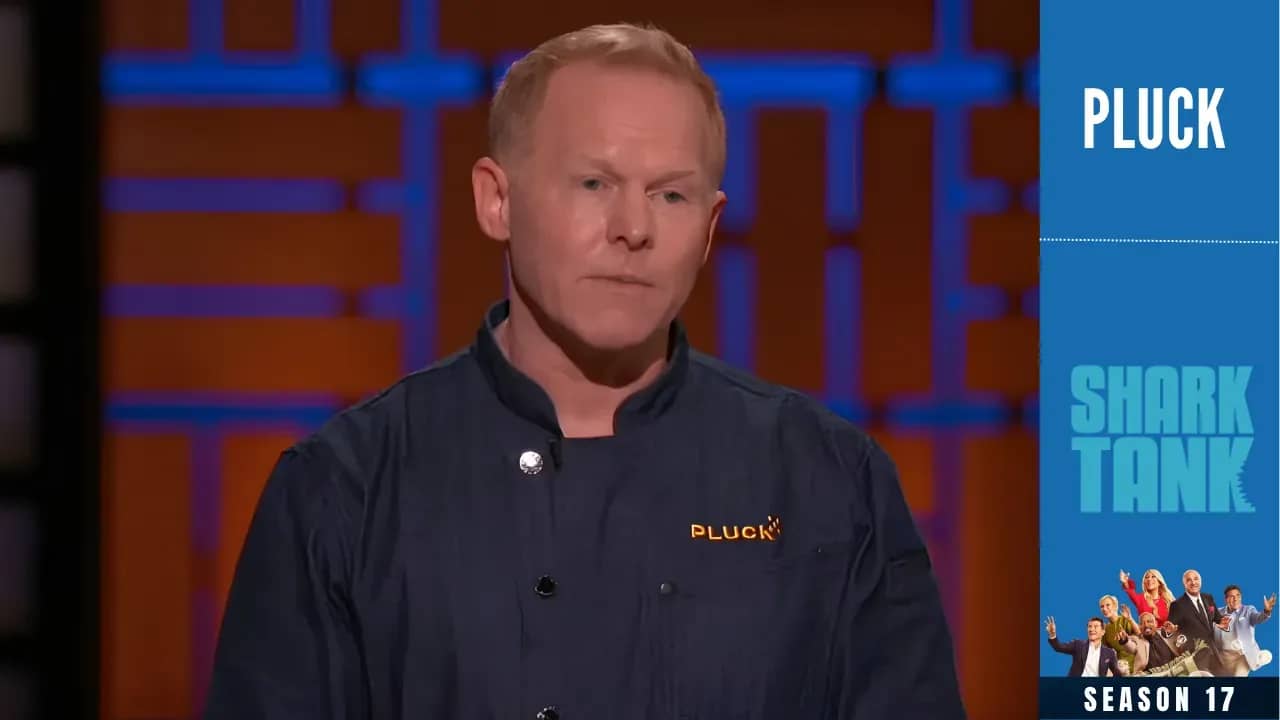
Pluck has an unusual business problem. Its product sits in a seasoning shaker, but the company wants customers to value it like a dietary supplement.
That distinction explains both its appeal and its difficult Shark Tank pitch. Chef James Barry found a convenient way to serve organ ingredients without asking customers to cook liver or kidneys. However, he also had to explain why a small shaker deserved a price close to $30.
As of August 2026, Pluck remains active. Its product range has expanded well beyond the four varieties discussed in the Tank, and Barry continues promoting the company through events and educational content. What remains less clear is its financial performance. The impressive sales figures disclosed during filming were founder-reported, while current revenue has not been published.
Pluck’s story is therefore more useful as a business case than as a simple episode recap. It shows how a founder can create a distinctive product, earn strong margins and still struggle to communicate the category clearly.
| Product Snapshot | Details |
|---|---|
| Company | Pluck, operated by Castle Hill Foods Inc. |
| Founder | James Barry |
| Product | Organ-based seasonings and food-based supplements |
| Industry | Specialty food and wellness |
| Shark Tank episode | Season 17, Episode 3 |
| Original ask | $250,000 for 6% |
| Deal status | No deal |
| Current status | Active, with an expanded product range |
| Website | eatpluck.com |
Latest Update: August 2026
- Pluck’s online store remains active.
- The company now offers at least nine flavor or formulation choices.
- Subscriptions, bundles, sample packs and international shipping remain available.
- Barry promoted a Pluck sampling appearance at Newtopia Now’s Denver Grocery Run on August 19, 2026.
- No verified current revenue figure has been released.
What Is Pluck?
Pluck makes seasonings from freeze-dried bovine organs, herbs and spices. The concept addresses a simple barrier: organ meats can contain useful nutrients, but many consumers dislike their flavor, texture or appearance.
The standard seasoned varieties contain a blend of liver, kidney, spleen, heart and pancreas. According to the company’s product FAQ, these flavors contain 17% organ blend and 83% seasoning blend. Pure Organs and Pure Brain use concentrated organ ingredients without the same seasoning ratio.
Pluck’s current range includes Original, Zesty Garlic, Southwest, Habanero Lime, Pure Organs, CinnaBrain, Pure Brain, Lion Salt and Chimichurri. This is a notable expansion from the four SKUs Barry described during filming.
The product targets wellness-focused buyers, ancestral-diet followers, parents and people who prefer food-based routines to capsules. Its value proposition is behavioral: customers do not need to prepare a new meal or remember another pill. They season food they already eat.
“If you can salt it, you can Pluck it.” — James Barry
That line makes the product easy to understand. The nutritional promise requires more care. The National Institutes of Health confirms that organ meats such as liver contain preformed vitamin A. However, that general fact does not prove that an ordinary serving of Pluck produces a specific health outcome.
Pluck’s website says clinical studies are in process. Until results are published, customer testimonials about blood markers should be treated as anecdotes rather than clinical evidence.
Who Founded Pluck?
James Barry brought relevant expertise to the problem. His public profile describes more than 20 years in professional kitchens, including work as a private chef. He also attended the Natural Gourmet Institute and co-authored The Naked Foods Cookbook in 2012.
Barry said he cooked for clients including Tom Cruise, George Clooney and Gerard Butler. More important to the Pluck case, his career centered on making nutrient-focused food taste approachable. That combination of culinary skill and wellness experience gave him a credible reason to experiment with organ-based seasoning.
He created Pluck after recognizing that many people understood the nutritional reputation of organs but still refused to eat them. His solution was to change the format instead of trying to change the customer’s entire diet.
| Founder Timeline | Milestone |
|---|---|
| 2003 | Attended the Natural Gourmet Institute. |
| 2012 | Co-authored The Naked Foods Cookbook. |
| 2021 | Recorded Pluck’s first reported six-figure sales year. |
| 2025 | Pitched Pluck on Shark Tank Season 17. |
| 2026 | Continued leading Pluck, publishing wellness content and promoting industry events. |
Barry’s strongest founder advantage was product credibility. His main weakness in the Tank was translating that knowledge into a restrained, buyer-centered explanation.

What Happened to Pluck on Shark Tank?
Pluck appeared in Shark Tank Season 17, Episode 3, which aired on October 8, 2025. The episode also included GoodEgg, Repaint Tray and Fundraiser Blankets.
Barry asked for $250,000 in exchange for 6% equity. That implied a valuation of approximately $4.17 million.
| Deal Snapshot | Result |
|---|---|
| Ask | $250,000 for 6% |
| Implied valuation | Approximately $4.17 million |
| Shark offers | None |
| Final deal | No deal |
| Sharks present | Barbara Corcoran, Lori Greiner, Kevin O’Leary, Daniel Lubetzky, Chip Gaines and Joanna Gaines |
The tasting went better than the negotiation. The Sharks sampled Pluck on steak, avocado toast and popcorn. Several said it tasted good, and one noted that the organ ingredients were not detectable.
The discussion changed when the Sharks asked how much someone needed to consume. Barry initially argued that any amount improved on eating no organs. He later explained that one teaspoon of Pure Organs represented approximately two ounces of fresh organs.
The answer demonstrated concentration, but it also exposed a positioning gap. Customers could understand how the seasoning tasted. They had less clarity about what an ordinary quarter-teaspoon serving was supposed to accomplish.
“It’s a supplement and a seasoning.” — James Barry
Barry’s sales history attracted more interest. He reported $100,000 in 2021, $300,000 in 2022, $600,000 in 2023 and $1.3 million in 2024. He said Pluck was on track for $2 million in 2025.
| Revenue Signal | Founder-Reported Sales | Change |
|---|---|---|
| 2021 | $100,000 | First reported year |
| 2022 | $300,000 | 200% growth |
| 2023 | $600,000 | 100% growth |
| 2024 | $1.3 million | About 117% growth |
| 2025 | $2 million projected | Projection not verified as achieved |
Barry said 65% of sales came through Pluck’s website, 30% through Amazon and 5% through wholesale. He also said a shaker cost $2.90 to produce and sold for $28. Those figures imply a product-level gross margin of roughly 89.6% before fulfillment, advertising, discounts, fees and overhead.
Despite those economics, every Shark declined.
- Barbara Corcoran felt Barry’s communication became argumentative.
- Lori Greiner liked the taste but did not understand the health benefit clearly enough.
- Kevin O’Leary objected to the valuation and investment size.
- Daniel Lubetzky respected the mission but did not see the right fit.
- Chip and Joanna Gaines believed changing consumer perceptions would be difficult.
“This is not an easy message.” — Chip Gaines
The official ABC episode page confirms that Pluck appeared alongside products covering egg cleaning, reusable paint equipment and fundraising blankets. Unlike several businesses from the episode, Pluck received no offer to negotiate.
How Does Pluck Make Money?
Pluck operates primarily as a direct-to-consumer packaged-goods company. It earns revenue from individual shakers, larger bags, travel packs, samples, bundles and recurring subscriptions.
| Business Model Snapshot | Pluck’s Approach |
|---|---|
| Customers | Wellness buyers, parents, organ-meat avoiders and supplement users |
| Value proposition | Organ ingredients delivered through an ordinary seasoning habit |
| Revenue model | One-time sales, subscriptions, bundles and wholesale |
| Channels | Official website, Amazon and specialty wholesale |
| Advantages | Distinct category, chef-led formulation, repeat use and strong product-level margin |
| Risks | Premium price, education costs, organ aversion and health-claim scrutiny |
The model benefits from repeat consumption. A seasoning placed on the kitchen table can become a daily habit, while subscriptions reduce the need to reacquire the same buyer.
The high pitch-era margin also gave Pluck room to pay for advertising and wholesale distribution. Still, gross margin should not be confused with profit. Shipping, packaging, fulfillment, content, affiliates and customer acquisition can absorb a large share of a direct-to-consumer brand’s margin.
Pluck also competes in two categories at once. Against ordinary seasoning, it appears expensive. Against organ-supplement capsules, it may appear more affordable and easier to use. Its marketing performance depends on which comparison customers make first.
A useful comparison is the ready-to-eat protein brand Im’peccable Chicken. Both businesses try to make nutrition more convenient, but convenience only converts into repeat sales when customers immediately understand the product’s role.
What Happened After Shark Tank, and Where Can You Buy Pluck?
Pluck did not need to wait for a deal to continue operating. Its active store and expanded assortment show that the company kept developing the product after filming.
| Current Status Evidence | Finding as of August 2026 |
|---|---|
| Website | Active Shopify store |
| Product availability | Shakers, large bags, travel packs, samples and bundles |
| Product range | At least nine current options |
| Subscription | Available, with discounts displayed on product pages |
| International shipping | Available to most countries, subject to import restrictions |
| Founder activity | Recent posts and August 2026 event promotion |
| Deal status | No deal was made on Shark Tank |
| Current revenue | Not publicly verified |
Standard shakers currently start at $29.95. Pure and brain-based products cost more, while subscriptions and bundles reduce the per-unit price. The official website is the clearest buying source because it carries the full range and explains serving sizes.
Customer response appears favorable but should be read carefully. Pluck’s product page displayed a 4.9 rating from 881 reviews when checked, although the company notes that some reviews come from related products grouped on the page. Retailer feedback on Faire also praises the taste, while acknowledging that the price requires customers to understand the product’s functional positioning.
The central buying decision is therefore not whether Pluck tastes exactly like liver. Evidence from the pitch and customer feedback suggests it does not. The bigger question is whether the buyer values its organ ingredients enough to pay supplement-level pricing.
| Company Timeline | Evidence-Backed Milestone |
|---|---|
| 2021 | Pluck reported $100,000 in first-year sales. |
| 2022 | Founder-reported sales reached $300,000. |
| 2023 | Founder-reported sales reached $600,000. |
| 2024 | Founder-reported sales reached $1.3 million. |
| 2025 | Pluck appeared on Shark Tank and left without a deal. |
| 2026 | The active company offered a larger product range and continued event marketing. |
Lessons From Pluck’s Journey
1. A new format still needs a familiar category
Pluck’s hybrid identity is its advantage and its weakness. “Seasoning plus supplement” differentiates the product, but it also gives customers two sets of expectations about price, serving size and results.
2. High margins do not eliminate education costs
A product-level margin near 90% sounds powerful. However, unusual products may require more advertising, demonstrations and founder-led content than familiar products. That cost can sit outside manufacturing.
3. Answer the dosage question early
The Sharks repeatedly asked how much Pluck someone needed. Barry’s best factual answer arrived late in the discussion and focused on the Pure product. A clearer explanation of each product’s organ content and intended role could have reduced resistance.
4. Conviction and persuasion are different skills
Barry’s passion supported years of product development. In the Tank, the same intensity sometimes sounded combative. Founders selling unfamiliar ideas must make skeptical questions feel welcome.
5. The Sharks identified a real risk but may have underweighted traction
The objections about education, valuation and positioning were reasonable. At the same time, a reported $1.3 million year, mostly through direct channels, suggested that a meaningful customer group already understood the proposition.
Final Take
Pluck remains an active no-deal Shark Tank company. It has expanded its products, maintained direct sales and continued building around Barry’s chef-led identity.
The company’s current finances are not public, so it is too early to label Pluck a major post-show success. Still, its survival and broader assortment show that the Sharks’ rejection did not invalidate the product.
The biggest lesson is about positioning. Pluck did not merely need to prove that powdered organs could taste good. It needed to teach customers whether they were buying flavor, nutrition or both. That communication challenge remains more important than the novelty of the ingredient.
Frequently Asked Questions
Is Pluck still in business?
Yes. Pluck’s website and store remain active as of August 2026, with multiple products, subscriptions and bundles available.
Did Pluck get a deal on Shark Tank?
No. James Barry received no offers and left without a deal.
How much did Pluck ask for?
Barry asked for $250,000 in exchange for 6% equity, implying a valuation of approximately $4.17 million.
Who founded Pluck?
Professional chef and cookbook co-author James Barry founded Pluck.
What is Pluck made from?
Its standard products combine freeze-dried bovine liver, kidney, spleen, heart and pancreas with herbs and spices. Ingredients vary by product.
Does Pluck taste like organ meat?
The company says it does not. Sharks and many customer reviews described the seasoned products as savory and approachable rather than liver-like.
How much does Pluck cost?
Standard shakers started at $29.95 when checked in August 2026. Pure and specialty formulations cost more, while subscriptions and bundles may reduce the price.
How much revenue does Pluck make?
Barry reported $1.3 million in 2024 sales and projected $2 million for 2025 during the pitch. No primary source found for this case file confirmed that the projection was achieved.
The weekly question
From obsession to clarity — one original question every week.
We answer one noisy topic at a time, in full. No daily roundup, no thread bait — just the question, the principles, and the system.
More from Shark Tank USA Season 17
All season pitches
Shark Tank USA
Bauble Stockings After Shark Tank: Barbara’s Deal, Current Status and the Premium-Brand Risk

Shark Tank USA
McMiLLER After Shark Tank: Daniel Lubetzky’s Deal, Retail Growth, and the Viral-Game Risk

Shark Tank USA