
Edible Architecture After Shark Tank: Lori’s Deal, Current Status and the Cost of Growth
Edible Architecture’s Shark Tank deal, current status, kit prices, and the cash-flow challenge behind its seasonal retail business.
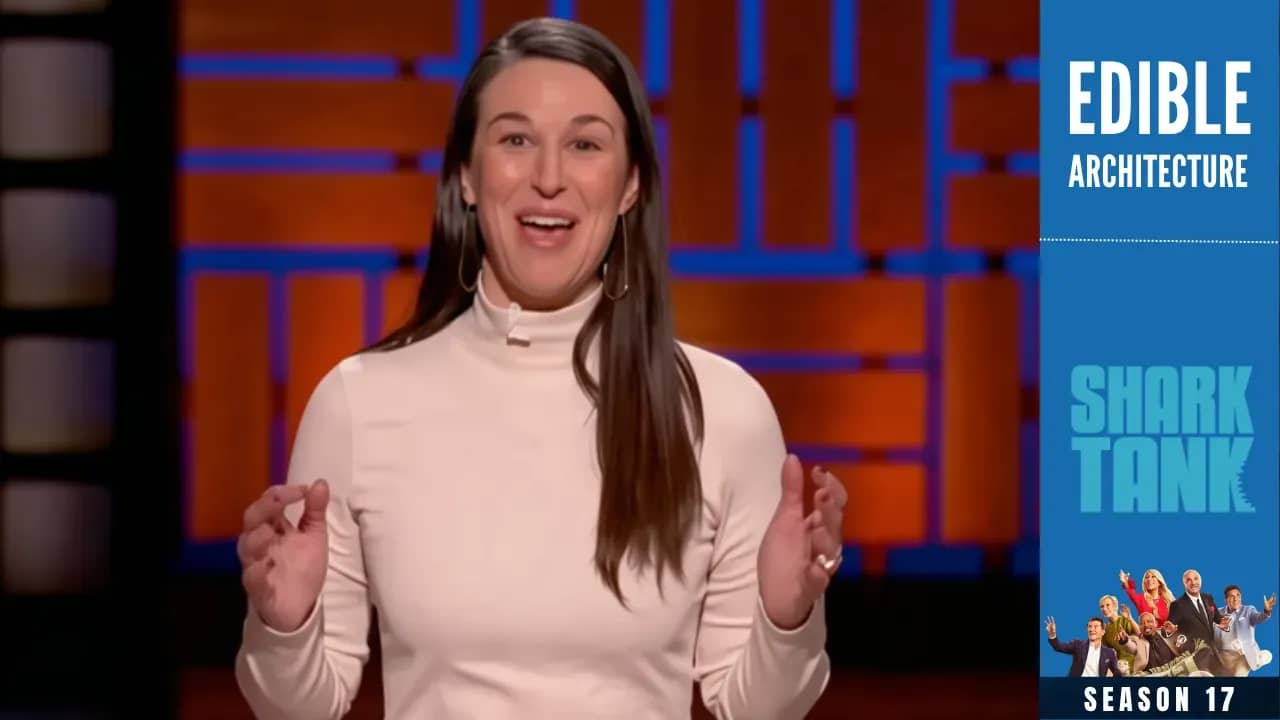
Edible Architecture turns a holiday craft into something guests can snack on: a miniature house built from crackers, cheese, and salami. The idea attracts attention because it combines a familiar tradition with a different reason to gather around the table.
Yet the business behind those tiny houses raises a larger question. What happens when retailers want your product, but fulfilling their orders requires money you do not have available? Growing sales can create pressure long before they create dependable cash.
That tension made Edible Architecture one of the useful business cases from Shark Tank Season 17. Founder Avital Ungar secured an on-air agreement with Lori Greiner after several Sharks rejected the concept. Her challenge was turning retailer interest into a business with enough room to fund its next season.
As of September 23, 2026, the company maintains an active storefront. Its public record offers evidence of continuing operations, alongside unanswered questions about investment closing and financial results. Here is what buyers and founders can reasonably conclude.
| Company | Edible Architecture |
|---|---|
| Founder | Avital Ungar |
| Product | DIY charcuterie chalet and tree kits |
| Industry | Specialty food, gifting, and holiday activities |
| Shark Tank episode | Season 17, Episode 7; December 10, 2025 |
| Deal status | $150,000 for 18% agreed on air; closing unconfirmed |
| Current status | Active online; current financial performance unverified |
| Website | Edible Architecture |
What Is Edible Architecture?
Edible Architecture packages a charcuterie-building activity into a kit. Customers assemble a cracker structure, attach ingredients with cheese spread, and decorate it before eating. The result works as both an activity and a centerpiece.
Its target customers include holiday hosts, gift buyers, families, and adults planning a wine-and-cheese gathering. Those uses matter because customers are paying for convenience and entertainment as well as food.
The classic kit currently lists salami, cheese spread, parmesan, dried fruit, nuts, seeds, and pretzels. Its updated description adds braided pretzel framing and golden raisins. The range also includes smaller chalets and tree-shaped alternatives.
Ungar did not need to invent the wider charcuterie-chalet trend. Her opportunity was making it easier to participate without sourcing every component separately. That puts the product alongside holiday activities such as Tomte Cake, although the food and assembly experience differ.
Who Founded Edible Architecture?
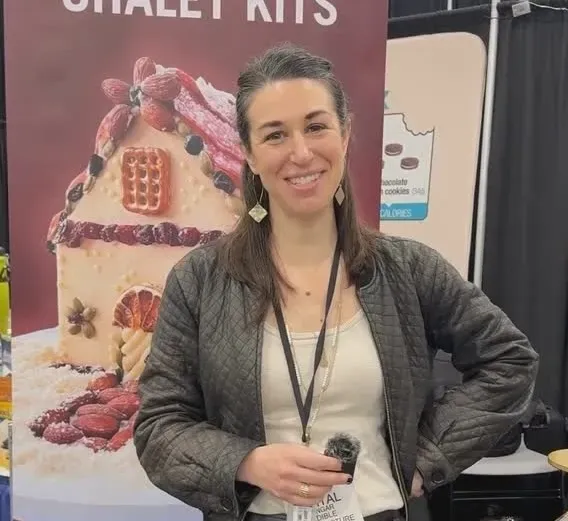
Avital Ungar brought experience in food-based gatherings to the business. She started Avital Food & Drink Experiences in 2011, developing culinary tours and events. Her professional background also includes sommelier training and studies at UCLA.
Reporting traces the chalet idea to a company holiday activity in 2021. Ungar saw an experience that could extend beyond her existing events. Her Guest Focus biography dates Edible Architecture’s launch to September 2022; retail kits followed in 2024.
Those dates should remain separate. Developing a business, establishing a legal entity, and reaching retail shelves are different milestones. The public evidence reviewed does not settle the incorporation date.
Her experience provided a useful starting advantage: understanding how food encourages people to interact. Scaling packaged products then required different capabilities, including purchasing, retailer relationships, inventory planning, and reliable delivery.
What Happened on Shark Tank?
Ungar entered seeking $150,000 for 10%. Her demonstration replaced demolished gingerbread houses with savory construction kits. The Sharks could build and taste the product themselves.
Kevin O’Leary disliked the reinterpretation of the holiday tradition. Barbara Corcoran questioned its appearance, particularly after people began eating it. Other concerns centered on personal enthusiasm for the product and the complications of financing purchase orders.
Ungar responded with business figures. She reported $123,000 in first-year retail sales, $11,000 in gross profit, and $3,500 in net profit. She framed that season as a test of demand.
“I was really just validating the market.”
— Avital Ungar, during her Shark Tank pitch
She also discussed a $1.17 million current-year sales figure alongside purchase orders and retailer commitments. The presentation did not clearly reconcile those categories. Her expectation of more than $2 million for the year remained a forecast.
Lori saw a connection to her experience with Boarderie. However, she wanted the investment to reflect her strategic contribution, rather than a promise to finance every order.
| Stage | Terms | Implied post-money valuation |
|---|---|---|
| Founder’s ask | $150,000 for 10% | $1,500,000 |
| Lori’s opening offer | $150,000 for 25% | $600,000 |
| Final on-air agreement | $150,000 for 18% | Approximately $833,333 |
Ungar negotiated Lori down from 25% to 18%, preserving seven percentage points of ownership. The final implied valuation remained below her opening ask. These calculations describe the investment terms shown, not the company’s current net worth.
How Does Edible Architecture Make Money?
The business sells kits through retailers and directly to customers. It also presents corporate-gifting options. Each channel offers a different balance of order volume, customer access, and selling costs.
| Customer | Hosts, gift buyers, families, adult groups, and corporate purchasers |
|---|---|
| Value proposition | A shared food-building experience with components supplied together |
| Revenue model | Kit sales, cracker packs, and wholesale orders |
| Channels | Website, retailers, and corporate-gifting inquiries |
| Advantages | Event experience, retailer access, and demonstrable product appeal |
| Risks | Seasonality, inventory funding, breakage, imitation, and limited wholesale margin |
The classic kit’s pitch economics explain the financing pressure. Ungar quoted a $10.68 unit cost, a $14.29 wholesale price, and a $29.99 retail price.
| Measure | Wholesale | Direct at retail price |
|---|---|---|
| Revenue per kit | $14.29 | $29.99 |
| Quoted product cost | $10.68 | $10.68 |
| Gross profit before other expenses | $3.61 | $19.31 |
| Calculated product gross margin | 25.3% | 64.4% |
For illustration, 10,000 kits at that cost represent $106,800 in product spending. At wholesale, they produce $36,100 in gross profit before additional expenses. Actual supplier deposits and retailer payment schedules were not disclosed.
The direct channel creates $15.70 more gross-profit room per kit at those prices. Shipping, fulfillment, payment fees, promotions, and advertising can consume that difference. The quoted margin therefore cannot be treated as take-home profit.
Like packaged-food companies such as Freestyle Snacks, Edible Architecture must make distribution work economically. A shelf placement creates opportunity; repeat orders and collected cash reveal more about its value.
What Happened After Shark Tank?
The investment closing remains unclear
The company’s Shark Tank page celebrates an agreement with Lori. That is consistent with the televised outcome. It does not provide a closing date or confirm that the final investment retained the televised terms.
In her post-show AMA, Ungar explained that Lori’s team conducts due diligence and declined to detail subsequent negotiations. The appropriate classification remains unclear, rather than closed or failed.
The business shows continuing activity
Edible Architecture appears in the IDDBA 2026 exhibitor list. That is a useful signal of wholesale outreach. An exhibitor listing alone cannot establish attendance, signed accounts, or sales.
The website also remains commercially active. Its current presentation differs from older indexed pages, showing a refreshed look and preorder messaging. However, mixed stock labels prevent a confident claim that every listed kit can ship immediately.
| Area | Evidence | Limit |
|---|---|---|
| Website | Active catalog and refreshed presentation | Does not establish sales volume |
| Product availability | Prices and purchasing controls displayed | Preorder and stock messaging need confirmation |
| Social activity | Official profiles are linked | Latest posting cadence and audience growth unverified |
| Deal status | On-air agreement and company publicity | No explicit closing confirmation located |
| Latest update | Current storefront reviewed; 2026 trade listing found | No verified new financial disclosure |
| Business status | Active; financial trajectory unverified | Financial stability and growth rate unknown |
Retail reach needs careful interpretation
The company’s retail locations page names World Market, Costco’s Southeast region, Albertsons MidAtlantic, and other outlets. It also lists H-E-B Mexico.
Those details support a broader distribution story, but not universal stock. They also do not reveal which relationships began after filming. Retailer interest was already part of Ungar’s pitch, so attributing the entire network to television would overstate the evidence.
| Period | Milestone | Evidence status |
|---|---|---|
| 2022 | Business launch dated in founder biography | Legal formation date not independently verified |
| 2024 | First retail season; $123,000 sales reported later | Founder-reported financial figure |
| 2025 pitch | $1.17 million discussed; more than $2 million forecast | Sales and commitments not fully reconciled |
| December 10, 2025 | Season 17 holiday episode airs | ABC episode record |
| December 2025 | Founder discusses due diligence publicly | Does not confirm investment closing |
| 2026 | IDDBA listing and continuing storefront activity | Operational signals, not revenue verification |
Customer response is encouraging in places, but incomplete
A hands-on review at Victor’s Biscuits praised the substantial crackers and combined savory flavors. It also wanted more distinction between the cheese flavors. A Costco discussion included positive reactions to the finished build and its meat and cheese.
That discussion also contained an isolated, unverified complaint about mold and customer service. These accounts are too limited to establish a typical experience. They show why quality control and problem resolution deserve attention alongside attractive product photos.
There is also no verified public result for the pitch’s $6 million revenue and $800,000 profit projection. The strongest conclusion is continued commercial activity. Whether Shark Tank materially improved profitability remains unanswered.
Where Can You Buy Edible Architecture?
The official website is the clearest starting point for product options and availability questions. Check a local retailer separately before planning an event around a kit.
| Product | Listed starting price |
|---|---|
| Charcuterie Chalet Kit | $29.99 |
| Mini Charcuterie Chalet Kit | $19.99 |
| Charcuterie Tree Kit | From $19.99 |
| Charcuterie Chalet House Crackers | From $19.99 |
No current subscription, confirmed international direct-shipping terms, or verified Amazon, Walmart, or Target listing was established in this review. Confirm the selected kit’s contents, dispatch timing, and final delivered price.
The company’s building guidance also distinguishes packaged ingredients from an assembled chalet. It advises refrigeration if the finished creation will not be eaten promptly. This is an eating activity, not a decoration intended to sit out for weeks.
Lessons From Edible Architecture’s Journey
Demand creates financing requirements
A purchase order can increase confidence while increasing cash pressure. Founders need to map production spending, delivery dates, payment collection, and seasonal markdown exposure before treating a larger order book as security.
Choose customers more precisely than your critics do
Some Sharks judged the kit against a familiar childhood tradition. Other buyers may want an adult gathering activity. Those groups can reach different conclusions about the same product.
“Some of the sharks are not my customer and that's okay.”
— Avital Ungar, after her Shark Tank negotiation
The practical response is to test demand within specific customer groups. Broad approval matters less than enough customers buying at a sustainable cost.
Seasonal expansion needs proof
Holiday businesses such as Tipsy Elves provide useful comparisons for occasion-based positioning. For Edible Architecture, additional occasions could spread demand across the year. They would also add inventory and marketing decisions. Public evidence does not yet establish a successful year-round transition.
Final take
Edible Architecture has a clear product idea, a founder with relevant experience, and continuing commercial activity. Its on-air agreement also demonstrates that one investor saw potential where others saw limited personal appeal.
The unresolved questions concern execution: whether the investment closed, how retailer commitments converted into collected revenue, and whether direct sales improved profit after selling costs. Those measures will say more about the company’s progress than another ambitious forecast.
For entrepreneurs, the case shows why demand and funding must be planned together. Ungar’s challenge is to turn a distinctive seasonal activity into repeatable orders that leave enough cash for the next production cycle.
Frequently Asked Questions
Is Edible Architecture still in business?
Its website remains commercially active as of September 23, 2026. Current listings do not establish that every product is ready for immediate shipment.
What deal did Edible Architecture get on Shark Tank?
Avital Ungar accepted $150,000 for 18% from Lori Greiner on Season 17, Episode 7.
Did Lori Greiner’s investment close?
The closing remains unconfirmed. The televised agreement and company publicity establish an announced deal, while the founder’s public comments describe due diligence.
Who founded Edible Architecture?
Avital Ungar, who previously built a culinary-experiences business offering food tours and events.
How much do the kits cost?
The classic chalet lists at $29.99, the mini at $19.99, and tree kits and cracker packs from $19.99. Confirm current availability and shipping charges.
Did Edible Architecture reach $6 million in sales?
No verified public results reviewed establish that outcome. The $6 million figure was a forecast shared during the pitch.
Can you leave an assembled chalet out like a gingerbread house?
The company advises against leaving assembled chalets out for long periods and recommends refrigeration when they will not be eaten promptly.
The weekly question
From obsession to clarity — one original question every week.
We answer one noisy topic at a time, in full. No daily roundup, no thread bait — just the question, the principles, and the system.
More from Shark Tank USA Season 17
All season pitches
Shark Tank USA
The Christmas Carolers After Shark Tank: Barbara’s 60% Deal, Expansion and Current Status
Shark Tank USA
Bauble Stockings After Shark Tank: Barbara’s Deal, Current Status and the Premium-Brand Risk

Shark Tank USA