
Im’peccable Chicken Shark Tank Update: Is the Business Still Growing?
Im’peccable Chicken turned ready-to-eat chicken breast into a portable protein snack, but its real test after Shark Tank has been scaling cold-chain delivery without sacrificing margins.
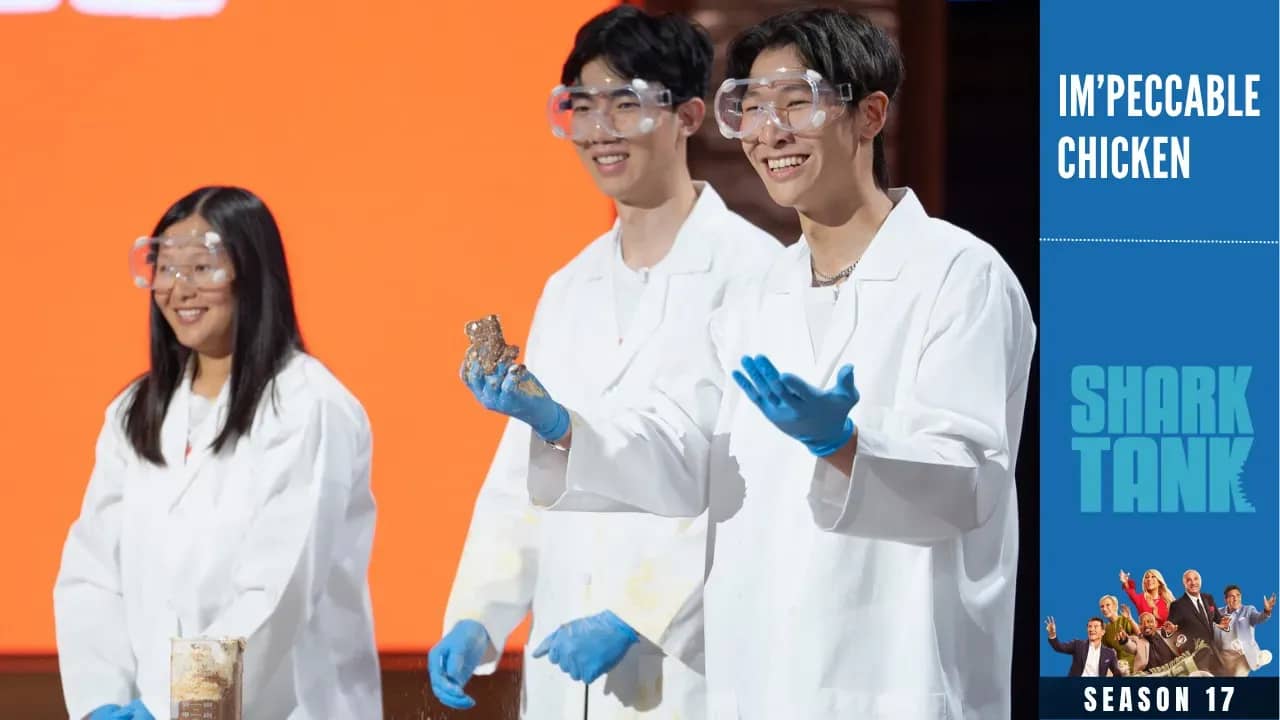
Im’peccable Chicken looks simple: season a chicken breast, cook it, seal it and sell it as a portable protein snack. The harder part is everything that happens after the pouch closes.
The company must keep refrigerated meat safe, tender and affordable as it moves across the country. It must also persuade customers to pay protein-bar prices for something they could cook at home. That operational challenge makes Im’peccable Chicken more interesting than its playful “nature’s protein bar” pitch suggests.
Founder Melina Chang began experimenting with sous-vide chicken in a USC dorm. By 2026, the company said it had crossed $1 million in trailing-12-month revenue, reduced its cost of goods and entered its first retail location. Those are promising signals, although the figures come from company channels and have not been independently audited.
This case file examines what happened during the pitch, why every Shark showed interest, how the refrigerated business model works and what the evidence says about Im’peccable Chicken today.
| Company | Im’peccable Chicken |
|---|---|
| Founder | Melina Chang |
| Pitch team | Melina Chang, Nick Hsu and Riley Yen |
| Product | Fully cooked, individually packaged chicken breasts |
| Industry | Food and beverage / convenience protein |
| Shark Tank episode | Season 17, Episode 2; aired Oct. 2, 2025 |
| On-air deal | $200,000 for 15% with Kevin O’Leary and Lori Greiner |
| Deal status | Unclear; no public closing confirmation found |
| Current status | Active, with company-reported growth and early retail activity |
| Website | Im’peccable Chicken |
Latest Update: July 2026
- The official online store remains active.
- Original Pepper, Classic Teriyaki and Orange Habanero are available.
- The company reports more than $1 million in trailing-12-month revenue.
- Its first reported retail test began at Pop Up Grocer in early 2026.
- The Shark Tank deal’s post-show status remains unconfirmed.
What Is Im’peccable Chicken?
Im’peccable Chicken sells fully cooked chicken breasts in individual vacuum-sealed pouches. Each serving contains about 27 grams of protein and 130–140 calories. Customers can eat the chicken cold or warm it for roughly 30–45 seconds.
The product sits between three familiar categories. It offers the portion control of a protein bar, the ingredients of a prepared meal and the portability of a convenience-store snack. Its target customers include fitness consumers, busy professionals and people who want whole-food protein without cooking.
Original Pepper has the shortest ingredient list and is marketed as gluten-free. Classic Teriyaki and Orange Habanero contain soy and wheat. The company sells the three flavors in multipacks rather than as low-cost single-pouch online orders.
The value proposition is time, not cheap chicken. A customer can buy raw chicken for less, but must store, cook, season and clean up after it. Im’peccable Chicken charges a premium to remove those steps.
That distinction matters. The company is not competing only with supermarket poultry. It is also competing with protein bars, shakes, meal-delivery services and convenience-store lunches.
The product’s presentation has evolved. During the pitch, a Shark noted that chicken in a clear pouch did not look attractive. The company later added a cardboard retail sleeve. That change gave the brand more room to communicate nutrition and flavor while hiding some of the visual drawbacks of vacuum-packed meat.
Who Founded Im’peccable Chicken?
Melina Chang developed the original concept after encountering ready-to-eat packaged chicken in Taiwan. She connected the format to her own weight-loss journey, although public accounts differ on the exact number of pounds she lost.

When she could not find an equivalent product in the United States, she began testing chicken, cooking times and flavors in her USC dorm. Chang later left college and used a reported $340,000 loan from her parents to establish a production facility in Commerce, California.
“Every day after I did my homework, I would experiment with the flavors. I would experiment with chicken breasts, the cook time, the temperature.”
— Melina Chang, USC Annenberg Media
Nick Hsu joined after meeting Chang through USC’s entrepreneurial community. His public updates focus on growth systems, creator-led marketing, packaging and retail. Riley Yen helped build the early company and appeared in the Tank, although USC Annenberg reported in October 2025 that he was no longer a company leader.
The team’s strongest founder-market fit came from combining Chang’s personal product experience with access to Taiwanese food-production knowledge. That did not make the chicken proprietary, but it shortened the learning curve for product development.
| Date | Founder milestone |
|---|---|
| 2023 | Melina Chang discovers a gap in the U.S. market for Taiwanese-style ready-to-eat chicken. |
| October 2023 | Chang begins sous-vide experiments in her USC dorm. |
| 2024 | Chang leaves USC and builds a production operation in Commerce, California. |
| October 2024 | The company launches online after early campus testing. |
| 2025 | Chang, Nick Hsu and Riley Yen pitch Im’peccable Chicken on Shark Tank. |
| 2026 | Chang and Hsu continue promoting direct-to-consumer growth and retail expansion. |
What Happened on Shark Tank?
Chang, Hsu and Yen entered Shark Tank seeking $75,000 for 5% equity. That placed a $1.5 million implied valuation on a business launched seven months earlier.
The founders presented the chicken as “nature’s protein bar” and served Original Pepper, Classic Teriyaki and Orange Habanero. The Sharks liked the taste and tenderness. However, Kevin O’Leary questioned why a customer would pay $5.40 for packaged chicken instead of preparing a breast at home.
The team said each pouch cost $1.70 to produce. Based on those pitch numbers, the product generated about $3.70 in gross profit per unit, or a 68.5% product-level gross margin. That calculation excludes cold shipping, fulfillment, marketing and overhead, so it does not represent the company’s net margin.
The founders also reported $85,000 in seven months of sales. All sales were direct to consumer. They described the pace as controlled because their main limitation was production and logistics rather than marketing.
“It’s a production and logistics problem.”
— Im’peccable Chicken founder during the Shark Tank pitch
That explanation led to a second concern. Michael Strahan questioned whether $75,000 would be enough to finance inventory and cold shipping at a larger scale. The founders said they could reduce production costs by 20% after reaching 30,000 units per month and that their facility could make far more.
O’Leary identified the strategic risk directly.
“There’s nothing proprietary about it.”
— Kevin O’Leary during the Shark Tank pitch
Still, the product attracted unusually broad interest. Barbara Corcoran offered $100,000 for 10%. Michael Strahan offered $100,000 for 9.5%. Another offer matched the original $75,000 request for 10%, while Robert Herjavec offered $75,000 for 7% after the founders said retaining equity mattered most.
The negotiations then shifted toward paired Sharks. The founders eventually accepted $200,000 for 15% from O’Leary and Lori Greiner. They said Kevin could help solve distribution while Lori could expand the brand’s appeal to women.
Shark Tank Deal Snapshot
| Original ask | $75,000 for 5% equity |
|---|---|
| Implied ask valuation | $1.5 million |
| Sales disclosed | $85,000 over seven months |
| Average selling price | $5.40 per pouch |
| Production cost disclosed | $1.70 per pouch |
| Implied product-level gross margin | Approximately 68.5% before shipping, fulfillment, marketing and overhead |
| Final on-air deal | $200,000 for 15% equity |
| Sharks | Kevin O’Leary and Lori Greiner |
| Deal valuation | Approximately $1.33 million post-money |
| Post-show deal status | Unclear; no authoritative public closing confirmation found |
No reliable public source confirms that the agreement survived due diligence. Later founder posts described the business as bootstrapped and discussed opening its cap table to investors. That language suggests the televised investment may not have closed, but it is not conclusive. The deal should therefore be classified as unclear.
Im’peccable Chicken shared Episode 2 with Snorinator, QB54 and Gerty Pet. Their different outcomes make the episode a useful comparison of traction, founder credibility and category risk across Shark Tank Season 17.

How Does Im’peccable Chicken Make Money?
The company’s primary channel remains its website. Customers buy refrigerated chicken in bundles or subscribe to recurring deliveries. In July 2026, a one-time 16-pack cost $86, matching the $5.40 price disclosed in the Tank. Larger subscriptions lowered the unit price.
Bundles help the company spread insulated packaging and delivery costs across more units. However, they also raise the customer’s first-order commitment. A curious buyer cannot test one pouch online without accepting the cost of a larger box.
Business Model Snapshot
| Customer segments | Fitness consumers, busy professionals and convenience-focused protein buyers |
|---|---|
| Value proposition | Whole-food protein without cooking, preparation or cleanup |
| Revenue model | Direct-to-consumer bundles, recurring subscriptions and emerging retail sales |
| Sales channels | Official website, social media and limited retail distribution |
| Customer acquisition | Creator marketing, paid social content, campus sampling, Shark Tank exposure and retail discovery |
| Key advantages | Clear positioning, founder story, specialized production knowledge and early category recognition |
| Key risks | Cold-chain costs, spoilage, limited defensibility, retail working-capital needs and price comparisons with raw chicken |
The cold chain is both the problem and a potential advantage. Any food company can attempt a similar recipe, but fewer can produce, pack and deliver refrigerated meat reliably. If Im’peccable Chicken develops better shipping economics and food-safety systems than new competitors, operations could become its practical moat.
Retail changes those economics. It may reduce the need to ship insulated boxes to individual homes and lets buyers try one pouch. In return, the company must share margin with distributors and stores, finance larger production runs and manage expiration risk.
The product also faces a positioning challenge. Similar convenience-protein businesses such as Vade Nutrition can ship shelf-stable products more cheaply. Im’peccable Chicken must make real-food quality valuable enough to justify refrigeration.
What Happened After Shark Tank?
The strongest post-show evidence points to an active young company rather than a completed Shark investment.
Company updates reported more than $1 million in revenue during a recent 12-month period. The founders also said the business was profitable, reduced cost of goods by 35% and reached $195,000 in month-to-date sales around the start of 2026. These figures are meaningful growth signals, but they remain self-reported.
The company said it cooked more than 200,000 chicken breasts and established three fulfillment centers that could reach 98% of the continental United States within two days. This directly addresses the logistics issue discussed in the Tank.
Packaging became another major focus. The founders concluded that a transparent pouch worked for food safety but poorly for retail presentation. They added a printed sleeve and tested it at Pop Up Grocer in New York. A founder later reported that the Pepper flavor sold out quickly during that placement.
That retail test is important, but it should not be confused with national distribution. The company stated a goal of entering 300 stores across New York, San Francisco and Los Angeles during 2026. No evidence found for this review confirms that it has reached that target.
Current Status Evidence Table
| Area | Evidence as of July 2026 | Assessment |
|---|---|---|
| Website | Active online store with bundles and subscription options | Active |
| Product availability | Original Pepper, Classic Teriyaki and Orange Habanero are offered online | Available direct to consumer |
| Customer activity | Hundreds of hosted verified-purchase reviews | Meaningful demand signal |
| Social activity | Company and founder operating updates continued into 2026 | Active |
| Retail | Pop Up Grocer retail test reported in New York | Early-stage retail |
| Revenue | More than $1 million over 12 months, according to company updates | Positive but unaudited |
| Profitability | The company reported profitable operations heading into 2026 | Company-reported |
| Shark Tank deal | No closing announcement found; later updates described the company as bootstrapped | Unclear |
| Overall business status | Active sales, fulfillment development and retail testing | Growing, with evidence caveats |
Company Timeline
| Date | Company development |
|---|---|
| 2023 | Im’peccable Chicken begins as a USC dorm-room project. |
| 2024 | The team develops a production operation in Commerce, California, and tests campus sales. |
| Oct. 10, 2024 | Im’peccable Chicken launches online. |
| 2025 | The company develops creator marketing and presents its products to retail buyers. |
| Oct. 2, 2025 | The founders accept a $200,000 on-air deal from Kevin O’Leary and Lori Greiner. |
| Late 2025 | The company reports crossing $1 million in trailing-12-month revenue. |
| Early 2026 | New retail packaging launches through a test at Pop Up Grocer. |
| July 2026 | Direct-to-consumer operations remain active while broader retail expansion continues. |
Customer reviews generally praise tenderness, convenience and easy portioning. Some customers use the chicken as a snack, but many add it to salads, rice, sandwiches and quick dinners. That suggests the broader use case may be “meal-prep shortcut” rather than only “protein bar replacement.”
Recurring complaints include price, the appearance of meat in a pouch, limited soy-free choices and occasional packaging questions. The reviews are hosted through the company’s commerce system, so they provide useful sentiment signals rather than an independent measure of satisfaction.
Where Can You Buy Im’peccable Chicken?
The best confirmed source is the official website. It offers 16-, 24- and 32-pack options, including recurring deliveries at lower per-unit prices.
The company advises customers to refrigerate pouches intended for near-term use and freeze the remainder. Buyers should inspect the ingredients before ordering. Original Pepper is presented as gluten-free, while Teriyaki and Orange Habanero contain soy and wheat.
Pop Up Grocer provided an early retail test in New York, but current stock and wider store availability may vary. No reliable evidence found for this review confirms national placement at Whole Foods, Sprouts or Bristol Farms.
Lessons From Im’peccable Chicken’s Journey
1. A simple product can still require complex execution
The recipe itself may be easy to imitate. The production, food-safety and refrigerated-delivery system is harder. Founders should examine the full operating system before deciding whether an idea has a moat.
2. Market validation can be more valuable than an early national launch
The founders declined to launch immediately with large retailers because they could not finance national inventory. That restraint allowed them to test demand and logistics through DTC. Moving too early into retail can leave a food startup with thin margins, unpaid invoices and perishable stock.
3. Packaging is part of product-market fit
The transparent pouch preserved the product but weakened its shelf appeal. The later sleeve redesign addressed a concern raised during the pitch. In consumer packaged goods, packaging must explain and sell the product before a shopper tastes it.
4. Convenience must justify the premium
Im’peccable Chicken cannot win a price comparison with raw poultry. It must compare favorably with takeout, protein bars and lost meal-prep time. That framing determines whether $5.40 feels expensive or reasonable.
5. A televised deal is not proof of investment
The company received five offers and accepted a larger-than-requested deal. Yet the closing status remains unknown. Business analysis should separate an on-air handshake from a verified transfer of funds and equity.
6. Growth claims need context
Crossing $1 million in trailing revenue would be a strong milestone for a young brand. However, revenue alone does not reveal customer-acquisition costs, cold-shipping expense, repeat-order rates or cash needs. Those metrics will determine whether the model scales sustainably.
The failure of refrigerated and prepared-food companies such as Back 9 Dips also shows why distribution discipline matters. Retail exposure can expand a food brand, but production and channel complexity can erase the benefits.
Final Take
Im’peccable Chicken is still in business and has progressed beyond the company shown in the Tank. It has an active store, repeat-purchase evidence, redesigned retail packaging and company-reported seven-figure revenue.
The central question is no longer whether consumers will buy chicken in a pouch. Some clearly will. The next test is whether the company can preserve margins as it moves from bundled e-commerce orders into individual retail sales.
Its strongest lesson is that an operational problem can become an advantage. The chicken is not proprietary, but a reliable system for making, shipping and selling it may be much harder to reproduce.
Frequently Asked Questions
Is Im’peccable Chicken still in business?
Yes. Its website remained active in July 2026 with three flavors, bundles and subscription options.
Who founded Im’peccable Chicken?
Melina Chang founded the company after discovering ready-to-eat chicken in Taiwan. Nick Hsu and Riley Yen helped build the early business and joined her during the Shark Tank pitch.
What deal did Im’peccable Chicken get on Shark Tank?
The founders accepted $200,000 for 15% equity from Kevin O’Leary and Lori Greiner.
Did the Shark Tank deal close?
The closing status is unclear. No authoritative public source confirms the completed investment, and later founder posts described the company as bootstrapped.
How much protein does Im’peccable Chicken contain?
Current product listings state that each pouch contains 27 grams of protein and approximately 130–140 calories.
Does Im’peccable Chicken need to be cooked?
No. The chicken is fully cooked. Customers can eat it cold or warm it for about 30–45 seconds.
Where can customers buy Im’peccable Chicken?
The official website is the most reliable purchasing source. The company has also tested retail sales through Pop Up Grocer in New York.
How much revenue does Im’peccable Chicken make?
The company reported crossing $1 million in trailing-12-month revenue and being profitable. These figures have not been independently audited.
The weekly question
From obsession to clarity — one original question every week.
We answer one noisy topic at a time, in full. No daily roundup, no thread bait — just the question, the principles, and the system.
More from Shark Tank USA Season 17
All season pitches
Shark Tank USA
The Christmas Carolers After Shark Tank: Barbara’s 60% Deal, Expansion and Current Status
Shark Tank USA
Bauble Stockings After Shark Tank: Barbara’s Deal, Current Status and the Premium-Brand Risk
Shark Tank USA