
Gerty Shark Tank Update: Inside the Deal, Business Model and Sold-Out Status
Gerty turned a novel pet companion into a Shark Tank deal, but its long-term business story is still taking shape today.
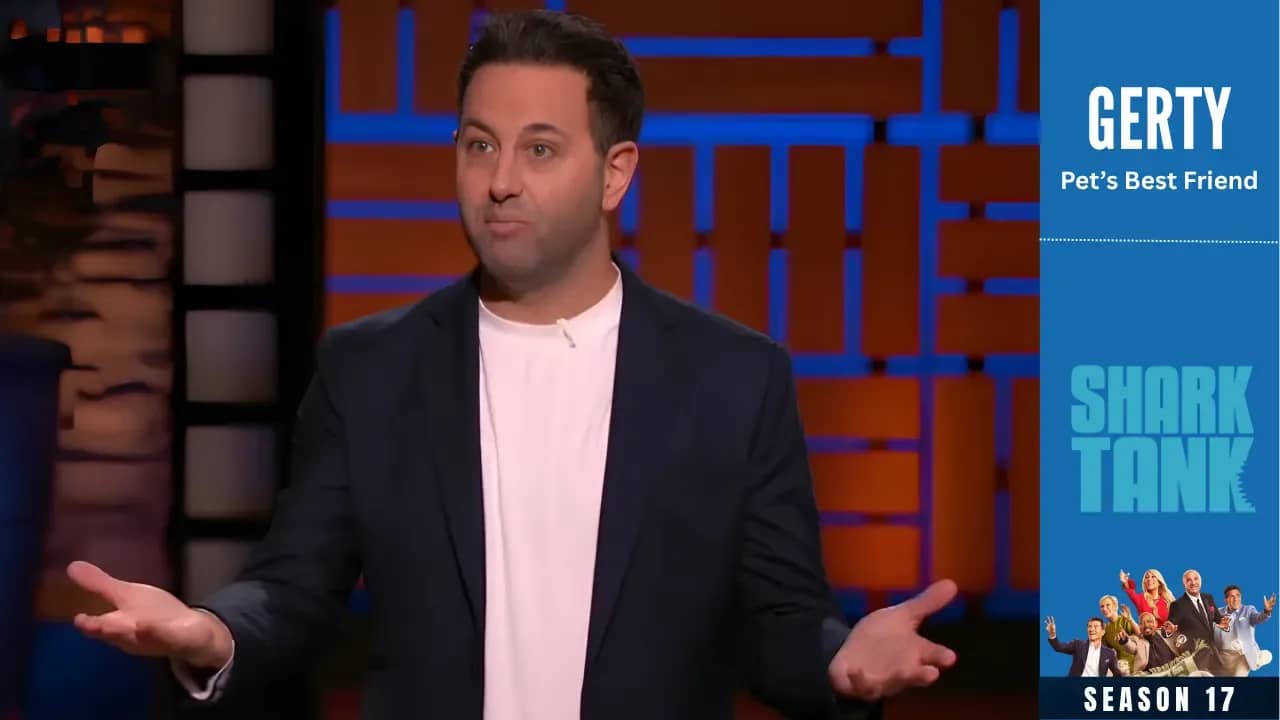
Gerty became one of the most visually memorable products from Shark Tank Season 17. The human-shaped inflatable looked like a joke at first. Founder Todd Schram, however, built it around a serious problem: pets that become distressed when their owners leave home.
That contrast made Gerty easy to remember. It also created an interesting startup question. Can an unusual product use curiosity and social sharing to overcome low early sales and the cost of educating skeptical customers?
As of July 14, 2026, Gerty’s official store remained active and listed the custom-face version Todd discussed during his pitch. However, both the standard and personalized models were sold out. Kevin O’Leary’s investment was confirmed as an on-air agreement, but we found no reliable public evidence that the deal closed after filming.
This case file examines Gerty’s product, founder story, Shark Tank negotiation, economics, current evidence and the lessons behind Kevin’s unusual bet.
Gerty Product Snapshot
| Company | Gerty |
|---|---|
| Founder | Todd Schram |
| Product | Human-shaped inflatable companion for pets |
| Industry | Pet care |
| Shark Tank episode | Season 17, Episode 2; aired Oct. 1, 2025 |
| On-air deal | $50,000 for 30% with Kevin O’Leary |
| Deal status | On-air agreement confirmed; closing unverified |
| Current status | Active storefront; products sold out when checked |
| Website | Official Gerty website |
Latest Update: July 2026
- Gerty’s official Shopify store remains active.
- The standard Gerty is listed at $39.99.
- The custom-face version is listed at a $64.99 sale price.
- No verified post-show revenue or deal-closing announcement was found.
What Is Gerty?
Gerty is an inflatable, human-shaped companion designed for pets that dislike being alone. Owners dress it in worn clothing so it carries a familiar scent. They then introduce it gradually before leaving the pet alone with it.
The product has three inflatable chambers. Owners can adjust the torso and legs so Gerty can sit or stand. Its small arms create an area where a dog or cat can rest.
The company’s instructions are an important part of the product. Owners should dress Gerty, talk to it and interact with it while their pet watches. The official site recommends a 24-48-hour introduction period.
“You have to follow instructions very carefully or else it won’t work.”
— Todd Schram
That statement reveals a hidden business challenge. Gerty is not a product customers can simply inflate and ignore. Its value depends partly on customer behavior, which creates onboarding friction and increases the risk of disappointing results.
Gerty should also be viewed as a comfort product, not a clinically established treatment. The ASPCA’s separation-anxiety guidance recommends behavior modification and professional help for significant cases. The Merck Veterinary Manual likewise explains that diagnosis requires ruling out other causes and that moderate or severe cases may need structured treatment.
Who Founded Gerty?
Todd Schram created Gerty after watching his rescue dog become distressed whenever he left home. During the pitch, he showed footage of the dog howling before Gerty and resting quietly beside it afterward.
“I created this product out of necessity.”
— Todd Schram,
This founder-problem connection gave Todd credibility as a pet owner. However, it did not replace broader testing. The Sharks wanted to know whether the apparent result extended beyond his dog.
Todd pointed to customer reviews as evidence. Those reviews became central to the pitch because Gerty needs social proof. The product looks unusual, and buyers may doubt it until they see another pet using it.
Some secondary profiles describe Todd as coming from hospitality. Detailed information about his education and career could not be independently verified. His clearest founder advantage was therefore direct knowledge of the customer problem, not documented veterinary expertise.
Founder and Product Timeline
| Date | Milestone |
|---|---|
| Before 2024 | Todd experiments with a human-like presence for his anxious rescue dog. |
| July 2024 | The GERTY trademark application later claims first use in commerce. |
| Sept. 13, 2024 | Todd files a federal GERTY trademark application for dog and pet toys. |
| 2024–2025 | Gerty begins selling online, including through Amazon. |
| Oct. 1, 2025 | Gerty appears on Shark Tank Season 17, Episode 2. |
| 2025–2026 | The company adds a higher-priced custom-face version. |
| July 2026 | The official store remains active, but both versions are sold out. |
What Happened to Gerty on Shark Tank?
Todd entered the Tank asking for $50,000 in exchange for 20% equity. That placed a $250,000 implied value on the company.
He told the Sharks that Gerty sold for $39.99 and had a landed cost of $7.50. Those numbers created a theoretical product-level gross margin of about 81.2% before shipping, fees, marketing, returns and overhead.
The traction was much weaker. Todd said Gerty had sold about 200 units during nine months on the market. The supplied recording contains conflicting auto-caption text for revenue, but the unit count and selling price suggest gross sales below $8,000.
Todd also said he had spent $3,000 on marketing. Half of his sales had arrived during the previous three months, which indicated some improvement but not yet dependable demand.
The Sharks’ objections centered on three issues:
- The company was still very early.
- The product looked strange or uncomfortable to several investors.
- Gerty needed social proof because customers might not believe it worked.
Robert Herjavec did not want to enter the inflatable-doll business. Michael Strahan thought the concept might help some pets but did not believe it was the right investment for him. Lori Greiner and Barbara Corcoran also viewed the company as too early.
Kevin O’Leary saw a different opportunity. Gerty’s unusual appearance could generate its own social-media attention. With a relatively small investment and strong reported unit economics, he treated it as a speculative consumer-product bet.
“How do I get my money back?”
— Kevin O’Leary
Kevin proposed $50,000 for 30%. Todd accepted without countering.
Gerty Shark Tank Deal SnapshotDeal elementTermsTodd’s ask
| Deal element | Terms |
|---|---|
| Todd’s ask | $50,000 for 20% |
| Ask valuation | $250,000 |
| Kevin’s offer | $50,000 for 30% |
| Final on-air agreement | $50,000 for 30% |
| Implied deal valuation | Approximately $166,667 |
| Closing status | Unverified |
How Does Gerty Make Money?
Gerty uses a straightforward direct-to-consumer model. The company sells a one-time pet product rather than a subscription or consumable.
The standard product was listed at $39.99. The custom-face version was listed at $64.99 during the latest audit, creating a $25 upsell before considering any difference in production cost.
Gerty Business Model SnapshotCustomer
| Customer | Owners of dogs or cats that show distress when left alone |
|---|---|
| Value proposition | A lightweight physical presence carrying the owner’s scent |
| Revenue model | One-time standard and personalized product sales |
| Sales channels | Official website and historically Amazon |
| Acquisition | Demonstration videos, testimonials, social sharing and television exposure |
| Advantages | Memorable design, low reported landed cost, compact storage and emotional appeal |
| Risks | Low repeat purchasing, skepticism, setup friction, copycats and inconsistent availability |
The reported margin was one reason Kevin could justify taking a flyer. At $39.99, subtracting the reported $7.50 landed cost leaves $32.49 per unit before other expenses.
However, early sales suggest manufacturing cost was not Gerty’s largest constraint. The company first had to make buyers believe the product could help. It then had to teach them how to use it.
Gerty’s unusual appearance helps and hurts. It makes the product easy to share, but it can also make serious buyers dismiss it as a gag. The strongest marketing strategy is therefore likely a combination of humor and credible customer demonstrations.
What Happened to Gerty After Shark Tank?
The clearest product change was the launch of a custom-face Gerty. Todd discussed personalization during the pitch, and the official store later listed a high-resolution custom-face version.
The storefront also displays customer testimonials and a 4.7-out-of-5 rating based on 49 reviews. A Woot page preserving Amazon-derived feedback showed 70 reviews and a lower 3.9-out-of-5 rating. That difference suggests reception is positive overall but not universally successful.
Those reviews are evidence of customer activity, not clinical proof. Individual dogs may respond differently, especially when their behavior comes from boredom, confinement distress, noise sensitivity or a medical issue rather than separation anxiety.
The company’s legal protection also remains uncertain. Todd filed a GERTY trademark application in September 2024. That record supports an application, but the available evidence does not establish that the mark completed registration.
Todd also said his three-valve design was patent pending. No public patent record could be confidently matched to him or Gerty during this review. The article should therefore retain the “patent pending during the pitch” wording rather than claim an issued patent.
Gerty Current Status Evidence
| Evidence | July 2026 finding | What it means |
|---|---|---|
| Official website | Active | The brand retains an operating storefront. |
| Standard Gerty | $39.99; sold out | Listed but unavailable to order. |
| Custom-face Gerty | $64.99; sold out | Product expansion occurred, but inventory was unavailable. |
| Reviews | Official and Amazon-derived reviews remain visible | Customers have used the product, with mixed outcomes. |
| On-air deal | Confirmed | Todd and Kevin agreed to terms during the episode. |
| Deal closing | No reliable confirmation found | The investment should be classified as unclear. |
| Business status | Active but inventory-constrained | The evidence does not support calling it closed or clearly growing. |
The sold-out status is ambiguous. It could reflect strong demand, a manufacturing delay, deliberately limited inventory or reduced operating activity. Without a founder statement, it should not be used as proof of success.
The same caution applies to revenue. No audited or reliably reported post-show sales figure was found. Estimates presented by other update sites are not evidence of company performance.
Where Can You Buy Gerty?
The official Gerty website is the most authoritative place to check availability. It listed the standard product for $39.99 and the custom-face version for $64.99 when reviewed.
However, both were sold out on July 14, 2026. Amazon carried Gerty previously, but current order availability could not be confidently confirmed during this audit.
Prospective buyers should monitor the official store for restocks. They should also remember that Gerty may be a comfort aid, not a replacement for a veterinarian or qualified animal-behavior professional.
Lessons From Gerty’s Shark Tank Journey
Strong margins do not replace demand
Gerty’s reported landed cost made its unit economics attractive. Yet only about 200 units sold before the pitch. A high theoretical margin matters only after a company finds repeatable demand.
Customer onboarding can become a hidden cost
Gerty requires a careful introduction. That process may improve results, but it also creates opportunities for customer error. Companies with behavior-dependent products need clear instructions, follow-up support and realistic expectations.
Novelty can reduce marketing costs
Gerty is naturally visual. It can generate curiosity without a long explanation, which supports Kevin’s social-first strategy.
“We just try and keep our costs lean and mean.”
— Kevin O’Leary
Still, viral reach must convert into paid orders. Attention alone does not demonstrate product-market fit.
Founders should understand what they surrender
Todd moved from offering 20% to accepting 30%. Kevin’s terms reduced the implied valuation by about one-third. The partnership may have justified that cost, but Todd accepted without testing whether Kevin would settle at 25%.
Claims must match the evidence
Customer stories can support marketing, but they do not prove that Gerty treats a diagnosed condition. A cautious company can describe observed comfort without overstating medical or scientific certainty.
Final Take
Gerty remains an active brand with a live storefront, a personalized product and visible customer feedback. However, both products were sold out during the latest audit, post-show revenue remains private, and Kevin O’Leary’s deal has not been publicly verified as closed.
The product’s strength is its ability to turn a serious pet-owner problem into an unforgettable visual demonstration. Its challenge is converting that attention into trusted, consistently available sales.
For founders, Gerty offers a useful lesson: a strange-looking solution can earn attention, but durable growth still depends on evidence, customer education, inventory and disciplined claims.
FAQs
Is Gerty still in business?
Gerty’s official website remained active on July 14, 2026. Both listed products were sold out, so the best classification is active but inventory-constrained.
Did Gerty get a deal on Shark Tank?
Yes. Todd Schram accepted Kevin O’Leary’s on-air offer of $50,000 for 30% equity.
Did Kevin O’Leary’s Gerty deal close?
The episode confirms an on-air agreement. No reliable public announcement or filing located for this review confirms that the investment closed after due diligence.
Who founded Gerty?
Todd Schram founded Gerty after trying to help his rescue dog remain calm when left alone.
How much does Gerty cost?
The standard Gerty was listed at $39.99. The custom-face version was listed at a $64.99 sale price during the July 2026 audit.
Where can I buy Gerty?
The official website is the best source for current inventory. Both versions were sold out when checked on July 14, 2026.
How does Gerty work?
Owners inflate Gerty, dress it in worn clothing and introduce it gradually. The product is intended to provide a familiar scent and human-like physical presence.
Is Gerty scientifically proven to treat separation anxiety?
No controlled clinical evidence specific to Gerty was located. Customer testimonials describe positive experiences, but significant separation anxiety should be discussed with a veterinarian or qualified behavior professional.
The weekly question
From obsession to clarity — one original question every week.
We answer one noisy topic at a time, in full. No daily roundup, no thread bait — just the question, the principles, and the system.
More from Shark Tank USA Season 17
All season pitches
Shark Tank USA
McMiLLER After Shark Tank: Daniel Lubetzky’s Deal, Retail Growth, and the Viral-Game Risk
Shark Tank USA
Edible Architecture After Shark Tank: Lori’s Deal, Current Status and the Cost of Growth

Shark Tank USA