
Snorinator Shark Tank Update: Is the Anti-Snoring Pillow Still in Business?
Snorinator turned one couple’s snoring battle into a Shark Tank lesson about pain, sleep, and habit change.
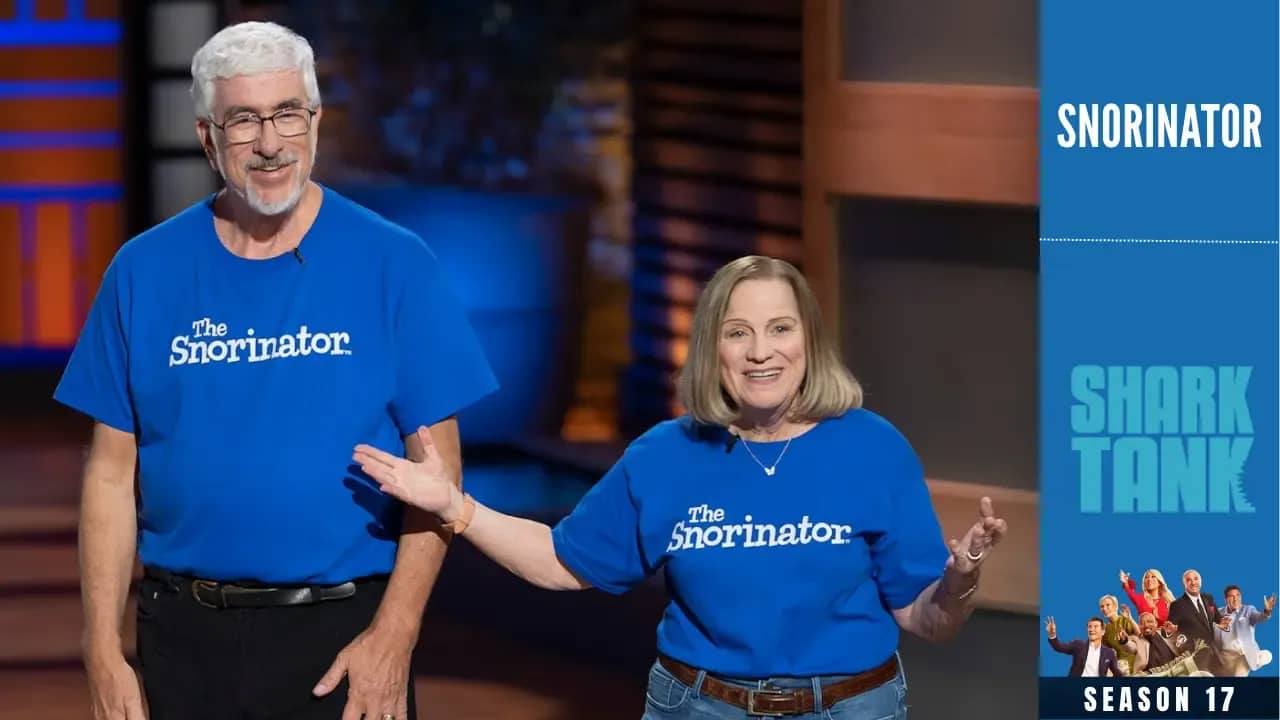
Some Shark Tank products are memorable because they look unusual. Snorinator fits that category. But the more useful business lesson is not that Lloyd and Sue Ecker walked into the Tank with a giant upright pillow.
The real story is how a funny-looking sleep product turned into a serious case study about customer pain.
Snoring is not only a problem for the person making the noise. Often, the more motivated buyer is the person lying awake beside them. That insight shaped the strongest moment in Snorinator’s pitch. Michael Strahan immediately saw that the product should be marketed to the partner who needs sleep, not just the snorer.
Snorinator appeared in Shark Tank Season 17, Episode 2. The founders landed an on-air deal with Lori Greiner and Michael Strahan, but the bigger question is what happened after the cameras stopped rolling.
Quick Answer: Is Snorinator Still in Business?
Yes. Snorinator is still in business as of July 2026. The official store remains active, and the core pillow is listed as available for $159.99. The company also sells fitted pillowcases, travel bags, and bundled product options.
The on-air Shark Tank deal was $100,000 for 25% total with Lori Greiner and Michael Strahan, according to the transcript. Whether that deal closed after filming remains unclear.
Snorinator Product Snapshot
| Company | The Snorinator |
| Founders | Lloyd Ecker and Sue Ecker |
| Product | Upright anti-snoring memory-foam pillow |
| Category | Sleep and wellness |
| Shark Tank episode | Season 17, Episode 2 |
| Original ask | $100,000 for 10% |
| On-air deal | $100,000 for 25% total with Lori Greiner and Michael Strahan |
| Deal status today | Unclear |
| Current status | Active online store |
| Website | Official Snorinator store |
Latest Update: July 2026
- Snorinator’s official Shopify store is active.
- The core pillow is listed at $159.99, discounted from $199.99.
- Small and large sizes are available.
- Pillowcases, travel bags, and bundles are listed.
- The company warns that the product is not for users diagnosed with sleep apnea or users who are seriously overweight.
What Is Snorinator?
Snorinator is an upright sleep-support pillow designed to help nonclinical snorers sleep in a more elevated position. It is made from memory foam and shaped more like a supportive backrest than a traditional pillow.
The product’s basic idea is simple: if a person can sleep upright, their airway may stay more open than it does when lying flat. That is the same broad logic behind wedge pillows, adjustable beds, and some positional snoring strategies.
The Snorinator pillow is designed to help reduce snoring for “nonclinical snorers.” That wording matters. Snoring can sometimes point to sleep apnea or another medical issue, so Snorinator is careful not to position itself as a medical cure.
External sleep-health guidance supports the broader idea that sleep position can affect snoring. Sleeping on your back can contribute to airway obstruction, while side and upright sleeping positions may help some breathing-related sleep issues.
That does not mean every snorer should buy one. Snorinator’s own site includes a strong warning against use by people diagnosed with sleep apnea or people who are seriously overweight.
Who Founded Snorinator?
Snorinator was founded by Lloyd and Sue Ecker, a married couple from Pomona, New York.
Their pitch worked because it came from a real household problem. Lloyd had snored for decades. Sue finally gave him an ultimatum.
“Figure out how to get rid of that buzz saw or get out of my bedroom.”
- Sue Ecker
Lloyd said he tried common snoring products, including strips, clips, vents, and mouthpieces. None solved the problem for him. He then found an old reference to upright positioning and started experimenting with a foam-based sleep support.
The result was Snorinator.
“I’m back in the bedroom, baby.”
- Lloyd Ecker
That line was funny, but it also explained the product’s emotional hook. Snorinator was not only selling better sleep. It was selling peace inside the bedroom.
Founder Timeline
| Period | Milestone |
|---|---|
| Before Snorinator | Lloyd struggles with long-term snoring. |
| Around four years before the pitch | Sue gives Lloyd an ultimatum to solve the problem. |
| Product development | Lloyd works with a friend in the foam business to create the pillow. |
| Pre-Shark Tank | The founders invest heavily in molds and inventory. |
| Shark Tank Season 17 | Lloyd and Sue pitch Snorinator and receive an on-air offer. |
| 2026 | The official store remains active with expanded accessories and bundles. |
What Happened on Shark Tank?
Lloyd and Sue entered the Tank asking for $100,000 for 10%. That valued Snorinator at $1 million.
They told the Sharks they had invested $341,000 into molds and inventory. Lloyd said the pillow cost about $38 landed and sold for $160. The current official store price is very close to that, listing the core pillow at $159.99.
The founders also shared sales numbers:
| Metric | Pitch Figure |
|---|---|
| Year-one sales | $100,000 |
| Year-two sales | $214,000 |
| Current-year projection | $325,000 |
| Total losses | About $500,000 |
| Landed cost | $38 |
| Retail price | $160 |
These figures came from the Shark Tank transcript and could not be independently verified through public sources.
The Sharks had mixed reactions. Michael Strahan and Lori Greiner tried the pillow and found it comfortable. Barbara Corcoran liked the founders but said she could not personally adapt to upright sleeping. Kevin O’Leary saw marketing challenges and went out.
The turning point came when Lori identified snoring as a major problem and Michael explained who the real customer might be.
“Snoring is a huge problem.”
- Lori Greiner
“I would market it toward the person who had to sleep.”
- Michael Strahan
That was the smartest business insight of the pitch. The buyer may not be the person snoring. The buyer may be the person desperate for silence.
Shark Tank Deal Snapshot
| Original ask | $100,000 for 10% |
| Implied valuation | $1 million |
| Shark offer | $100,000 for 25% total |
| Sharks | Lori Greiner and Michael Strahan |
| Founder counter | 22% total |
| Final on-air deal | $100,000 for 25% total |
| Final implied valuation | $400,000 |
| Post-show close status | Unclear |
How Does Snorinator Make Money?
Snorinator appears to operate mainly as a direct-to-consumer product business. The official store sells the core pillow, fitted pillowcases, travel bags, and multi-item bundles.
That gives the company a few ways to increase order value. A customer may buy the pillow first, then add a custom pillowcase or travel bag. The official store currently lists pillow-plus-accessory bundles priced above the core pillow.
Business Model Snapshot
| Area | Snorinator’s Model |
|---|---|
| Customer | Couples affected by disruptive snoring |
| Main buyer | Often the partner who cannot sleep |
| Value proposition | Reduce snoring through upright sleep positioning |
| Revenue streams | Pillow sales, pillowcases, travel bags, bundles |
| Channel | Official direct-to-consumer store |
| Advantage | Clear problem, memorable founder story, simple demo |
| Risk | Requires customers to change sleep behavior |
| Key constraint | Medical-adjacent positioning must stay careful |
The product has attractive pitch economics if the $38 landed cost is accurate. A $160 retail price would leave room for gross margin before shipping, advertising, returns, and overhead.
However, the Sharks were right to focus on the education burden. Snorinator is not a tiny impulse product. It is large, visible, and asks the customer to sleep differently. That makes marketing more expensive because the company has to prove comfort, usefulness, and habit change.
What Happened After Shark Tank?
The clearest post-show evidence is that Snorinator is still operating online. The official store’s product data shows the core pillow, pillowcase, travel bag, and bundles available as of July 2026.
The product line also appears to have expanded. The core pillow product was created in Shopify in 2023. The fitted pillowcase was created in 2024. The travel bag was created in 2025. That suggests the business kept merchandising beyond the original pillow.
Snorinator also received independent product-review attention. A 2025 review from New York Magazine’s Strategist found the pillow helped reduce the reviewer’s snoring after an adjustment period. The same review also noted that the upright position may not be ideal for every long-term sleeper.
That mixed reception is useful. It supports the idea that Snorinator can work for some users, while reinforcing the Sharks’ concern that customer adoption is the challenge.
Current Status Evidence Table
| Evidence | What It Shows |
|---|---|
| Official website active | The company is still operating online. |
| Product listed as available | Core pillow remains for sale. |
| Current price: $159.99 | Pricing is close to the Shark Tank retail figure. |
| Accessories listed | Pillowcase and travel bag support bundle strategy. |
| Site warning language | Company is narrowing claims for safety and fit. |
| Independent review | Some positive product experience, with comfort caveats. |
| Deal closure evidence | No reliable confirmation found. |
Company Timeline
| Year | Event |
|---|---|
| 2021 approx. | Sue’s ultimatum pushes Lloyd to solve his snoring problem. |
| 2023 | Snorinator core pillow appears in Shopify product data. |
| 2024 | Fitted pillowcase product is added. |
| 2025 | Travel bag product is added. |
| Oct. 1, 2025 | Snorinator appears in Shark Tank Season 17 Episode 2. |
| 2025 | Strategist publishes an independent product review. |
| 2026 | Official store remains active with products available. |
The biggest unknown is whether Lori and Michael’s deal closed. Many Shark Tank deals change or fall apart after due diligence. Without founder confirmation, SEC filings, or company announcement, the safest answer is: on-air deal, closing unverified.
Where Can You Buy Snorinator?
The best verified place to buy Snorinator is the official Snorinator product page.
As of July 2026, the official store lists:
| Product | Current Listed Price |
|---|---|
| Snorinator pillow only | $159.99 |
| Fitted pillowcase | $59.99 |
| Travel bag | $69.99 |
| Pillow + pillowcase | $212.99 |
| Pillow + travel bag | $222.99 |
| Pillow + travel bag + pillowcase | $272.99 |
Buyers should read the company’s warnings before ordering. The official site says not to order the pillow for someone diagnosed with sleep apnea or someone who is seriously overweight.
That warning is not a small detail. It defines the product’s real market: nonclinical snorers who can safely try positional sleep support.
Lessons From Snorinator’s Journey
Snorinator’s pitch offers several useful lessons for founders.
First, sell to the person with the strongest pain. Lloyd was the user, but Sue was the person most motivated to solve the problem. Michael Strahan caught that immediately. Products for household problems often have two customers: the user and the person affected by the user.
Second, a funny product still needs serious economics. Snorinator had a memorable pitch, but the Sharks focused on losses, manufacturing investment, and behavior change. Story opened the door. Business fundamentals decided the offer.
Third, customer education can be expensive. Snorinator has to convince buyers that sleeping upright is comfortable enough to become a habit. That is harder than selling a familiar pillow shape.
Fourth, medical-adjacent products need careful boundaries. Snoring can be harmless, but it can also point to sleep apnea. Snorinator’s own warning language helps protect the brand by narrowing who the product is for.
Finally, patents and differentiation help, but they do not remove go-to-market risk. Lloyd said the company had an issued utility patent. Even if verified, that would not solve the bigger challenge: getting people to try a new sleep behavior.
Final Take
Snorinator is still active, still selling, and still one of the more memorable sleep products from Shark Tank Season 17. The on-air deal with Lori Greiner and Michael Strahan gave the founders a strong TV moment, but the deal’s post-show status remains unclear.
The company’s strongest asset is not just the pillow. It is the clarity of the problem. Snoring creates a household pain point that people want solved.
The hardest part is habit change. Snorinator asks customers to rethink how they sleep. That makes it a sharper business case study than it first appears.
FAQs
Is Snorinator still in business?
Yes. Snorinator’s official store is active as of July 2026, and the pillow remains available for purchase.
Did Snorinator get a deal on Shark Tank?
Yes. Lloyd and Sue Ecker accepted an on-air deal of $100,000 for 25% total with Lori Greiner and Michael Strahan, according to the transcript.
Did the Snorinator Shark Tank deal close?
The deal close status is unclear. No reliable public confirmation was found showing that Lori Greiner and Michael Strahan’s investment closed after filming.
How much does Snorinator cost?
The official store lists the core Snorinator pillow at $159.99 as of July 2026. Bundles with pillowcases and travel bags cost more.
Who founded Snorinator?
Snorinator was founded by Lloyd and Sue Ecker, a married couple from Pomona, New York.
Is Snorinator for sleep apnea?
No. The company’s site warns not to order Snorinator for someone diagnosed with sleep apnea. People with chronic snoring or possible sleep apnea symptoms should seek medical advice.
Where can you buy Snorinator?
The most reliable verified source is the official Snorinator website at thesnorinator.com.
What is the biggest business lesson from Snorinator?
Snorinator shows that solving a real household problem can attract investor interest, but products that require behavior change need strong marketing, clear positioning, and careful customer education.
The weekly question
From obsession to clarity — one original question every week.
We answer one noisy topic at a time, in full. No daily roundup, no thread bait — just the question, the principles, and the system.
More from Shark Tank USA Season 17
All season pitches
Shark Tank USA
McMiLLER After Shark Tank: Daniel Lubetzky’s Deal, Retail Growth, and the Viral-Game Risk
Shark Tank USA
Edible Architecture After Shark Tank: Lori’s Deal, Current Status and the Cost of Growth

Shark Tank USA