Alchemize Fightwear Shark Tank update: The deal, business model and 2026 warning signs
Alchemize Fightwear won three Sharks, but its empty 2026 store turns a triumphant pitch into a cautionary business case.
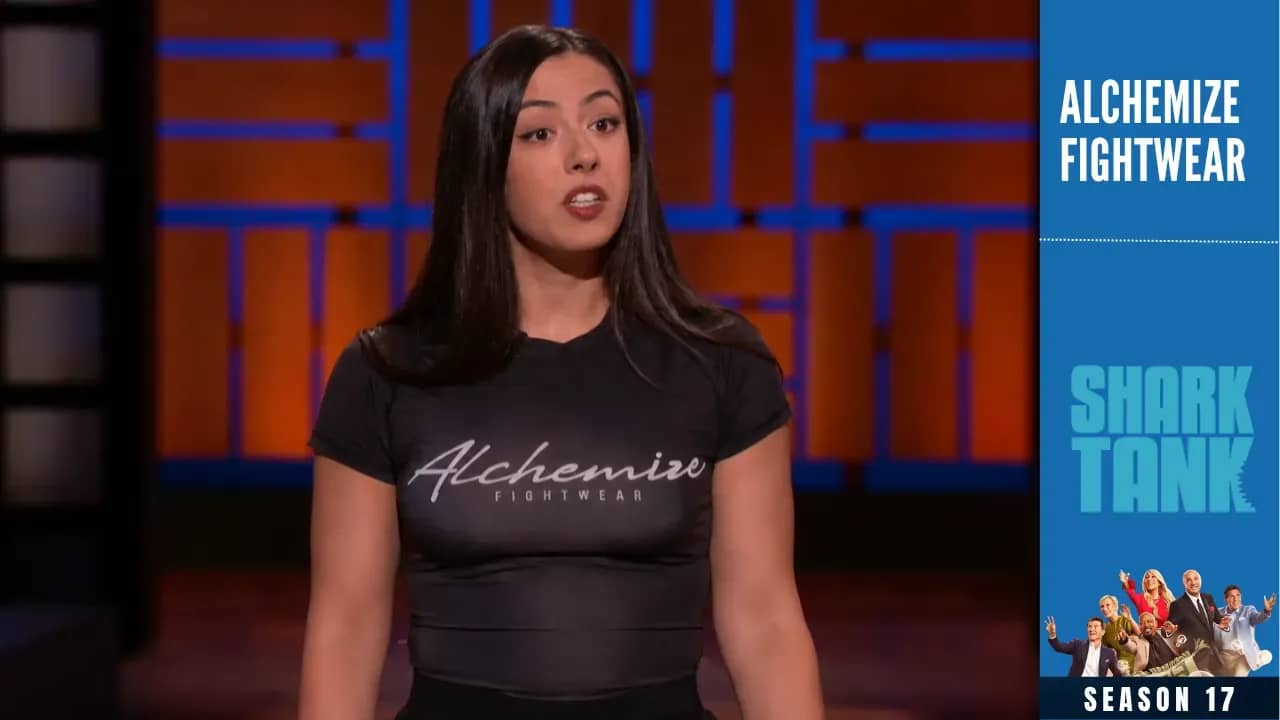
Alchemize Fightwear entered Shark Tank with a problem that was easy to understand. Women in combat sports often trained in gear adapted from men’s clothing. Poor coverage and fit could distract athletes at the exact moment they needed confidence.
Founder Maya Nazareth turned that problem into a specialized apparel company, a direct-to-consumer brand and a community for women who fight. By the time her episode aired, Alchemize reported $1.8 million in lifetime sales and had organized some of the largest women-only grappling events in its niche.
However, the more useful business story begins after the deal. Alchemize’s official website remains active in August 2026, but its main product catalog contains no merchandise. Customers have also reported serious fulfillment and communication problems. Those signals do not prove that the company has closed, but they make “growing” an unsupported description.
This case file examines the product, founder, three-Shark agreement, business model and evidence behind Alchemize’s uncertain current position. Readers can explore the other companies and deals in the Shark Tank Season 17 episode guide.
| Product snapshot | Details |
|---|---|
| Company | Alchemize Fightwear |
| Founder | Maya Nazareth |
| Product | Women-specific jiu-jitsu, wrestling, boxing and MMA apparel |
| Industry | Combat-sports apparel and community events |
| Shark Tank episode | Season 17, Episode 4; aired Oct. 22, 2025 |
| On-air deal | $300,000 for 15% with Lori Greiner, Alexis Ohanian and Kendra Scott |
| Deal status | Company-reported closed; no public filing located |
| Current status | Active website; apparel operation under uncertainty |
| Website | Official Alchemize store |
Latest update — August 2026
- The official website remains online.
- The main catalog and singlet collection contain no products.
- The founder remained publicly active in mid-2026.
- Multiple customers reported fulfillment and communication problems during 2026.
- No public explanation for the empty catalog was found.
What is Alchemize Fightwear?
Alchemize designed technical apparel for women in jiu-jitsu, wrestling, boxing and mixed martial arts. Its central idea was that female fighters needed more than smaller versions of men’s gear.
The company adjusted coverage, support and fit for women’s bodies. Its hero product was a wrestling and grappling singlet with a built-in sports bra, high neckline and double lining. The broader range included rash guards, grappling bottoms, leggings, gis and loungewear.
The product solved both a functional and emotional problem. Clothing that rides up or becomes transparent can expose an athlete during close-contact training. Better coverage can remove that distraction and help the wearer concentrate on performance.
“Built for our bodies and built for battle.” — Maya Nazareth
The timing also supported the concept. The NCAA’s first women’s wrestling championship took place in 2026. NCAA participation rose from more than 1,200 women in 2023-24 to more than 1,700 in 2024-25.
Like Doublesoul Socks, another Season 17 apparel brand, Alchemize sold identity as well as function. Buyers were not only choosing fabric. They were joining a group that felt overlooked by mainstream sportswear.
Who founded Alchemize Fightwear?

Maya Nazareth began Brazilian jiu-jitsu as a teenager. She has said the sport helped her recover confidence after bullying and personal trauma.
The apparel problem became clear during training and competition. Nazareth repeatedly adjusted clothing made for male bodies and once realized that her chest had become exposed while an opponent held her in a choke.
She began interviewing female fighters while studying business at the University of Delaware. Those conversations showed that the problem was broader than her own experience.
Nazareth launched Alchemize publicly in 2020. The company won the student category of the university’s Hen Hatch competition that year, providing early funding and validation. She later left a marketing job to work on the business full time.
Her background was unusually well matched to the opportunity. She was an athlete, a customer and an organizer inside the community she wanted to serve. Her Forbes founder profile later reported a $1 million seed round, institutional sales and plans for three stores.
| Founder timeline | Milestone |
|---|---|
| 2015 | Began training in Brazilian jiu-jitsu as a teenager |
| 2018-2020 | Interviewed female fighters and developed early products while at university |
| 2020 | Launched Alchemize and won the Hen Hatch student competition |
| 2021 | Moved into the business full time after funding an early purchase order |
| 2023 | Expanded the community strategy through women-only grappling camps |
| 2025 | Joined Forbes’ Retail & Ecommerce 30 Under 30 list and appeared on Shark Tank |
| 2026 | Continued speaking publicly while the apparel catalog went empty |
What happened to Alchemize Fightwear on Shark Tank?
Nazareth asked the Sharks for $250,000 in exchange for 5%. That placed a $5 million implied value on the company.
She reported $1.8 million in lifetime revenue. Sales had reached nearly $500,000 in the previous year, and she forecast $875,000 with a 3%-5% profit margin for the current year.
The direct-to-consumer economics initially looked attractive. Nazareth reported a $32 customer-acquisition cost and a $157 average order value. The $90 hero singlet reportedly cost $27 landed, creating a 70% product-level gross margin.
The Sharks still questioned the valuation. Activewear companies may command strong revenue multiples, but those benchmarks often belong to larger brands with proven distribution and operations. Ohanian also warned that Alchemize would compete against brands with unusually loyal customers.
Lori Greiner and Ohanian offered $250,000 for 20%. Nazareth countered at 10%, but they moved only to 15%. Kendra Scott then joined the group and increased the aggregate offer to $300,000 for 15%.
“I’m a fighter, so I’m going to shoot my shot.” — Maya Nazareth
The three investors rejected 12%. Nazareth accepted their $300,000-for-15% offer. The official ABC Episode 4 guide confirms the company and episode details.

| Deal snapshot | Terms |
|---|---|
| Founder’s ask | $250,000 for 5% |
| Initial implied valuation | $5 million |
| First offer | $250,000 for 20% from Lori Greiner and Alexis Ohanian |
| Founder’s counters | 10%, then 12% after Kendra Scott joined |
| Final on-air deal | $300,000 for 15% |
| Sharks | Lori Greiner, Alexis Ohanian and Kendra Scott |
| Final implied valuation | $2 million |
| Post-show status | Company-reported closed |
How does Alchemize Fightwear make money?
Alchemize’s main revenue engine was direct-to-consumer apparel. Customers bought technical fightwear through the company’s website, while limited sales also went to gyms, schools and universities.
The company used a focused inventory strategy. It held stock in a small core range and introduced other designs through limited capsule collections. Scarcity created urgency while allowing the team to test demand before making larger commitments.
Live events became a second business line. Beginning in 2023, Alchemize organized women-only camps with instruction, lodging, meals and community activities. Philadelphia Magazine reported seven camps and more than 1,000 attendees by late 2025.
The two revenue streams supported each other. Apparel brought athletes into the brand, while events increased loyalty and provided direct access to product feedback. That approach reduced reliance on paid advertising during the company’s early growth.
| Business model component | How it worked |
|---|---|
| Customers | Women training or competing in combat sports |
| Value proposition | Better coverage, support and movement for female athletes |
| Revenue model | Apparel sales, event tickets and limited institutional orders |
| Channels | Website, Instagram, athletes, camps and community referrals |
| Advantages | Founder credibility, specialized fit and a focused community |
| Risks | Inventory, supplier delays, fulfillment capacity and a narrow market |
Like Z-Coil Footwear, Alchemize needed customers to believe that physical function justified a premium price. Like the sports-focused Pelagion, it also needed to prove that a passionate niche could support a scalable company.
The pitch exposed an important weakness. A 70% product gross margin sounds strong, yet the company expected only a 3%-5% overall profit. Marketing, payroll, events, returns, storage and unsold inventory consumed most of the difference.
What happened after Shark Tank?
Alchemize announced that it had secured the $300,000 investment, and Nazareth’s professional website later described the three-Shark deal as closed. Funding databases also record a roughly matching late-2025 round.
However, no public filing or detailed investor announcement confirms the transaction’s legal mechanics. The evidence supports “company-reported closed,” not an independently audited conclusion.
The episode produced immediate attention. In March 2026, Nazareth told 6ABC that Olympic and UFC-level athletes had contacted the company. Alchemize was also promoting a May 2026 East Coast Women’s Grappling Retreat.
Those positive signals were followed by operational warnings. By August, the official catalog and singlet collection both stated that no products were available. The site still described its fightwear and camps, but parts of the events area remained dated.
Customer reports add context. Several members of a women’s jiu-jitsu discussion described long delivery delays, missing items, refunds and difficulty reaching customer service during 2026.
These reports are anecdotal. They do not represent every order. Yet the repetition of similar complaints, combined with an empty catalog, points to more than a temporary out-of-stock item.
| Current-status signal | Evidence in August 2026 | Assessment |
|---|---|---|
| Website | Online and branded | Active |
| Apparel availability | No products in the main catalog | Paused or unavailable |
| Founder activity | Public speaking and Alchemize-related posts in mid-2026 | Active |
| Customer fulfillment | Repeated reports of delays and partial orders | Material warning |
| Deal | Described as closed by company-controlled sources | Likely closed; not independently verified |
| Overall business | Brand remains visible, but commerce is not functioning normally | Pivoting or under operational uncertainty |
Before Shark Tank versus August 2026
| Area | Before Shark Tank | August 2026 |
|---|---|---|
| Products | Core fightwear plus limited capsule drops | No products in the official catalog |
| Revenue | $1.8 million in reported lifetime sales | No verified post-show revenue update |
| Distribution | Mainly direct-to-consumer | No active merchandise visible |
| Community | Large online following and growing camps | Community pages remain, but recent company activity is unclear |
| Operations | Limited drops intended to control inventory | Customers report delays, missing goods and weak communication |
Where can you buy Alchemize Fightwear?
No reliable source for new Alchemize apparel was available on Aug. 18, 2026. The official store contained no products, and no verified Amazon or major-retail listing was found.
Buyers should wait for confirmed live inventory. If merchandise returns, they should check stated fulfillment times and recent customer feedback before ordering.
Lessons from Alchemize Fightwear’s journey
Community can become a competitive advantage
Alchemize did not wait for a women’s combat-sports market to organize itself. It created events, gathered product feedback and gave customers a shared identity. That community helped the brand grow without early advertising.
Gross margin does not guarantee a healthy company
A $90 product that costs $27 appears attractive. However, the projected net margin was only 3%-5%. Founders must model the complete cost of inventory, marketing, fulfillment, returns and staff.
Limited drops reduce one risk but can create another
Small releases can prevent excess stock. Preorders and tight production schedules can still create customer-service problems if manufacturing slips. Inventory discipline must be matched by honest communication.
A strong category does not automatically justify a high valuation
The Sharks agreed that women’s combat sports offered an interesting opportunity. They did not accept the $5 million valuation. Their final terms valued the company at $2 million, reflecting its size and execution risk.
Brand trust is an operating asset
Alchemize’s message depended on supporting women. That made fulfillment and communication especially important. When operations conflict with the promise, disappointment can spread quickly through a close community.
Final take
Alchemize Fightwear solved a real product problem and built a credible community around it. Nazareth’s experience gave the company authenticity that larger apparel brands could not easily manufacture.
The Shark Tank agreement validated the opportunity, but it did not remove the operational risks. The empty catalog and repeated fulfillment complaints now matter more than the on-air celebration.
Alchemize should not be labeled closed without stronger evidence. It also should not be described as a clear post-Shark Tank success. The most accurate August 2026 classification is a recognizable brand in transition, with an active founder and unresolved questions around apparel operations.
Frequently asked questions
Is Alchemize Fightwear still in business?
The website remains active, but the official store listed no products on Aug. 18, 2026. The business appears to be pivoting or experiencing operational problems.
Who founded Alchemize Fightwear?
Maya Nazareth founded the company after experiencing poor fit and coverage in combat-sports clothing designed around male bodies.
What did Alchemize ask for on Shark Tank?
Nazareth asked for $250,000 in exchange for 5%, implying a $5 million valuation.
What Shark Tank deal did Alchemize receive?
She accepted $300,000 for 15% from Lori Greiner, Alexis Ohanian and Kendra Scott.
Did the Alchemize Shark Tank deal close?
Company-controlled sources describe it as closed, and funding databases record a matching round. No public legal filing was found, so independent confirmation remains limited.
How much revenue did Alchemize generate?
Nazareth reported $1.8 million in lifetime sales during the pitch. The company’s projected $875,000 in 2025 sales has not been verified as achieved.
Where can you buy Alchemize Fightwear?
No new products were available through the official catalog on Aug. 18, 2026. Buyers should wait for confirmed inventory and updated fulfillment information.
Why did the Sharks question Alchemize’s valuation?
The company was still small, expected a thin net profit and faced established athletic brands. The Sharks saw potential but wanted terms that reflected those risks.
The weekly question
From obsession to clarity — one original question every week.
We answer one noisy topic at a time, in full. No daily roundup, no thread bait — just the question, the principles, and the system.