Geeks Around Globe
Shark Tank USA
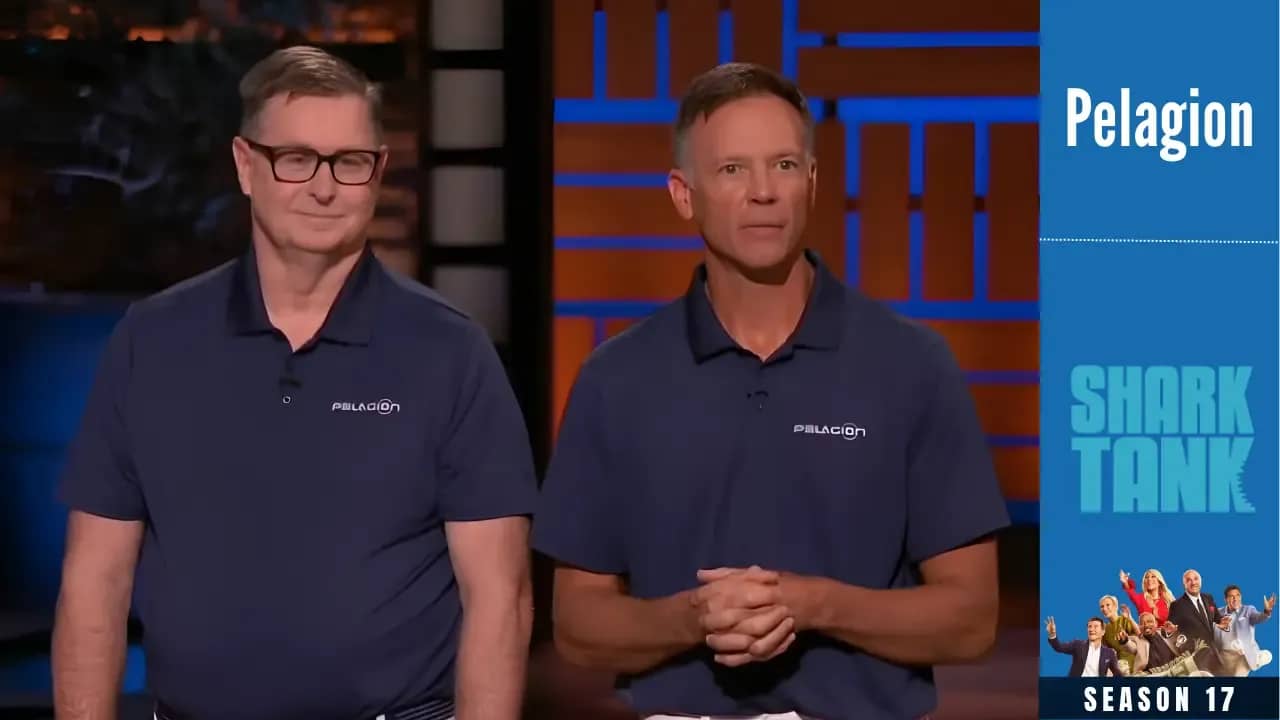
Pelagion founders Mike Terry and Jamie Schlinkmann pitch the HydroBlade on Shark Tank Season 17.

Pelagion Shark Tank Update: What Happened to the HydroBlade After Season 17?

Pelagion’s HydroBlade wowed the Sharks, but its $20M valuation, price, and production risk sank the deal.

Pelagion was one of the most ambitious hardware pitches in Shark Tank Season 17. The company was not selling a small kitchen tool, a snack brand, or a simple consumer accessory. It was pitching a $25,000 electric watercraft that needed engineering, manufacturing, batteries, safety systems, and a buyer willing to pay premium recreation prices.

That is what makes Pelagion interesting as a case file. The Sharks clearly saw the appeal of the HydroBlade. Some even liked the product. But the investment case had problems. Pelagion wanted a $20 million valuation while it was still pre-production, had 19 preorders, and needed far more capital to scale.

So the real story is not just that Pelagion left Shark Tank without a deal. The better question is why a product the Sharks found exciting still failed to win an investment.

Quick Answer: Is Pelagion Still in Business?

Yes. Pelagion is still active as of June 2026. The company’s website is live, the HydroBlade is listed for preorder, and Automatic Manufacturing Systems, Inc., Pelagion’s parent company, has an active Wefunder reservation page. Pelagion did not get a deal on Shark Tank Season 17, Episode 1.

Pelagion Snapshot Details
CompanyPelagion
ProductHydroBlade
Founders / teamJamie Schlinkmann and Mike Terry
IndustryElectric personal watercraft / electric hydrofoil
Shark Tank episodeSeason 17, Episode 1
Air dateSept. 24, 2025
Deal statusNo deal
Current statusActive; preorder and investment reservation pages live
Websitepelagion.com

Latest Update (June 2026): Pelagion’s official website remains active, its shop lists HydroBlade preorder deposits, and its Wefunder page shows investor reservations for Automatic Manufacturing Systems, Inc., the parent company behind Pelagion.

What Is Pelagion’s HydroBlade?

The HydroBlade is a stand-up electric hydrofoil personal watercraft. Pelagion describes it as the first stand-up electric hydrofoil with steering capabilities. In simple terms, it tries to combine the thrill of a stand-up Jet Ski with the quiet efficiency of an electric hydrofoil.

That positioning matters because the HydroBlade sits between two categories. Traditional personal watercraft are familiar and fast, but they are noisy, fuel-powered, and expensive to store or maintain. Electric eFoils are cleaner and quieter, but many riders find them difficult to learn. Pelagion’s bet is that handlebars and steering can make hydrofoiling feel more like riding a bike or motorcycle.

"The HydroBlade is the world’s first stand-up electric hydrofoil with intuitive steering."

- Pelagion founders

The HydroBlade page lists dual motors, dual 5.5 kWh batteries, a claimed 4-hour runtime, and speed around 70 km/h. During the Shark Tank pitch, the founders described the HydroBlade as offering four hours of silent operation and up to 40 mph top speed.

This is not a low-cost beach toy. Pelagion is trying to sell a premium electric recreation product to early adopters, water-sports enthusiasts, resort operators, and buyers who want a quieter ride.

Product Feature Business Meaning
Dual electric motorsSupports speed and performance positioning
Dual 5.5 kWh batteriesSupports longer ride-time claims
Handlebars and steeringReduces the learning-curve concern found with many eFoils
Hydrofoil designImproves efficiency by lifting the hull above the water
$25,000 price pointCreates premium positioning but limits the buyer pool

Who Founded Pelagion?

Pelagion was pitched by Mike Terry and Jamie Schlinkmann from South Florida. Pelagion’s official site identifies Schlinkmann as CEO and founder. The company says he built Pelagion after returning to a childhood obsession: the original Kawasaki stand-up Jet Ski.

"When I was a kid, I had an original Kawasaki stand-up Jet Ski. I loved the thing."

- Jamie Schlinkmann

That origin story gives Pelagion useful founder-market fit. Schlinkmann was not chasing a random trend. He was trying to update a product category he personally understood.

Pelagion is also tied to Automatic Manufacturing Systems, Inc. The company’s About page says Pelagion is a subsidiary of Automatic Manufacturing Systems, a manufacturing business with experience in automation across several industries.

That background is important. A battery-powered hydrofoil is difficult to build. It needs mechanical engineering, electrical engineering, software, assembly, safety testing, and service support. A founder with manufacturing infrastructure has a more credible path than a founder with only a prototype.

Founder Timeline Milestone
Childhood inspirationSchlinkmann’s interest traces back to a 1973 Kawasaki stand-up Jet Ski.
Mid-1990sSchlinkmann started an industrial automation company, according to the pitch transcript.
2021The founders said they started building the HydroBlade project.
2023IEEE Spectrum and New Atlas covered the HydroBlade prototype.
2025Pelagion launched HydroBlade preorders at CES Las Vegas.
2025Pelagion appeared on Shark Tank Season 17.

What Happened on Shark Tank?

Pelagion appeared on Shark Tank Season 17, Episode 1, alongside Doublesoul SocksZ-Coil, and Dad Strength Brewing. The founders asked for $800,000 for 4% of the company. That valued the business at $20 million.

"We’re here today seeking $800,000 for 4% of our organization."

- Mike Terry and Jamie Schlinkmann

The numbers made the pitch difficult. The founders said they started the project in 2021 and had spent about $2.047 million on it. They also said the HydroBlade was not yet in production and had 19 preorders.

The retail price was another concern. Pelagion said the HydroBlade would sell for $25,000 and cost about $12,500 to make. That implies an attractive gross margin, but it also puts the product above many existing watercraft alternatives.

Deal Snapshot Pelagion
Ask$800,000
Equity offered4%
Implied valuation$20 million
Project started2021
Amount spentAbout $2.047 million
Production statusPrototype / not in production
Preorders19
Retail price$25,000
Cost to make$12,500
Final resultNo deal
Main objectionsValuation, capital intensity, price, structure, coachability


The Sharks were not rejecting the product idea alone. They were reacting to the gap between Pelagion’s ambition and its proof. A $20 million valuation is hard to defend when the company is still pre-production, has 19 preorders, and needs more capital to manufacture at scale.

"This is a very capital intensive business which has pre-orders but no sales."

- Rashaun Williams

Robert Herjavec focused on price. The founders argued that other products did not offer the HydroBlade’s battery life and range. But Robert compared the $25,000 price against high-end jet skis and eFoils already in the market.

"You are way out of your league for price."

- Robert Herjavec

Kevin O'Leary raised a different issue: structure. Pelagion was not presented as a clean standalone startup. The founders were including the broader manufacturing company in the deal. That made it harder for the Sharks to understand what they were buying and how they would get a return.

"You stuck it inside a really convoluted deal."

- Kevin O'Leary

The pitch then became tense when Schlinkmann defended the manufacturing setup. His point was logical: the company designed the HydroBlade to be made in-house. But the exchange appeared to weaken investor confidence.

"We designed this for us to make."

- Jamie Schlinkmann

Kendra Scott gave the clearest emotional read on the pitch. She liked the product enough to say she wanted two for her beach house. But she still passed because the capital needs were too large and the founder interaction concerned her.

"I’m obsessed with the product. I want to order two right now for my beach house."

- Kendra Scott

"I need a founder who’s going to be receptive to input."

- Kendra Scott

That is the central Shark Tank lesson from Pelagion. The Sharks liked the idea more than they liked the deal. The product was exciting, but the investment case was too expensive, too early, and too structurally complicated.

How Does Pelagion Make Money?

Pelagion’s business model starts with direct sales of the HydroBlade. The company’s shop currently lists preorder options, including a $200 preorder and a $2,000 fully refundable preorder. Its investor FAQ states a retail price of $25,000 for the HydroBlade.

During the pitch, the founders said the product would cost about $12,500 to make. On paper, that creates a 50% gross margin. But hardware margins can shrink after shipping, warranty, service, returns, financing, customer support, and dealer or rental partnerships.

That is why the Sharks focused on capital. A premium hardware company may need millions more before it reaches stable production. Kendra Scott summarized that risk directly.

"$800,000 is just a little tiny drop of what you’re going to need."

- Kendra Scott

Pelagion may also generate future revenue from accessories, custom skins, future seated or fishing-focused models, and commercial use cases. Its Wefunder memo mentions eco-tours, rapid response, and STEM education as possible applications.

Business Model Area Pelagion Analysis
CustomerWater-sports enthusiasts, thrill-seekers, resorts, tour operators, premium recreation buyers
Value propositionA quieter, electric, steerable hydrofoil with a lower learning curve than many eFoils
Revenue modelHydroBlade sales, preorder deposits, possible accessories, future product variants
ChannelsOfficial website, boat shows, Wefunder, social media, influencer demos
AdvantagesManufacturing parent company, engineering team, 75,000 sq. ft. facility, differentiated design
RisksHigh price, hardware complexity, service needs, safety concerns, limited public customer reviews

The most important business advantage is manufacturing. Many hardware startups struggle because they outsource too much too early. Pelagion claims access to design, engineering, assembly, shipping, and technical support through Automatic Manufacturing Systems.

However, manufacturing strength does not automatically create demand. Pelagion still has to prove that enough buyers want a $25,000 electric hydrofoil and that the company can deliver it reliably.

What Happened After Shark Tank?

After Shark Tank, Pelagion’s public evidence points to continued activity rather than shutdown. The company’s home page references its Shark Tank appearance and promotes a preorder offer. The shop remains active. The investment page remains active. Wefunder shows investor reservations for Automatic Manufacturing Systems, Inc.

The strongest traction signal is not traditional retail distribution. It is preorder and investor interest. Wefunder listed $81,880 reserved by 45 investors when accessed and highlighted more than 30 presold units in the first month. Those are useful signals, but they are not the same as confirmed delivered units or recurring revenue.

Pelagion also spent 2025 trying to get the product in front of the right audience. Its company news page says HydroBlade launched preorders at CES Las Vegas in January 2025. A May 2025 post says Pelagion appeared at CES, Miami Boat Show, Palm Beach Boat Show, and Suncoast Boat Show, with San Diego Boat Show planned for June.

Current Status Evidence Finding What It Means
WebsiteActiveCompany has not gone dormant online
ShopPreorder products listedSales funnel is active
Product availabilityPreorder, not clearly verified as broad deliveryBuyers should confirm delivery timing
FundingWefunder reservation page activeCompany is still seeking capital interest
PressCovered by IEEE Spectrum and New AtlasProduct received credible technical attention
Business statusActive / early commercializationNot closed, but still proving scale
Company Timeline Milestone
2021The founders said they started building the HydroBlade project.
2023IEEE Spectrum and New Atlas covered the HydroBlade prototype.
July 2024Pelagion published a founder interview post about Jamie Schlinkmann.
January 2025Pelagion launched HydroBlade preorders at CES Las Vegas.
May 2025Pelagion reported multiple boat-show appearances.
September 2025Pelagion appeared on Shark Tank Season 17, Episode 1.
June 2026Website, shop, and Wefunder page remained active.

The post-show picture is therefore mixed but alive. Pelagion has credible technical coverage, a differentiated product, and an active preorder path. At the same time, public evidence of large-scale deliveries, customer reviews, or revenue is still limited.

"This is a setback, but setbacks happen."

- Pelagion founders

Where Can You Buy the HydroBlade?

The best place to buy or preorder the HydroBlade is Pelagion’s official shop. The Pelagion Shop lists preorder options at $200 and $2,000. The company’s investor FAQ lists the retail price at $25,000.

Buyers should treat this like a premium vehicle purchase, not a normal online order. Before placing a preorder, confirm delivery timing, refund rules, warranty coverage, service support, shipping limitations, and whether the product complies with local watercraft rules.

Pelagion’s site also offers test-ride signups. For a product this expensive and physical, a test ride may be more useful than any product description.

Lessons From Pelagion’s Journey

Pelagion’s first lesson is that an exciting product does not automatically create an investable deal. The Sharks liked the HydroBlade, but they questioned the valuation, production stage, price point, and future capital needs.

The second lesson is that founder-market fit matters, but coachability matters too. Schlinkmann’s manufacturing experience gave Pelagion credibility. Yet the Tank showed how quickly founder conviction can become a concern when investors feel their feedback is being resisted.

The third lesson is about pricing. A $25,000 product can work, but it narrows the market. Pelagion does not need every water-sports fan to buy one. It needs enough premium customers, resorts, and operators to prove the category.

The fourth lesson is that company structure matters. If investors cannot clearly understand what they are buying, how the product sits inside the parent company, and how their money returns, the deal becomes harder to close.

Pelagion did not lose the Sharks because the HydroBlade was boring. It lost them because the product was exciting, but the investment case was too expensive, too early, and too structurally complicated.

Final Take

Pelagion is still active, and the HydroBlade remains one of the more ambitious products from Shark Tank Season 17. The company did not get a Shark Tank deal, but it continues to pursue preorders, investor reservations, and public demos.

The business is worth watching because it has a real manufacturing story behind it. But it also carries real startup risk. Pelagion must prove that its premium electric hydrofoil can move from exciting demo to delivered product at scale. That is the difference between a memorable Shark Tank pitch and a durable company.

Pelagion FAQs

Is Pelagion still in business?

Yes. Pelagion’s website, shop, and investment reservation pages were active as of June 2026.

What is Pelagion’s HydroBlade?

The HydroBlade is a stand-up electric hydrofoil personal watercraft with steering capabilities, dual motors, and dual batteries.

Did Pelagion get a deal on Shark Tank?

No. Pelagion left Shark Tank Season 17, Episode 1 without a deal.

How much did Pelagion ask for on Shark Tank?

Pelagion asked for $800,000 for 4%, which implied a $20 million valuation.

Why did the Sharks pass on Pelagion?

The Sharks passed because of the valuation, capital needs, $25,000 price point, pre-production status, company structure, and concerns about founder coachability.

How much does the HydroBlade cost?

Pelagion’s investor FAQ lists the HydroBlade retail price at $25,000. The official shop lists preorder deposits at $200 and $2,000.

Where can you buy the HydroBlade?

The HydroBlade is available for preorder through Pelagion’s official website.

Is the HydroBlade already shipping?

Public sources reviewed did not independently verify broad customer deliveries. Buyers should confirm delivery timing directly with Pelagion before ordering.

Sources

Newsletter

From obsession to clarity — one original question every week.

We answer one noisy topic at a time, in full. No daily roundup, no thread bait — just the question, the principles, and the system.


Continue reading

More in Shark Tank USA