
Surf Skull Shark Tank Update: The Closed Deal and the Challenge of Scaling Surf Safety
Surf Skull turned a bloody surfing accident into a Shark Tank deal—but can bucket-hat helmets survive real-world scaling
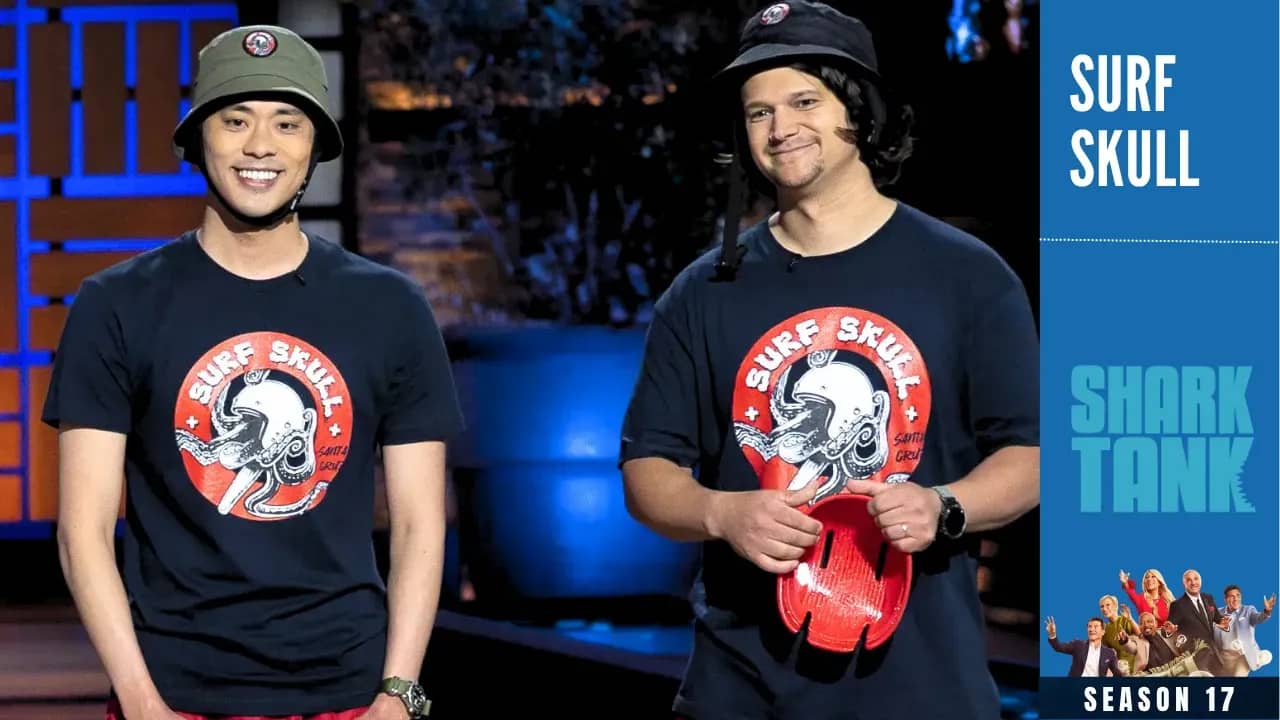
Surf Skull's most interesting challenge begins with a familiar consumer problem: people do not always wear equipment they know could help them. Appearance, comfort, and habit influence the decision. The Santa Cruz company built its business around making surfing head protection look like an ordinary bucket hat.
Today, the story has moved beyond a memorable television demonstration. Surf Skull sells an expanded product range, and founder Davon Larson has confirmed that its investment deal closed. Yet the business still raises useful questions about product testing, manufacturing costs, and turning sudden attention into dependable delivery.
Its negotiation also offers a clear lesson in choosing investors. Davon and Paul Huang accepted more dilution than the lowest-equity offer required because they wanted a particular partner. That choice makes this company worth studying beyond the usual question of whether the Sharks said yes.
This case file follows the evidence from the pitch to the current storefront. It separates historical sales from growth claims, explains the product differences, and examines what the company still needs to prove. First, here is the short answer.
| Company | Surf Skull |
|---|---|
| Founder | Davon Larson; Paul Huang appeared alongside him as CFO and business partner |
| Product | Surfing head protection built into a bucket-hat design |
| Industry | Water-sports equipment |
| Shark Tank episode | USA Season 17, Episode 6; November 12, 2025 |
| Deal status | Closed, founder-confirmed; broadcast terms were $50,000 for 20% |
| Current status | Active, with an expanded range; financial performance remains private |
| Website | Surf Skull's official store |
Latest Update: September 2026
- - The store lists Reeflex and Essential product options.
- - The founder has publicly confirmed deal closure.
- - Testing claims require attention to the specific model and size.
- - No verified current annual revenue or profit figure is available.
What Is Surf Skull?
Surf Skull combines a bucket hat with protective components intended for surfing. Its customer is someone who wants head protection without the appearance of a conventional helmet. The brim also adds shade.
The founders treated reluctance to wear protective gear as a design problem. During the pitch, Paul explained the tension:
"People want head protection, but not at the cost of looking ridiculous."
— Paul Huang
That observation gives the product a clear commercial purpose. Equipment has to fit into a customer's routine before its features can influence regular use. For Surf Skull, the familiar hat shape is part of the buying argument.
The range has evolved. V2 with Reeflex includes a slip layer intended to manage rotational forces. Essential omits that layer and carries different protection claims. Buyers should treat these as distinct products, even when their silhouettes look similar.
The company describes its technology in confident terms. However, design intentions and laboratory testing should not become blanket promises about preventing injuries.
Who Founded Surf Skull?
Product designer Davon Larson started Surf Skull after a surfboard fin cut his head while surfing in Mexico. Existing helmets did not appeal to him, so he began developing an alternative.
Paul Huang brought financial experience to the business. During their pitch, the pair explained that they met through a surfing group at Google. Their shared interest helped them recognize the problem, while their different skills helped them address it.

The wider team also matters. Surf Skull identifies Kendall Larson Williams with operations and credits engineers Aaron Christian and Owen Murphy with V2 development. A convincing prototype requires more than an engaging founder story.
Founder Timeline
- 2022: Davon's injury in Mexico provides the starting point, according to local reporting.
- 2023: Surf Skull launches.
- 2025: Davon and Paul present the business to the Sharks while the team develops V2.
- 2026: The company continues selling and explaining its revised product range.
The team's relevant experience improved its ability to build the product. It did not remove the need to complete tooling, validate performance, and deliver orders. Those tasks became central to the next stage.
What Happened on Shark Tank?
Surf Skull appeared in Shark Tank Season 17, alongside Tantos, Forte3D, and Shalom Japan. ABC's episode listing confirms the November 12, 2025 appearance.
Davon and Paul asked for $50,000 for 12% equity. They reported approximately $100,000 in lifetime net sales and roughly $45,000 during their previous full business year.
The product demonstration drew attention, but testing prompted a more important question. The founders acknowledged that V2 remained a prototype with preliminary testing and unfinished molds. They expressed confidence in their engineers and the work ahead.
Recent sales also needed explanation. The founders said they had reduced inventory while concentrating on the new version. They did not provide a clear year-to-date sales number in the aired exchange.
| Proposal | Investment | Equity | Implied post-money valuation |
|---|---|---|---|
| Original ask | $50,000 | 12% | Approximately $416,667 |
| Barbara Corcoran | $50,000 | 15% | Approximately $333,333 |
| Daniel Lubetzky, initial | $50,000 | 25% | $200,000 |
| Daymond John | $50,000 | 25% | $200,000 |
| Accepted Daniel deal | $50,000 | 20% | $250,000 |
Valuations equal investment divided by equity. They describe the proposals, not Surf Skull's current value.
Kevin O'Leary raised cycling as a larger opportunity but did not connect with the surfing focus. Lori Greiner praised the innovation and declined. Daniel and Daymond wanted more equity because of the involvement they expected the business to require.
The founders chose Daniel after negotiating his offer down to 20%. They pointed to his experience with Tandem Boogie as a reason to prefer him.
That decision had a measurable cost: five additional percentage points compared with Barbara's offer. The business case depended on Daniel's contribution being worth that extra ownership.
How Does Surf Skull Make Money?
Surf Skull primarily sells physical products through its own website. Its range also includes branded merchandise and related accessories. The main economic question is how much remains after getting an order into a customer's hands.
| Customer | Surfers seeking discreet head protection |
|---|---|
| Value proposition | Protective components in a familiar hat shape |
| Revenue model | Individual product and accessory purchases |
| Channels | Direct online sales; crowdfunding supported development |
| Advantages | Recognizable design, founder experience, product iteration |
| Risks | Testing costs, customer acquisition, inventory, fulfillment, and competing products |
At filming, the founders said V1 cost $10–$12 to manufacture and sold for $75. That leaves $63–$65 before other expenses. For V2, they projected a $12–$15 manufacturing cost and a $100 selling price.
Those figures produce attractive manufacturing-only spreads: about 84%–87% for V1 and 85%–88% for the planned V2. They do not establish operating profit. Tooling, freight, packaging, returns, payment fees, marketing, and staff still need funding.
They also cannot establish today's margins. Current manufacturing costs are unavailable, and the flagship's price has changed.
Retail could increase reach, but it would introduce wholesale pricing and inventory demands. Daymond's references to retail connections were possible future routes, not confirmed stockist agreements.
Surfing-related companies can follow very different models. SURFSET Fitness built around exercise equipment and licensed workouts. Surf Skull's current challenge centers on manufacturing, selling, and supporting equipment that customers take into the water.
What Happened After Shark Tank?
The deal closed, according to the founder
In a February 10, 2026 account, Davon confirms that the investment closed. He also describes roughly tenfold sales growth after airing and pressure to catch up with orders.
That is meaningful first-person evidence. The financial claim remains self-reported, and the comparison period is unspecified. It cannot support an annual revenue estimate. The exact closing date and executed terms are not public.
Crowdfunding came before the broadcast
The V2 Kickstarter campaign raised $14,592 from 149 backers against a $10,000 goal. Its recorded funding period ran from August 1 to September 15, 2025.
That timing changes the interpretation. The campaign finished before the November episode aired, so its funding cannot be credited to the broadcast. It provides evidence of earlier customer support.
Pledges also differ from operating revenue. They create delivery obligations and may help pay development costs before the company earns a dependable return.
The current product requires a precise reading
The company's testing disclosure says V2 Large passed independent EN 1385 water-helmet testing. It says other sizes remain in the certification process. The full laboratory report was not independently reviewed for this case file.
This matters because a shared product name can hide differences in documented testing. Buyers should check the exact model and size. Essential does not carry the same certification claim.
| Check | Evidence | What remains uncertain |
|---|---|---|
| Website | Active storefront and product pages | Financial health |
| Product availability | Current models display ordering controls | Every variant's stock and dispatch date |
| Social activity | Public company and investor posts located | Audience growth and posting frequency |
| Deal status | Founder confirms closure | Final contract details |
| Latest update | Live range includes several product tiers | Sales contribution of each tier |
| Business status | Active, with reported growth | Profitability and repeatable growth |
| Period | Milestone | Business meaning |
|---|---|---|
| 2023 | Surf Skull launches | Begins testing demand |
| 2025, before broadcast | V2 crowdfunding exceeds its goal | Early support precedes television exposure |
| November 2025 | Shark Tank appearance | National exposure and an investment agreement |
| December 2025 target | Company planned V2 preorder shipping | A delivery target, not proof of completed fulfillment |
| 2026 | Broader range remains on sale | Execution shifts toward product selection and order delivery |
| Issue | At filming | September 2026 evidence |
|---|---|---|
| V2 | Prototype with unfinished molds | Commercial listing |
| Flagship price | Planned at $100 | Listed at $118 |
| Investment | Accepted on-air offer | Closure confirmed by founder |
| Performance evidence | Preliminary testing discussed | Size-specific testing claim published |
| Sales visibility | Historical dollar figures disclosed | No verified current annual total |
The evidence supports continued development and commercial activity. It does not settle whether the company has built a reliably profitable operation. More products can attract different customers, but they also create additional inventory and support work.
Where Can You Buy Surf Skull?
The official store is the clearest verified purchasing source. At the research date, it listed V2 with Reeflex at $118, Essential at $98, and Essential Floral at $78.
Check the selected model, size, shipping estimate, and return terms before ordering. Some older products remain listed with limited availability. A listing alone does not confirm immediate dispatch.
This research did not authenticate a current major-chain rollout. Third-party references to Amazon availability were insufficient to confirm an authorized, current listing.
Lessons From Surf Skull's Journey
- - Understand resistance to adoption. Customers weigh comfort and appearance alongside technical features. Product design needs to address that decision.
- - Price the investor's contribution. The founders surrendered extra equity for Daniel's experience. That choice deserves evaluation through the help he delivers.
- - Keep expansion tied to capability. Entering cycling would require different design and testing work. A larger market also brings additional execution demands.
- - Separate manufacturing economics from profit. A large price-to-cost spread can shrink after acquisition, delivery, and support expenses.
- - Prepare for attention to become obligations. More orders require stock, communication, and dependable fulfillment.
The Sharks identified several real issues: testing, market scope, and the effort required to scale. Public evidence is not yet sufficient to judge whose offer would have produced the best financial outcome.
Final Take
Surf Skull has moved beyond the prototype-stage pitch. Its store remains active, its product range has developed, and the founder has confirmed the investment closed. Those are concrete milestones.
The next measure of progress is operational. Can the company deliver consistently, explain product differences clearly, and earn enough after all costs to keep improving its equipment? Current public information does not fully answer those questions.
For entrepreneurs, the strongest lesson is the connection between customer behavior and execution. A design that people want to wear can create demand. Maintaining trust requires clear claims, reliable delivery, and disciplined spending. Surf Skull's lasting business value will depend on how well it connects those pieces.
FAQs
Is Surf Skull still in business?
Yes. Its official storefront remained active with current product listings when checked on September 15, 2026.
Who founded Surf Skull?
Davon Larson founded the business. Paul Huang, identified by ABC as CFO, joined him for the pitch.
What was Surf Skull's Shark Tank deal?
The founders accepted $50,000 for 20% equity from Daniel Lubetzky after asking for $50,000 for 12%.
Did the deal close?
Yes, according to Davon's February 2026 account. The final investment documents are not public.
How much does Surf Skull cost?
Listed prices were $118 for V2 with Reeflex, $98 for Essential, and $78 for Essential Floral at the research date.
Is every Surf Skull certified?
No. The company identifies V2 Large as having passed EN 1385 testing. It does not make the same claim for Essential.
What is Surf Skull's revenue or net worth?
Current annual revenue and company value are unverified. The $250,000 valuation implied by the broadcast deal is historical, not a present-day net-worth estimate.
The weekly question
From obsession to clarity — one original question every week.
We answer one noisy topic at a time, in full. No daily roundup, no thread bait — just the question, the principles, and the system.
More from Shark Tank USA Season 17
All season pitches
Shark Tank USA
Bauble Stockings After Shark Tank: Barbara’s Deal, Current Status and the Premium-Brand Risk
Shark Tank USA
McMiLLER After Shark Tank: Daniel Lubetzky’s Deal, Retail Growth, and the Viral-Game Risk
Shark Tank USA