Orka Bar Shark Tank update: Lori Greiner’s deal, $250K sales and the frozen-shipping challenge
Orka Bar proved Shark Tank viewers would buy a protein-packed frozen treat—but turning that appetite into a scalable business remains the real test.
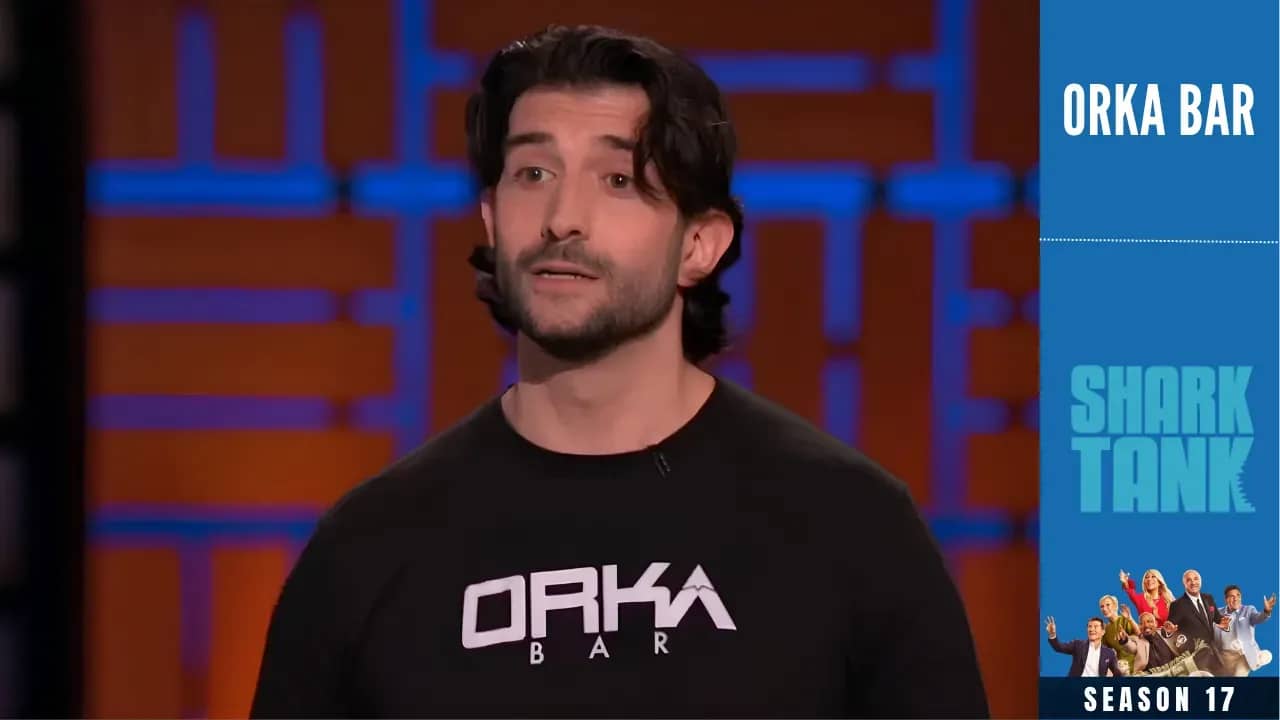
Orka Bar left Shark Tank with something many food founders want: a respected retail investor, strong reactions to the product and a national audience. Five months later, Lori Greiner’s official website reported that the company had generated $250,000 in sales.
That growth makes Orka more than a frozen-dessert pitch. It is a case study in what happens when customer appeal runs into difficult logistics. The bars require frozen manufacturing, freezer space, insulation and dry ice. Those costs do not disappear because customers like the taste.
Founder Stephen Longo now has evidence that people will buy his egg-white-based frozen protein bars. The harder question is whether Orka can build a repeatable retail model without losing its margin to the cold chain.
This case file examines the product, Lori Greiner deal, business model, post-show growth and evidence available in August 2026. Readers can explore the other products featured in Shark Tank Season 17 in our complete season guide.
Quick answer:
| Company | Orka Bar LLC |
|---|---|
| Founder | Stephen Longo |
| Product | Frozen protein bars made with egg whites, cream and whey |
| Industry | Frozen food and functional snacks |
| Shark Tank episode | Season 17, Episode 4; aired Oct. 22, 2025 |
| On-air deal | $100,000 for 25% with Lori Greiner |
| Deal status | Likely closed; private documents are not public |
| Current status | Active and growing, with inventory and distribution constraints |
| Website | OrkaBar.com |
Latest update — August 2026
- The official website remains active with five four-pack options priced at $15.99.
- Several online products display sold-out notices.
- Lori Greiner’s website reports $250,000 in sales during the five months after Shark Tank.
- Orka continued appearing at New Jersey markets through June 2026.
- No verified national grocery-chain placement was found.
What is Orka Bar?
Orka Bar is a frozen snack designed to taste like an ice cream bar while delivering the nutrition associated with a protein bar. Its center uses egg whites, light cream and whey protein. A dark chocolate shell surrounds the filling.
The company sells Cookies & Cream, Vanilla Bean, Raspberry, Mint and a four-flavor Variety pack. Each box contains four bars. Orka advertises 15 grams of protein per bar, along with low sugar, low net carbohydrates and 6 grams of fiber.
Exact nutrition varies by flavor. During the Shark Tank pitch, Longo said Vanilla Bean, Raspberry and Mint contained 5 grams of sugar. Cookies & Cream contained 8.5 grams because it included a gluten-free cookie. Buyers should rely on the current label for each flavor.
The product is not dairy-free. It contains milk and eggs, and the ingredients are produced in a facility that handles peanuts and tree nuts.
Orka’s positioning is both its strength and its complication. It gives health-conscious consumers a more indulgent alternative to a dry protein bar. However, it cannot offer the portability of a conventional bar because it must remain frozen.
Who founded Orka Bar?
Stephen Longo founded Orka Bar in 2023. He is a competitive beach volleyball player, lifelong athlete and certified nutrition coach.

The idea grew from his post-workout routine. Longo wanted something colder and more satisfying than a protein shake or conventional bar, without choosing a high-sugar frozen dessert.
“Why isn’t there something that is refreshingly indulgent?”
— Stephen Longo
Longo did not have a food-science background. He began by testing recipes with nutrition clients, friends and family. That approach helped him validate taste, but it did not solve shelf life or manufacturing.
He later filled that expertise gap through outside support. The New Jersey Commission on Science, Innovation and Technology reported that Orka received a Catalyst research and development voucher and worked with the Rutgers Food Innovation Center. The partnership helped refine prototypes, test shelf life and prepare production-ready formulas.
| Year | Milestone |
|---|---|
| 2020 | Longo earned his nutrition coaching certification. |
| 2023 | He founded Orka Bar and began developing its frozen protein-bar format. |
| 2024 | New Jersey records connected Orka with a $40,000 Catalyst R&D voucher. |
| 2024-2025 | Orka worked with the Rutgers Food Innovation Center on formulation and shelf-life testing. |
| 2025 | Longo appeared on Shark Tank and accepted Lori Greiner’s offer. |
| 2026 | The company reported post-show sales growth while continuing online and local retail activity. |
What happened to Orka Bar on Shark Tank?
Longo asked for $100,000 in exchange for 15%, implying a post-money valuation of about $666,667. The Sharks sampled all four flavors and praised the product’s taste.
“It really is the best thing I’ve tasted in this category.”
— Daymond John
The numbers created more concern. Longo said a box cost about $5 to make and wholesaled for $10. Online pricing was $13.99, while retailers charged roughly $14.99 to $18.99.
That produced a 50% wholesale product margin before labor, storage, spoilage and overhead. A direct order had a better product-level margin, but frozen fulfillment introduced insulated packaging and dry-ice expenses.
Longo had generated $35,000 in year-to-date sales and projected $80,000 to $100,000 for the calendar year. About 70% of sales came from gyms and smaller vitamin or supplement retailers. The remaining 30% came through the company’s website.
The objections followed a common theme. Daymond John worried about refrigerated shipping and thin margins. Kevin O’Leary considered the company too early. Alexis Ohanian praised Longo’s effort but said food was outside his expertise. Kendra Scott questioned whether the founder had identified the right distribution model.
Greiner saw a role for her grocery experience. She offered $100,000 for 33.3%. Longo countered at 20%, then 22.5%. Greiner held at 25%, and Longo accepted.
| Year | Milestone |
|---|---|
| 2020 | Longo earned his nutrition coaching certification. |
| 2023 | He founded Orka Bar and began developing its frozen protein-bar format. |
| 2024 | New Jersey records connected Orka with a $40,000 Catalyst R&D voucher. |
| 2024-2025 | Orka worked with the Rutgers Food Innovation Center on formulation and shelf-life testing. |
| 2025 | Longo appeared on Shark Tank and accepted Lori Greiner’s offer. |
| 2026 | The company reported post-show sales growth while continuing online and local retail activity. |
The episode also included two useful comparisons. Alchemize Fightwear attracted Greiner and two other investors with stronger sales but later faced operational warning signs. The Sprouting Company rejected a deal and pursued growth independently. Orka chose a third path: accept more dilution in exchange for channel expertise.
How does Orka Bar make money?
Orka earns revenue through direct website orders, subscriptions, wholesale accounts, gyms, specialty retailers and local markets. The website offers a 10% subscription discount, but customers must subscribe to at least four boxes.
The four-box requirement is revealing. At the current $15.99 price, the minimum product subtotal reaches $63.96 before any additional charges. Larger orders help spread frozen packaging and delivery costs across more units.
| Term | Details |
|---|---|
| Founder’s ask | $100,000 for 15% |
| Ask valuation | About $666,667 post-money |
| Greiner’s first offer | $100,000 for 33.3% |
| Founder’s counters | 20%, then 22.5% |
| Final on-air deal | $100,000 for 25% |
| Final valuation | $400,000 post-money |
| Post-show status | Likely closed, based on Greiner’s continued public involvement |
At the pitch-period $5 production cost, a $10 wholesale price left $5 before operating expenses. Selling directly at $13.99 left $8.99 before frozen fulfillment. Current pricing has risen to $15.99, but no updated manufacturing-cost figure is public.
Retail remains the most logical long-term channel because shoppers take responsibility for the final trip from freezer to home. Yet retail also gives part of the selling price to distributors and stores. Orka must therefore lower its unit cost or support a premium shelf price.
That is why Greiner referenced Frozen Farmer during the negotiation. Frozen Farmer shows how a frozen Shark Tank brand can scale through retail. It also illustrates how much distribution matters in this category.
What happened to Orka Bar after Shark Tank?
The strongest post-show signal comes from Lori Greiner’s official website. It says Orka generated $250,000 in sales during the five months after its episode aired.
That result exceeded Longo’s pitch projection. The reported five-month total was 2.5 times the upper end of his projected full-year sales. It is not an audited figure, but it supports the conclusion that Shark Tank produced meaningful demand.
Greiner’s dedicated product page also provides the best available evidence about the investment. It does not publish closing documents, but it treats Orka as an active Shark Tank product and reports company performance. The deal can therefore be described as likely closed, with the legal details remaining private.
Orka also strengthened its intellectual property. The ORKA BAR word mark was registered with the U.S. Patent and Trademark Office on Dec. 9, 2025. The registration covers ice cream bars, frozen confections and ice cream sandwiches.
The company’s operating footprint remains smaller than a national grocery rollout. Orka continued attending Asbury FRESH markets through June 2026. Its website maintains a wholesale form and store locator, but no confirmed placement in Kroger, Whole Foods, Walmart, Costco or another major national chain was found.
| Component | How it works |
|---|---|
| Customer | Athletes, gym members and buyers seeking a higher-protein frozen dessert |
| Value proposition | Ice cream-style taste with protein-focused nutrition |
| Revenue model | Direct sales, subscriptions, wholesale and local retail |
| Acquisition | Sampling, gyms, affiliates, events, social media and Shark Tank exposure |
| Advantages | Distinct format, strong taste reactions and a registered brand |
| Main risk | Frozen manufacturing, storage and delivery costs |
| Scaling requirement | Lower production costs and more efficient regional or national distribution |
Before Shark Tank versus August 2026
| Signal | Evidence | Assessment |
|---|---|---|
| Website | Store and customer-support pages remain online. | Active |
| Product lineup | Five four-pack options are listed at $15.99. | Stable lineup |
| Inventory | Several product pages display sold-out notices. | Possible capacity constraint |
| Retail | The store locator and wholesale program remain active. | Primarily local or specialty retail |
| Sales | $250,000 reported within five months of airing. | Positive growth signal |
| Deal | Greiner maintains a dedicated Orka product page. | Likely closed |
| National expansion | No major national grocery-chain placement was verified. | Still unproven |
| Overall status | Active sales, local events and continuing customer demand. | Growing, but early-stage |
Shark Tank clearly changed Orka’s demand curve. It has not yet proved that the company can translate that attention into national freezer distribution.
Where can you buy Orka Bar?
Orka lists its products through the official website for $15.99 per four-bar box. Monthly and every-two-month subscriptions receive a 10% discount, bringing each subscribed box to $14.39.
Nationwide frozen shipping requires at least four boxes. Several flavors and the Variety pack displayed sold-out notices during this review, so buyers should check live inventory before ordering.
Customers in Orka’s existing markets may find a smaller purchase through the official store locator. Local retail is likely the more practical option because it avoids a multi-box frozen shipment.
Lessons from Orka Bar’s journey
1. Product appeal and business quality are different tests
The Sharks liked Orka’s taste. Four still declined. Their response shows that a strong product can generate demand without proving that its supply chain will make money.
2. Cold-chain economics must shape the channel strategy
Direct-to-consumer sales provide more control, but frozen fulfillment consumes margin. Grocery retail removes the final shipping problem while introducing distributor fees, retailer margins and limited freezer space.
3. Strategic help can justify dilution
Longo gave up 25% after initially offering 15%. That reduced the company’s post-money value from about $666,667 to $400,000. The trade may still make sense if Greiner helps secure production and retail relationships that Orka could not reach alone.
4. Founders can borrow missing expertise
Longo had no food-science background. He compensated through customer testing, nutrition education and a Rutgers Food Innovation Center partnership. Founders do not need to begin as experts in every discipline, but they do need a credible plan for closing knowledge gaps.
5. Post-show sales are a signal, not the finish line
The reported $250,000 result validates demand. The next proof points are repeat purchases, lower costs, reliable inventory and broader retail distribution. Other Season 17 food brands, including Dad Strength Brewing, show why store expansion often matters more than an initial sales spike.
Final take
Orka Bar appears to be an active, growing Shark Tank company rather than a short-lived television product. Longo turned an athletic frustration into a distinctive frozen snack, attracted Lori Greiner and generated a meaningful post-show sales increase.
The Sharks were still right about the risk. Every Orka Bar must be manufactured, stored, shipped and displayed frozen. That requirement makes distribution the core business problem.
Orka’s next chapter will depend less on whether customers enjoy the bars and more on whether the company can keep them available at a profitable price. The demand signal is promising. The national retail case remains unfinished.
Frequently asked questions
Is Orka Bar still in business?
Yes. Its website, wholesale program, subscriptions and retail locator remain active as of August 2026.
Who founded Orka Bar?
Stephen Longo founded Orka Bar in 2023. He is a certified nutrition coach, lifelong athlete and competitive beach volleyball player.
What deal did Orka Bar receive on Shark Tank?
Longo accepted $100,000 for 25% from Lori Greiner. He originally asked for $100,000 for 15%.
Did Lori Greiner’s Orka Bar deal close?
The best public evidence indicates that it likely closed. Greiner’s official website maintains a dedicated Orka page and reports the company’s post-show sales. Private closing documents are not available.
How much revenue does Orka Bar make?
No current annual revenue has been verified. Greiner’s website reports $250,000 in sales during the five months after the episode aired.
How much does Orka Bar cost?
The official website lists each four-bar box at $15.99. Subscriptions reduce the price to $14.39 per box, subject to a four-box minimum.
Is Orka Bar dairy-free?
No. The bars contain light cream and whey protein. They also contain eggs and are produced in a facility that handles peanuts and tree nuts.
Where can you buy Orka Bar?
Buyers can check the official website or use the company’s store locator. Online availability changes, and several products displayed sold-out notices in August 2026.
The weekly question
From obsession to clarity — one original question every week.
We answer one noisy topic at a time, in full. No daily roundup, no thread bait — just the question, the principles, and the system.