The Sprouting Company Shark Tank Update: No Deal, Fast Growth, and the Seed Subscription Model
The Sprouting Company left Shark Tank without a deal, then grew fast enough to challenge the Sharks’ valuation.
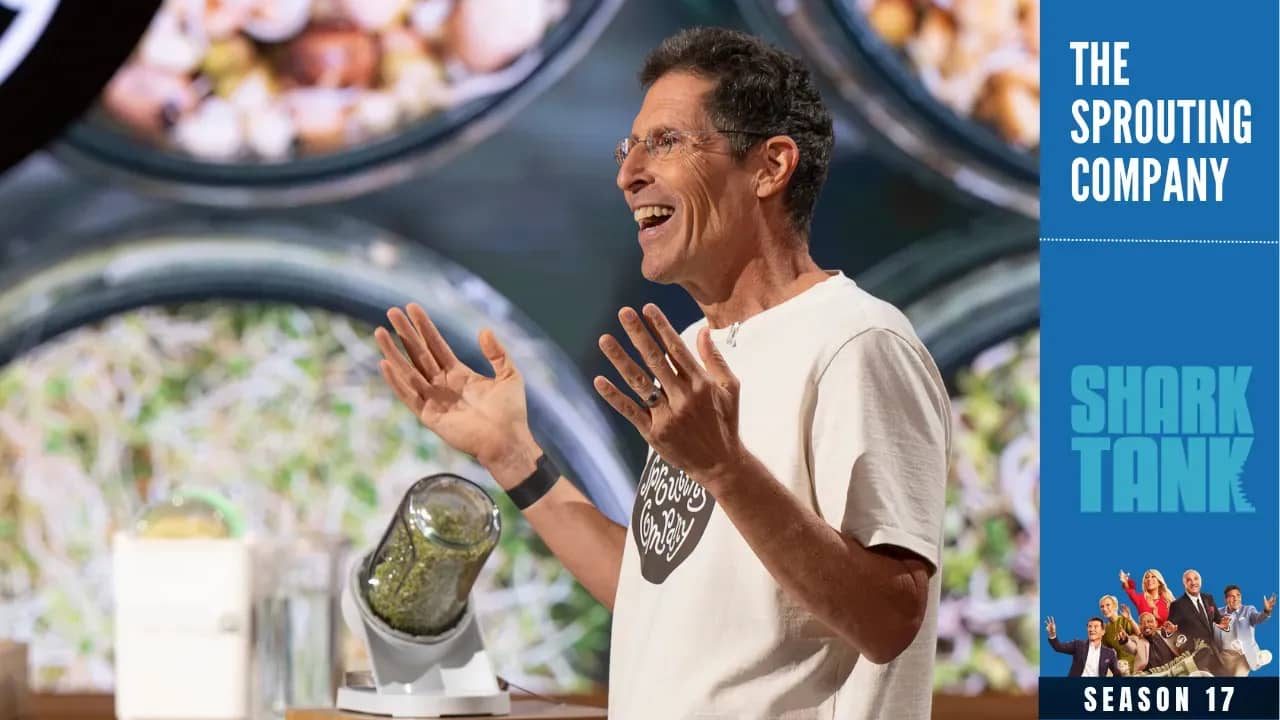
The Sprouting Company left Shark Tank without an investor. That result now looks less important than what happened after the episode aired.
Founder Doug Evans reported that monthly revenue grew from roughly $200,000 before the broadcast to more than $1 million by March 2026. That put the company on a $12 million annualized pace. It did not prove that the company had already earned $12 million in a full year, but it gave Evans a stronger answer to the Sharks’ concerns about his $10 million valuation.
The story also carries unusual baggage. Evans previously helped build Organic Avenue and later founded Juicero, one of Silicon Valley’s most criticized hardware startups. The Sprouting Company is his attempt to apply those lessons to a simpler product: a countertop sprouter supported by recurring seed sales.
This case file examines the product, the rejected deal, the subscription model, current evidence, and the question that still matters: are customers buying a better sprouter, or simply paying for convenience? Readers can find the other products featured in Shark Tank Season 17 in our complete season guide.
| Company | The Sprouting Company, a brand of Wova Labs, Inc. |
|---|---|
| Founder | Doug Evans; company material also identifies Mike Posner as a co-founder |
| Product | Countertop sprouting system and organic sprouting seeds |
| Industry | Home food growing and wellness |
| Shark Tank Episode | Season 17, Episode 4, aired October 22, 2025 |
| Deal Status | No deal |
| Current Status | Growing, based on active sales and reported revenue expansion |
| Website | The Sprouting Company |
Latest update — August 2026
- The official store remains active with starter kits, individual seeds, bundles, and subscriptions.
- Evans reported more than $1 million in monthly revenue for March 2026.
- Atland Ventures later disclosed an investment in the company.
- The free iPhone app and two issued sprouter patents remain active.
What Is The Sprouting Company?
The Sprouting Company sells a coordinated system for growing edible sprouts on a kitchen counter. Users place seeds in its 55-ounce glass jar, soak them, and then rinse and drain them twice a day. Most crops are ready within three to seven days.
The sprouter includes a straight-sided glass jar, stainless-steel filter, angled stand, and drip tray. Its design aims to improve drainage, airflow, cleaning, and capacity compared with a standard mason jar balanced over a bowl.
No soil, fertilizer, grow light, or outdoor garden is required. That makes the product useful for apartment residents, beginners, and people who want fresh produce without maintaining a garden. It shares that home-food-production appeal with GoodEgg’s backyard food tools, although sprouting requires much less space.
The product does not make sprouting itself proprietary. Consumers can grow sprouts in inexpensive jars fitted with screens. The Sprouting Company therefore sells an easier and more polished routine rather than access to a unique biological process.
Evans promoted sprouts as far more nutrient-dense than mature vegetables. That claim needs context. Research has found that young broccoli sprouts can contain much higher concentrations of glucoraphanin than mature broccoli. It does not follow that every sprout contains 100 times more of every nutrient than every mature vegetable.
Who Founded The Sprouting Company?
Doug Evans brought more food-industry experience into the Tank than most founders. He served in the U.S. Army’s 82nd Airborne Division before building businesses in design, juice, and plant-based food.

Evans helped launch Organic Avenue in New York in 2002. The cold-pressed juice and raw-food company expanded to several locations before a majority interest was sold to an investment firm. Evans then founded Juicero, a connected juicing system that raised more than $100 million.
Juicero shut down in 2017 after reports showed that users could squeeze its proprietary juice packs by hand. The failure remains part of Evans’ reputation. However, it also shaped his new model.
After spending several years in the Mojave Desert, Evans focused on sprouts as a way to grow fresh food in a remote location. He published The Sprout Book in 2020 and later developed a dedicated sprouting system.
“I am responsible for 100% of what happened with that company.”
— Doug Evans, discussing Juicero in an Entrepreneur interview
That history makes Evans both credible and controversial. He understands hardware, subscriptions, fundraising, branding, and consumer food. He also knows how quickly complex hardware and founder hype can overwhelm a useful idea.
| Year | Milestone |
|---|---|
| 2002 | Helped launch Organic Avenue in New York. |
| 2012–2013 | A majority interest in Organic Avenue was sold. |
| 2013 | Founded Juicero. |
| 2017 | Juicero ceased operations. |
| 2020 | Published The Sprout Book. |
| 2024 | Commercially launched The Sprouting Company. |
| 2025 | Appeared on Shark Tank and rejected an investment offer. |
| 2026 | Reported a $12 million annualized revenue pace. |
What Happened on Shark Tank?
The official ABC episode page confirms that The Sprouting Company appeared in Season 17, Episode 4 on October 22, 2025. Evans asked for $500,000 in exchange for 5%, valuing the company at $10 million.
The Sharks sampled a sprout smoothie and salad before Evans demonstrated the manual growing system. He also revealed an autonomous sprouting prototype that could pump, rinse, and drain water.
Evans said the manual sprouter cost $15 to manufacture and sold for $100. He reported $1.5 million in revenue over approximately 18 months and an average order value of $109. He also said May 2025 produced about $50,000 in profit at a 21.4% net operating margin.
Those numbers impressed the panel, but the valuation created a gap. Kevin O’Leary offered $500,000 for 25%, implying a $2 million valuation. Daymond John later matched him.
Alexis Ohanian supported the mission but doubted whether sprouts had reached broad consumer demand.
“I don’t yet believe sprouts are there.”
— Alexis Ohanian
Kendra Scott did not see the company as a fit for her portfolio. Lori Greiner pointed to the number of alternative sprouting products. Kevin and Daymond eventually joined forces and appeared to settle at $500,000 for 15%, or 7.5% each.
Evans countered at 10%. When the Sharks held their position, he declined the deal.
| Stage | Terms | Implied Valuation |
|---|---|---|
| Founder’s Ask | $500,000 for 5% | $10 million |
| Kevin O’Leary’s Initial Offer | $500,000 for 25% | $2 million |
| Initial Joint Position | $500,000 for 25% | $2 million |
| Founder’s Counteroffer | $500,000 for 10% | $5 million |
| Apparent Final Offer | $500,000 for 15% from Kevin O’Leary and Daymond John | Approximately $3.33 million |
| Final Outcome | No deal | Not applicable |
The Sharks were not rejecting Evans’ execution. They were pricing competitive risk. Evans, meanwhile, believed the current growth rate made their valuation too low.
How Does The Sprouting Company Make Money?
The company’s real product is not the glass jar. It is a repeatable customer relationship.
A starter kit introduces consumers to the routine. Once those customers start new crops every few days, they need more seeds. The company sells broccoli, alfalfa, mung bean, chickpea, lentil, radish, pea, salad, and protein mixes as one-time purchases or scheduled refills.
This model combines high-margin hardware with recurring consumables. It resembles other wellness businesses in which education helps create a habit. Pluck’s organ-based seasoning and The Qi’s whole-flower tea ritual face a similar task: convince consumers to adopt an unfamiliar behavior, then earn repeat orders.
| Component | How It Works |
|---|---|
| Customer Segments | Wellness consumers, plant-based households, beginners, frequent sprouters, and gift buyers |
| Value Proposition | A large, coordinated sprouting system that includes purpose-built hardware, seeds, instructions, and support |
| Revenue Streams | Starter kits, seed refills, subscriptions, replacement parts, books, and product bundles |
| Sales Channels | Official website, Shop storefront, social media, podcasts, email marketing, paid advertising, and the company’s app |
| Competitive Advantages | Brand recognition, founder authority, recurring seed orders, product design, educational content, and patents related to future automated systems |
| Key Risks | Cheap alternatives, premium pricing, advertising costs, raw-sprout safety concerns, and founder-reputation risk |
The intellectual property deserves one qualification. Wova Labs owns two issued U.S. patents for a rotational sprouter system. The issued patent records support Evans’ pitch claim. However, those patents concern the more automated rotational system, not the general act of growing sprouts in a jar.
What Happened After Shark Tank?
The strongest evidence arrived after the no-deal episode.
| Period | Reported Monthly Revenue | What It Means |
|---|---|---|
| Before the Shark Tank Broadcast | Approximately $200,000 | The company had established meaningful traction before the episode aired. |
| December 2025 | Approximately $540,000 | Monthly revenue had reached about 2.7 times its pre-broadcast level. |
| March 2026 | More than $1 million | The reported monthly result represented an annualized revenue pace of approximately $12 million. |
These numbers came from Evans and have not been audited. Still, the progression is specific enough to show substantial momentum. At the March pace, the company’s revenue run rate exceeded the valuation Evans requested in the Tank.
That does not automatically prove that rejecting the offer was correct. Revenue is not profit, and rapid direct-to-consumer growth can require heavy advertising, inventory, fulfillment, and customer-support spending. A $12 million run rate also describes one month multiplied by 12, not a completed year.
Other evidence supports an active operation. The company continues selling numerous starter kits and seed varieties. Its free iPhone app remains available. Shop displays hundreds of customer reviews, and Atland Ventures later disclosed an investment.
| Signal | Current Evidence | Assessment |
|---|---|---|
| Website | Active store offering hardware, seeds, bundles, subscriptions, and customer support | Active |
| Product Availability | Multiple starter kits, seed varieties, replacement parts, and bundles are listed for purchase | Available online |
| Customer Reviews | The Shop storefront displays strong ratings, although independent discussions present more mixed opinions about price | Generally positive |
| App | The company’s free iPhone app remains available for crop tracking, instructions, and recipes | Active |
| Funding | Atland Ventures publicly disclosed an investment in the company | Outside investor validation |
| Shark Tank Deal | Doug Evans rejected the on-air offer | No Shark deal |
| Revenue | Founder-reported monthly revenue exceeded $1 million in March 2026 | Rapid reported growth |
| Business Status | Reported revenue, active products, customer activity, and product breadth have increased | Growing |
Where Can You Buy It, and Is It Worth the Price?
The official website is the best verified buying source. Promotional starter bundles were advertised from approximately $89.99 at the time of this review, while other bundles and premium seed varieties cost more. Prices can change with bundle size and subscription discounts.
The site offers recurring seed deliveries, a 30-day return period for hardware, and a one-year sprouter warranty. Customers pay return shipping, and seeds cannot be returned because they are food products.
The system is best suited to beginners, frequent sprouters, and buyers who value a coordinated product. Experienced growers can assemble a mason jar, screen, and stand for much less. Independent customer comments often praise the large jar and drainage system while questioning the premium price.
Food safety also matters. The FDA has documented outbreaks associated with raw sprouts. Warm and humid sprouting conditions can support bacteria as well as plants. Buyers should use seeds intended for sprouting, clean the equipment carefully, follow safe handling instructions, and understand that home growing does not eliminate risk.
Lessons From The Sprouting Company’s Journey
1. Convenience can support a premium
The product’s components are not difficult to imitate. The company’s advantage comes from combining them into a system people will use consistently. Its sales suggest that some consumers will pay to avoid assembling a cheaper solution.
2. Consumables can matter more than hardware
The sprouter creates the first transaction. Seeds create repeat revenue. That recurring layer makes the business more valuable than a company selling jars alone.
3. Valuation disputes are settled by execution
The Sharks valued the company between $2 million and roughly $3.33 million. Evans asked for $10 million. A few months later, he reported a $12 million annualized revenue pace. Growth strengthened his position, although profitability and customer-acquisition costs remain unknown.
4. Founder history works in both directions
Organic Avenue and Juicero gave Evans experience, contacts, and a strong media story. Juicero also created skepticism. Founders cannot erase a public failure, but they can show what changed in the next business.
5. Market education remains the central challenge
Alexis Ohanian’s concern still matters. The company must convince more consumers that sprouting belongs in a normal kitchen routine. Its app, book, recipes, podcasts, and social content are therefore part of the product—not just marketing around it.
Final Take
The Sprouting Company appears to be one of Season 17’s more interesting no-deal cases. Evans rejected an offer that would have cost him 15% of the company, then reported rapid growth after the broadcast.
The company’s success does not rest on inventing sprouting. It rests on packaging an old practice as a modern, repeatable habit supported by premium hardware and recurring seeds. That distinction explains both its growth and its risk.
If the company can retain subscribers and control advertising costs, Evans may have been right to protect his equity. If buyers decide a mason jar is good enough, the Sharks’ concerns about competition may prove equally accurate.
Frequently Asked Questions
Is The Sprouting Company still in business?
Yes. Its official store, products, seed subscriptions, app, and customer-support policies remain active as of August 2026.
Did The Sprouting Company get a Shark Tank deal?
No. Doug Evans rejected an apparent final offer of $500,000 for 15% from Kevin O’Leary and Daymond John.
Who founded The Sprouting Company?
Doug Evans is the founder presented by ABC and on Shark Tank. Some company material also identifies musician Mike Posner as a co-founder.
How much is The Sprouting Company worth?
No verified private-company valuation is public. Evans asked at a $10 million valuation. The Sharks’ final offer implied approximately $3.33 million.
How much revenue does The Sprouting Company make?
Evans reported more than $1 million in monthly revenue for March 2026. That was a $12 million annualized pace, not verified full-year revenue.
Does The Sprouting Company have patents?
Yes. Wova Labs holds two issued U.S. utility patents related to a rotational sprouter system. Those patents do not cover the general practice of jar sprouting.
Is the sprouter worth $100?
It may be worthwhile for beginners and frequent users who value capacity, drainage, design, and support. Experienced sprouters can build a functional system for less.
The weekly question
From obsession to clarity — one original question every week.
We answer one noisy topic at a time, in full. No daily roundup, no thread bait — just the question, the principles, and the system.