The Qi Tea Shark Tank Update: Daymond’s Investment and the Business Beyond the Bloom
The Qi won Daymond’s backing, but can its colorful flower teas turn Shark Tank attention into a solid wellness business?
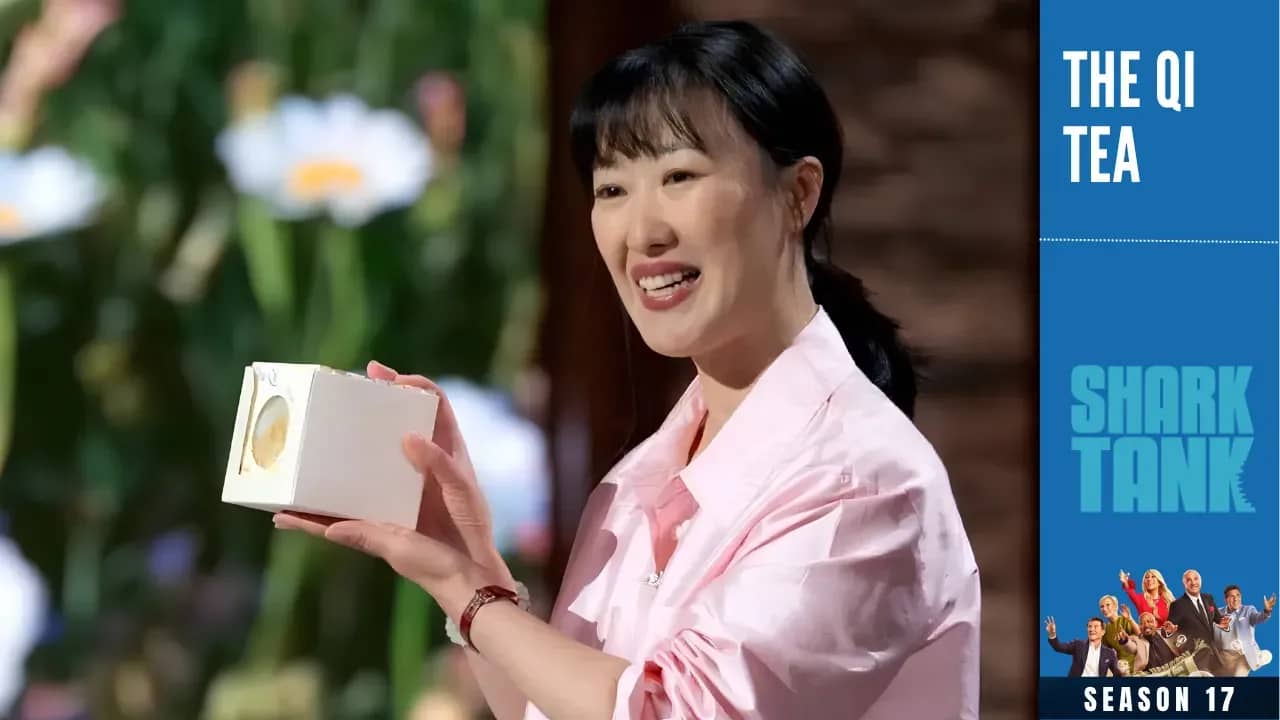
The Qi turns a cup of tea into something people can watch, share, and give as a gift. Whole flowers open in hot water, making preparation part of the product. That visual appeal helped Lisa Li bring a premium tea business to national television.
By September 2026, the company remained active, with flower teas, bundles, and a wider range that includes matcha. Daymond John has also publicly acknowledged investing after the show. The more useful question now is how the business turns that attention into lasting demand.
During the pitch, Lisa described a $36 box with a $7 landed cost. Those numbers attracted interest, but several Sharks struggled to picture its place on a store shelf. A product can look beautiful and generate sales while still needing a clearer growth strategy.
That tension makes The Qi a useful Shark Tank Season 17 case study. Its story connects founder experience, premium branding, customer education, and the cost of expansion. Here is where the business stands and what the evidence says about its progress.
| Company | The Qi |
|---|---|
| Founder | Lisa Li |
| Product | Whole-flower infusions, blooming teas, and related tea products |
| Industry | Food and beverage; premium tea and gifting |
| Shark Tank episode | Season 17, Episode 5 — November 5, 2025 |
| Deal status | Investment publicly acknowledged; televised terms were $200,000 for 20% |
| Current status | Active, with product expansion; financial growth unverified |
| Website | The Qi official store |
Latest Update — September 2026: The Qi continues selling its flower-tea collection and Shark Tank bundle. A January 2026 announcement documents expansion into Uji matcha. Public evidence supports an ongoing business, but it does not establish current annual sales or profit.
What Is The Qi Tea?
The Qi sells whole flowers that steep into herbal infusions. Its original assortment features rose, chrysanthemum, and lotus. The preparation creates a visible experience: the customer watches a dried flower open in the water.
The appeal combines drinking, presentation, and a deliberate pause. A gift buyer may value the packaging and appearance. A regular customer may value the flavor and preparation routine.
The company also sells blooming teas containing tea leaves, blends, matcha, and glassware. These distinctions matter when choosing a product. The pure flower infusions are caffeine-free, while some other products contain caffeine.
The brand uses traditional wellness language, but that positioning should not be mistaken for clinical proof. Its clearest observable features are the ingredients, appearance, flavor, and brewing experience.
Who Founded The Qi?
Lisa Li grew up in China drinking tea with her grandmother. In interviews, she describes moving to Vermont at 14 without speaking English. Tea remained a connection to family as her surroundings changed.

She later spent more than a decade in fashion. Burnout and personal health experiences encouraged her to reconsider what she wanted to build. Discovering rose tea in Yunnan helped turn that interest into a business.
The Qi launched in 2019. Lisa brought experience in aesthetics and branding, alongside familiarity with the tea traditions behind the product. That combination helps explain the company’s emphasis on packaging and presentation.
| Stage | Development |
|---|---|
| Childhood | Tea drinking with her grandmother becomes an important family ritual. |
| Age 14 | Moves to the United States and learns English. |
| Fashion career | Builds experience in branding and presentation. |
| Before launch | Yunnan travel helps inspire the flower-tea concept; accounts differ on the exact year. |
| 2019 | Launches The Qi. |
| 2025 | Presents the business on Shark Tank. |
Her background gave the product a recognizable identity. It also created a challenge: translating something personally familiar into an offer that unfamiliar customers could quickly understand.
What Happened on Shark Tank?
The Qi appeared on Season 17, Episode 5, originally broadcast November 5, 2025. The panel included Lori Greiner, Kevin O’Leary, Robert Herjavec, Daymond John, and guest Shark Allison Ellsworth.
Lisa requested $200,000 for 8%, implying a $2.5 million post-money valuation. She reported $2.9 million in lifetime sales, $616,000 in the previous year, and a current-year forecast above $1 million.
The demonstration drew praise for taste and presentation. However, Lori considered the product too specialized. Kevin saw a competitive category and questioned whether the business offered an attractive investment return.
Robert focused on distribution.
“I'm not sure where to sell it.”
— Robert Herjavec
Allison liked the packaging but questioned whether shoppers would understand the product in the tea aisle. Lisa defended starting with premium positioning, arguing that lower-priced options could follow.
| Stage | Terms | Implied post-money valuation |
|---|---|---|
| Original ask | $200,000 for 8% | $2.5 million |
| Daymond’s opening offer | $200,000 for 25% | $800,000 |
| Lisa’s first counter | $300,000 for 20% | $1.5 million |
| Later counter | $200,000 for 18% | About $1.11 million |
| Final televised agreement | $200,000 for 20% with Daymond | $1 million |
Daymond saw potential online, pointing to shipping ease and margins. Lisa’s persistence reduced his requested stake by five percentage points. The final implied valuation was still 60% below her original ask.
Daymond also agreed to invest in Warrior Kid Medic in the same episode. Both pitches show why an investor’s connection with a founder can matter alongside the numbers.
How Does The Qi Make Money?
The Qi earns revenue from tea, accessories, gift sets, subscriptions, and wholesale orders. Lisa also described food-service and hospitality sales during the pitch. These channels reach customers in different buying situations.
| Customer | Tea drinkers, gift buyers, specialty retailers, and hospitality businesses |
|---|---|
| Value proposition | A visually distinctive tea ritual with premium presentation |
| Revenue model | Product purchases, replenishment, subscriptions, bundles, and wholesale |
| Channels | Official website, wholesale marketplace, and selected retail listings |
| Advantages | Brand identity, sourcing relationships, and a demonstrable experience |
| Risks | Customer education, acquisition costs, repeat demand, inventory, and founder workload |
| Customer | Tea drinkers, gift buyers, specialty retailers, and hospitality businesses |
|---|---|
| Value proposition | A visually distinctive tea ritual with premium presentation |
| Revenue model | Product purchases, replenishment, subscriptions, bundles, and wholesale |
| Channels | Official website, wholesale marketplace, and selected retail listings |
| Advantages | Brand identity, sourcing relationships, and a demonstrable experience |
| Risks | Customer education, acquisition costs, repeat demand, inventory, and founder workload |
The pitch’s $36 selling price and $7 landed cost imply an approximately 80.6% product-level gross margin. That leaves $29 before other costs. It does not mean the company keeps 80% of revenue as profit.
Advertising, payment fees, fulfillment, discounts, and overhead still need funding. Wholesale economics also differ because the brand receives less than the final retail price. The public figures do not reveal the margin across the entire business.
Bundles can spread acquisition costs across a larger order. Subscriptions can support replenishment. Both mechanisms become valuable when customers enjoy the product enough to return.
Same-episode company Freestyle Snacks offers a useful distribution comparison. Portable snacks and ceremonial tea face different shopping habits, even though both sell repeat-purchase food products.
What Happened After Shark Tank?
Daymond publicly acknowledged the investment
In a video posted on his LinkedIn account, Daymond refers to having invested in The Qi. The conversation with Lisa forms part of an Adobe Express sponsorship. It supports investor confirmation, while leaving the final ownership percentage and contract details undisclosed.
Broadcast attention created a selling opportunity
In her April 2026 account, Lisa reported sellouts after broadcast and a sharp traffic increase. She also described recognition at a holiday popup. These are founder-reported outcomes without published order totals.
The Shark Tank bundle gives interested viewers a defined starting point. That matters because a visitor who understands the story may still struggle to choose among unfamiliar flowers. A starter offer can reduce that decision burden.
A dated launch shows product expansion
A January 15, 2026 company email offered early access to Uji matcha ahead of its planned public launch the next day. The offer included a standalone product and flower-related bundles.
This provides a concrete example of expansion after the episode. Matcha may introduce customers through a more familiar category, then lead them toward flower teas. That is a possible commercial benefit, not a measured result.
Other blends and accessories also appear in the catalog. Their current presence alone does not establish when they launched or whether Shark Tank caused their introduction.
| Area | Evidence | Limit |
|---|---|---|
| Website | Active product catalog and ordering controls | No public profitability data |
| Product availability | Flower teas and sets offered for purchase | Some items show sold out |
| Wholesale | Faire catalog and dated buyer feedback | Sales volume undisclosed |
| Social activity | Official profiles identified | Audience growth unverified |
| Deal status | Investor acknowledgment | Final legal terms private |
| Latest dated evidence | August 11, 2026 wholesale review; May 25 company article | Different types of activity, neither a revenue report |
| Business status | Operating with an expanded range | Growth rate unknown |
| Year | Milestone |
|---|---|
| 2019 | The Qi launches. |
| 2020 | Founder interviews document its early development. |
| 2022 | Coverage explores the challenge of teaching customers about flower tea. |
| 2025 | Shark Tank appearance and televised agreement with Daymond. |
| 2026 | Matcha announcement, investor acknowledgment, and continued retail and wholesale activity. |
Customer feedback explains both the appeal and the challenge
Older Macy’s reviews praise gifting and appearance, while individual buyers also question flavor strength and luxury value. This is a small sample, but it illustrates how differently customers can judge the same experience.
A buyer seeking strong everyday tea may evaluate the product differently from someone buying a present. Clear descriptions help attract customers whose expectations fit the product.
| Question | Pitch-era position | September 2026 evidence |
|---|---|---|
| What drives the offer? | Premium flower-tea ritual | That core offer continues within a broader assortment |
| How does it reach customers? | DTC, wholesale, and hospitality reported | Website and wholesale presence remain visible |
| How large is the business? | $616,000 previous-year sales reported | No verified current annual figure |
| What remains unresolved? | Scalable distribution | Acquisition efficiency, retention, and profitability |
Where Can You Buy The Qi Tea?
The official store is the clearest place to compare the range. Its displayed options included the following prices when checked. Taxes, shipping, promotions, and availability can change the final total.
| Product | Displayed price |
|---|---|
| Floral Collection | $36 |
| Floral Collection subscription | $30.60 |
| Daily Ritual Set | $55 sale price |
| Shark Tank Special | $85 sale price |
The variety box contains nine flowers. Using each three times produces the advertised 27 cups, or about $1.33 per cup. Customers who steep each flower only once would pay $4 per serving.
Anthropologie also lists a blooming-tea product. Current Amazon availability was not verified. Check individual ingredients, caffeine content, and stock before choosing a set.
Lessons From The Qi’s Journey
Make the buying occasion clear. A gift, a daily drink, and a spa experience require different messages. The product becomes easier to sell when customers quickly understand its role.
Measure the economics beyond the product. An attractive gross margin gives a business room to operate. Acquisition costs, repeat orders, and fulfillment determine how much room remains.
Choose distribution deliberately. The retail debate also appeared in Lila Birth Gowns. Founders should assess the cost of serving each channel rather than treating more outlets as automatic progress.
Expand around customer behavior. A familiar product such as matcha could help introduce a less familiar assortment. The useful measures would be cross-purchases, repeat orders, and inventory turnover.
Final Take
The Qi’s strongest business idea is making preparation part of what customers buy. Its flowers, packaging, and glassware turn an ordinary drinking occasion into a recognizable experience. The company has continued operating and broadened its range since its television appearance.
The next stage depends on whether that experience produces repeat demand at a sustainable cost. Public evidence does not yet answer that question. Product launches and customer feedback show activity, but updated revenue, retention, and margin data would reveal much more.
For entrepreneurs, the lesson is practical: premium presentation can create interest, while clear positioning and disciplined operations help turn interest into a durable business. The Qi’s future will depend on how well those pieces work together.
FAQs About The Qi
Is The Qi still in business?
Yes. Its website and wholesale catalog remained active when checked in September 2026.
Did The Qi get a Shark Tank deal?
Yes. Lisa Li accepted $200,000 for 20% from Daymond John on the show.
Did Daymond’s investment go through?
Daymond later publicly acknowledged investing. The final signed terms have not been disclosed.
Who founded The Qi?
Lisa Li founded the company after a career in fashion and launched it in 2019.
How much revenue does The Qi make?
Lisa reported $2.9 million in lifetime sales and $616,000 in the previous year during the pitch. Current annual revenue remains unverified.
Where can you buy The Qi?
The official website sells teas and sets. Selected products also appear in retailer listings, including Anthropologie.
Are all The Qi teas caffeine-free?
No. Pure flower infusions are caffeine-free, but matcha and some blooming teas contain tea leaves and caffeine.
The weekly question
From obsession to clarity — one original question every week.
We answer one noisy topic at a time, in full. No daily roundup, no thread bait — just the question, the principles, and the system.