Tantos Shark Tank Update: No Deal, Retail Growth, and the Cost of Scaling
Tantos left Shark Tank with no deal, but its pasta chips kept selling. Here’s how the brand is growing beyond the pitch.
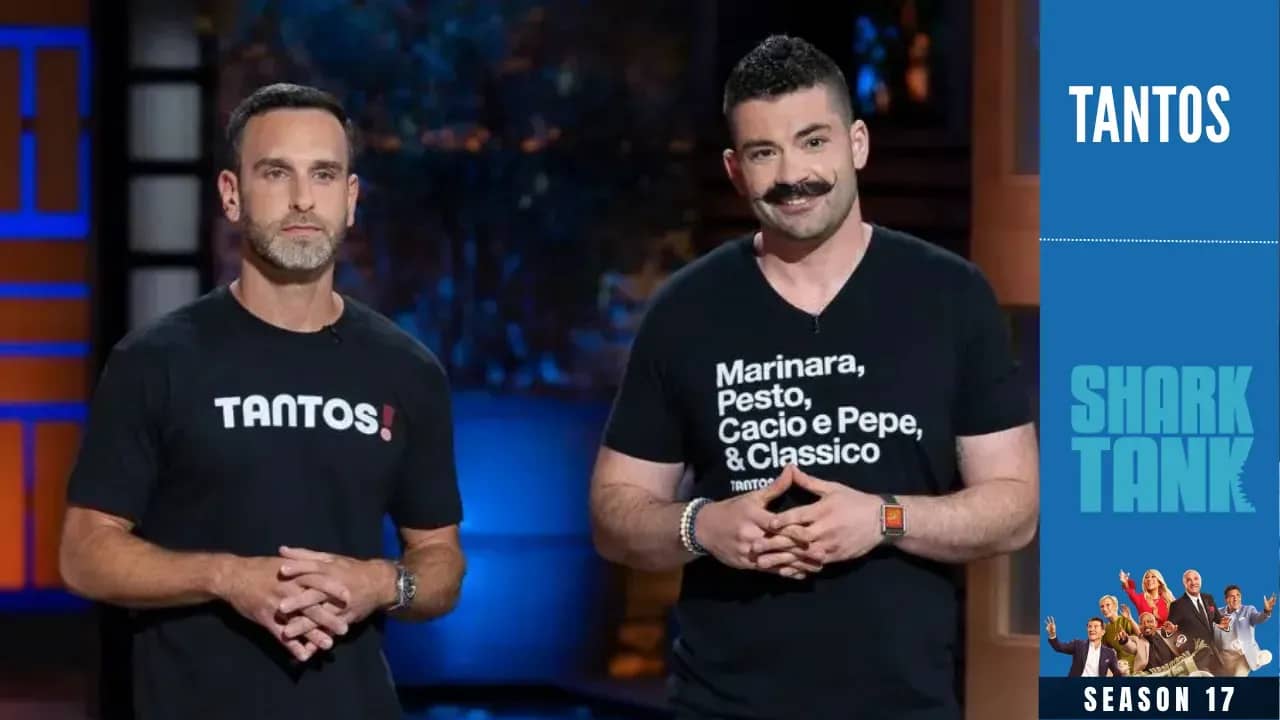
Tantos offers a useful test of what a Shark Tank rejection actually means. The pasta-chip company remains active, with retail listings and later reports of wider distribution. Yet its founders left the show without an investor, despite a positive tasting and praise for their valuation.
That gap makes the business worth studying. A snack can taste good, attract customers, and still face difficult economics. Each new store creates another chance to sell. It can also require more inventory, more working capital, and more spending to keep products moving.
Chef Joe Sasto and co-founder Sean Knecht built Tantos around familiar Italian flavors in a different snack format. Their challenge was turning that first curious bite into a repeat purchase. The Sharks questioned how quickly a small brand could establish itself among powerful competitors.
This case file follows that question beyond television. It separates pitch figures from later updates, examines the money behind each bag, and checks what current evidence supports. For readers wondering whether Tantos survived its no-deal appearance, the answer starts here.
| Company | Tantos |
|---|---|
| Founders | Chef Joe Sasto and Sean Knecht |
| Product | Puffed pasta chips |
| Industry | Packaged savory snacks |
| Shark Tank episode | Season 17, Episode 6; November 12, 2025 |
| Deal status | No offer accepted; no deal |
| Current status | Active, with reported distribution growth |
| Website | eattantos.com |
Latest Update: September 2026
- - The company’s storefront remains accessible.
- - H-E-B lists a 4-ounce Pesto bag at $4.98, subject to location and shopping method.
- - August podcast notes describe a Kroger test and a broader retail footprint.
- - No independently verified current revenue or net-worth figure is available.
What Is Tantos?
Tantos turns pasta into a crunchy packaged snack. Its core range includes Classico, Marinara, Pesto, and Cacio e Pepe. The appeal combines familiar flavors with the convenience of opening a bag.
The product targets people who enjoy savory snacks and Italian food. It fits lunch breaks, travel, and casual entertaining. Its main promise is taste and portability, rather than solving a nutritional problem.
That distinction matters. Buyers may try something because it sounds unusual, but novelty alone cannot establish repeat demand. Tantos must compete on flavor, texture, price, and how often shoppers want another bag.
The comparison with Snacklins is useful: both brands ask shoppers to try a different base for a familiar crunchy snack. Their ingredients differ, but both face the task of making an unfamiliar product easy to understand.
Who Founded Tantos?
Joe Sasto brought culinary experience and a public profile. The company’s biography describes his work at Quince and Lazy Bear, alongside appearances on food television. During the pitch, he explained that the pandemic disrupted his restaurant plans.

“I still wanted to be able to feed people and share my love of pasta with others.”
— Joe Sasto
Sean Knecht brought business experience. His earlier venture, PrideBites, had already taken him onto Shark Tank. He first contacted Joe with a question about making pasta, and their relationship developed into a business partnership.
Their roles suited the work ahead. Joe could develop the food and communicate its appeal. Sean could organize inventory, sales, finances, and fulfillment. Neither role could replace the other.
| Stage | Development | Business significance |
|---|---|---|
| Before Tantos | Joe develops restaurant and television experience. | Culinary credibility and an audience. |
| 2016 | Sean appears on Shark Tank with PrideBites. | Experience presenting and operating a consumer business. |
| Before launch | A pasta conversation develops into a partnership. | Product skills meet operating skills. |
| 2024 | Tantos enters commercial sales. | The founders move from development to execution. |
| 2026 | Sean discusses the company in founder interviews. | Public evidence of continued involvement. |
What Happened on Shark Tank?
Tantos appeared in Shark Tank Season 17, alongside Surf Skull, Forte3D, and Shalom Japan in Episode 6. Joe and Sean requested $150,000 for 10%.
The founders reported about $500,000 in sales and $54,000 in net income for their first approximately 12 months. They also cited almost $300,000 in 2025 year-to-date sales and $96,000 in net income. Those periods may overlap, so the sales figures should not be added.
| Ask | $150,000 for 10% |
|---|---|
| Offer | None |
| Final deal | No deal |
| Investing Shark | None |
| Implied valuation | $1.5 million post-money; $1.35 million pre-money, assuming new equity |
| Sharks present | Barbara Corcoran, Lori Greiner, Kevin O’Leary, Daymond John, and Daniel Lubetzky |
The tasting went well. The tougher discussion concerned getting shelf space and keeping it. Kevin emphasized the category’s difficulty, while Daymond questioned how a small brand would fare against established competitors.
Daniel recalled losing money in an earlier pasta-chip business. His experience made him wary of shipping and distributor economics. Barbara referenced her Pipcorn investment, while Lori questioned major-account progress.
“You come in asking for a very fair valuation.”
— Lori Greiner
Lori’s comment helps explain the outcome. Price was not the central obstacle. The founders argued that their operating infrastructure was ready and investment would accelerate distribution. The Sharks still declined the journey.
How Does Tantos Make Money?
Tantos earns money by selling packaged snacks directly and through wholesale channels. These channels have different costs. A retail shelf price includes money that never reaches the brand.
During the pitch, the founders said a 4-ounce bag cost $1.24 to make and sold to distributors for $2.73. That leaves $1.49 before expenses outside the stated manufacturing cost.
| Measure | Large bag | Small bag |
|---|---|---|
| Manufacturing cost | $1.24 | $0.44 |
| Distributor price | $2.73 | $1.00 |
| Price less manufacturing cost | $1.49 | $0.56 |
| Spread as a share of distributor price | 54.6% | 56.0% |
Calculation: (distributor price minus manufacturing cost) divided by distributor price. These figures are not verified net margins.
Freight, warehousing, promotions, returns, and overhead may reduce that spread. A founder needs room for those expenses before agreeing to wider distribution.
| Customer | Snack buyers and pasta enthusiasts |
|---|---|
| Value proposition | Italian flavors in a portable, crunchy format |
| Revenue model | Direct and wholesale product sales |
| Channels | Website, Amazon, and retail distribution |
| Advantages | Culinary expertise, founder visibility, and operating relationships |
| Risks | Shelf competition, inventory costs, imitation, and repeat demand |
Brand recognition can help Tantos earn a first purchase. Reliable quality and availability must then support the next one. No verified patent record establishes that competitors cannot pursue a similar product.
What Happened After Shark Tank?
Exposure produced orders, with financial pressure attached
In a May 2026 founder interview, Sean reported roughly 3,000 orders in the first three days after airing. He said the combined website and Amazon sales baseline rose threefold.
He also described cash pressure from inventory, marketing, and delayed Amazon payouts. His co-packer was the lead investor, which helped the supplier relationship. These are founder-reported results, not audited financials.
The business lesson is practical: an order surge creates work before it creates freely available cash. A company must fund production and delivery while managing payment timing. Television attention can make that gap larger.
Retail growth has stronger evidence than revenue growth
The August 2026 Shelf Space episode notes report more than 1,200 stores, including a 400-store Kroger test across 13 divisions. They also name H-E-B, The Fresh Market, and World Market.
Those figures describe reported distribution, not an independent store audit. A test placement also differs from a permanent chain-wide rollout. Its value depends on customer purchases and retailer reorders.
There is direct evidence of retail activity too. H-E-B maintains a product listing and ran a promotion that expired in July 2026. That supports continued selling without establishing the brand’s total sales.
| Area | Evidence | What remains uncertain |
|---|---|---|
| Website | Accessible storefront | Order fulfillment was not tested. |
| Product availability | Official range and H-E-B listing | Stock varies by product and location. |
| Social activity | Official social links remain present. | Recent posting frequency was not verified. |
| Deal status | No on-air deal; later founder confirmation | No later Shark investment established. |
| Latest dated update | August 27, 2026 podcast notes | Reported footprint not independently counted. |
| Business status | Active, with reported growth | Current profit and revenue undisclosed. |
The chronology prevents an exaggerated success story
Sean’s launch retrospective dates the commercial debut to July 24, 2024. His separate October 2025 retail account describes World Market placing an order before the television episode aired.
That matters when evaluating the show’s impact. Shark Tank exposed an operating brand to more people. It did not create every retail relationship that later appeared in company updates.
| Date | Milestone |
|---|---|
| July 24, 2024 | Commercial launch, according to Sean’s retrospective. |
| By October 2025 | Founder describes the first World Market purchase order. |
| November 12, 2025 | Shark Tank appearance ends without a deal. |
| 2026 | Founder interviews and retail evidence document continued operations. |
| September 14, 2026 | Current case-file evidence check. |
| Question | At the pitch | Later evidence |
|---|---|---|
| Would a Shark invest? | Founders sought acceleration. | No deal resulted. |
| Could retail access develop? | Founders described buyer conversations. | Retail listings and reported tests show progress. |
| Was the product changing? | Four signature flavors. | The same core flavor range remains listed. |
| Was success measurable? | Founders supplied historical financial figures. | No verified current annual financial statements. |
Customer feedback provides a narrower signal
The official variety-pack page displayed 4.5 out of 5 stars from 29 reviews. Visible comments praised flavor and crunch, while one described stale packages. This small, company-hosted sample cannot establish overall satisfaction.
It does identify something worth monitoring. For a packaged snack, consistency matters as much as the first tasting. One strong batch cannot compensate for unreliable quality across repeat orders.
Where Can You Buy Tantos?
The official variety-pack page is a useful starting point for comparing flavors and bag sizes. Check the selected quantity, final price, and availability before ordering. The company also directs shoppers to Amazon.
For a single retail bag, H-E-B’s Pesto listing shows 4 ounces at $4.98. Price and stock depend on location and shopping method. Its ingredient list includes wheat and milk.
Do not assume the range is vegan or gluten-free. Current subscription terms and international shipping were not verified. The July H-E-B promotion has expired.
Lessons From Tantos’ Journey
Separate taste approval from investment approval. The Sharks could enjoy Tantos while declining its distribution risks. A similar distinction appears in Pluck, another chef-led food business that left without a deal.
Know what each channel leaves behind. Manufacturing cost is only part of the calculation. Founders should model the money remaining after delivery, selling costs, and channel deductions.
Prepare for successful orders. A purchase order can create an immediate need for production cash. Inventory planning belongs in the sales strategy from the start.
Measure repeat demand. Store count records access. It does not reveal sales per store, retailer reorders, or whether customers return. Those measures would make the next Tantos update more meaningful.
Final Take
Tantos has enough public evidence to support continued commercial activity and reported distribution progress. That is meaningful after a no-deal appearance. It does not yet establish a large, profitable exit or prove the Sharks made a financial mistake.
The founders demonstrated that an appealing product and an operating business can survive investor rejection. The next test is whether wider availability produces dependable repeat sales while preserving cash. For entrepreneurs, this is the central lesson: growth must work inside the business as well as on the shelf. For readers following Tantos, retailer reorders and verified financial updates would provide the clearest evidence of what comes next.
Tantos FAQs
Is Tantos still in business?
Yes. Its storefront and retail listings support continued activity as of September 14, 2026.
Did Tantos get a Shark Tank deal?
No. The founders asked for $150,000 for 10% and left without an offer.
Who founded Tantos?
Chef Joe Sasto and entrepreneur Sean Knecht founded the company.
What sales did Tantos report on Shark Tank?
The founders reported approximately $500,000 during their first roughly 12 months. This historical claim is not a verified current annual revenue figure.
Where can you buy Tantos?
Start with the official store, its Amazon route, or participating retailers. Local stock varies.
Is Tantos vegan or gluten-free?
Do not assume either. The checked Pesto listing contains wheat and milk; inspect the specific flavor’s label.
The weekly question
From obsession to clarity — one original question every week.
We answer one noisy topic at a time, in full. No daily roundup, no thread bait — just the question, the principles, and the system.