
PeeSport Shark Tank Update: Did Henry Snow’s Deal With Kevin O’Leary Close?
PeeSport is active after Shark Tank. See whether Kevin O’Leary’s deal closed, how the business works, current pricing and its 2026 status.
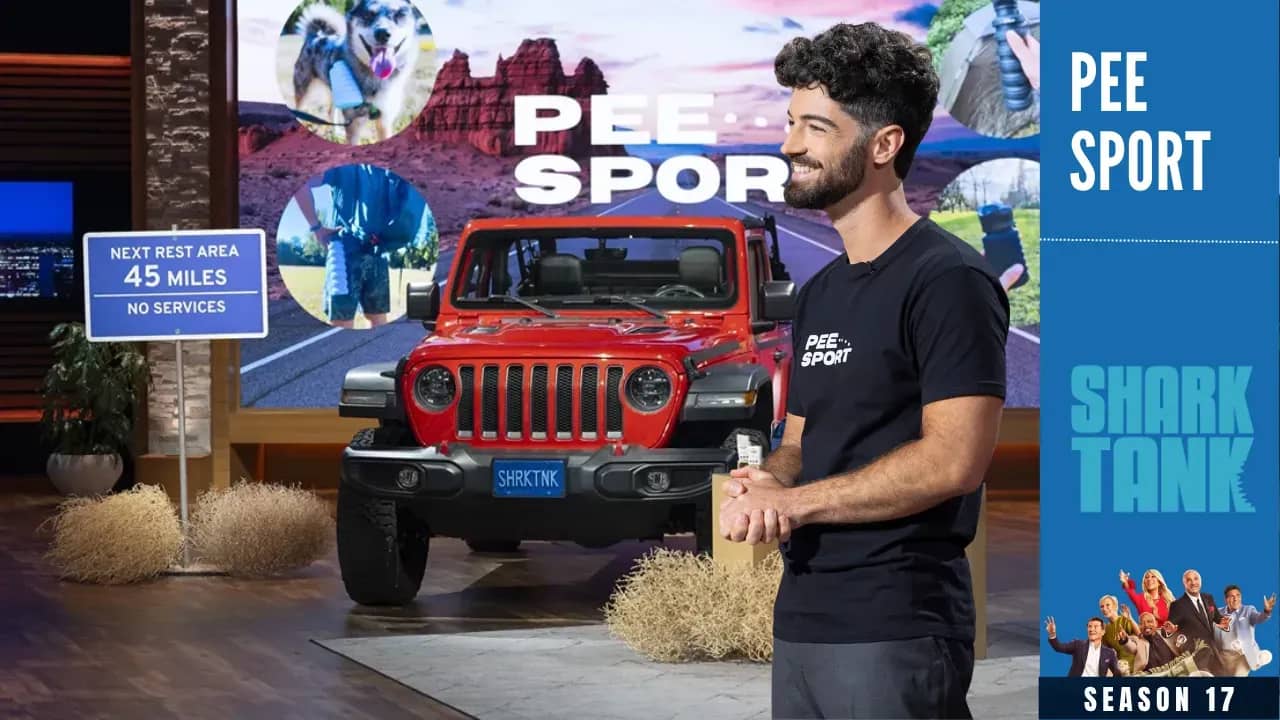
Most portable urinals compete on price. PeeSport took the opposite approach. It gave an awkward utility product a polished name, collapsible silicone body and premium positioning.
That decision turned a product once priced at $39.99 into a useful branding case study. During Shark Tank, founder Henry Snow reported $500,000 in annual sales and about $130,000 in profit. He also knew his acquisition cost, average order value and manufacturing cost. Those numbers helped move the discussion beyond bathroom jokes.
The more interesting story came after filming. PeeSport redesigned the product, raised its price to $69.95 and expanded beyond its original website-only model. Henry also publicly confirmed that his deal with Kevin O’Leary closed.
Today, PeeSport remains an unusual but active consumer brand. Its journey shows how design and humor can create value in a commoditized category. It also illustrates the long-term cost of accepting a perpetual royalty.
Quick answer: PeeSport is still in business as of October 2026. Henry Snow says he closed his $150,000 deal with Kevin O’Leary. The company now sells PeeSport 3.0, claims more than 50,000 units sold and has expanded into Walmart’s online marketplace.
| Product snapshot | Details |
|---|---|
| Company | PeeSport LLC |
| Founder | Henry Snow |
| Product | PeeSport Pee Bottle 3.0 |
| Industry | Travel, outdoor and personal-care accessories |
| Shark Tank episode | Shark Tank Season 17, Episode 8 |
| Original ask | $150,000 for 10% |
| On-air deal | $150,000 for 12% plus royalties |
| Shark | Kevin O’Leary |
| Deal status | Closed, based on the founder’s public statement |
| Current status | Active and growing |
| Website | PeeSport |
Latest update — October 2026
- PeeSport 3.0 is listed at $69.95.
- A two-unit bundle costs $99.95.
- The company claims more than 50,000 units sold.
- Its website and Walmart online listing are active.
- The current model is larger and uses a redesigned locking lid.
- No audited post-show revenue figure is public.
What Is PeeSport?
PeeSport is a reusable portable urinal designed for situations where a restroom is unavailable. The silicone body expands for use and collapses for storage. Its wide opening is intended for men and women, avoiding the need for a separate funnel.
The current 3.0 model holds 34 ounces, or about one liter. The company says it is top-rack dishwasher safe and uses nonporous platinum silicone. A snap-seal lid allows the container to be closed before it is emptied and cleaned.
That does not make PeeSport a new product category. Hospitals, pharmacies and outdoor retailers have sold portable urinals for years. PeeSport’s difference is its positioning.
Henry did not try to win the lowest-price comparison. He framed the product as a discreet travel accessory rather than medical equipment. The brand speaks to drivers, truckers, campers, pilots, festivalgoers, older adults and people with limited restroom access.
That strategy carries a trade-off. Generic portable urinals often cost less than $25, while PeeSport now costs $69.95. Buyers are paying for the materials, collapsibility, seal, warranty and less clinical appearance.
Who Founded PeeSport?
Henry Snow is PeeSport’s founder and public-facing CEO. He grew up in the United States in a Ukrainian immigrant family and began experimenting with websites and online businesses as a child.

He later tried more than 100 business ideas, according to a Nomad Magazine interview. His projects included design, web development, freelance work, apps, retreats and community programs.
PeeSport came from a simpler problem. While traveling through Europe in a camper van with his dog, Bella, Henry used the van’s sink and plastic bottles when he could not find a restroom. Both solutions created spills, smells and embarrassment.
He searched for a better product but found mostly rigid, medical-looking containers. He designed a silicone version, built a preorder page and posted about it online. An outdoor publication picked up the idea, producing hundreds of preorders.
Manufacturing took longer. Henry said the first minimum order was about $25,000 and the first delivery took more than six months. He gradually changed the materials, shape and quality while retaining control of the molds.
“We don’t have to settle for ugly products just because the problem is unglamorous.”
Henry Snow, Authority Magazine interview
An early official company article identified Henry and Jacques as the entrepreneurs running PeeSport. It was written by Jacques Martiquet. Current company pages identify Henry as founder and CEO, so Jacques’s present ownership and operating role are unclear.
| Founder timeline | Milestone |
|---|---|
| Childhood | Learns website building and begins selling online |
| Teenage years | Runs an online electric-scooter business |
| Early adulthood | Experiments with remote work, services, apps and community businesses |
| Camper-van period | Encounters the problem that leads to PeeSport |
| 2023 | Tests demand with a landing page and preorders |
| 2023–2025 | Iterates on materials, molds and manufacturing |
| 2025 | Pitches PeeSport on Shark Tank |
| 2026 | Confirms the Kevin O’Leary deal and launches product improvements |
Henry’s advantage was not medical expertise. It was experience with online selling, quick demand tests and brand storytelling. Those skills let him identify a neglected product and sell it at a premium.
What Happened on Shark Tank?
PeeSport appeared in Season 17, Episode 8, which ABC aired on January 7, 2026. Henry asked for $150,000 for 10% equity, implying a $1.5 million post-money valuation.
The financials quickly changed the tone of the pitch. Henry said PeeSport generated $500,000 in sales during the preceding year and approximately $130,000 in profit. The bottle cost about $3 to make and sold for $39.99.
Those figures imply a product-level gross margin of roughly 92.5% before advertising, freight, fulfillment, returns and overhead. The reported business-level profit margin was about 26%.
Henry also disclosed a $17 customer acquisition cost and $60 average order value. That meant paid acquisition consumed approximately 28% of the average order before product and operating costs.
Some Sharks liked Henry more than the category. They questioned whether customers needed a premium urinal and whether the business fit their portfolios. Barbara Corcoran praised his execution but declined. Robert Herjavec also decided the category was not for him.
Michael Strahan offered $150,000 for 17.5%, plus a $1 royalty until he recovered his investment. Kevin O’Leary initially proposed $150,000 for 15%, a $2 royalty until repayment and $0.50 per unit afterward.
Henry rejected the heavier dilution and repeatedly capped equity at 12%. Kevin eventually reduced the perpetual royalty to $0.30.
| Deal snapshot | Terms |
|---|---|
| Ask | $150,000 for 10% |
| Ask valuation | $1.5 million post-money |
| Michael Strahan offer | $150,000 for 17.5%, plus $1 per unit until repayment |
| Kevin’s initial offer | $150,000 for 15%, plus $2 until repayment and $0.50 perpetually |
| Final deal | $150,000 for 12%, plus $2 until repayment and $0.30 perpetually |
| Equity-only valuation | $1.25 million post-money |
| Units needed to repay Kevin through the initial royalty | 75,000 |
| Deal status | Closed, according to Henry |
Henry later said in an April 2026 founder interview that he had closed the deal. That is stronger evidence than an episode recap, although the private investment documents are not public.
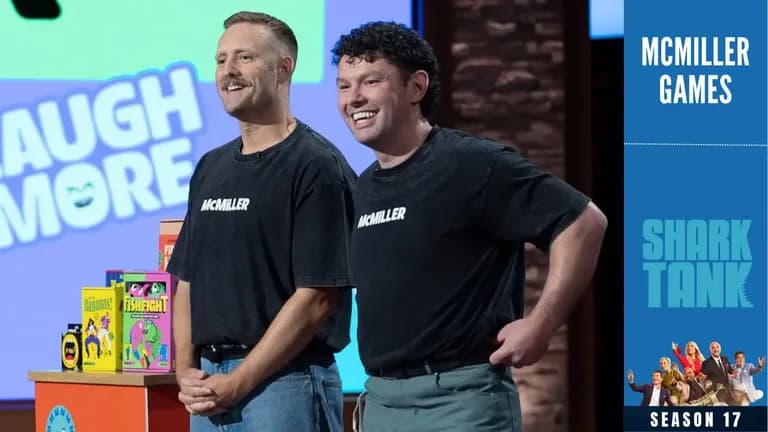
Kevin’s structure also resembles other Season 17 deals. Daniel Lubetzky used equity and a royalty in the McMILLER deal, while Kevin later negotiated another royalty-backed investment with Screen Skinz.
How Does PeeSport Make Money?
PeeSport began as a direct-to-consumer business. That model allowed it to control the product page, brand voice, customer data and retail margin.
The main revenue source remains the bottle. The company also sells a two-unit “home and away” bundle, odor-control tablets and hygiene wipes. These accessories can increase average order value without requiring another customer-acquisition event.
| Business model component | PeeSport’s approach |
|---|---|
| Customer | Travelers, drivers, outdoor users, older adults and people with limited restroom access |
| Value proposition | A discreet and reusable alternative to cheap medical-looking urinals |
| Revenue model | Product, bundle and accessory sales |
| Channels | Direct website and online marketplaces |
| Acquisition | Paid social, humorous content, earned media, referrals and Shark Tank |
| Advantages | Brand, owned molds, unisex design, premium materials and registered name |
| Risks | High price, substitutes, copycats, inventory and royalties |
The pitch numbers reveal why Kevin could demand a royalty. A $2 payment on a $39.99 product represented 5% of retail revenue until his investment was recovered. Afterward, the $0.30 royalty represented about 0.75%.
At today’s $69.95 price, $0.30 is only about 0.43% of a full-price direct sale. However, the burden becomes more noticeable in wholesale because the company receives less revenue per unit.
| Revenue signal | Evidence | What it means |
|---|---|---|
| Prior-year sales | $500,000 reported during the pitch | Proven demand before national exposure |
| Prior-year profit | Approximately $130,000 | Profitable rather than purely growth-funded |
| CAC/AOV | $17 CAC and $60 AOV | Workable acquisition economics at the time |
| Current volume | 50,000+ units claimed | Meaningful lifetime customer base |
| Current price | $69.95 | Stronger revenue per unit but greater price resistance |
| Distribution | Website plus Walmart online | Reduced dependence on one storefront |
The company’s advantage is therefore not the invention of portable urination. It is its ability to persuade buyers that this particular version is worth a premium.
Its biggest risk is the reverse argument. Walmart displays many portable urinals priced below $25. PeeSport must keep proving that its design, durability and warranty justify the difference.
What Happened After Shark Tank?
The first major development was deal completion. Henry’s April 2026 statement supports classifying Kevin’s investment as closed.
The second was product iteration. PeeSport says it rebuilt the product after filming. Version 3.0 is 40% larger than the televised model, uses platinum silicone and has a stronger snap-seal lid. The capacity increased to 34 ounces.
The third was distribution. PeeSport is no longer limited to its own website. A Walmart online listing is active, sold by PeeSport and fulfilled by Walmart. That is evidence of channel expansion, but it does not prove placement in Walmart stores.
| Current-status signal | October 2026 evidence | Verdict |
|---|---|---|
| Website | Active, with product and checkout pages | Active |
| Product | PeeSport 3.0 shown in stock | Available |
| Price | $69.95; two for $99.95 | Verified |
| Distribution | Direct website and Walmart online | Expanding |
| Deal | Founder says it closed | Closed |
| Product development | New capacity, material and seal | Continuing |
| Traction | 50,000+ units claimed | Positive, company-reported |
| Business status | Sales, product and distribution remain active | Growing |
Customer sentiment looks positive, but the evidence needs context. PeeSport reports a 4.8-star rating and more than 500 reviews. Judge.me displayed 359 reviews, with 87% marked verified. However, broad independent coverage remains thin, and Walmart’s visible recent reviews included incentivized submissions.
| Period | Business position |
|---|---|
| Early 2023 | Preorder-stage product with uncertain demand |
| Late 2023 | Viral attention and early customer validation |
| 2024 | Registered U.S. trademark and continued iteration |
| Shark Tank filming | $39.99 product, website-only sales and $500,000 reported revenue |
| January 2026 | National television exposure |
| April 2026 | Founder confirms the Kevin O’Leary deal closed |
| Mid-2026 | PeeSport 3.0 and accessories expand the offer |
| October 2026 | $69.95 product, 50,000-unit claim and Walmart online availability |
The strongest post-show change is not a disclosed revenue surge. It is the movement from a one-product website business toward a broader, higher-priced relief brand.
| Before Shark Tank | October 2026 |
|---|---|
| $39.99 bottle | $69.95 PeeSport 3.0 |
| 700 mL earlier capacity | 1-liter capacity |
| Website-only sales | Website and Walmart online |
| One-year durability positioning | Lifetime durability coverage |
| Product-level proof of demand | 50,000+ units claimed |
| Founder-funded growth | Kevin O’Leary investment closed |
| Distribution ambition | Early marketplace expansion |
Where Can You Buy PeeSport?
The official PeeSport website is the best source for the full offer. It lists one PeeSport 3.0 for $69.95 and two for $99.95. The purchase includes a 69-day return window and lifetime durability coverage under the company’s stated terms.
Walmart also carries PeeSport online at $69.95. The listing is sold by PeeSport and fulfilled by Walmart. Local pickup was not available in the listing reviewed.
The company says it ships internationally, although cost and delivery time depend on the destination. Buyers should verify the latest terms at checkout.
PeeSport suits people who expect repeated use and value compact storage, a softer opening and a closing lid. Someone seeking a one-time emergency option may prefer a cheaper disposable bag or basic plastic urinal.
Lessons From PeeSport’s Journey and Final Take
PeeSport’s first lesson is that unattractive categories can create branding opportunities. Henry did not invent the underlying function. He changed how the product looked, felt and spoke to customers.
The second lesson is to test demand before perfecting production. Preorders and earned media gave Henry a signal before he committed deeply to manufacturing.
Third, founders need more than a large gross margin. PeeSport’s $3 cost and $39.99 price looked exceptional, but the reported profit margin was closer to 26%. Advertising, fulfillment and overhead still mattered.
Fourth, perpetual royalties deserve careful modeling. Kevin’s $0.30 payment looks small against a $69.95 direct sale. It becomes more material when volume grows or wholesale reduces the company’s revenue per unit.
Finally, personality can be an operating advantage. Like Kevin’s investment in the unconventional Gerty Pet, PeeSport works because the founder turns an awkward problem into a memorable story without hiding its practical value.
PeeSport is active, the product has improved and the founder says the deal closed. What remains unknown is the company’s precise post-show revenue. The evidence supports calling PeeSport a growing business—not assigning it a speculative net worth.
Frequently Asked Questions
Is PeeSport still in business?
Yes. Its website is active, PeeSport 3.0 is available and the product has expanded to Walmart’s online marketplace.
Did the PeeSport Shark Tank deal close?
Henry Snow said in April 2026 that he closed the deal with Kevin O’Leary. No private investment document has been published.
What was PeeSport’s Shark Tank deal?
Kevin offered $150,000 for 12% equity, plus $2 per unit until he recovered $150,000 and $0.30 per unit afterward.
Who founded PeeSport?
Henry Snow is the founder and CEO. Earlier official company material also identified Jacques alongside Henry, but Jacques’s current role is unclear.
How much does PeeSport cost?
PeeSport 3.0 costs $69.95 for one. The official site lists a two-unit bundle for $99.95.
Can women use PeeSport?
The company designed its wide, integrated opening for use by men and women without a separate funnel.
How much revenue has PeeSport generated?
Henry reported $500,000 in prior-year sales during the pitch. He later described the company as a seven-figure business, but no exact post-show revenue period or audited figure is public.
Is PeeSport patented?
The company describes PeeSport as patent pending. A corresponding public patent application number was not verified during this research.
The weekly question
From obsession to clarity — one original question every week.
We answer one noisy topic at a time, in full. No daily roundup, no thread bait — just the question, the principles, and the system.
More from Shark Tank USA Season 17
All season pitches
Shark Tank USA
The Christmas Carolers After Shark Tank: Barbara’s 60% Deal, Expansion and Current Status
Shark Tank USA
Bauble Stockings After Shark Tank: Barbara’s Deal, Current Status and the Premium-Brand Risk
Shark Tank USA