Flightpath Golf Shark Tank Update: The $11.8M Brand the Sharks Rejected
Flightpath made $11.8M in sales but left Shark Tank without a deal. Here’s why the Sharks rejected it and where the golf brand stands in 2026.
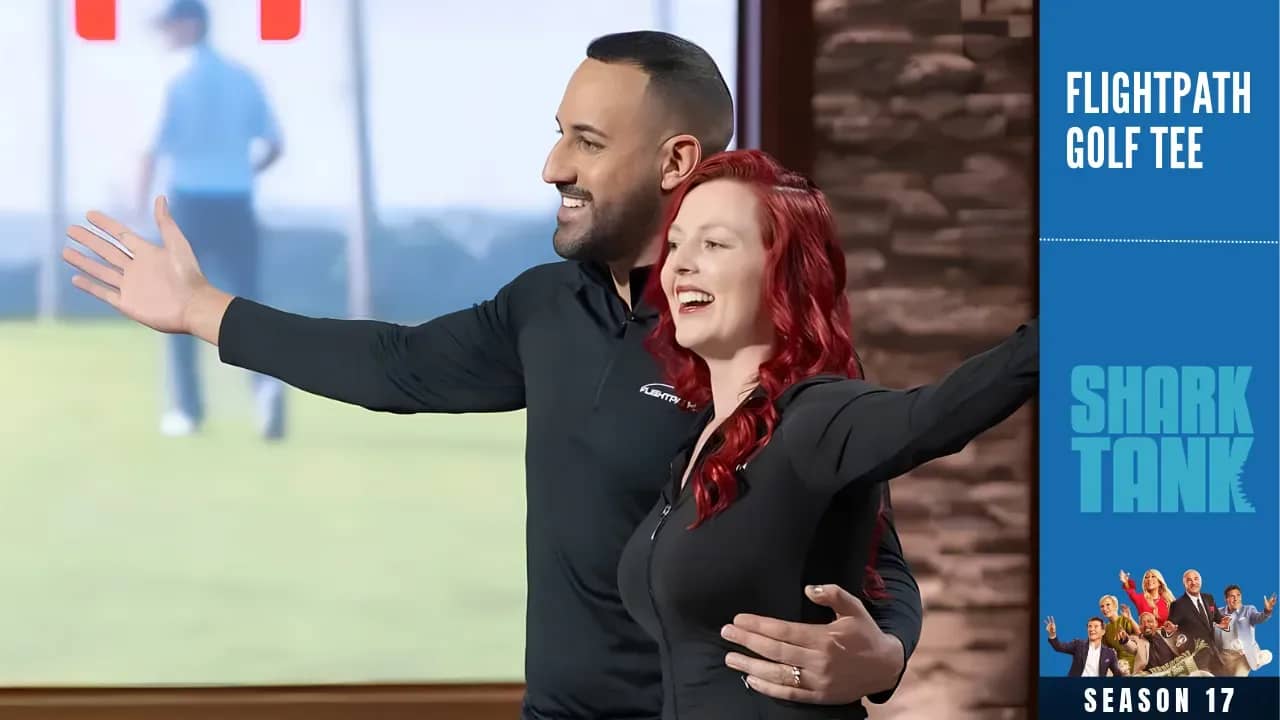
Flightpath Golf walked into the Tank with a number most founders would love to announce: $11.8 million in lifetime sales.
That figure should have made the company one of the easier investments in Shark Tank Season 17. Instead, every Shark walked away.
The problem was not whether golfers would buy an expensive golf tee. Flightpath had already answered that question. The problem was what remained after those sales. The company reported only $46,000 in profit on $4.3 million in annual revenue. It also carried an $800,000 seller-financing obligation and had experienced costly fulfillment and marketplace mistakes.
Flightpath therefore offers a more useful case study than a simple no-deal recap. It shows how a brand can generate millions in sales without becoming an attractive investment. It also shows why customer acquisition, debt, channel control and founder accountability matter as much as top-line growth.
Quick answer: Flightpath Golf remains active as of October 2026. The official store sells its patented performance tees plus grips, golf pens, eyewear, training products and other accessories. Michael and Caroline Sierra did not receive a Shark Tank deal. The company appears to be expanding, although no reliable post-show revenue or profit figure is publicly available.
| Product snapshot | Details |
|---|---|
| Company | Flightpath Golf |
| Founders/operators | Michael Sierra and Caroline Castille Sierra |
| Original inventors | Daniel Whalen and Ronald Whalen |
| Product | Reusable directional performance golf tees |
| Industry | Golf equipment and accessories |
| Shark Tank episode | Season 17, Episode 8; January 7, 2026 |
| On-air ask | $300,000 for 10% |
| Deal status | No deal |
| Current status | Active and expanding; current profitability unknown |
| Website | Official Flightpath store |
Latest update — October 2026
- Flightpath’s online store remains active.
- Its flagship eight-tee pack is listed at $24.99.
- The catalog has expanded into grips, pens, eyewear and training accessories.
- Company and founder accounts remained publicly active in late 2026.
- No verified post-show revenue, profit or seller-financing balance is available.
What is Flightpath Golf?
Flightpath sells a reusable golf tee designed to reduce contact between the tee and ball. Its directional head includes an arrow that golfers point toward their intended target.
The product’s underlying performance golf tee patent names Daniel and Ronald Whalen as its inventors. The patent describes a support structure, concave recess and directional indicator intended to reduce friction and guide orientation.
Flightpath markets the tee as a performance accessory rather than a disposable peg. The company says its tees can survive at least 100 hits and conform to USGA and R&A rules. It offers 3.25-inch tees for drivers and 2.75-inch versions for irons.
The flagship product costs $24.99 for eight tees. That price is far above a bag of wooden tees—and free tees remain available at many courses.
Flightpath’s value proposition depends on three ideas:
- The tee lasts much longer than wood.
- Its reduced-contact design may limit unwanted friction and spin.
- The directional arrow gives golfers a repeatable alignment cue.
Those features make the product easy to demonstrate. However, buyers should treat the performance language carefully. A tee may affect launch conditions, but it cannot correct poor swing mechanics by itself.
The closest Shark Tank comparison is Chalkless, another sports accessory that asks athletes to pay for an incremental performance advantage.
Who founded Flightpath Golf?
Flightpath’s origin story includes both inventors and commercial operators.
Daniel Whalen and his father, Ronald, developed the patented tee structure. Daniel reportedly presented the idea at a University of Central Florida entrepreneurship event, where Michael Sierra recognized its commercial potential.
Michael then contacted Caroline Castille. Caroline brought experience in startup investing and digital marketing. She had studied at UCF, helped build an angel-investment network, launched an earlier dance-footwear business and founded the e-commerce marketing firm Clickable Impact.
Michael and Caroline partnered with the inventors and launched the current Flightpath business in 2020. They later obtained 90% ownership through a seller-financing arrangement. That acquisition structure would become a central issue in the Tank.
Michael focused on operations, data and conversion performance. Caroline worked on advertising, email, branding and partnerships. Their combined skill set helped turn an obscure piece of golf equipment into a multimillion-dollar direct-to-consumer product.
Their advantage was not deep playing experience. It was the ability to market a technical product to golfers at scale.

| Founder timeline | Milestone |
|---|---|
| 2017 | Daniel and Ronald Whalen filed the underlying provisional patent application. |
| 2018 | The U.S. utility patent was granted. |
| 2020 | Michael and Caroline launched Flightpath as a DTC brand. |
| 2020–2024 | The company scaled through performance advertising and e-commerce. |
| 2026 | Michael and Caroline pitched the business on Shark Tank. |
| 2026 | Flightpath expanded its catalog and continued developing golf-media and owned-audience channels. |
What happened to Flightpath on Shark Tank?
Michael and Caroline appeared in an episode featuring precision golf tees and guest Shark Michael Strahan. They asked for $300,000 in exchange for 10% of Flightpath.
That offer valued the business at $3 million.
| Deal snapshot | Details |
|---|---|
| Ask | $300,000 for 10% |
| Implied valuation | $3 million |
| Reported lifetime sales | $11.8 million |
| Reported prior-year sales | $4.3 million |
| Reported prior-year profit | $46,000 |
| Revised proposal | $300,000 for 5% plus $0.50 per unit until $600,000 was repaid |
| Final result | No deal |
| Shark | None |
The initial sales figure attracted attention. Flightpath had generated $11.8 million over four years, including $4.3 million in the preceding year.
Then the Sharks heard the profit figure: $46,000.
That meant Flightpath retained only about 1.1 cents of net profit from each dollar of reported annual revenue. A small change in advertising rates, shipping, returns or discounts could erase the profit entirely.
The founders attributed the weak result to several problems. Flightpath had spent roughly $2 million on advertising. A change in third-party logistics providers reportedly added about $2 to each shipment. The company had also sold 40,000 units to another buyer, which then discounted much of that inventory on Amazon and disrupted Flightpath’s pricing.
The Sharks were concerned not only about the mistakes, but also about how the founders presented them. Kevin O’Leary and Barbara Corcoran believed the explanation placed too much responsibility on outside parties.
“You just gave me a litany of ways of how you screwed up.” — Kevin O’Leary, during the Flightpath pitch
Another problem arrived late in the discussion. Michael and Caroline had acquired their ownership through $800,000 in seller financing. They had reportedly repaid only $55,000.
The founders tried a final counterproposal: $300,000 for 5%, plus a $0.50 royalty on each unit until the Shark received $600,000. The panel rejected it. Adding another repayment obligation would have placed more pressure on a business that already had thin profits and substantial debt.
Flightpath joined QB54 as a Season 17 sports product that demonstrated demand but left without an investment.
How does Flightpath make money?
Flightpath began as a focused direct-to-consumer business. It sold a single premium product through online advertising, email, landing pages and social media.
That approach worked because the tee has a simple visual story. Traditional tees break and make broad contact with the ball. Flightpath’s tee is durable, directional and engineered to reduce contact.
| Business model component | Flightpath approach |
|---|---|
| Customer | Recreational and competitive golfers |
| Value proposition | A durable, directional, tournament-conforming alternative to disposable tees |
| Core revenue | Direct online product sales |
| Additional revenue | Bundles, grips, pens, eyewear, training accessories, wholesale, memberships and media services |
| Acquisition | Paid advertising, email, social content, TikTok, referrals and media partnerships |
| Advantages | Patent, first-party golfer audience, recognizable design, marketing expertise and U.S. manufacturing |
| Risks | High CAC, low repeat frequency, debt, fulfillment problems, premium pricing and copycats |
The model has one built-in tension. Durability helps justify the premium price, but a tee that lasts 100 or more hits does not need frequent replacement.
Flightpath can solve that problem in three ways:
- Keep acquiring new golfers.
- Sell additional products to existing customers.
- Monetize its audience through media, wholesale and brand partnerships.
The 2026 catalog suggests the company is pursuing all three. It now sells golf grips, marking pens, eyewear, training tools, cleaners and accessories.
That diversification may increase customer lifetime value. It also creates more inventory, fulfillment and quality-control work. Flightpath is attempting to solve its repeat-purchase problem by accepting greater operational complexity.
What happened after Shark Tank, and where can you buy Flightpath?
Flightpath did not need to wait for a Shark’s due diligence because there was no handshake to close. The post-show question is whether the company used its television exposure to improve the business behind its sales.
The available evidence shows continued activity.
Caroline said the episode and a later rerun increased calls and created new business opportunities. In a May 2026 founder interview, she discussed U.S. manufacturing, TikTok Shop plans, intellectual-property protection and a customer base of approximately 500,000–600,000. That customer figure remains self-reported.
“We’re at 500, 600,000 customers to date.” — Caroline Sierra, Everything Intellectual Property
The company also moved beyond its former single-product strategy. By October 2026, its store listed 45 products. Its company profile showed recent posts about tees, grips, pens and other golf equipment.
| Current-status evidence | Finding |
|---|---|
| Website | Active |
| Flagship tee | Available at $24.99 per eight-pack |
| Product catalog | Expanded into multiple golf-accessory categories |
| Company social activity | Active in late 2026 |
| Founder activity | Active, including hiring and product-launch posts |
| Shark Tank deal | No deal |
| Current revenue | Not publicly verified |
| Current profit | Not publicly verified |
| Status | Active and operationally expanding |
Flightpath’s journey resembles Surf Skull: both companies must translate a technical sports-product story into consumer trust. It also carries a warning seen in Alchemize Fightwear—public visibility does not remove the need for dependable fulfillment.
The official store is the clearest purchasing source. Buyers can select tee length and color and review the company’s 30-day return policy. International customers should check shipping costs before ordering.
Customer feedback is mixed. Store-hosted reviews commonly praise durability and reuse. However, the company’s BBB customer reviews include complaints about delivery, communication and recurring membership charges.
The BBB sample contains only four reviews, so it should not be treated as a complete picture. Still, buyers should review every checkout option and confirm whether they are enrolling in a recurring membership.
Lessons from Flightpath’s journey
Revenue is not the same as investability
Flightpath had already proved that golfers would pay $25 for a premium tee. Yet its thin profit left little room for error. A business generating $4.3 million in sales should not be one shipping-cost increase away from losing its earnings.
Channel control matters
Selling 40,000 units created immediate revenue, but the buyer allegedly discounted most of that inventory on Amazon. A wholesale transaction can become expensive if it damages the brand’s main channel.
Founder accountability shapes investor confidence
Investors know that logistics providers, marketplaces and agencies create real problems. They still expect founders to explain what they controlled, what they learned and what they changed.
Debt changes negotiation leverage
Flightpath’s $3 million headline valuation did not look unreasonable beside $11.8 million in sales. However, the unpaid seller-financing obligation and weak profit made the equity less attractive.
Expansion can fix one weakness and create another
Grips, pens and eyewear may improve customer lifetime value. They also add suppliers, inventory, returns and customer-support demands. Product expansion only helps if the operating system can support it.
Final take
Flightpath remains active, and its expanded catalog suggests it is trying to build more value from the audience it acquired. The company turned a small, overlooked product into a recognizable golf brand and proved there was demand for a premium tee.
However, the Sharks focused on the quality of that revenue. Thin profit, major seller financing and repeated execution problems made the investment difficult to justify.
The open question is whether Flightpath’s post-show expansion produces healthier margins—or creates another layer of operational strain. Until the company releases updated financial evidence, active and expanding is a defensible description. Highly profitable is not.
Frequently asked questions
Is Flightpath Golf still in business?
Yes. Its website is active, products are available, and company accounts showed recent activity as of October 2026.
Who founded Flightpath Golf?
Daniel and Ronald Whalen invented the patented tee. Michael Sierra and Caroline Castille Sierra partnered with the inventors and built the current commercial brand.
What did Flightpath ask for on Shark Tank?
Michael and Caroline asked for $300,000 in exchange for 10%, implying a $3 million valuation.
Did Flightpath get a Shark Tank deal?
No. All five Sharks declined to invest.
How much revenue did Flightpath report?
The founders reported $11.8 million in lifetime sales and $4.3 million in the year before the pitch. They reported only $46,000 in profit for that year.
Why did the Sharks reject Flightpath?
The Sharks cited thin profit, expensive advertising, operational mistakes, marketplace disruption, an $800,000 seller-financing obligation and concerns about founder accountability.
Where can you buy Flightpath Golf Tees?
The official Flightpath online store is the clearest current source. An eight-pack was listed at $24.99 in October 2026.
Are Flightpath tees patented?
The underlying performance-tee design is covered by active U.S. Patent 10,118,076. Daniel and Ronald Whalen are listed as its inventors.
The weekly question
From obsession to clarity — one original question every week.
We answer one noisy topic at a time, in full. No daily roundup, no thread bait — just the question, the principles, and the system.