Sleepy Baby After Shark Tank: Kendra Scott Deal and 2026 Update
Sleepy Baby accepted Kendra Scott’s $70K offer for 50%. See the founders, patent, business model, quality risks, and October 2026 status.
When a baby will only settle with constant rocking, shushing, or patting, the problem is not abstract. It is an exhausted parent standing beside a crib, afraid that lifting one hand will start the crying again.
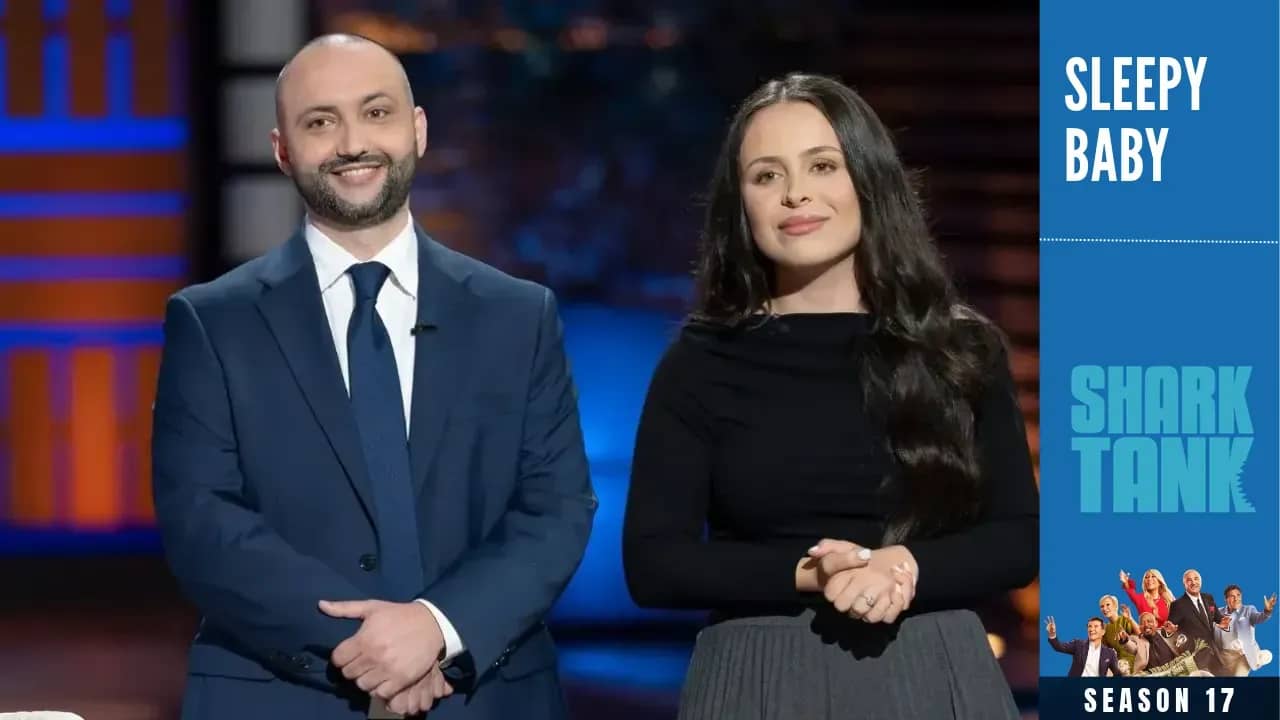
That was the problem Gary Harutyunyan and Siran Kirakosyan tried to solve with Sleepy Baby. Their compact device combines a soft automatic patting arm with white noise, giving caregivers a hands-free way to continue a familiar soothing rhythm.
The couple’s Shark Tank Season 17 pitch produced one of the season’s most founder-friendly emotional connections, and one of its steepest equity trades. Kendra Scott offered the requested $70,000, but wanted half the company.
Sleepy Baby is still selling in October 2026, and its patent application is still pending. Yet its story now includes open questions about the deal, limited independent review evidence, and a public search for engineering help to reduce product noise and returns. That makes it more useful as a startup case file than as a simple pitch recap.
| Item | Details |
|---|---|
| Company | Sleepy Baby |
| Founders | Gary Harutyunyan and Siran Kirakosyan |
| Product | Wearable automatic baby-patting device with white noise |
| Industry | Baby care and sleep aids |
| Shark Tank appearance | Season 17, Episode 9 |
| Air date | January 14, 2026 |
| Current status | Active; direct-to-consumer sales continue |
| Website | sleepybaby.com |
What Is Sleepy Baby?
Sleepy Baby is a rechargeable soothing device that delivers rhythmic pats through a soft, heart-shaped paddle. An adjustable belt holds the unit in place, while built-in white noise can run with or without the patting motion.
The device targets parents and caregivers whose babies respond to repeated touch but wake when the person stops. Its value proposition is simple: continue a familiar soothing action while giving the caregiver’s arms and back a break.
The current model has adjustable patting speeds, charging-status lights, a 1.5-hour recharge time, and up to seven hours of device use. The company says white noise can play for up to ten hours. It lists the product at $63.99 with free shipping, a 30-day money-back guarantee, and a 12-month warranty.
Sleepy Baby says its product has passed third-party safety tests and that it has issued a Children’s Product Certificate. A CPC is a manufacturer or importer’s certification based on applicable third-party test results; it is not a blanket government endorsement of every way a product might be used.
Parents should also separate soothing claims from safe-sleep guidance. The American Academy of Pediatrics recommends placing infants on their backs on a firm, flat sleep surface and keeping soft objects and loose items out of the sleep space. Buyers should read the product instructions, follow current safe-sleep guidance, and ask a pediatrician when uncertain.
Who Founded Sleepy Baby?
Los Angeles couple Gary Harutyunyan and Siran Kirakosyan created Sleepy Baby after their newborn experienced severe colic. They told the Sharks that rocking, patting, and shushing worked, but their baby woke as soon as the physical touch stopped.
Siran is a registered nurse, according to the company’s current About page. Gary has described a background in state government and studied sociology at the University of California, San Diego. Neither founder entered the category as a consumer-products veteran. Their advantage was direct experience with the problem, plus Siran’s healthcare background.
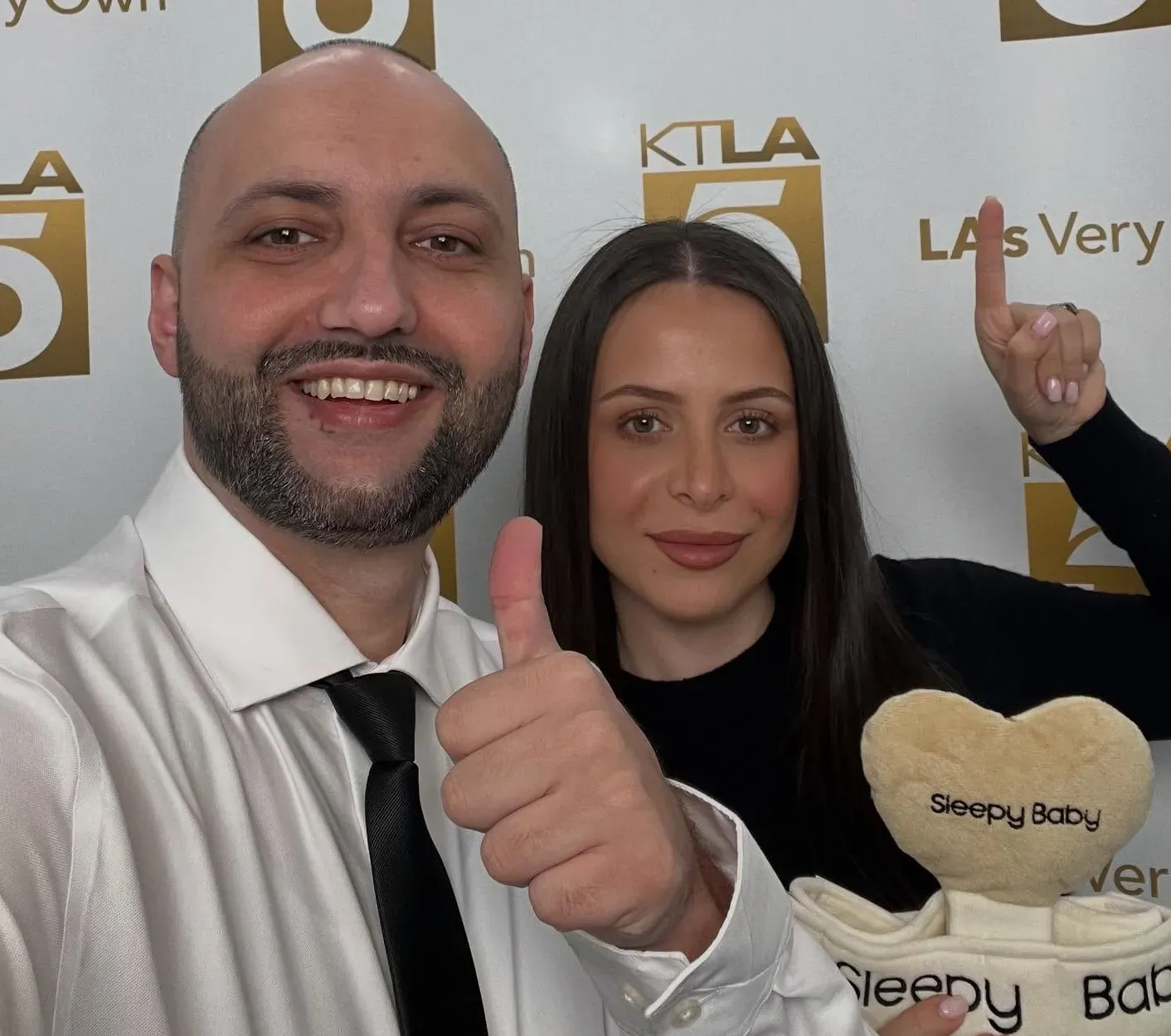
Their first successful home trial became the emotional center of the pitch:
“When we put Sleepy Baby on our baby for the first time, he slept five hours straight.”
Siran Kirakosyan, Shark Tank Season 17, Episode 9
That result is a founder account, not a clinical finding or a promise that every baby will respond the same way. Still, it explains why the couple invested their savings and turned a household workaround into a product.
What Happened on Shark Tank?
Gary and Siran entered the Tank asking for $70,000 for 25% of Sleepy Baby. The ask implied a $280,000 valuation.
The product immediately connected with Kendra Scott. She remembered leaning over her own child’s crib to keep patting, then hearing the crying restart when she tried to leave.
“This is something that I literally dreamt and hoped would come to the market.”
Kendra Scott, Shark Tank Season 17, Episode 9
The founders reported 331 units sold and approximately $21,000 in sales. Their device cost $9.40 to make and sold for $63.99. At those figures, the gross profit before shipping, advertising, payment fees, returns, and overhead was about $54.59 per unit, or roughly an 85% product-level gross margin.
| Pitch term | Details |
|---|---|
| Ask | $70,000 for 25% |
| Ask valuation | $280,000 |
| Sales reported | Approximately $21,000 from 331 units |
| Unit cost reported | $9.40 |
| Retail price reported | $63.99 |
| Kendra Scott’s offer | $70,000 for 50% |
| Final on-air deal | $70,000 for 50% with Kendra Scott |
| Deal valuation | $140,000 |
| Post-show closing status | Not publicly confirmed |
Why did four Sharks walk away?
Robert Herjavec understood the sleep problem but doubted the device would have soothed his twins. He needed to believe in the product personally and went out.
Kevin O’Leary focused on customer acquisition. He argued that reaching expecting and new parents at the right moment can be expensive and difficult, especially under modern privacy rules.
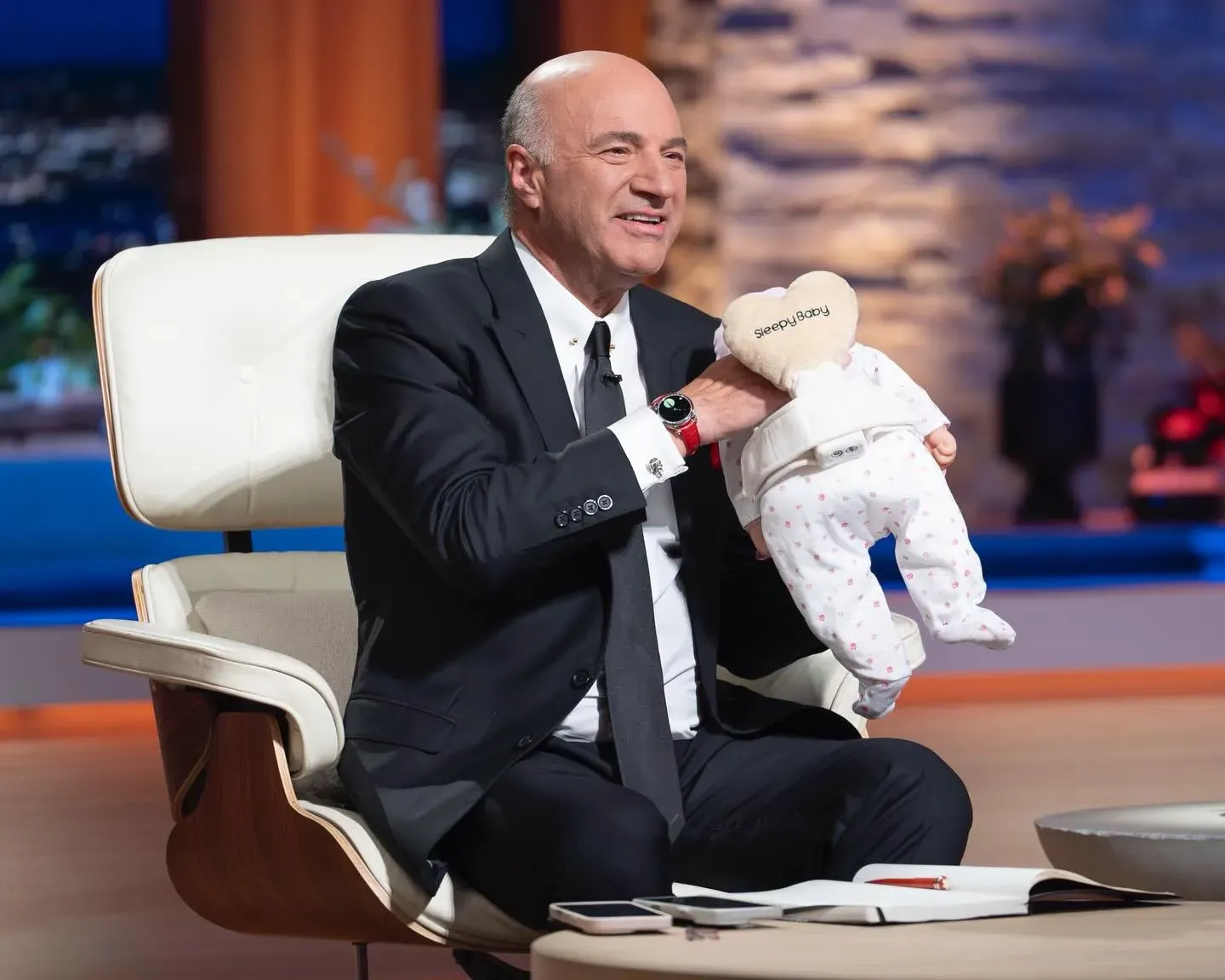
Rashaun Williams had an existing investment in Happiest Baby and did not want another company in the same space. He advised the founders to become broader parenting thought leaders instead of relying on one device.
Lori Greiner questioned how easily competitors could copy the idea while the patent was pending. She also did not see a path to a large enough business.
Kendra saw both the emotional need and a retail story. However, she considered Sleepy Baby too early to support the founders’ valuation. She held firm at 50%. Gary proposed 40%, but Kendra refused. After Gary asked Siran to decide, she accepted.
The handshake cut the implied valuation in half. The founders gave up twice the equity they originally offered, betting that Kendra’s consumer-brand experience could make the remaining half worth more. It resembles the strategic-partner logic behind other Kendra Scott investments, including Doublesoul and Alchemize Fightwear, though Sleepy Baby was at a much earlier sales stage.
How Does Sleepy Baby Make Money?
Sleepy Baby is primarily a direct-to-consumer hardware business. It buys finished inventory, sells through its Shopify website, and keeps the spread between manufacturing cost and the customer’s purchase price.
| Business model element | Sleepy Baby’s approach |
|---|---|
| Customers | Parents, caregivers, gift buyers, and families with babies who respond to patting or white noise |
| Value proposition | Combines automatic rhythmic touch and white noise in one portable device |
| Revenue model | One-time product sales; bundle options encourage multi-unit orders |
| Sales channels | Official website; no verified major-retail rollout found |
| Acquisition channels | Shark Tank visibility, social creators, local media, educational content, and email capture |
| Advantages | Clear problem, strong pitch-era unit margin, compact design, pending patent, and giftable price |
| Risks | Customer-acquisition cost, safety expectations, copycats, returns, manufacturing consistency, and limited repeat purchases |
The pitch-era margin is attractive, but it does not equal profit. Baby hardware carries costs beyond the factory price: compliance testing, freight, fulfillment, refunds, warranty replacements, insurance, customer support, and paid acquisition.
The repeat-purchase challenge is also real. Unlike diapers or formula, one working device may satisfy a household. The website responds with two- and three-unit bundles for twins, grandparents, diaper bags, or gifts. A broader product line could create repeat revenue, but only one core product was listed during this audit.
The patent application strengthens the moat more than a vague “patent pending” label. U.S. application US20250256054A1, filed by Gary Harutyunyan, covers an adjustable automated baby-patting device with a motor, reciprocating paddle, belt, speed controls, power system, and optional audio. It was still pending in October 2026, so no enforceable issued patent was verified.
What Happened After Shark Tank?
Sleepy Baby’s website remains active and sells the device for $63.99. The company continues publishing parent-focused content and promotes a pending patent. Current revenue, profitability, retail distribution, and the closing of Kendra Scott’s deal remain undisclosed. A September 2026 engineering listing shows that the founder is working to reduce clicking, motor noise, and inconsistent quality linked to returns.
The television appearance created credible visibility. ABC included Sleepy Baby in its official Episode 9 business list, while KTLA and Fox 11 Los Angeles interviewed the founders after the episode. Gary’s public profiles continue to identify him with the company.
Product development has also moved beyond the pitch-stage claim. The patent application was published in August 2025 and remains pending. The current site promotes longer battery life, a warranty, bundles, and a money-back guarantee.
The most important current evidence is not purely positive. In September 2026, Gary posted a public engineering job seeking help at the existing factory in Yancheng, China. He wrote that clicking, motor noise, and uneven quality had caused returns. The brief asked an engineer to diagnose the motor and gears, reduce noise below 35 dBA, and test revised samples across all speeds.
That listing is evidence of an operational problem, but also of founder action. Hardware brands often discover that the first marketable version is not the final reliable version. The business question is whether Sleepy Baby can correct the defects without losing its margin or customer trust.
| Area | Evidence | Assessment |
|---|---|---|
| Website | Active Shopify storefront with checkout, policies, and current content | Verified active |
| Product availability | Single device listed at $63.99; bundles presented on the product page | Available direct |
| Patent | U.S. application US20250256054A1 remains pending | Verified pending |
| Media activity | ABC listing plus post-show KTLA and Fox 11 interviews | Verified |
| Customer reception | Positive testimonials exist, but independent review volume is small | Promising but limited |
| Product quality | Founder cited clicking, motor noise, uneven quality, and returns in an engineering listing | Active operational risk |
| Kendra Scott deal | Accepted on air; no reliable public closing confirmation found | Unclear |
| Revenue and profit | No current figures disclosed | Unknown |
| Business status | Sales and content continue while product refinement is underway | Active; cautiously stable |
| Date | Milestone |
|---|---|
| December 2023 | Available company-directory evidence places the product launch in late 2023 |
| February 2024 | Gary filed the provisional patent application that established priority |
| June 2024 | Full U.S. patent application filed |
| August 2025 | Patent application published as US20250256054A1 |
| January 14, 2026 | Sleepy Baby appeared on Shark Tank and accepted Kendra Scott’s $70,000-for-50% offer |
| January 2026 | Founders appeared in KTLA and Fox 11 Los Angeles segments |
| September 2026 | Founder publicly sought an engineer to address noise and quality problems |
| October 2026 | Website, sales, blog, and patent application remained active |
Where can you buy Sleepy Baby?
The best verified place to buy Sleepy Baby is the official website. The device was listed at $63.99 with free shipping during this review. We did not verify an active Amazon listing or a national retail partner.
Independent public feedback remains thin. Trustpilot showed a small group of reviews, mostly positive about soothing, charging, and white noise, plus a negative review questioning the concept and electrical safety. Company-hosted testimonials were also favorable, but those are selected by the seller. Buyers should weigh the guarantee, instructions, safe-sleep guidance, and the limited independent review base.
Readers comparing sleep-related pitches can also see Snorinator, another Season 17 product that faced the challenge of proving a personal sleep solution can work for many different users.
Lessons From Sleepy Baby’s Journey
Emotional product-market fit can open the door
Kendra understood the problem before seeing years of sales data. That connection mattered because the product turned a common but hard-to-describe parenting moment into a visible solution.
High gross margin does not remove hardware risk
An 85% pitch-era product margin looks exceptional. Returns, replacements, compliance, freight, and engineering revisions can quickly consume it. Founders should model contribution margin after every variable cost, not just factory cost.
A pending patent is progress, not a completed moat
Sleepy Baby has a real published application, which is more meaningful than an unsupported marketing claim. Still, a pending application does not guarantee a patent will issue or prevent every competitor from entering the market.
Customer acquisition needs an answer before scale
Kevin O’Leary’s objection remains the central growth question. Parents need the product during a narrow life stage. Content, pediatric referrals, gift registries, social proof, and retail placement may help, but each channel has costs and trust requirements.
Strategic capital can justify dilution, but only if the help arrives
The founders accepted a $140,000 post-money valuation because they believed Kendra could change the company’s reach. That logic works only if the deal closes and the promised expertise creates value. Without public confirmation, readers should treat the 50% transaction as an on-air agreement rather than a verified completed investment.
Publicly fixing quality problems is better than hiding them
The engineering listing exposes an uncomfortable weakness, but it also shows Gary pursuing a concrete fix. The next test is execution: quieter units, fewer returns, better consistency, and clearer evidence that the revision worked.
Final Take
Sleepy Baby remains in business after Shark Tank, but it is still an early hardware startup rather than a proven breakout.
The company has an active product, direct sales, strong pitch-era unit economics, a published patent application, and founders who understand the customer’s pain. It also has meaningful risks: a one-product catalog, difficult customer acquisition, unresolved deal status, limited independent review data, and publicly acknowledged manufacturing defects.
Kendra Scott’s bet was not really on 331 sales. It was on a relatable problem, committed founders, and a product that could fit retail and gifting. Whether giving up 50% was wise depends on evidence that is not public yet, especially whether the deal closed and whether her involvement helped distribution.
The larger lesson is simple. A memorable invention can win a Shark’s attention, but a durable baby-products company must also earn trust through safety, consistent manufacturing, clear use guidance, and reliable customer outcomes.
Frequently Asked Questions
Is Sleepy Baby still in business?
Yes. Its website remained active and accepted direct orders in October 2026.
Did Sleepy Baby get a deal on Shark Tank?
Yes, on air. Gary Harutyunyan and Siran Kirakosyan accepted Kendra Scott’s offer of $70,000 for 50% equity. The post-show closing has not been publicly confirmed.
Who founded Sleepy Baby?
Los Angeles couple Gary Harutyunyan and Siran Kirakosyan founded the company after trying to soothe their colicky newborn.
How much does Sleepy Baby cost?
The official website listed the device at $63.99 with free shipping during the October 22, 2026 audit.
Is Sleepy Baby patented?
Not yet. U.S. patent application US20250256054A1 was pending as of October 2026.
How much revenue has Sleepy Baby made?
The founders reported about $21,000 from 331 units during the pitch. No reliable current revenue figure is public.
Does Sleepy Baby guarantee that a baby will sleep?
No product can guarantee the same response from every baby. The company offers a 30-day money-back guarantee, but its performance claims should be treated as product and customer reports, not clinical proof.
Is Sleepy Baby safe for overnight use?
Follow the product instructions and current pediatric safe-sleep guidance. The AAP advises a firm, flat sleep surface with no loose or soft objects in the sleep space. Ask a pediatrician about any product-specific concern.
The weekly question
From obsession to clarity — one original question every week.
We answer one noisy topic at a time, in full. No daily roundup, no thread bait — just the question, the principles, and the system.