VirtuSphere Shark Tank Update: Where Did the Giant VR Ball Go?
VirtuSphere left Shark Tank without a deal, but documented installations followed. See its real-world use and what remains unknown today.

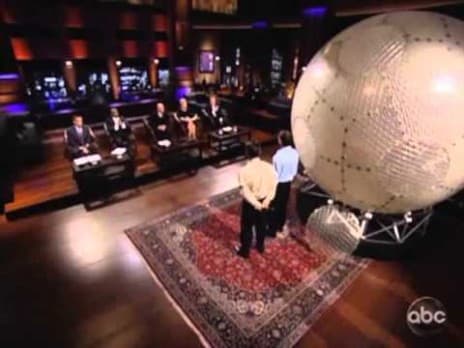
A virtual world can stretch for miles while the person wearing a headset stands in a small room. VirtuSphere tried to bridge that mismatch with a device large enough to walk inside: a hollow sphere that rotates beneath the user.
It was one of the most physically imposing products brought into Shark Tank during Season 1. Ray Latypov and Jim DiMascio sought $1.5 million, but the Sharks did not invest. The scale of the hardware also pointed to a business very different from an ordinary consumer accessory.
The later record is more substantial than a simple claim that the company disappeared. An Air Force report documents installed simulators in 2011, and the original website still presents the product and invites inquiries. Neither fact establishes a current sales total or a recent delivery.
This update follows those distinctions: what the device did, what happened in the Tank, where its use was documented afterward and what remains unknown today. It belongs to the technology group in our Shark Tank USA Season 1 guide.
Quick answer: What happened to VirtuSphere?
Ray Latypov and Jim DiMascio asked for $1.5 million for 10% of VirtuSphere and left Shark Tank without an investment. The technology did reach institutional users: a June 2011 Air Force report documented two simulators installed at Maxwell Air Force Base's Squadron Officer College. The original VirtuSphere website remains accessible and invites inquiries about options, prices and availability. That supports an ongoing web presence, but recent orders, fulfillment and operating scale were not verified. A categorical claim that the business has closed is therefore not established by the evidence reviewed. Current status: the product remains presented online, with documented historical installations and uncertain present commercial activity.
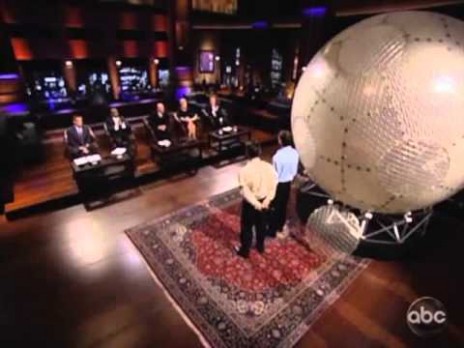
Shark Tank / ABC, via Shark Tank Blog.
What was VirtuSphere designed to do?
VirtuSphere was a locomotion platform for virtual reality. Instead of walking across a room, a user moved within a rotating sphere while a headset displayed a simulated environment.
A supplier case study from motion-tracking company Polhemus explains the combination of physical movement, a head-mounted display and tracking technology. The structure acted somewhat like an enlarged trackball, with the user's movement turning the sphere.
The important distinction is between the physical floor space and the simulated distance. The user could move through a virtual scene without needing a real corridor of the same length.
| Component | Role in the experience |
|---|---|
| Hollow sphere | Surface in which the user moved |
| Supporting platform | Allowed the sphere to rotate |
| Head-mounted display | Showed the simulated environment |
| Tracking hardware | Connected movement with the virtual scene |
| Application software | Determined the scenario being experienced |
The case study describes particular hardware and integration at the time it was prepared. It is not a guarantee that every current package uses those exact components.
Who brought VirtuSphere to Shark Tank, and did they get a deal?
Ray Latypov and Jim DiMascio presented the business. The pitch recap records their request and the Sharks' decision.
| Pitch detail | Result |
|---|---|
| Presenters | Ray Latypov and Jim DiMascio |
| Season | Shark Tank USA Season 1 |
| Request | $1.5 million for 10% |
| Implied asking valuation | $15 million |
| Accepted investment | None |
| Commercial issue | A large, specialized system needed a convincing buyer market |
The asking valuation was substantial, especially for a product with a specialized customer base. The Sharks' interest in trying the device did not translate into a willingness to finance the company.
It is also useful to distinguish the presenters from the technology's inventors. The Air Force's later account credited the Latypov brothers with developing the system. A television appearance does not necessarily include every person responsible for an invention.
The $15 million figure is the valuation implied by the request. It is not a verified later appraisal or founder net worth.
Who was the likely customer?
VirtuSphere's physical scale made institutions and venues a more natural discussion than ordinary household use. A simulator needs space, suitable software and people who can set it up and operate it.
The product's possible settings included training, education and entertainment. Those possibilities are not all equivalent to confirmed paying customers.
| Potential setting | What an operator would need to evaluate |
|---|---|
| Educational institution | Whether the experience serves a specific teaching purpose |
| Training facility | Whether the scenario and hardware fit the intended exercise |
| Entertainment venue | Throughput, staffing, space and maintenance |
| Exhibition | Transport, assembly and supervised demonstrations |
These are commercial considerations, not a claim that all of these markets generated recurring revenue.
The challenge is to turn a compelling demonstration into a purchase justified by a clear use. That is different from proving that the technology functions at all.
What happened after Shark Tank?
Latest verified position: Historical institutional use is documented, including two Air Force installations reported in 2011. The original site still offers product information and a sales inquiry route. Current production, delivery capacity and revenue were not independently confirmed.
Air Force reporting documented real installations
On June 17, 2011, Air University Public Affairs reported that Squadron Officer College at Maxwell Air Force Base had installed two VirtuSphere simulators and was testing educational applications.
That is stronger evidence than a company logo list alone. An institutional user described equipment present at its facility and the work it was exploring.
The article discussed future possibilities as well as the installed systems. Those plans should not be rewritten as completed deployments. It also does not establish that the same equipment remains in use today.
A university described its own access to the technology
A Harrisburg University brochure described having a VirtuSphere for students to explore simulated experiences.
This adds another institutional source to the history. It supports the conclusion that the product moved beyond the television demonstration, while remaining a historical statement rather than a current operating inventory.
The distinction matters because specialized hardware can have a long visible history without a readily available public record of recent sales.
The original site still presents the product
The VirtuSphere website describes the system and directs visitors to contact the company for options, pricing and availability. It does not provide the kind of verified checkout-and-delivery evidence that would establish a current sale.
The correct reading is therefore limited: a relevant original web presence remains. This article did not contact the sales address or place an order.
A live website alone cannot settle whether a business is producing new units, maintaining existing ones or simply preserving older information. Equally, a lack of public sales announcements does not by itself prove closure.
The remaining gaps are commercial, not proof that the device was fictional
The institutional reports establish that real systems existed and were installed. What remains unclear is the present scale of commercial activity.
| Question | Evidence-based answer |
|---|---|
| Was a physical system demonstrated? | Yes |
| Did it reach institutions after the pitch? | Yes, according to institutional sources |
| Is the original site accessible? | Yes |
| Is a current unit price verified? | No |
| Are recent fulfilled orders verified? | No |
| Is a definitive closure established? | No |
This is a different kind of uncertainty from Ionic Ear, where a consumer launch was not verified. VirtuSphere's documented installations give its post-show story a firmer historical base.
Can you buy or try VirtuSphere today?
The original site offers an inquiry route rather than a publicly verified purchase path. Anyone exploring a system would need confirmation of current availability, included equipment, software support, installation requirements and service arrangements.
Historical prices repeated in television recaps should not be treated as current quotations. Likewise, a past museum or university installation does not guarantee public access today.
This update does not direct readers to similarly named businesses as replacements. A spelling match or similar domain is not evidence of continuity with the Shark Tank company.
What can entrepreneurs learn from VirtuSphere?
The most useful lesson is that an impressive demonstration and a repeatable sales model answer different questions. A product can work and reach real institutions while still facing a difficult route to predictable growth.
For specialized hardware, customer fit includes more than interest. Space, software, support and a defined use all affect whether a potential customer can justify buying.
Season 1's WiSpots raised another version of that institutional-sales challenge. Both cases reward looking past the demonstration to the deployment and business evidence.
Frequently asked questions
Who pitched VirtuSphere?
Ray Latypov and Jim DiMascio presented the business to the Sharks.
How much did they ask for?
They requested $1.5 million for 10%, implying a $15 million asking valuation.
Did VirtuSphere get a deal?
No Shark invested during the pitch.
Was VirtuSphere used outside the show?
Yes. The Air Force documented two installed simulators in 2011, and a Harrisburg University brochure also described the technology.
Is VirtuSphere still in business?
The original website remains accessible and invites inquiries. Recent commercial activity was not independently verified, so a definite operating or closure verdict would overstate the evidence.
What does VirtuSphere cost now?
A current verified price was not established. The company site directs prospective customers to inquire.
The weekly question
From obsession to clarity — one original question every week.
We answer one noisy topic at a time, in full. No daily roundup, no thread bait — just the question, the principles, and the system.