Ionic Ear Shark Tank Update: Did the Implant Ever Launch?
Darrin Johnson sought $1 million for Ionic Ear but received no offer. Here’s what is known about the concept and its proposed valuation.

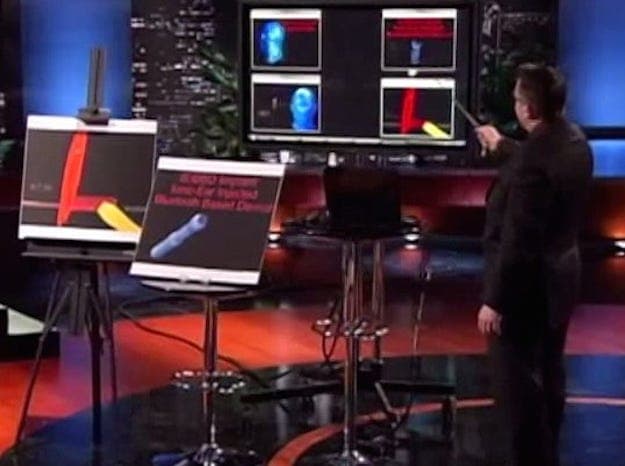
An earpiece that slips out is an irritating problem. Darrin Johnson proposed a much bigger commitment to solve it: putting the device inside the body.
His Ionic Ear concept offered an unusual test of a familiar startup question. Can the effort of adopting a product outweigh the problem it is supposed to solve? The idea attracted lasting attention because it appeared in Shark Tank’s first US episode, but attention did not turn it into a verified consumer product.
The distinction matters when looking back. A proposed invention, a working prototype, an investment and a commercial launch are different milestones. A memorable television appearance proves none of the later stages on its own.
This update examines what Johnson asked for, what evidence exists after the episode, and what the proposal reveals about customer adoption. There is no verified revenue history or current purchase link to add. The useful business lesson comes from the gap between the inconvenience Johnson identified and the commitment his proposed solution required.
Ionic Ear after Shark Tank: Quick Answer. Short on time? Darrin Johnson sought $1 million for 15% in Season 1, Episode 1. He received no offer for his proposed implantable Bluetooth earpiece. The proposal required surgery, making adoption a much larger decision than buying an ordinary accessory. Current status: BGR’s February 2026 retrospective reports that Ionic Ear never reached a commercial launch. The research reviewed for this update did not establish a subsequent product, retail channel or financing round. The often-repeated $6.67 million figure is the valuation implied by Johnson’s asking terms. It is not evidence of a completed investment, present company value or the founder’s personal wealth.
Product snapshot
| Detail | Information |
|---|---|
| Venture | Ionic Ear |
| Entrepreneur | Darrin Johnson |
| Proposed product | An implanted Bluetooth earpiece |
| Category | Consumer-electronics concept |
| Appearance | Season 1, Episode 1 |
| Commercial status | No verified launch; BGR reports it never launched |
| Current official store | Not established in the reviewed evidence |
The pitch belongs to the same premiere as Mr. Tod’s Pie Factory. The contrast shows how different the businesses in one episode could be.
What was Ionic Ear, and who proposed it?
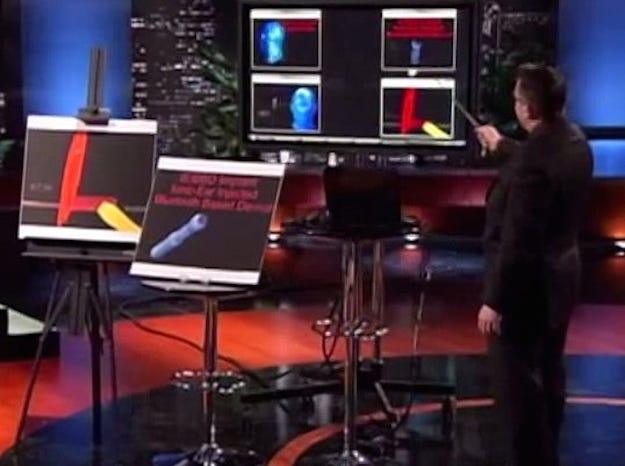
Shark Tank / ABC, via Business Insider
Darrin Johnson presented the idea as a way to prevent a Bluetooth earpiece from falling off. It was a proposed implanted device, not a conventional headset that customers could simply put on or remove.
ABC’s official list of businesses featured on the show includes Ionic Ear. That confirms its place in the show’s history; the listing does not establish subsequent product availability.
The founder information that can be responsibly used here is limited. Johnson was the entrepreneur presenting the concept. A verified account of his later career, personal finances or continuing development work was not established.
The distinction between a proposal and a product is especially important in this case. A concept illustration can explain an intended experience. It cannot demonstrate reliability, manufacturing readiness or willingness to pay.
What happened on Shark Tank?
Johnson requested $1 million for 15% and received no offer. Inc.’s review of the original pitch describes the surgical premise and the short, unsuccessful presentation.
Deal snapshot
| Measure | Pitch outcome |
|---|---|
| Investment requested | $1 million |
| Equity offered | 15% |
| Implied asking valuation | Approximately $6.67 million |
| Offer accepted | None |
| Shark investor | None |
| Post-show closing of a Shark deal | Not applicable: there was no agreement |
The valuation is a calculation: $1 million divided by 0.15. It is the value implied by the requested share price, not a market-tested appraisal.
The central business obstacle was adoption. An external accessory asks a customer to spend money and change a habit. The proposed Ionic Ear added a surgical commitment to that decision.
That creates an unusually high bar for the benefit offered. An investor would need evidence that enough customers considered a slipping earpiece troublesome enough to accept that commitment. The reviewed material does not establish such customer validation.
The segment also appears in Sony Pictures Television’s compilation of unusual pitches. The video documents the television presentation; it should not be mistaken for evidence of a later launch.
How was the business supposed to work?
Ionic Ear did not establish a verified operating revenue model in the material reviewed. It is more accurate to assess the proposed customer proposition than to describe sales channels that never became public.
Proposed business model: questions the concept needed to answer
| Element | Proposal or evidence | Unresolved commercial question |
|---|---|---|
| Customer problem | An external earpiece could fall off | How many customers would pay for a substantially different solution? |
| Intended benefit | Keep the device in place through implantation | Would buyers accept the adoption process? |
| Revenue | No verified sales record | What would customers pay, and for what complete service? |
| Delivery | No verified commercial rollout | Who would provide installation, support and replacement? |
| Investment | A funding request without an accepted offer | What milestones would justify the capital required? |
This is an analysis of missing business evidence, not a claim that Johnson had no private plans.
The price of hardware alone would not describe the full customer experience. A commercial proposition would also need to explain installation, ongoing use, maintenance and replacement. Without that information, neither a buyer nor an investor could assess the complete commitment.
There is no basis to invent a subscription, licensing agreement, distributor network or manufacturing margin. A useful case study makes these gaps visible rather than filling them with a plausible-sounding business model.
What happened after Shark Tank?
Latest update — November 17, 2026: The reviewed evidence does not establish a commercial Ionic Ear product, an official purchasing channel or verified sales. BGR’s February 2026 retrospective reports that the concept never became a launched product. No confirmed relaunch was found in the research used for this update.
BGR’s follow-up supports describing Ionic Ear as an unlaunched concept. It does not provide a company dissolution filing or a founder-confirmed shutdown date.
Current-status evidence audit
| Question | Finding | Limit |
|---|---|---|
| Was it featured on the show? | Yes; ABC lists Ionic Ear | Appearance does not imply endorsement or commercial success |
| Was there a Shark agreement? | No offer was accepted | There is no deal-closing story to report |
| Was a consumer launch documented? | BGR reports no launch | No independent commercial product record was established here |
| Can customers buy it? | No verified purchasing channel identified | Unrelated audio devices are not Ionic Ear |
| Is current revenue known? | No verified figure | An asking valuation cannot substitute for revenue |
| Is the founder’s later activity confirmed? | Not established by the reviewed sources | Avoid speculation about his private life |
Retrospectives can keep a pitch visible for years. That is media attention, not evidence of an operating company.
This is also why a precise closure year would be misleading. A business that sells products and later shuts its doors has a different history from a proposal with no documented launch. Available reporting supports the latter description.
Can you buy Ionic Ear today?
No verified Ionic Ear purchase option was established. There is no supported product price, retailer or order link to recommend.
Products with similar terminology should not be presented as successors without evidence connecting them to Johnson’s venture. A shared use of wireless technology is not enough to establish a commercial relationship.
For readers exploring what did reach customers across the season, our complete Season 1 products guide separates pitch outcomes from later business evidence.
What can founders learn from the Ionic Ear pitch?
Measure the inconvenience created by the solution. A product may solve the stated problem while asking customers to accept a larger burden. A pitch needs to account for that trade-off.
Separate technical possibility from customer demand. A device concept does not show that buyers want the full experience. Testing willingness to adopt matters alongside explaining how an invention might function.
Make the funding milestone concrete. A large request is easier to assess when investors can see what has already been demonstrated and what their money would establish next. The available Ionic Ear record does not show that bridge to a commercial product.
Keep price and value distinct. The proposed $6.67 million valuation was an asking price. Nobody’s agreement to that valuation was established by this pitch.
A different no-deal example from the season is Throx, a physical consumer product. The comparison is useful because “no deal” alone does not tell readers what existed at the time or what happened afterward.
Frequently asked questions
Did Ionic Ear get a deal?
No. Johnson did not receive an investment offer.
How much money did Darrin Johnson ask for?
He requested $1 million for 15% of the venture.
Was Ionic Ear worth $6.67 million?
That number is implied by the request. It was not a completed investment valuation or evidence of personal wealth.
Did Ionic Ear ever launch?
BGR’s 2026 retrospective reports that it did not. The research used here did not establish a commercial launch.
Is there an official shutdown date?
A primary document confirming a shutdown date was not established. This article therefore does not assign one.
What is Darrin Johnson doing now?
His current activity was not verified in the reviewed sources, so no claim is made about his later career.
Ionic Ear’s lasting value as a case study is the customer-adoption question it exposes. The record supports a proposed invention and an unsuccessful funding pitch. It does not support a fabricated sales history, personal fortune or later business revival.
The weekly question
From obsession to clarity — one original question every week.
We answer one noisy topic at a time, in full. No daily roundup, no thread bait — just the question, the principles, and the system.