Ranulph Fiennes Reached Both Poles, Then Climbed Everest at 65
Ranulph Fiennes led the first surface circumnavigation via both poles, then climbed Everest at 65 despite vertigo.
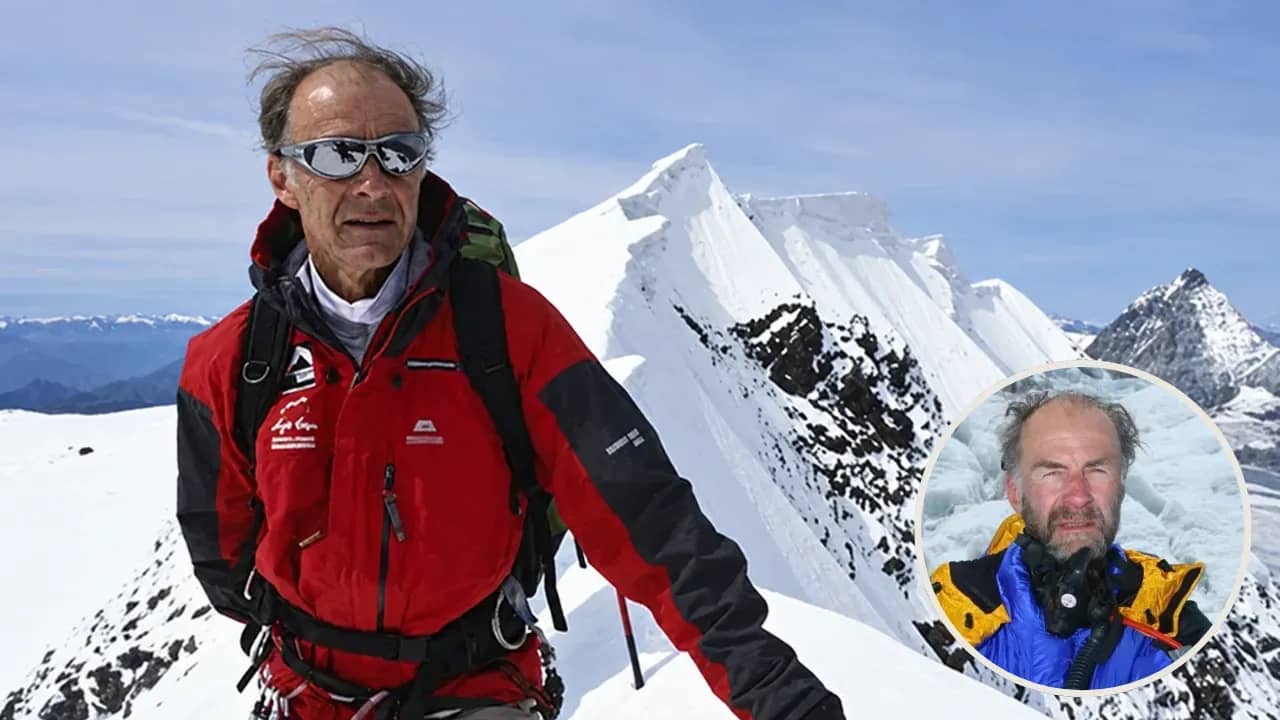
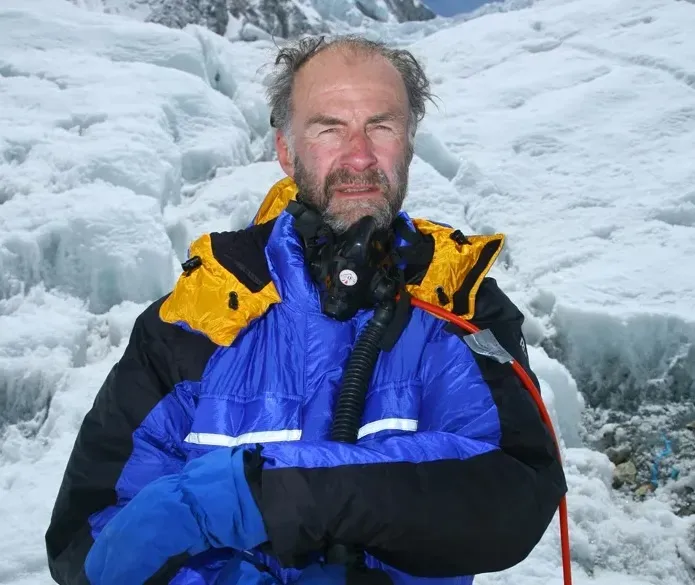
On May 21, 2009, Sir Ranulph Fiennes reached the summit of Mount Everest at 65. He had lifelong vertigo, a history of heart trouble and two failed Everest attempts behind him. His success made him the oldest Briton to summit the mountain at the time.
That would have been a career-defining achievement for almost anyone. Fiennes had already gone further. In 1982, he and Charles Burton completed the first surface circumnavigation through both geographic poles.
The combined story is not simply about tolerating pain. It is about an obsession with routes, records and preparation, supported by people whose work made each milestone possible.
Fast Facts
- Who:
- A British explorer and former soldier who built a career around polar travel, records and endurance.
- Geek Obsession:
- Designing difficult routes and solving their logistical, mechanical and physical problems.
- Notable Feat:
- With Charles Burton, completed the first surface circumnavigation through both geographic poles in 1982.
- Key Number:
- Summited Everest at 65 in 2009, becoming the oldest Briton to do so at the time.
- How It Worked:
- Years of planning, acclimatization, specialist equipment, guides, Sherpas, supply crews and supplemental oxygen.
- Reality Check:
- Neither milestone was solo or unsupported; large teams made Transglobe and the Everest climb possible.
How an obsession became a route around the world
Born in 1944, Fiennes served in the British Army before making exploration his profession. His most ambitious early project began with an idea from his first wife, Virginia “Ginny” Fiennes.
In 1972, Ginny proposed circumnavigating Earth along its polar axis. The plan required seven years of preparation, more than 30 expedition members and approximately 1,800 sponsoring companies. Ginny helped select the team, organize routes and schedules, run polar bases and manage communications.
That context matters. The Transglobe Expedition was never one man walking unsupported around the planet. It was a large technical operation involving a ship, aircraft, surface vehicles, radio stations, mechanics, scientists and carefully positioned supplies.
Fiennes led the expedition. Charles Burton traveled with him along the full route, while Oliver Shepard joined them for the Antarctic crossing. Their challenge belonged to the same demanding polar tradition later explored by Felicity Aston during her solo Antarctic journey, although the methods and support classifications were very different.
The machinery behind the journey to both poles
The expedition left Greenwich on September 2, 1979. It traveled south through Europe and Africa before using the ice-strengthened ship Benjamin Bowring to reach Antarctica.
Fiennes, Burton and Shepard crossed the continent with snow vehicles and sledges, reaching the South Pole on December 15, 1980. Supply aircraft deposited fuel and equipment ahead of them, while Ginny maintained communications from the polar base.
Shepard left the traveling party after the Antarctic stage. Fiennes and Burton continued north by ship, boat and overland travel before reaching Canada’s Arctic islands. They then moved from Ellesmere Island onto the Arctic Ocean.
Vehicles struggled against ice ridges up to about 12 metres high. The men changed to human-hauled pulks, designed to carry equipment and convert into small canoes if they encountered open water. Their daily progress sometimes fell to a few kilometres.
They reached the North Pole on April 10, 1982. The journey was still not finished. The pair had to continue across moving sea ice toward their ship before finally returning to Greenwich on August 29.
The expedition’s Arctic account describes broken machinery, shifting ice, severe cold and the constant possibility that open water would cut off the route. Surface travel did not mean an absence of support. It meant that the circumnavigators themselves completed the route without being carried between sections by aircraft.
“I like breaking records; it’s the only thing I know how to do, so it’s my job. I don’t like failures.”
Source: Fiennes speaking to Wired
Endurance was a system, not a superpower
Fiennes built his expeditions around objectives that could be measured: a route, a record or a geographic point. He then spent years assembling the equipment, transport, funding and specialists required to reach it.
That method did not eliminate failure. A solo Arctic attempt in 2000 ended with severe frostbite and the loss of parts of several fingers. In 2003, he suffered a heart attack and underwent emergency bypass surgery. Months later, he and physician Mike Stroud completed seven marathons in seven days.
Extreme endurance athletes often make suffering look spontaneous. In reality, it usually rests on pacing, logistics, recovery and experienced partners. That same pattern appears in Scott Jurek’s carefully managed ultrarunning career.
Fiennes also rejected the idea that explorers simply stop feeling fear. He acknowledged panic, vertigo and the role of luck. His skill was continuing to make decisions while those pressures were present.
Why Everest took three attempts
Fiennes first attempted Everest in 2005. Chest pain forced him to retreat roughly 300 metres below the summit. In 2008, he returned but turned around at about 8,400 metres after becoming exhausted.
The third attempt used Everest’s standard South Col and southeast ridge route. Fiennes climbed with professional guide Kenton Cool, Sherpa support and supplemental oxygen. The Himalayan Database records the ascent as an oxygen-assisted commercial expedition.
That support does not make Everest routine. At extreme altitude, the body cannot properly recover, judgment deteriorates and small problems can become fatal. Climbers must also manage cold, fixed ropes, limited weather windows and the exhaustion of descending after reaching the summit.
Fiennes’ climb belongs to a wider history of high-altitude achievements that depend on logistics and skilled local teams. Nimsdai Purja’s 14-peak project offers another clear example of why mountaineering records cannot be separated from planning, oxygen strategy and Nepali expertise.
At 65, Fiennes became the oldest Briton to have summited Everest at that point. He also became the first person to combine Everest’s summit with the completed surface journey through both geographic poles.
“I get vertigo and don’t like looking down. But if you are there, you might as well look once.”
Source: Fiennes speaking to Time after Everest
The reality behind the records
The simplified version of Fiennes’ story presents a solitary adventurer defeating one hostile environment after another. The verified version is more interesting.
Transglobe depended on Ginny Fiennes, Charles Burton, Oliver Shepard and dozens of people working aboard the ship, in aircraft, at bases and from the expedition office. Everest depended on Kenton Cool, Sherpa climbers, established routes, supplemental oxygen and a commercial expedition structure.
Fiennes supplied leadership, fundraising ability, tolerance for discomfort and an unusual appetite for unfinished goals. His collaborators supplied expertise he did not possess. The result was not individual toughness replacing teamwork. It was toughness made useful by teamwork.
These expeditions are also poor templates for casual imitation. Polar travel and high-altitude climbing require specialist training, medical planning, rescue arrangements and informed decisions about risks that can never be removed completely.
A new kind of limit
Fiennes continued pursuing endurance projects after Everest. At 71, he completed the 2015 Marathon des Sables, a multi-stage race across the Sahara, becoming the oldest British finisher at the time.
In 2024, Fiennes: Return to the Wild followed him and his cousin, actor Joseph Fiennes, through the Canadian wilderness. The series also documented Ranulph’s Parkinson’s diagnosis and the different limits it had placed before him.
His career shows that endurance is not the absence of fear, age, illness or dependence on other people. It is the disciplined work of understanding those constraints, assembling the right support and deciding which objective remains worth pursuing.
Fiennes reached both poles and the top of Everest, but the more revealing achievement was the system behind those destinations: curiosity turned into a plan, failure turned into information and individual determination strengthened by a team.
The weekly question
From obsession to clarity — one original question every week.
We answer one noisy topic at a time, in full. No daily roundup, no thread bait — just the question, the principles, and the system.