Felicity Aston: The Woman Who Skied Antarctica Alone
Felicity Aston skied alone across Antarctica, yet the hardest challenge was surviving 59 days utterly alone inside her own mind.
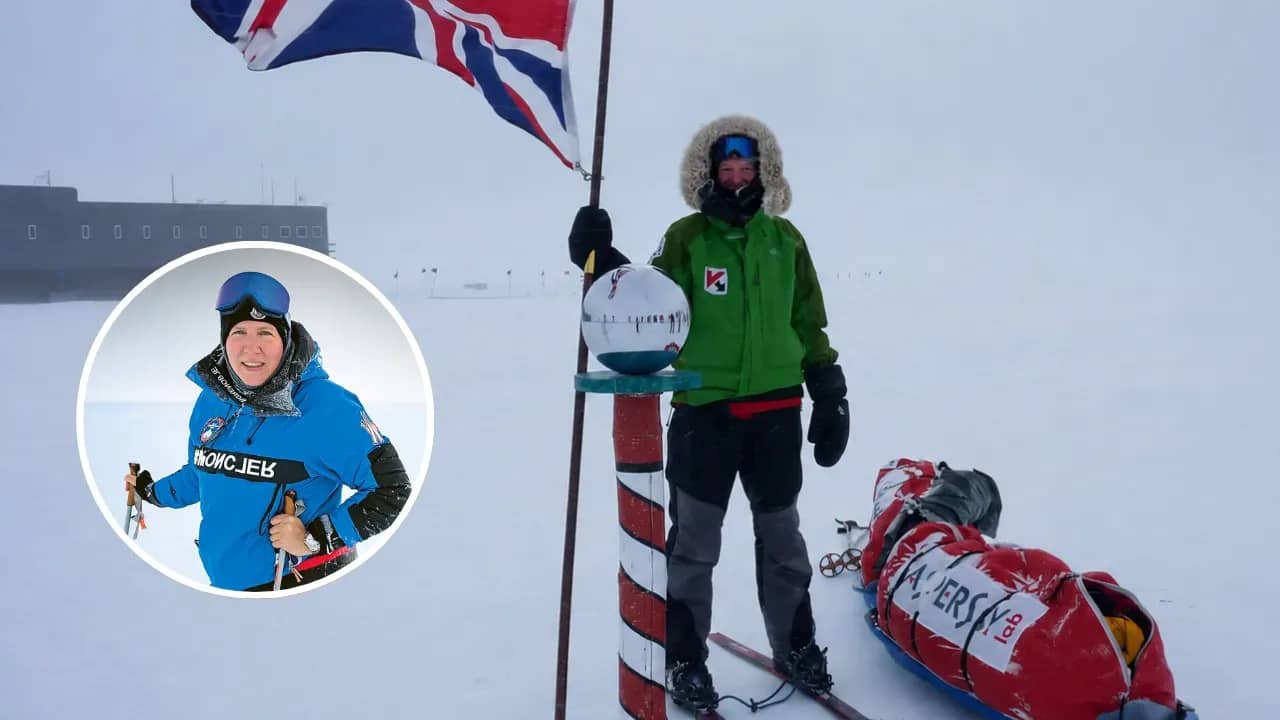
Most explorers fear the cracks hidden beneath Antarctica’s snow. For Felicity Aston, the greatest danger was harder to see. It was the crushing weight of being completely alone.
In January 2012, Aston finished a 1,744-kilometer journey across the Antarctic continent. She had spent 59 days skiing through whiteouts, bitter winds and temperatures as low as minus 40 degrees Celsius. Two sledges carrying food, fuel and equipment followed behind her.
The crossing made her the first woman to ski across Antarctica alone. It also made her the first person to complete a solo ski crossing of the continent using muscle power rather than kites or machines. Yet the record was only one chapter in a much longer fascination with cold places.
Felicity Aston Fast Facts
- Full name: Felicity Ann Dawn Aston
- Born: Oct. 7, 1977
- Nationality: British
- Known for: Becoming the first woman to ski alone across Antarctica
- Record completed: Jan. 23, 2012
- Distance: 1,744 kilometers, or 1,084 miles
- Duration: 59 days
- Route: Ross Ice Shelf to Hercules Inlet via the South Pole
- Method: Nordic skis and two sledges, without kites or machines
- Support: Two planned food and fuel resupplies
- Honors: MBE and Polar Medal, awarded in 2015
- Current research: Microplastics in Arctic ice and snow
Who Is Felicity Aston?
Felicity Aston is a British polar explorer, meteorologist, author and research scientist. Her career has taken her across Antarctica, Greenland, Siberia, Arctic sea ice and some of the coldest inhabited regions on Earth.
According to Aston’s official biography, she first traveled to Antarctica at age 23 to work as a meteorologist for the British Antarctic Survey. She remained at Rothera Research Station for about two and a half years, including two consecutive winters.
Her work involved monitoring the climate and ozone. The posting gave her scientific experience, but it also created a lasting connection to the polar world. Antarctica became more than an exotic destination. It became a place she understood well enough to miss after leaving.

The Idea of Crossing Antarctica Alone
By 2011, Aston had already spent more than a decade building expedition experience. She had crossed Greenland with a British women’s team, raced in the Canadian Arctic and traveled across Siberia and Lake Baikal.
She had also organized and led an international team of women to the South Pole in 2009. Many members began with little experience of snow, skiing or winter camping. The team completed a 911-kilometer journey in 38 days.
Going alone presented a different test. Aston wanted to know how she would react without teammates, conversation or immediate help. Her question was deeply personal: Could she manage the Antarctic environment entirely through her own decisions?
How Felicity Aston Crossed Antarctica
Aston began at the Ross Ice Shelf in late November 2011. Her route climbed the Leverett Glacier, crossed the Transantarctic Mountains and continued over the Polar Plateau to the South Pole.
She then traveled toward Hercules Inlet on the Ronne Ice Shelf. Reaching it on Jan. 23, 2012, completed a coast-to-coast journey of 1,744 kilometers, or 1,084 miles.
She traveled on Nordic cross-country skis while pulling two sledges weighing about 85 kilograms at the start. She used no kite, sail or motor for propulsion. However, the journey was not unsupported in the strict expedition sense. Two food and fuel resupplies had been placed along her route, one at the South Pole and another about 500 kilometers farther along.
That distinction matters. Aston’s achievement was a solo, human-powered crossing with resupplies. The precise details make the record more credible, not less remarkable. Guinness World Records recognizes her journey and records its distance, duration and method.
The Hardest Part Was Being Alone
The cold created constant practical danger. Exposed skin could freeze, buried crevasses could open beneath her skis and severe weather could prevent an aircraft from reaching her. When her lighter stopped working, every remaining match became part of her survival calculation.
Isolation proved even more difficult. Aston sometimes went weeks without seeing another person. Whiteouts erased the horizon, leaving her in a world with little color, contrast or sensory change.
Her mind began converting the wind into familiar sounds. In one message preserved in her expedition log, she wrote, “Got woken by low flying jet planes last night. Then remembered no jet planes in Antarctica. It was the wind.”
Each morning brought another psychological battle. Instead of imagining the entire distance ahead, she concentrated on leaving the tent and beginning the day. That repeated decision eventually carried her across the continent.
More Than a Record-Breaking Expedition
Aston did not abandon polar exploration after completing her crossing. She continued organizing expeditions that combined difficult travel with science, communication and opportunities for women from different backgrounds.
Her Before It’s Gone project sent teams on annual Arctic journeys to gather samples and measurements related to ice and snow. The work helped build a dataset from several parts of the Arctic rather than treating each expedition as an isolated adventure.
That work now connects directly with her scientific research. The National Oceanography Centre identifies Aston’s doctoral project as research into microplastics in Arctic ice and snow.
Her transition from meteorologist to expedition leader and researcher reveals the real pattern behind her career. She does not travel to cold places merely to endure them. She uses exploration to ask questions, collect information and make remote environmental change easier for others to understand.
Last month I had a very fun conversation with the wonderful @AlexHonnold (he of the very scary free solo climb up the big cliff in Yosemite) as part of his ‘Planet Visionaries’ podcast series from @ROLEX
— felicity_aston (@felicity_aston) November 1, 2024
Have a listen using the link below: https://t.co/mlVBq18JZS pic.twitter.com/rr2Yt1KLBz
Fact Vs Fiction
Fact: Felicity Aston became the first woman to ski alone across Antarctica and the first person to make a solo crossing using only muscle power for propulsion.
Fact: She received two planned resupplies during the 59-day journey. Describing the crossing as completely unsupported would therefore be inaccurate.
Fact: She was appointed an MBE for services to polar exploration and received the Polar Medal in 2015. Her MBE appears in the official 2015 New Year Honours list.
Fiction: Aston did not free-climb the Burj Khalifa or become known for urban free solo climbing. That claim confuses her with skyscraper climbers such as Alain Robert.
Why Felicity Aston’s Story Matters
Aston’s achievement was spectacular, but her honesty makes it memorable. She did not describe herself as fearless. She spoke openly about loneliness, panic, tears and the daily conviction that the task was beyond her.
Her record shows that endurance can look less like confidence and more like beginning again while afraid. Her later work also gives the journey a larger purpose. The same curiosity that pulled her across Antarctica now drives research into a changing Arctic environment.
Frequently Asked Questions
Did Felicity Aston cross Antarctica completely unsupported?
No. She traveled alone and used no kite or machine for propulsion, but she collected two planned resupplies containing food and fuel.
How far did Felicity Aston ski across Antarctica?
She traveled 1,744 kilometers, or 1,084 miles, over 59 days.
When did she finish the crossing?
Aston reached Hercules Inlet on Jan. 23, 2012.
What does Felicity Aston do now?
She continues working as an explorer, author and research scientist. Her current research examines microplastics deposited in Arctic ice and snow.
The weekly question
From obsession to clarity — one original question every week.
We answer one noisy topic at a time, in full. No daily roundup, no thread bait — just the question, the principles, and the system.