Joe Simpson, the Mountaineer Who Crawled Back From Siula Grande
Joe Simpson survived a shattered leg, a cut rope and a crevasse, then crawled back to camp on Peru’s Siula Grande.
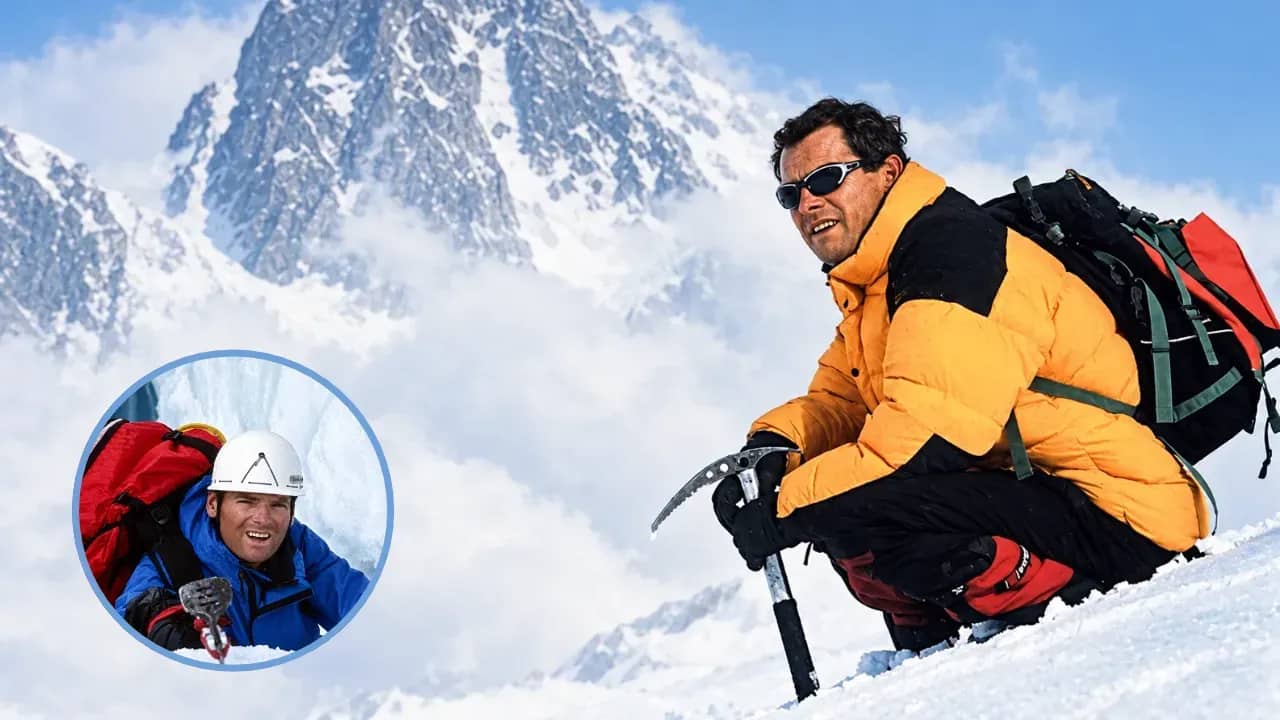
Joe Simpson survived a shattered right leg, a severed climbing rope and a fall into a crevasse during a 1985 descent of Siula Grande in Peru. He then escaped the ice, crossed kilometres of glacier and rocky moraine, and reached base camp after three and a half days of crawling and hopping.
The survival story became famous through Touching the Void, but it was not simply an act of determination. Simpson’s return depended on mountaineering knowledge, equipment, relentless problem-solving and the rescue attempt his climbing partner Simon Yates had already made.
Fast Facts
- Who:
- British mountaineer and author Joe Simpson, best known for his memoir Touching the Void.
- Geek Obsession:
- Alpine-style climbing and solving survival problems with equipment, route knowledge and disciplined decision-making.
- Notable Feat:
- Survived a shattered leg and crevasse fall after completing Siula Grande’s first west-face ascent.
- How He Survived:
- He escaped the crevasse, then divided the return journey into short, timed targets.
- Key Number:
- Simpson crawled and hopped for three and a half days before reaching base camp.
- Reality Check:
- Yates cut the rope only after a long rescue attempt, and Simpson repeatedly defended his decision.
The climb before the survival story
Simpson was 25 and Yates was 21 when they attempted the previously unclimbed west face of Siula Grande, a mountain rising about 6,344 metres in Peru’s Cordillera Huayhuash.
They were climbing in alpine style. Instead of installing fixed ropes and stocked camps, they carried what they needed and moved continuously up the mountain. This reduced time on dangerous terrain, but it also meant the two climbers had little margin for injury or rescue.
Their original expedition report describes the west face as approximately 1,250 metres high and gives their route the maximum Alpine grade of Extrêmement Difficile Plus. They climbed steep ice, mixed ground and unstable powder before reaching the summit on June 7, 1985.
They had completed the first ascent of the west face. The larger challenge began when they tried to descend the north ridge in worsening weather.
A broken leg above 19,000 feet
At about 11:30 a.m. on June 8, the edge of a small ice cliff collapsed beneath Simpson. He fell roughly 16 metres and landed with his right leg locked straight.
The impact drove his tibia into his knee joint. The expedition report also records fractures involving his ankle and heel. He and Yates were still above 19,000 feet, with no organized rescue team waiting nearby.
Yates did not immediately abandon him. He tied their two ropes together and began lowering Simpson down the mountain. After each rope-length descent, Simpson had to take his weight off the rope so Yates could move the joining knot through his lowering device.
Yates repeated that process in storm conditions, lowering Simpson about 800 metres. It was a remarkable improvised rescue, but neither climber could see the terrain below them clearly.
The rope cut over an unseen crevasse
After dark, Yates unknowingly lowered Simpson over an overhanging ice cliff. Simpson was left hanging in open space, unable to reach the slope below or climb the rope with frostbitten hands.
Yates could not see or hear him. The knot connecting their ropes had reached the lowering device, and Simpson’s weight was gradually pulling Yates from his unstable snow seat. After holding on for about an hour, Yates cut the rope to prevent both men from falling.
Simpson dropped approximately 33 metres into a crevasse. Instead of falling into its deepest section, he landed on a snow bridge inside it.
He could not climb back to the hole above. His remaining option was to descend farther into the darkness using the cut rope, hoping to find another way out.
“If I was going to die, I wanted to do it in sunlight.”
Joe Simpson
About 20 metres below his original position, Simpson found avalanche debris forming a steep slope. He worked his way across it, climbed toward daylight and finally emerged onto the glacier.
How he made the crawl manageable
Escaping the crevasse still left Simpson a long way from base camp. In his later account, he estimated that approximately 2.5 kilometres of crevassed glacier and another 10.5 kilometres of moraine and rock separated him from safety.
The precise distance varies between retellings, but the primary expedition report confirms that he crawled for three and a half days. He had no food during the four-day ordeal and found water only on the final day.
Simpson turned the journey into a sequence of small problems. Using his watch, he selected a nearby crevasse or rock and gave himself about 20 minutes to reach it. Each target replaced the overwhelming distance to camp with a single measurable task.
He crawled, hopped and sometimes fell across the glacier and moraine. On his final night, a distance that would normally have taken minutes required hours as he slipped in and out of consciousness.
Shortly after 1 a.m. on June 11, he reached the camp area and called out. Yates and their camp companion, Richard Hawking, initially thought the sound came from an animal. They were preparing to leave after concluding that Simpson had died.
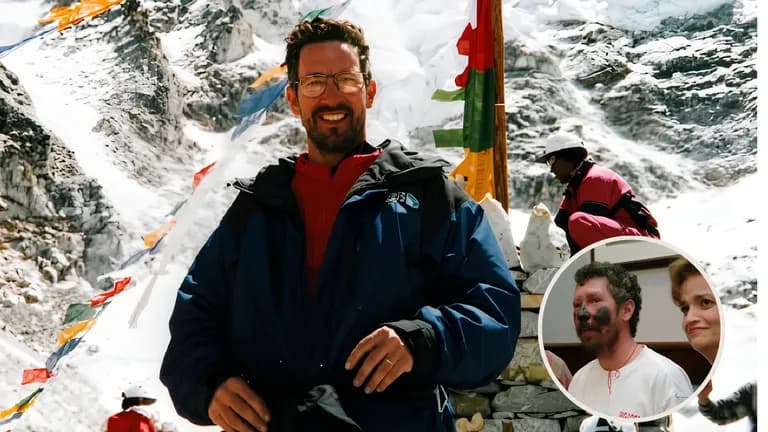
Simpson’s return recalls Beck Weathers walking back into an Everest camp after rescuers believed he could not survive. Both stories are remembered as solitary returns, but survival still depended on other people completing the rescue afterward.
Why cutting the rope is not the whole story
The most repeated version of the story reduces Yates to the climber who cut his partner’s rope. That leaves out the hundreds of metres he had already lowered Simpson through avalanches, darkness and freezing conditions.
Simpson has consistently defended the decision. He wrote Touching the Void partly because early rumors and reports had distorted what Yates had done.
“Eventually there was nothing in the story that you could recognise except the cutting of the rope.”
Joe Simpson
The rope cut was not a betrayal made at the beginning of the accident. It came at the end of a prolonged rescue, when the climbers could not communicate and Yates was being pulled toward the same drop.
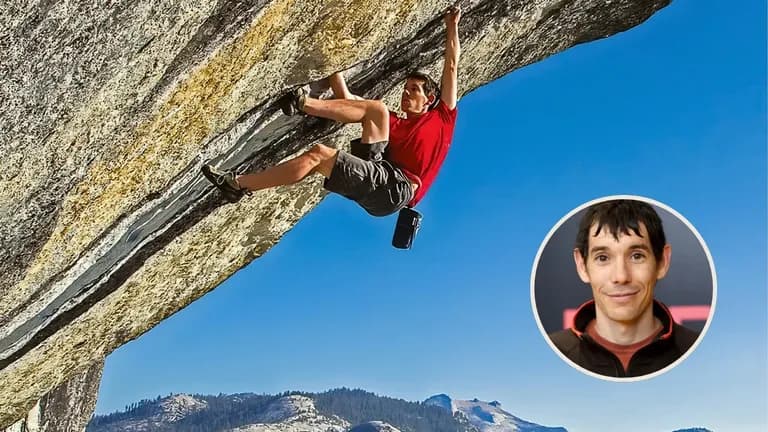
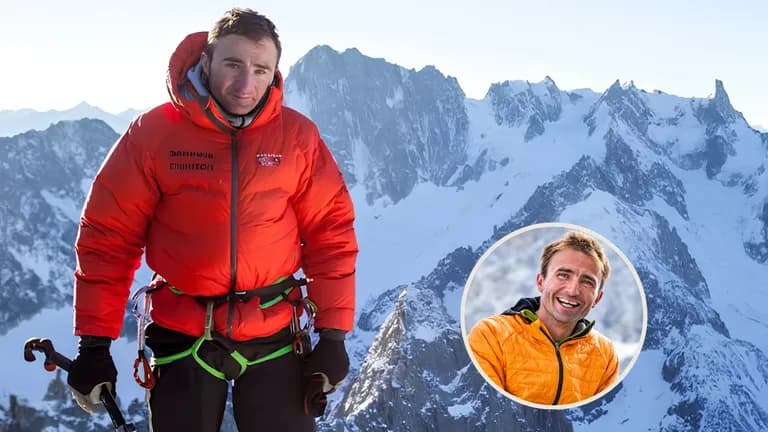
That distinction matters in mountaineering, where training and judgment can reduce risk without removing it. The same tension between practiced control and uncontrollable consequences shaped Ueli Steck’s precision-driven speed climbing.
Simpson and Yates survived because they were skilled climbers, but expertise did not make their choices safe or simple. Luck mattered too, including where Simpson landed inside the crevasse.
From survival ordeal to Touching the Void
Reaching camp did not end Simpson’s ordeal. He traveled by mule for two days and then spent about 23 hours in a pickup truck before reaching medical care, 11 days after breaking his leg.
He eventually returned to climbing, although the accident changed what he was prepared to attempt. Simpson continued until 2009, when accumulated pain convinced him to stop.
His 1988 memoir Touching the Void turned an expedition known mainly within climbing circles into an international story. It won the 1988 Boardman Tasker Award for Mountain Literature. Kevin Macdonald’s 2003 film adaptation later won BAFTA’s 2004 award for outstanding British film, and the story was adapted for the stage in 2018.

Popular retellings often present Simpson’s crawl as proof that determination can overcome anything. His own account is less comforting. He has described survival as physically and psychologically destructive, not as a clean discovery of hidden strength.
What he did on Siula Grande was narrower and more useful than a motivational slogan. Faced with a distance he believed he could not complete, Simpson used the habits of a mountaineer: assess the terrain, protect the next movement, divide the problem and keep making decisions. He did not know those decisions would bring him home. He only knew which rock he had to reach next.
The weekly question
From obsession to clarity — one original question every week.
We answer one noisy topic at a time, in full. No daily roundup, no thread bait — just the question, the principles, and the system.