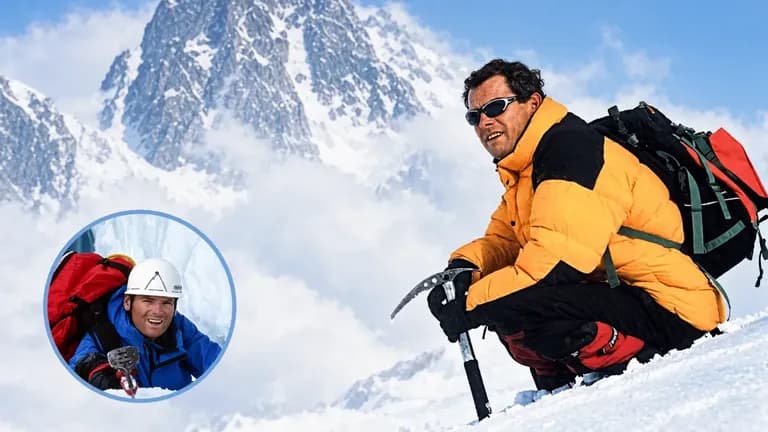
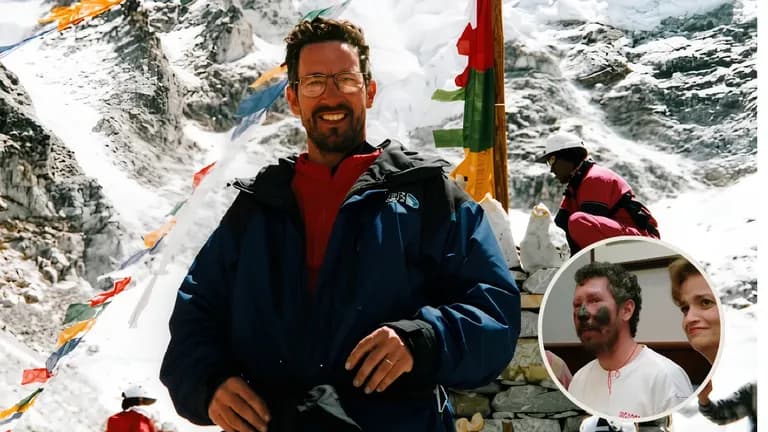
Ueli Steck, the Swiss Machine Who Climbed the Eiger in 2 Hours 23 Minutes
Ueli Steck turned Alpine climbing into a study of speed, precision and risk, racing up the Eiger in 2 hours 22 minutes.
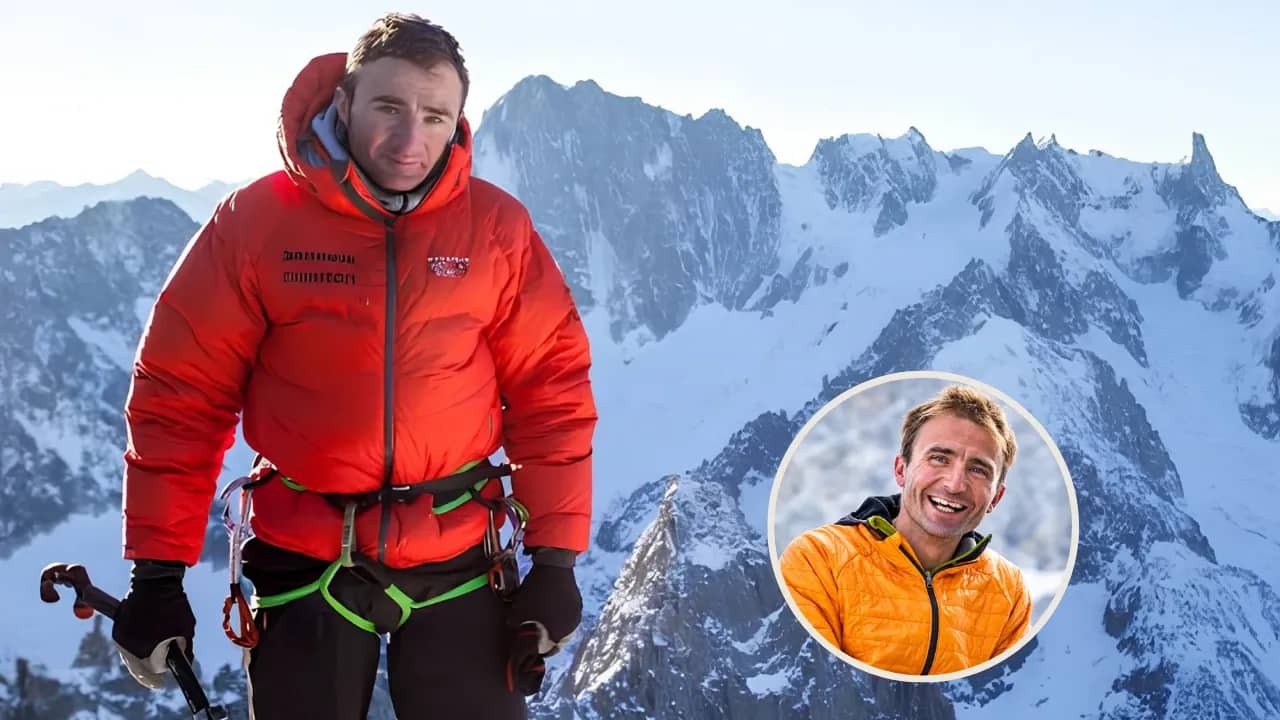
On November 16, 2015, Swiss alpinist Ueli Steck climbed the Heckmair Route on the Eiger’s north face alone in 2 hours, 22 minutes and 50 seconds. The route rises roughly 1,800 metres through steep rock, snow and ice. Steck moved across it with the speed of a runner and the precision of someone who had spent years memorizing what every movement would demand.
The ascent explains why he became known as the “Swiss Machine.” It also hides part of the story. Steck disliked the nickname, Alpine speed records are difficult to compare, and the efficiency that made his climbing look controlled could never eliminate the consequences of a mistake.
Fast Facts
- Who:
- Swiss alpinist Ueli Steck, born in 1976 and known internationally as the “Swiss Machine.”
- Geek Obsession:
- Optimizing Alpine climbing through route knowledge, endurance training, light equipment and efficient movement.
- Notable Feat:
- Soloed the Eiger’s Heckmair Route in 2 hours, 22 minutes and 50 seconds in 2015.
- How It Worked:
- Repeated practice, project-specific training and intimate route knowledge reduced hesitation and unnecessary movement.
- Most Surprising Detail:
- His first solo Eiger ascent took 10 hours; successive attempts eventually reduced that time by more than seven hours.
- Reality Check:
- Alpine times are not perfectly comparable because weather, route conditions, equipment and climbing style change.
How a Carpenter Became a Speed Specialist
Ueli Steck was born in Langnau im Emmental, Switzerland, on October 4, 1976. He discovered climbing at 12 and completed his first ascent of the Eiger’s north face in 1995, when he was 18. He trained as a carpenter, but climbing increasingly became the organizing force in his life.
According to an American Alpine Journal account of his life, Steck first soloed the Eiger north face in 2004. It took him about 10 hours. Instead of treating that as a finish, he began studying the enormous gap between his time and the fastest ascents by earlier climbers.
In 2007, he completed the route in 3 hours 54 minutes. A year of specialized preparation helped him lower that time to 2:47:33 in 2008. Dani Arnold then climbed it in 2 hours 28 minutes in 2011, giving Steck another benchmark to chase.
“I climbed solo a lot in the following years. I was not sure how to beat the record, but I didn’t care. I just want to do it faster.”
That progression matters. His final time was not the product of one reckless sprint. It grew from repeated ascents, technical familiarity and years spent learning where he could move quickly without losing control.
Training the Mountain Like an Endurance Event
Steck approached mountaineering as an athlete. In a 2010 interview, he said he trained between 30 and 40 hours a week. Some days included four or five hours of running followed by climbing.
He did not use the same program for every objective. If a route demanded difficult climbing, he devoted more time to power and technique. When his technical ability already exceeded a route’s demands, he shifted the balance toward endurance. His approach resembled Scott Jurek’s system of endurance: performance came from coordinating training, pacing, recovery and judgment rather than relying on toughness alone.
Route knowledge was another form of speed. Steck could save time because he had rehearsed decisions that slower climbers might need to make on the wall. He knew where the terrain changed, where his heart rate needed to settle and where a rushed move would create unacceptable risk.
His equipment was deliberately light, but “solo” did not always mean the same climbing style. During his 2008 Eiger ascent, he climbed free without using a rope or protection. In 2015, he used some existing gear and benefited from an established track and excellent conditions. He later said he felt more comfortable and pushed himself less aggressively than he had in 2008.
The Records That Built the Swiss Machine
The Eiger was only the most visible part of Steck’s Alpine speed project. In 2008, he completed the Colton-McIntyre Route on the north face of the Grandes Jorasses in 2 hours 21 minutes. In 2009, he climbed the Matterhorn’s classic Schmid Route in 1 hour 56 minutes. Both were reported as speed records at the time.
These ascents helped turn a niche discipline into something a general audience could visualize. Footage showed a lightly equipped climber moving rapidly across terrain where progress is normally deliberate and guarded. He appeared mechanical from a distance, although the performance depended on constant human decisions about balance, fatigue, conditions and fear.
Steck also proved that speed could support a longer journey. In 2015, he climbed all 82 recognized Alpine summits above 4,000 metres in a single 62-day push. He travelled between the mountains on foot or by bicycle and sometimes descended by paraglider. He climbed 30 summits alone and 52 with partners. The project did not break the existing 60-day record, but its continuous, non-motorized style made it one of the clearest expressions of his fast-and-light philosophy.
That combination of mountain skill and continuous movement later appeared in projects such as Kilian Jornet’s minimalist high-altitude climbing. In both cases, speed was not simply sprinting. It was an entire system built around fitness, efficiency, acclimatization and carrying less.
Why the Stopwatch Needs Context
Steck reclaimed the Eiger benchmark in 2015, but he resisted treating Alpine times like results on a standardized running track. Snow, ice, rockfall, temperature, existing tracks and fixed equipment can all change the character of a route. One climber may move through conditions that are substantially faster or safer than those faced by another.
“We can never compare ascents in a face like the Eiger. Conditions and weather are always different. But this is what makes alpinism interesting and unique. For me it is the personal challenge and your own experience that really matters.”
That is the necessary reality check behind the record. The 2:22:50 time is well documented, but it should not be interpreted as a laboratory measurement proving that one ascent was superior in every respect. Style and conditions remain part of the result.
The “Swiss Machine” label needs similar qualification. Steck acknowledged that other people had created the name, and people close to him said he disliked its cold, mechanical implications. Behind the image was a quiet, highly sensitive person who valued climbing as a personal experience, not merely as public performance.
Speed could reduce the time spent beneath unstable ice or rock, but it also narrowed the margin for correction. Solo climbing meant there might be no partner to arrest a fall, solve a problem or call for help. This was expert-level alpinism with fatal consequences if skill, equipment, terrain or luck failed. It is not an achievement that recreational climbers can safely imitate.
A Legacy Measured in More Than Minutes
Steck eventually carried his pursuit of efficiency into the Himalaya. He climbed Everest without bottled oxygen, completed rapid ascents on other 8,000-metre mountains and became one of the best-known alpinists of his generation. His influence can be seen in later projects that compress years of mountaineering into months, including Nimsdai Purja’s 14-peak Himalayan project.
On April 30, 2017, Steck fell to his death at approximately 7,100 metres on Nuptse in Nepal. He was 40 and was climbing alone during an acclimatization outing for an attempted Everest-Lhotse traverse. His death demonstrated the boundary that training and precision could reduce but never erase.
The Eiger time remains the cleanest number attached to his name, yet Steck’s own words point toward a more useful legacy. He saw speed as a way to test preparation, technique and personal limits, not as a universal measure of worth. The Swiss Machine was never really a machine. He was a climber who spent years turning thousands of small human decisions into 2 hours, 22 minutes and 50 seconds of movement.
The weekly question
From obsession to clarity — one original question every week.
We answer one noisy topic at a time, in full. No daily roundup, no thread bait — just the question, the principles, and the system.