Beck Weathers, the Everest Climber Left for Dead Who Walked Back Into Camp
Beck Weathers survived the 1996 Everest disaster after rescuers left him for dead, then somehow walked back into Camp IV.
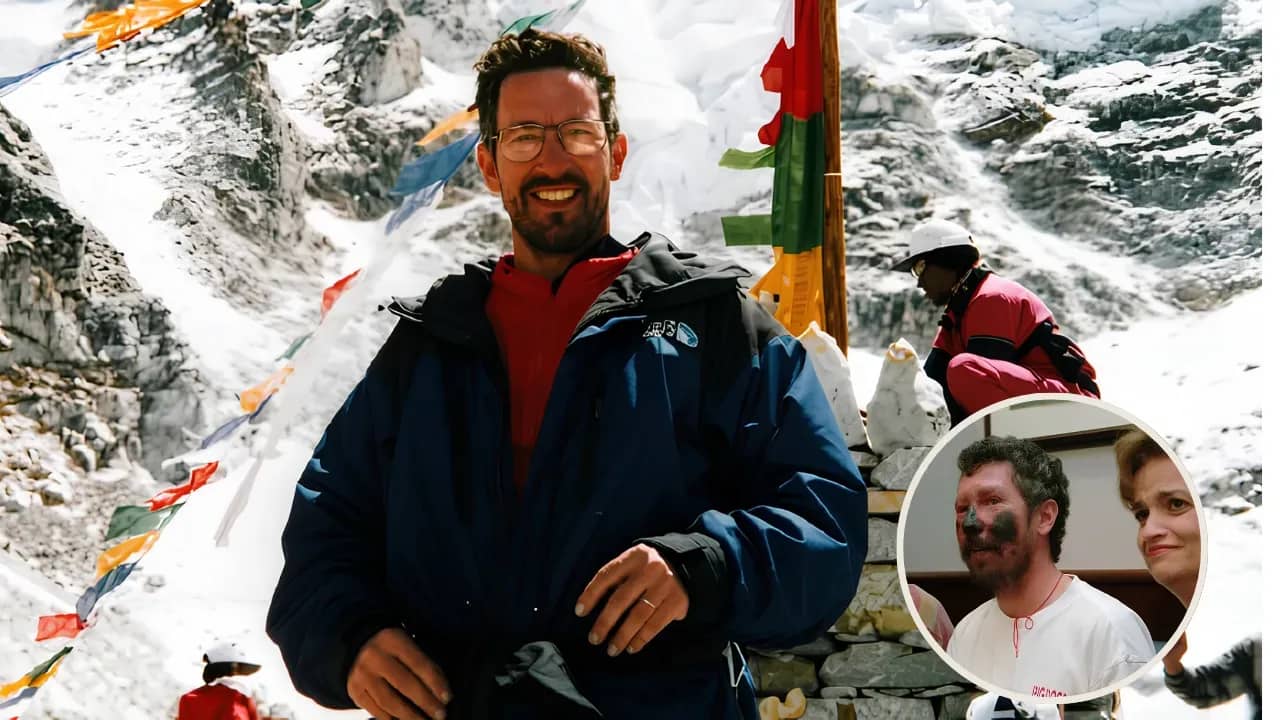
On May 11, 1996, Beck Weathers walked into Camp IV on Mount Everest after fellow climbers had concluded that he could not be saved. He had spent the night exposed near 26,000 feet, was barely able to see, and had suffered catastrophic frostbite.
His survival became one of the defining stories of the 1996 Everest disaster, which killed eight climbers over May 10 and 11. Yet the popular version, in which one frozen man simply rises and saves himself, leaves out the obsession that brought him there, the medical problem that stopped his ascent, and the exhausted team that ultimately carried his survival the rest of the way.
Fast Facts
- Who:
- Beck Weathers, a Dallas pathologist and experienced amateur mountaineer.
- Geek Obsession:
- Training for major mountains and pursuing the highest summit on each continent.
- Notable Feat:
- Survived the 1996 Everest disaster and reached Camp IV after rescuers judged him beyond saving.
- How He Survived:
- He regained consciousness and walked toward camp before a large rescue effort moved him down the mountain.
- Reality Check:
- His awakening remains medically unexplained, and climbers, Sherpas, doctors and a Nepalese pilot completed the rescue.
- What Happened Next:
- He lost his right arm and left fingers, underwent reconstructive surgery and rebuilt his family life.
Mountaineering gave Beck Weathers an escape
Weathers was a Dallas pathologist who had spent close to a decade pursuing major mountains. His interest was not casual. He trained intensely and worked toward climbing the highest peak on each continent.
Behind that drive was a long struggle with depression. Physical exhaustion quieted his thoughts, so climbing became both an outlet and an increasingly consuming obsession. The training and expeditions also pulled him away from his wife, Peach, and their two children.
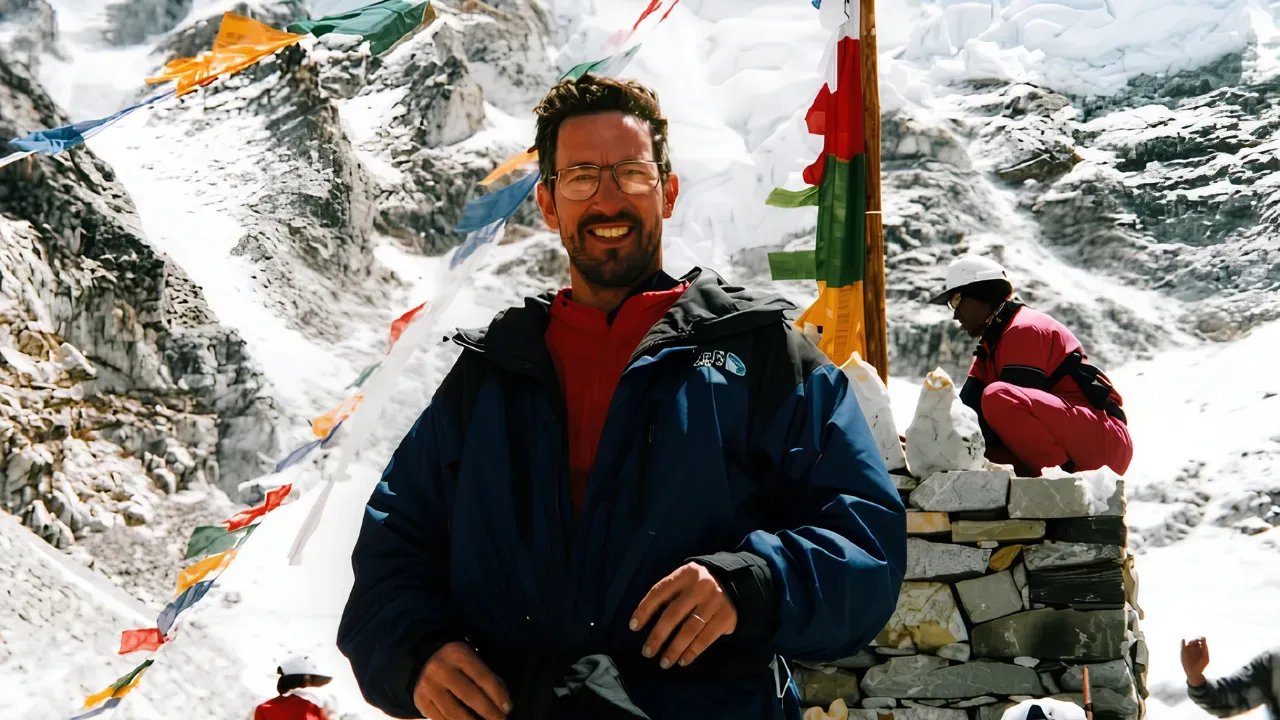
By the time he joined Rob Hall’s Adventure Consultants expedition, Everest represented the last great objective in his climbing project. The attempt depended on guides, Sherpas, fixed ropes, supplemental oxygen, acclimatization and camps positioned up the mountain. Similar support systems would later help Ranulph Fiennes reach Everest’s summit at 65. At extreme altitude, experience still depends on a network of other people.
An eye operation ended his summit attempt
Weathers left Camp IV for the summit during the night of May 9 and 10. As daylight arrived, his vision deteriorated so badly that continuing became unsafe.
He had previously undergone radial keratotomy, an older procedure that attempted to correct short-sightedness by making incisions in the cornea. Exposure to very high altitude can change vision in people who have had the operation. A report in Wilderness & Environmental Medicine confirms that Weathers’s eyesight worsened as he climbed, leaving him unable to travel safely at approximately 27,000 feet.
Hall stopped his ascent and told him to wait until the guide returned from the summit. Weathers remained in place for hours, even declining earlier opportunities to descend. Hall never came back. He became stranded high on the mountain with client Doug Hansen and died during the disaster.
Weathers eventually began descending with guide Mike Groom and other climbers. By then, a powerful storm had swallowed the South Col in wind and blowing snow. The group became disoriented despite being only a few hundred yards from the tents at Camp IV.
The decision to leave him behind
The stranded climbers huddled together as their strength and body heat disappeared. Guide Anatoli Boukreev made repeated trips from camp and brought several people back, but Weathers and Japanese climber Yasuko Namba were in such poor condition that rescuers believed neither could be moved alive.
The following morning, doctor Stuart Hutchinson and several Sherpas found them partly covered with snow and ice. Weathers was breathing and could mumble, but he could not sit up. With other climbers still missing and every rescue attempt exposing more people to danger, Hutchinson made a brutal triage decision: the search team would preserve its strength for people it had a realistic chance of saving.
Weathers’s family in Texas was told that he had died. Namba did die on the South Col.
Late that afternoon, however, Weathers regained enough awareness to move. He later suggested that sunlight absorbed by his clothing might have raised his temperature just enough for him to regain consciousness, but he never claimed to know exactly why he survived.
Unable to see more than a short distance and with his frozen arms held away from his body, he stood and began moving. He eventually found the tents. David Breashears, whose IMAX expedition helped with the rescue, described the sight of a man already pronounced dead staggering toward camp in a contemporary NOVA interview.
Walking into camp was not the end of the rescue
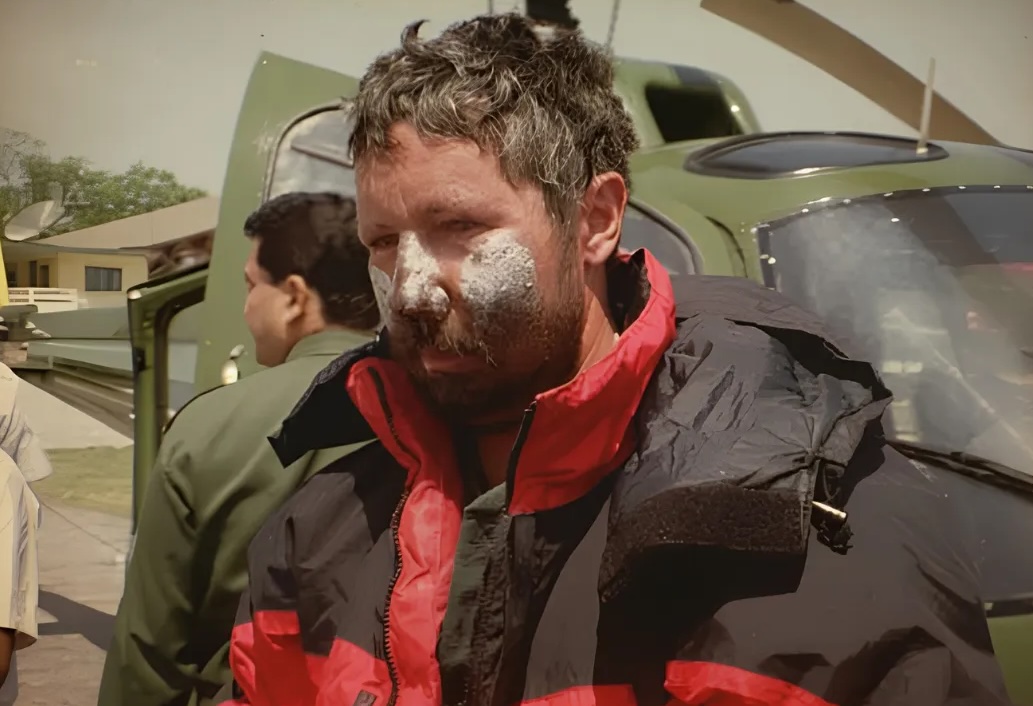
Reaching Camp IV did not mean Weathers had saved himself. He remained severely hypothermic and frostbitten, and the climbers around him did not expect him to survive another night.
By the following morning, he was drinking, eating and able to move with help. Pete Athans and Todd Burleson assisted him down from Camp IV. Breashears, Ed Viesturs, other members of the IMAX expedition, Sherpas and medical personnel helped continue the descent through terrain Weathers could not have crossed alone.
On May 13, Lieutenant Colonel Madan Khatri Chhetri of the Nepalese Army flew a helicopter to the area near Camp I. Taiwanese climber Makalu Gau was evacuated first, followed by Weathers. A NOVA report published days after the disaster placed the pickup at approximately 20,000 feet.
The fuller account does not diminish Weathers’s return to camp. It makes the survival more accurate. His decision to stand mattered, but so did the judgment, labor and risk accepted by climbers, Sherpas, doctors and a helicopter crew.
“It was my decision to be there, my legs took me there.”
The physical cost followed him home
Frostbite cost Weathers his right arm below the elbow and the fingers of his left hand. Surgeons also reconstructed his nose through a series of operations, using cartilage and tissue to build part of it on his forehead before moving it into position.
He eventually returned to pathology with assistance, but his recovery was not merely a problem of prosthetics, surgery and relearning everyday tasks. Before the expedition, Peach had decided that his absences and climbing obsession had damaged their marriage beyond repair. When he returned, she gave him a year to demonstrate that his priorities had genuinely changed.
They remained together. Weathers later wrote Left for Dead: My Journey Home from Everest with Stephen G. Michaud, framing the story around depression, family and the consequences of defining himself through achievement.
“The people in your lives are what matter first, last and always.”
What his survival really demonstrates
There is no simple physiological explanation for why Weathers regained consciousness when he did. There was no measurement of his core temperature on the South Col, and his own sunlight theory remains an informed possibility rather than a proven mechanism.
There is also no honest version of the story in which determination makes Everest safe. Weathers’s experience began with a vision problem, worsened through decisions made under pressure, and ended with permanent injuries despite professional assistance. The tension between mastery and uncontrollable risk also shaped Ueli Steck’s precision-driven speed-climbing career.
What Weathers did prove was narrower and more human. A man whom experienced rescuers believed could not be saved found enough awareness to stand and move toward camp. Other people then supplied the skill, strength, treatment and aircraft needed to bring him home.
Everest ended his mountaineering career, but it also forced him to confront what the obsession had cost. The most important journey in his account was not the distance from the snow to Camp IV. It was the longer return to the family he had nearly left behind.
The weekly question
From obsession to clarity — one original question every week.
We answer one noisy topic at a time, in full. No daily roundup, no thread bait — just the question, the principles, and the system.