Nampons After Shark Tank: Deal, Sales and 2026 Status
Nampons is active after Shark Tank. See whether its $350,000 deal closed, how the business works, current pricing and its 2026 status.
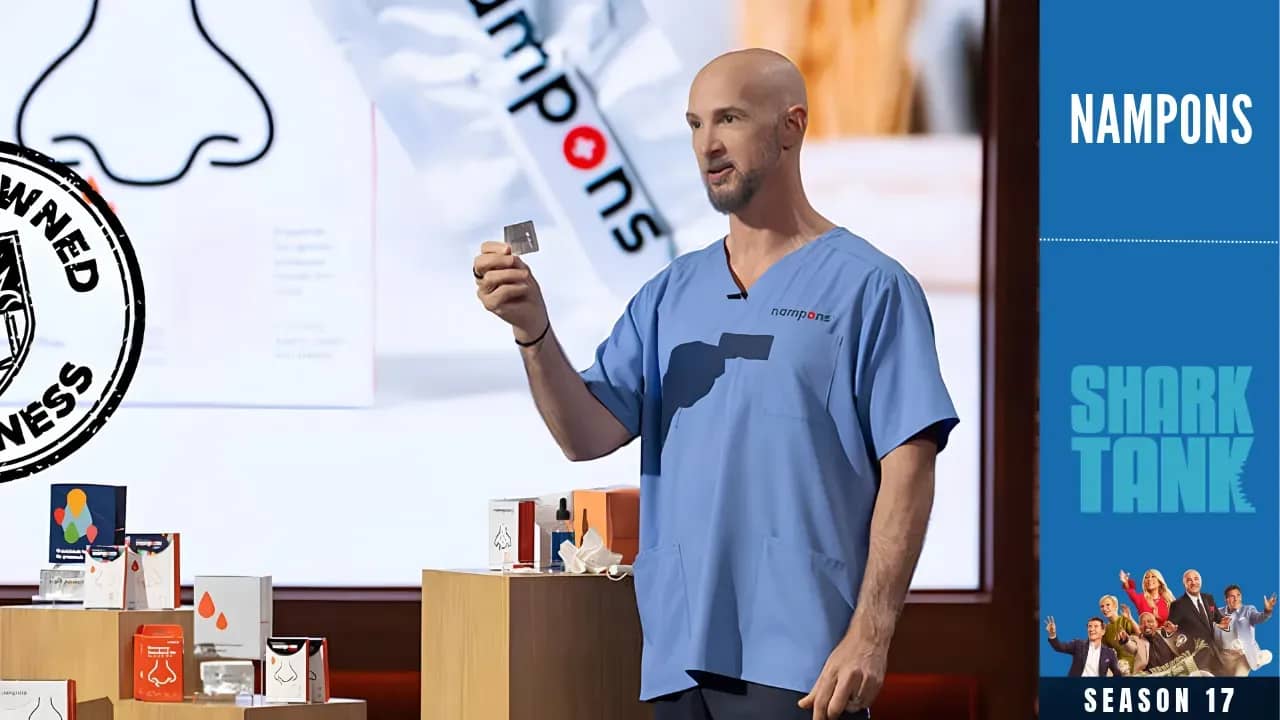
Few products show the difference between inventing a useful object and building a scalable company as clearly as Nampons. The product solves one narrow problem: stopping common nosebleeds without stuffing the nose with tissues. Yet turning that solution into a consumer-health category required medical credibility, customer education, strong margins, and national distribution.
Founder Joshua Lippiner brought all four elements to Shark Tank. He also brought a $7 million valuation that the Sharks considered too aggressive. The resulting negotiation became a useful case study in how founders can use a temporary royalty to bridge a valuation gap.
The business has continued operating since the episode aired. Nampons now markets adult, children’s, and emergency-kit products through its website, Amazon, and Walmart channels. The company also reports more than three million units sold.
However, one question remains unresolved. Josh accepted a deal with Robert Herjavec and Michael Strahan, and later discussed their support. No public filing or explicit founder confirmation establishes that the investment completed due diligence.
This case file examines the product, pitch economics, post-show evidence, and lessons behind one of the more unusual businesses featured in Shark Tank Season 17.
Quick answer: Nampons remains in business as of October 2026. Its website and marketplace listings are active, and the company reports distribution through more than 1,200 Walmart stores. Josh accepted $350,000 from Robert Herjavec and Michael Strahan for 10% equity, plus a temporary $0.10-per-unit royalty. Public evidence suggests the Sharks supported the company after airing, but the deal’s legal closing has not been conclusively confirmed.
| Nampons at a glance | Details |
|---|---|
| Company | Nampons LLC |
| Founder | Joshua Lippiner |
| Product | Single-use nasal plugs for mild to moderate nosebleeds |
| Industry | First aid and consumer health |
| Shark Tank appearance | Season 17, Episode 8 |
| Air date | January 7, 2026 |
| Original ask | $350,000 for 5% |
| On-air deal | $350,000 for 10% plus a temporary $0.10-per-unit royalty |
| Sharks | Robert Herjavec and Michael Strahan |
| Deal status | Accepted on air; final closing remains publicly unconfirmed |
| Current status | Active and selling |
| Official website | nampons.com |
Latest update — October 20, 2026: Nampons has active product listings, adult and children’s variants, an emergency kit, and retail availability that the company says includes more than 1,200 Walmart stores. The company reports more than three million units sold. Its accepted Shark Tank deal has not been publicly confirmed as closed.
What Is Nampons?
Nampons are small, absorbent nasal plugs designed for mild to moderate nosebleeds. Instead of pinching loose tissue against the nostril, a user inserts the soft cylindrical product into the bleeding side of the nose. The company says the material expands as it absorbs blood and applies gentle pressure to help a clot form.
The idea is deliberately simple. Traditional first-aid advice often involves leaning forward, pinching the soft part of the nose, and waiting. In real life, people also reach for tissues, gauze, or paper towels. Those improvised materials can be awkward, visible, and difficult to keep in place. Nampons packages a cleaner, more discreet option in individually wrapped units.
The current lineup includes products sized for adults, a smaller children’s version, and an Emergency Nosebleed Kit with plugs and supporting supplies. This creates several use cases: home first-aid cabinets, schools, sports bags, travel kits, offices, and healthcare settings.
Nampons describes itself as FDA registered. That wording matters. Registration or device listing is not the same as FDA approval, and consumers should not interpret it as an agency endorsement. The product is intended for routine nosebleeds; bleeding that is severe, follows a major injury, causes breathing difficulty, or does not stop requires medical attention.
Who Founded Nampons?
Joshua Lippiner is a Lehigh University graduate and serial entrepreneur whose career combined finance, operations, and consumer-product experience. The nosebleed idea emerged from a recurring family problem: his children experienced frequent nosebleeds, while the available solutions felt either clinical or improvised.
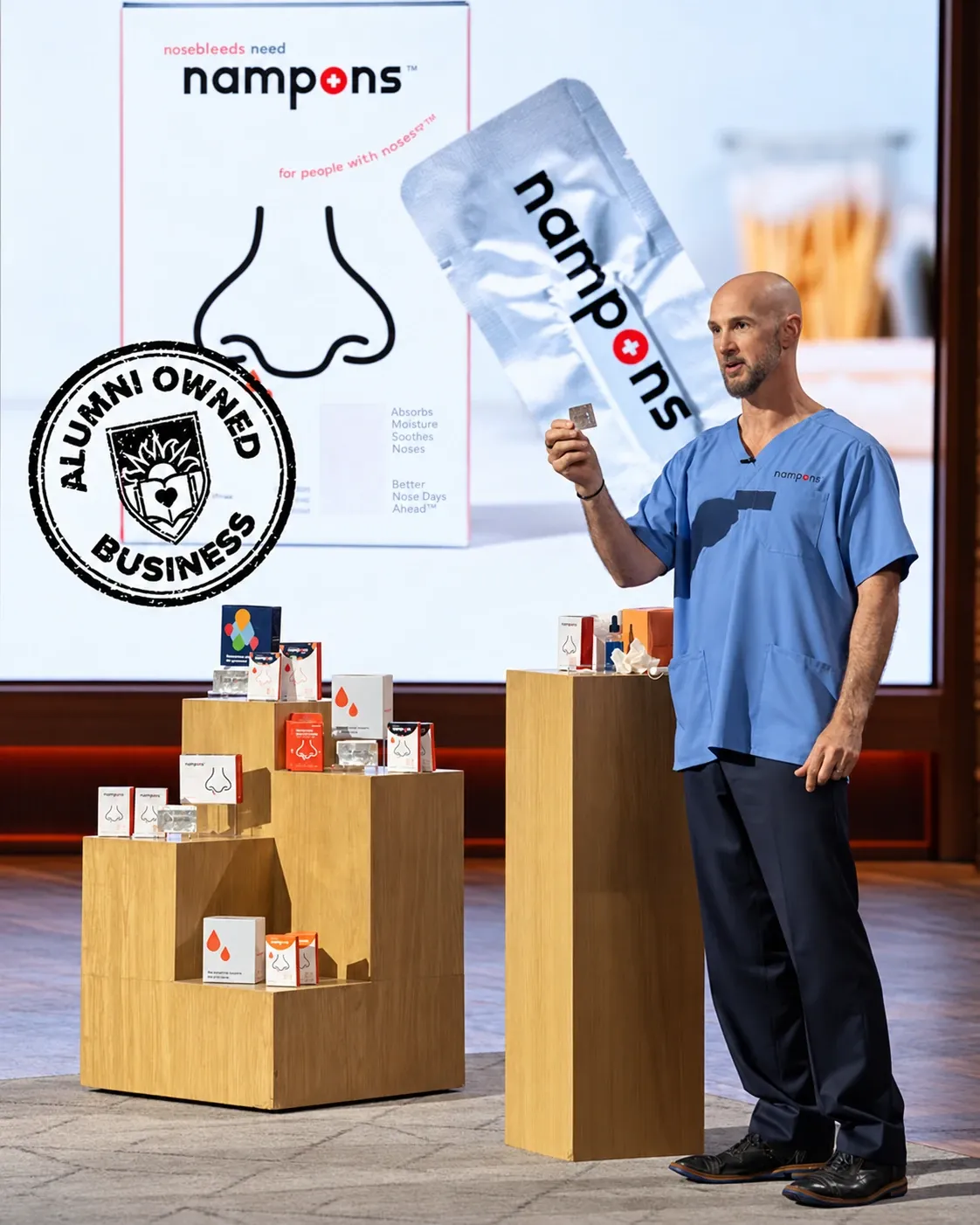
That founder-product connection helped his pitch. Josh was not searching for a novelty item to market. He had experienced the frustration, understood the embarrassment of a visible nosebleed, and recognized that the first-aid aisle lacked a product designed around convenience and dignity.
In a Lehigh University alumni interview, he described the opportunity plainly:
“Not having the right product out there for nosebleeds is crazy in retrospect.”
Joshua Lippiner, Lehigh University interview
Nampons launched in 2021. From there, Josh had to solve a challenge common to new healthcare-adjacent products: explain the mechanism without making exaggerated medical claims, earn trust, and put the product where customers naturally shop for first aid.
| Founder timeline | Milestone |
|---|---|
| Before Nampons | Built experience across finance, operations, and entrepreneurial ventures |
| Product origin | Sought a better response to his children’s recurring nosebleeds |
| 2021 | Launched Nampons commercially |
| 2024–2025 period discussed in the Tank | Scaled direct-to-consumer, Amazon, and wholesale sales |
| January 2026 | Pitched on Shark Tank Season 17 |
| October 2026 | Company remains active with expanded products and national retail reach |
What Happened to Nampons on Shark Tank?
Nampons appeared on Shark Tank Season 17, Episode 8. Josh asked for $350,000 in exchange for 5% of the company, implying a $7 million valuation.
His demonstration made the problem instantly understandable. The product was compact, easy to show, and memorable enough to provoke both humor and serious questions. The Sharks quickly moved past the name to examine the business.
Josh said Nampons had produced about $1.1 million in an earlier year, then approximately $3.4 million in the prior year, with $3.8 million projected for the current year discussed in the pitch. He reported roughly $800,000 in profit in the prior year but expected only about $200,000 in the projection year because the company was investing in wholesale growth and inventory.
Channel mix was central to the conversation. Josh said direct-to-consumer and Amazon revenue had been about $2 million in the prior year and was projected to rise to roughly $3 million. Wholesale added reach, but the working-capital demands and lower contribution profile helped explain why revenue growth did not translate into comparable profit growth.
The unit economics were strong. A six-pack sold for $15.99 and cost $3.61, implying a gross margin of about 77.4% before fulfillment, platform fees, marketing, and overhead. A 12-pack sold for $24.99 and cost $7.86, implying about 68.5% on the same limited basis.
Kevin O’Leary focused on the valuation and financial efficiency. Robert Herjavec and guest Shark Michael Strahan saw the consumer opportunity but also wanted protection against paying too much for equity. Their solution was a combined equity-and-royalty structure.
| Pitch term | Details |
|---|---|
| Founder’s ask | $350,000 for 5% |
| Implied valuation | $7 million |
| Accepted offer | $350,000 for 10% |
| Royalty | $0.10 per individual unit until the $350,000 investment is repaid |
| Implied post-money valuation | $3.5 million |
| Units needed to repay principal | 3.5 million individual units |
| Sharks | Robert Herjavec and Michael Strahan |
Josh accepted the offer. The royalty was temporary rather than perpetual, making it less damaging to long-term margins while giving the Sharks a path to recover capital. For the founder, the structure preserved a higher valuation than a larger equity sale might have produced.
How Does Nampons Make Money?
Nampons follows a hybrid consumer-health model. The company sells direct for higher gross revenue per order, uses Amazon to capture product-search demand, and relies on retail distribution for scale and visibility. Its small, lightweight format also makes multipacks practical and supports repeat purchases by families and institutions dealing with recurring nosebleeds.
| Revenue channel | Role in the business | Main trade-off |
|---|---|---|
| Company website | Higher-control sales, education, product bundles, and customer data | Requires traffic acquisition and fulfillment |
| Amazon | Captures high-intent searches and provides review-based trust | Platform fees and dependence on marketplace rules |
| Retail and wholesale | National reach, shelf discovery, and institutional credibility | Lower margins, inventory demands, and retailer payment terms |
| Multipacks and kits | Raises order value and serves different use cases | More SKUs and inventory complexity |
The pitch numbers suggest attractive product-level margins but also show why cash flow matters. Retail growth often requires production before revenue arrives. That can cause profit to fall even while sales rise, especially when the company builds inventory, pays for placement, or extends wholesale terms.
| Financial signal from the pitch | Reported figure | What it suggests |
|---|---|---|
| Prior-year revenue | About $3.4 million | Meaningful demand before the episode |
| Projected revenue | About $3.8 million | Growth was continuing, though not explosively |
| Prior-year profit | About $800,000 | Business had demonstrated profitability |
| Projected profit | About $200,000 | Wholesale expansion and inventory were absorbing cash |
| Six-pack product gross margin | About 77.4% | Strong before fulfillment, marketing, platform fees, and overhead |
| 12-pack product gross margin | About 68.5% | Still healthy despite a lower per-unit selling price |
The model resembles other first-aid founders that must balance purpose, compliance, and mass retail. The Warrior Kid Medic case shows how product education can become part of the customer-acquisition strategy rather than a separate marketing task.
What Happened to Nampons After Shark Tank?
Post-show evidence points to an operating business rather than a short-lived television spike. Josh told Lehigh that the episode created a surge of attention and demand. Nampons continued selling through its own site and Amazon, and the company expanded retail distribution.
The strongest growth claim comes from the company itself: Nampons says it has sold more than three million units and is available in more than 1,200 Walmart stores. Those figures are meaningful, but they should be read as company-reported because detailed retailer sell-through data and audited financial statements are not public.
The product range also broadened. Adult and children’s packs address different fit requirements, while the Emergency Nosebleed Kit turns the core plug into a more complete first-aid solution. This is a sensible adjacent expansion because it serves the same problem and customer rather than pushing the brand into an unrelated category.
The accepted deal needs more careful treatment. A television handshake is not the same as a completed investment. Shark Tank deals typically undergo due diligence after filming, and terms can change or fail to close. Josh has publicly referred to Robert and Michael’s help, which suggests a continuing relationship, but we found no definitive public statement that the exact on-air contract closed. The most accurate classification is therefore accepted on air; final status unconfirmed.
That distinction matters in Shark Tank reporting. For comparison, our PeeSport update also separates the televised outcome from evidence about what happened afterward.
| Current-status check | Evidence as of October 2026 | Assessment |
|---|---|---|
| Official website | Active with products available | Verified |
| Amazon presence | Active adult product listing with 4.6/5 rating and roughly 2,800 reviews when checked | Verified listing; rating can change |
| Retail distribution | Company reports more than 1,200 Walmart stores | Company-reported |
| Units sold | Company reports more than three million | Company-reported |
| Product expansion | Adult, children’s, and emergency-kit options | Verified on active listings |
| Shark deal | Accepted on air; founder later discussed the Sharks’ support | Exact legal closing not publicly confirmed |
| Date | Business milestone |
|---|---|
| 2021 | Nampons launched |
| Before filming | Business reached multimillion-dollar annual sales and expanded into wholesale |
| January 7, 2026 | Episode aired; Josh accepted Robert and Michael’s offer |
| After airing | Traffic and demand increased following national exposure |
| 2026 | Product line and reported national retail reach continued to expand |
| October 20, 2026 | Website, Amazon listing, and store-locator presence remained active |
Where Can You Buy Nampons?
The broadest product selection is available from the official Nampons website. At the time of this update, an adult six-pack and children’s six-pack were each listed at $15.99, an adult 12-pack at $24.99, and the Emergency Nosebleed Kit at $6.99. Prices, stock, and promotions can change.
Customers can also check the active Nampons listing on Amazon. For physical retail, the company provides a store locator; local inventory should be confirmed before making a trip.
Lessons From Nampons’ Journey and Final Take
First, an obvious problem can still be commercially overlooked. Nosebleeds are common, yet many people still improvise with household materials. Nampons did not invent a new medical event; it packaged a more convenient response.
Second, margins do not eliminate working-capital pressure. The pitch showed strong product-level economics alongside a projected profit decline. Wholesale growth can consume cash through inventory, fulfillment, and retailer payment cycles even when each unit is profitable on paper.
Third, deal structure can resolve a valuation deadlock. Robert and Michael did not simply accept Josh’s $7 million valuation. They used more equity plus a temporary royalty to improve their downside protection. Josh traded some economics for two partners and national exposure.
Fourth, evidence should be labeled by strength. Active listings and public pricing can be verified directly. Distribution and lifetime-unit figures are company-reported. The investment’s closing status is unknown. Keeping those categories separate produces a more useful business case file than repeating marketing claims as settled fact.
Finally, memorable branding is valuable only when the product earns trust. The Nampons name made the pitch hard to forget, but retail expansion depended on packaging, instructions, reviews, and a credible consumer-health proposition. A related example is the Snorinator Shark Tank update, where a highly specific physical problem also demanded careful explanation.
Nampons appears to have used Shark Tank as an accelerator rather than a rescue. It entered the Tank with substantial revenue, accepted a creatively structured deal, and remained active through October 2026. The company’s next test is not whether people remember the pitch. It is whether Nampons can turn a familiar emergency into a durable first-aid category while maintaining margins and trust at retail scale.
Frequently Asked Questions
Is Nampons still in business?
Yes. As of October 20, 2026, Nampons has an active website, active marketplace listings, multiple product formats, and a store-locator presence. The company reports distribution through more than 1,200 Walmart stores.
Did the Nampons Shark Tank deal close?
The exact closing status is not publicly confirmed. Joshua Lippiner accepted Robert Herjavec and Michael Strahan’s offer on air and later discussed their support, but we found no definitive public statement confirming that the original contract completed due diligence unchanged.
What was the final Nampons Shark Tank deal?
Josh accepted $350,000 for 10% equity from Robert Herjavec and Michael Strahan, plus a $0.10 royalty on each individual unit until the $350,000 investment was repaid.
Who founded Nampons?
Joshua Lippiner founded Nampons. He developed the concept after dealing with frequent nosebleeds in his family and launched the product in 2021.
How much do Nampons cost?
When checked on October 20, 2026, the company listed adult and children’s six-packs at $15.99, an adult 12-pack at $24.99, and the Emergency Nosebleed Kit at $6.99. Retailer pricing may differ and can change.
Where can I buy Nampons?
Nampons are available from the company’s website, Amazon, and participating physical retailers. The brand’s store locator can help identify nearby locations, although shoppers should verify local stock.
Is Nampons patented?
Josh described the product as protected during the pitch. Patent scope and status can change, so readers evaluating intellectual property should consult current USPTO records or the company rather than treating the television discussion as legal verification.
How much revenue has Nampons made?
During the pitch, Josh reported about $3.4 million in prior-year revenue and projected roughly $3.8 million for the current year discussed on the show. The company has not published audited post-show revenue. It separately reports more than three million units sold.
The weekly question
From obsession to clarity — one original question every week.
We answer one noisy topic at a time, in full. No daily roundup, no thread bait — just the question, the principles, and the system.