
Forte3D Shark Tank Update: Lori’s Deal, New Violins, and the Challenge of Scaling
Forte3D won Lori Greiner over with a 3D-printed cello, but turning that performance into a lasting business is the bigger test.
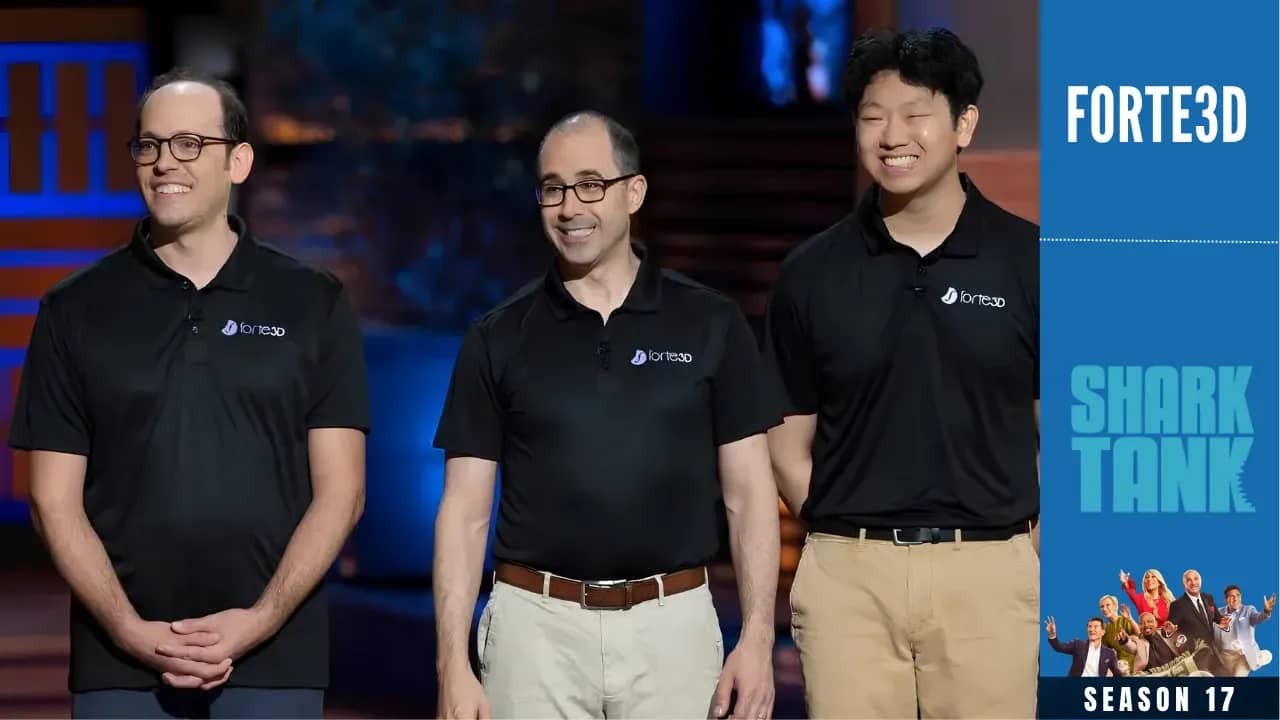
Forte3D now sells both cellos and violins, giving its Shark Tank pitch a tangible follow-through. The company has moved beyond demonstrating an unusual instrument. It must now show that musicians will keep buying instruments made through an unfamiliar process.
That makes the business interesting beyond television. A cello can sound convincing during a short performance, yet building a dependable instrument company requires much more. Customers need consistent quality, reliable delivery, useful support, and confidence that their purchase will suit their playing.
Founders Alfred Goodrich and Elijah Lee approached that challenge with a mix of musical knowledge and engineering. Their hybrid instruments combine carbon fiber, printed components, and traditional parts. The aim is to make performance-oriented instruments more accessible while reducing familiar ownership problems.
The team accepted Lori Greiner’s offer during Shark Tank Season 17. Since then, reported sales growth and a broader lineup have provided encouraging signals. This case file examines what those signals establish, where the evidence remains limited, and what the business can teach founders.
| Company | Forte3D |
|---|---|
| Founders | Alfred Goodrich and Elijah Lee |
| Musical adviser | Mike Block, who joined in early 2024 |
| Product | Hybrid carbon-fiber and 3D-printed acoustic string instruments |
| Industry | Musical instruments |
| Shark Tank episode | Season 17, Episode 6; November 12, 2025 |
| Deal status | $250,000 for 16% accepted on air; closure unverified |
| Current status | Active, with an expanded product lineup |
| Website | forte3d.com |
Latest update: September 2026
- - The official catalog lists both cellos and violins.
- - Base prices are $2,950 for the cello and $1,495 for the violin.
- - Smaller instruments and violas remain development opportunities.
- - Current financial results and investment closure remain unverified.
What Is Forte3D?
Forte3D makes acoustic string instruments using a hybrid construction method. Printed components form parts of the structure, while carbon-fiber panels form the top and back. Traditional wooden components remain part of the instrument.
The result targets musicians who want an alternative to conventional wooden instruments. Portability, durability, sound, and price all form part of the proposition. These benefits may matter differently to a touring player, an adult learner, or a teacher.
Goodrich’s development story, documented by Autodesk, involved learning design software and repeatedly refining the instrument. That process matters commercially: the team can test design changes without carving an entirely new wooden body.
However, accessible pricing depends on the comparison. A roughly $3,000 cello may appeal to someone considering a costly professional instrument. It remains a substantial purchase for a beginner. The strongest business case starts with a specific musician and need.
Who Founded Forte3D?
Alfred Goodrich founded Forte3D with Elijah Lee. Goodrich brought professional music and teaching experience. Lee brought engineering interests and experience as a cellist.
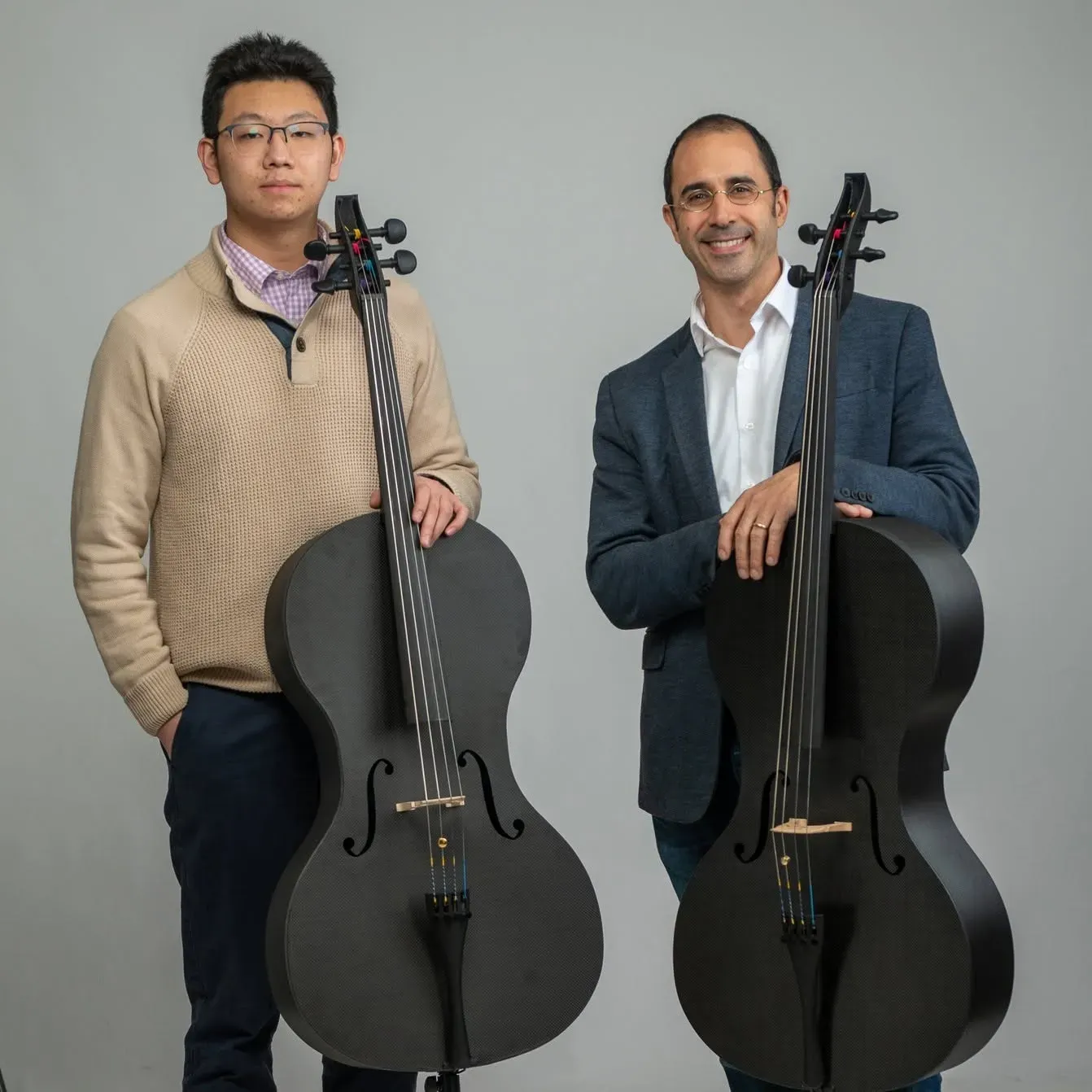
Their connection began in an orchestra classroom. Goodrich was Lee’s director when the idea of printing an instrument emerged. They built a custom printer and developed prototypes together, according to a Yale Ventures founder profile.
Mike Block joined in early 2024 and became chief musical adviser. His role added performance expertise and artist relationships. Calling all three original founders would blur that documented sequence.
| Period | Development |
|---|---|
| Before launch | Goodrich and Lee connect through music education and develop the instrument concept. |
| Development years | They build a custom printer and refine their designs through repeated prototypes. |
| Early 2024 | Block joins the company. |
| 2025 | The three present Forte3D on Shark Tank. |
| February 2026 | Lee discusses the next stage of expansion with Yale Ventures. |
The team’s advantage begins with understanding the customer’s problem. Engineering supports that knowledge, but musicians still decide whether the finished instrument earns their trust.
What Happened on Shark Tank?
The team asked for $250,000 for 10%, implying a $2.5 million post-money valuation. Block’s performance helped the Sharks hear the product before examining the business.
The founders said their cello sold for $3,000 and cost $800 to manufacture. They reported $350,000 in 2024 sales and projected approximately $500,000 for the filming year. These were company claims made during the pitch.
The Sharks questioned the size of the opportunity and how an investor would recover the money. Daymond John stepped away because he did not consider himself the right category partner. The performance impressed the room, but investment suitability remained a separate question.
| Stage | Terms |
|---|---|
| Original ask | $250,000 for 10% |
| Ask valuation | $2.5 million post-money |
| Lori’s first offer | $250,000 for 18% |
| Kevin’s offer | $250,000 for 10%, plus $100 per unit until $250,000 was repaid |
| Founder counter to Lori | 15% equity |
| Accepted agreement | $250,000 for 16% with Lori Greiner |
| Final implied valuation | $1,562,500 post-money; $1,312,500 pre-money |
“I'll do it for 16.”
— Lori Greiner
The founders accepted. Their choice exchanged more ownership for an agreement without Kevin’s proposed per-unit payment.
The episode also featured Tantos, which left without a deal. Together, the pitches show why an appealing product does not produce the same investment decision in every category.
How Does Forte3D Make Money?
Forte3D earns revenue from instruments, customized finishes, complete outfits, and accessories. Its website supports direct sales, while specialist retailers also list its products.
| Component | How it works |
|---|---|
| Customers | Adult learners, advancing players, and professionals |
| Value proposition | A different combination of performance, price, and practicality |
| Revenue model | Instrument sales, customization, outfits, and accessories |
| Channels | Direct website and specialist retailers |
| Advantages | Design knowledge, musician credibility, and relevant intellectual property |
| Risks | Purchase infrequency, assembly capacity, acquisition costs, and service requirements |
The pitch figures leave $2,200 between the cello’s selling price and stated manufacturing cost. That equals approximately 73.3% of revenue. It does not establish net profit or a fully measured gross margin.
Customer acquisition, shipping, returns, overhead, and any excluded labor still need funding. The gap between product margin and operating profit also matters in Alchemize Fightwear, another niche business that attracted Lori.
Forte3D’s intellectual-property claim has concrete support. U.S. patent 12,094,439 B2 names Goodrich and Lee as inventors and Forte3D LLC as assignee. Granted September 17, 2024, it describes a particular stringed-instrument structure. It does not grant ownership of every use of 3D printing in music.
What Happened After Shark Tank?
Reported demand rose, but the baseline remains private
Goodrich described a substantial sales increase following the broadcast. In reporting carried by VISTA Today from Philadelphia Business Journal, he said:
“I’d say we’re at least 20 times our weekly revenue.”
— Alfred Goodrich, quoted in November 2025 business reporting.
That is an encouraging demand signal. However, the report does not disclose the earlier weekly revenue or show how long the increase lasted. Multiplying the claim into an annual forecast would create precision the evidence cannot support.
| Period | Reported figure | Evidence limit |
|---|---|---|
| 2022 | $30,000 | Founder-reported during pitch |
| 2023 | $150,000 | Founder-reported during pitch |
| 2024 | $350,000 | Founder-reported during pitch |
| Aggregate at pitch | $570,000 | Listed annual figures total $530,000 |
| Filming-year forecast | Approximately $500,000 | Achievement not verified |
| After broadcast | At least 20 times prior weekly revenue | Founder claim; dollar baseline unspecified |
| Current annual revenue | Not verified | No dependable public total located |
The $40,000 difference could reflect another reporting period, rounding, or omitted context. None is confirmed. Leaving the discrepancy visible is more useful than silently choosing one total.
The violin moved beyond the pitch prototype
During filming, the violin was still a late prototype. Yale Engineering reported its launch by December 2025. The current catalog confirms that violins are now part of the commercial range.
The February 2026 Yale Ventures profile describes plans to expand capacity, raise capital, and develop violas and smaller instruments. These plans could extend the customer base. They do not establish completed fundraising or signed school contracts.
Did Lori’s investment close?
The accepted television offer is well supported. Public coverage often describes it as an investment, but the sources reviewed do not explicitly document post-filming completion.
The appropriate classification remains unclear. That does not mean the agreement failed. It means the public evidence is stronger on the televised negotiation than on the private closing process.
| Signal | Evidence | Assessment |
|---|---|---|
| Website | Official catalog and support pages remain accessible | Active commercial presence |
| Product availability | Cellos, violins, and accessories listed | Catalog confirmed; immediate stock varies |
| Social activity | Company-linked social profiles remain identifiable | Recent posting frequency not verified |
| Deal status | On-air agreement corroborated | Private closure unclear |
| Latest dated founder update located | February 2026 Yale Ventures profile | Expansion plans documented |
| Business status | Broader lineup and reported demand growth | Active; current profitability unknown |
Company timeline
| Year | Milestone |
|---|---|
| 2022 | First sales year identified in the pitch; relevant patent application filed. |
| 2023 | Reported sales reach $150,000. |
| 2024 | Block joins; U.S. patent granted; reported sales reach $350,000. |
| 2025 | Shark Tank airs, Lori’s offer is accepted, and violin launch is documented. |
| 2026 | Expansion plans receive further coverage; both instruments remain listed. |
The evidence supports progress after television. It cannot isolate how much growth came from the show, the violin launch, existing artist relationships, or other marketing.
Where Can You Buy Forte3D?
The official Forte3D catalog is the clearest starting point for current models and customization.
| Product | Listed price |
|---|---|
| Carbon-fiber cello | $2,950 |
| Carbon-fiber violin | $1,495 |
| Complete cello outfit | $3,795 |
| Complete violin outfit | $1,875 |
Fiddlershop also lists the cello, although its checked listing showed sold out. Official product-page text contained conflicting stock cues, so a listing should not be treated as an immediate-shipping promise.
The company FAQ allows up to three weeks for preparation, plus additional time for custom orders. The homepage gives a shorter estimate. Confirm timing directly before ordering. International shipping is offered, and the return policy assigns insured return-shipping costs to the buyer.
Lessons From Forte3D’s Journey
Define the reachable customer
A large industry figure cannot answer how many customers a young company can serve. Forte3D needs evidence about specific buyers, their budgets, and their reasons for choosing this instrument. Those details would strengthen both marketing and valuation arguments.
Compare equity with the cash cost of a royalty
Kevin’s proposed $100 royalty would require 2,500 qualifying units to repay $250,000. At the pitch prices, it represented 3.3% of cello revenue and approximately 5.6% of proposed violin revenue.
Lori’s accepted offer involved six additional percentage points of ownership compared with Kevin’s equity request. The founders chose that tradeoff, but future results are needed to judge its financial outcome.
Design capacity around the complete order
Printing components quickly does not eliminate assembly, setup, testing, and support. The growth question is how many satisfactory instruments the company can deliver reliably.
Orka Bar presents a different version of the same operating lesson: demand and delivery capability must develop together. For Forte3D, reducing dependence on individual hand assembly could matter as much as increasing publicity.
Final take
Forte3D has several assets that deserve attention: complementary founders, a relevant granted patent, a working product, and a wider range than it presented during filming. Those developments give the business substance beyond its television appearance.
The next useful evidence would be sustained sales, dependable delivery times, broader customer adoption, and clearer investment disclosure. Each would help show whether early attention has become a durable business.
For founders, the lesson is to connect invention with operating discipline. A persuasive demonstration can open doors. Long-term value depends on delivering the promised experience repeatedly, at a cost that leaves enough money to support customers and keep improving the product.
Forte3D FAQs
Is Forte3D still in business?
Its active catalog and support pages support continued operations as of September 16, 2026.
What deal did Forte3D receive on Shark Tank?
The team accepted $250,000 for 16% equity from Lori Greiner.
Did the Forte3D deal close after filming?
Post-filming completion could not be verified. The on-air agreement is confirmed.
Who founded Forte3D?
Alfred Goodrich and Elijah Lee founded the company. Mike Block joined in early 2024 as a musical adviser.
How much do Forte3D instruments cost?
The checked base prices were $2,950 for the cello and $1,495 for the violin. Outfits and custom options cost more.
How much revenue does Forte3D make?
Current annual revenue is unverified. Historical pitch figures and the reported post-show surge should not be presented as current audited results.
Does Forte3D sell smaller instruments for children?
The checked FAQ lists full-size cellos and violins, with fractional sizes in development.
The weekly question
From obsession to clarity — one original question every week.
We answer one noisy topic at a time, in full. No daily roundup, no thread bait — just the question, the principles, and the system.
More from Shark Tank USA Season 17
All season pitches
Shark Tank USA
Bauble Stockings After Shark Tank: Barbara’s Deal, Current Status and the Premium-Brand Risk

Shark Tank USA
McMiLLER After Shark Tank: Daniel Lubetzky’s Deal, Retail Growth, and the Viral-Game Risk

Shark Tank USA