Face Blok Shark Tank Update: What Became of Irina Blok’s Masks?
Irina Blok’s 2009 mask pitch drew fresh attention years later. Separate the documented design project from unverified relaunch and sales claims.


A face mask can communicate more than its practical purpose. Designer Irina Blok explored that idea in 2009 by adding playful graphics to an otherwise plain object.
Her Face Blok project reached Shark Tank during the swine-flu era. The Sharks declined to invest, and the original business did not become a clearly documented long-running retail operation.
Years later, widespread mask use brought new attention to the old pitch. That makes the story tempting to rewrite as an obvious missed fortune. The evidence supports a more careful account: a documented design project, a rejected investment request, and later media interest.
Blok’s own portfolio preserves the project and explains how it began. It does not establish a current Face Blok store, pandemic-era sales, or a revived company. This update keeps those different kinds of evidence separate.
Quick answer: Irina Blok requested $50,000 for 30% of Face Blok and left Shark Tank Season 1 without a deal. Her official portfolio documents the 2009 fashion-mask concept and its early online attention. Later media returned to the pitch during the pandemic, but that interest does not establish that Face Blok resumed selling products. Retrospective coverage describes the original venture as discontinued, and no current official ordering channel was verified. Current status: preserved as a design project; ongoing Face Blok retail operations are unverified.

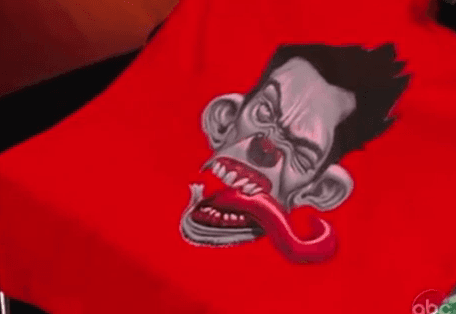
A novelty mask design associated with Face Blok. Image via Shark Tank Blog.
What was Face Blok?
Face Blok proposed masks decorated with graphics and humorous designs. The idea was to change how an everyday object looked and how people responded to it.
| Product snapshot | Details |
|---|---|
| Designer | Irina Blok |
| Project | Decorated novelty masks |
| Origin documented by designer | 2009 |
| Intended distinction | Playful visual designs |
| Appearance | Shark Tank USA Season 1, Episode 5 |
In her official project history, Blok says she began with a digital mockup that attracted online attention. She describes requests from people interested in buying the designs and the need to work out production.
That is a useful distinction: an image can demonstrate an aesthetic idea before a complete product business exists.
The portfolio’s statements about intended health-related uses are not independent performance evidence. This update makes no claim that the novelty designs offered a particular level of medical protection.
Why did the Sharks pass?
Blok sought $50,000 for 30% of the business. The pitch ended without an accepted offer.
Shark Tank Blog’s account describes the designs attracting interest but the business failing to persuade the investors about demand and orders.
| Deal snapshot | Result |
|---|---|
| Requested investment | $50,000 |
| Equity offered | 30% |
| Implied asking valuation | About $166,667 |
| Accepted offer | None |
| Shark investor | None |
The implied valuation is a calculation from the request. It is not a current business value or a measure of Blok’s personal wealth.
The pitch is one of the season’s early-stage product proposals covered in our Shark Tank USA Season 1 guide.
How did online attention fit the business model?
The project had a visual idea that could travel quickly online. Turning that attention into a business required a different set of steps.
Someone sharing an image is not necessarily a customer. Someone asking where to buy a product may still decline once price, delivery, and specifications become clear.
| Stage | What it shows | What still needs testing |
|---|---|---|
| A design image attracts attention | People notice the concept | Whether they will pay for it |
| Potential buyers make inquiries | Some commercial interest exists | Price and purchase commitment |
| A product is manufactured | The concept can become a physical item | Consistency, suitability, and delivery |
| Orders are fulfilled | Customers receive the item | Repeat demand and sustainable economics |
This is an analysis of the path from design to sales, not a claim that Face Blok completed each stage at scale.
The same attention-versus-demand distinction appears in Coffee Brand Gifts’ pitch, where the interest of a broad audience was not a substitute for verified product orders.
What happened after Shark Tank?
Latest update — November 17, 2026: Blok’s official portfolio still documents the fashion-mask project. This review did not verify an operating Face Blok storefront, current sales, or a confirmed relaunch.
The designer preserves the original project
The portfolio identifies the project as dating to 2009 and explains its development from a digital concept into a Shark Tank pitch.
That gives readers a primary account of the idea and its origin. It is not presented as a current shop or an audited record of the venture’s finances.
An archived project page is valuable evidence, but it answers a different question from a working ordering and fulfillment system.
Later media attention is not proof of a relaunch
Blok’s official biography links to later interviews revisiting the mask pitch. A 2020 Vulture interview returned to the subject.
The existence of those interviews shows renewed interest in the story. It does not establish that the original company sold masks during the pandemic or earned a particular amount from that demand.
This update therefore avoids a speculative “the Sharks missed millions” narrative. A later change in a market does not prove what one earlier company would have earned.
Her design career is a separate story
Blok’s portfolio includes work across branding and product design. Her Android project page describes creating the familiar green Android character while working at Google.
That achievement should not be used as evidence that Face Blok succeeded commercially. A designer can have an extensive career while one particular venture remains inactive.
The two subjects can be connected through the creator without merging their financial or commercial outcomes.
| Question | Evidence found | Limit |
|---|---|---|
| Did the mask project exist in 2009? | Documented by Blok’s portfolio | Does not establish large-scale production |
| Was it pitched on Shark Tank? | Confirmed by portfolio and episode coverage | No investment was secured |
| Did it attract later coverage? | Interviews are linked by the designer | Media attention is not sales evidence |
| Is there a current original-brand store? | None verified | A portfolio page is not a checkout |
| Was there a pandemic relaunch? | Not verified | General mask demand does not establish one |
| Is current revenue known? | No dependable figure found | No net-worth calculation is justified |
What remains uncertain?
The exact end date of original commercial activity and any complete sales history were not verified.
The most defensible status is that the project remains documented, while ongoing Face Blok retail operations are unverified and retrospective coverage describes discontinuation.
This is different from Coverplay, where an official storefront and founder investment confirmation supply stronger evidence of commercial continuation.
Can you buy Face Blok masks today?
No current official sales channel for the original Face Blok venture was verified.
A mask with a similar graphic from another seller is not automatically connected to Blok’s project. Check the actual maker rather than assuming a visual resemblance establishes a brand relationship.
This article does not recommend the designs for medical use or evaluate their protective performance. It is an update on the business and design history.
What can creators learn from Face Blok?
Face Blok illustrates how a strong visual idea can attract attention before the business is ready to serve it.
Design, manufacturing, pricing, and distribution are related but separate tasks. The speed at which an image spreads can exceed the speed at which a creator can build a reliable product operation.
The retrospective lesson is also about evidence. Later popularity of a product category can make an old idea look timely, but it cannot reconstruct unrecorded sales or guarantee a hypothetical outcome.
Frequently asked questions
Who created Face Blok?
Designer Irina Blok created the 2009 fashion-mask project.
How much did she ask for?
She requested $50,000 for 30% of the business.
Did Face Blok get a Shark Tank deal?
No. The aired pitch ended without an investment.
Did Face Blok relaunch during the pandemic?
No confirmed relaunch was verified in this review. Renewed media attention is not proof of renewed retail operations.
Is the designer the creator of the Android logo?
Her official portfolio documents that separate design work. It should not be treated as evidence of Face Blok’s commercial success.
What is Face Blok’s net worth?
No reliable current valuation or revenue figure was verified. The original asking valuation is not a current net-worth estimate.
The weekly question
From obsession to clarity — one original question every week.
We answer one noisy topic at a time, in full. No daily roundup, no thread bait — just the question, the principles, and the system.