Classroom Jams Shark Tank Update: What Came After Five Sharks?
All five Sharks made an offer for Classroom Jams. Discover what is verified about the deal and Marc Furigay’s Shakespeare Sessions today.

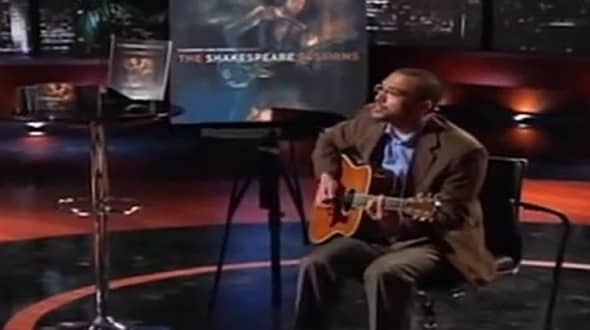
A student can remember the words to a favorite song while struggling to get through a page of Shakespeare. Teacher and musician Marc Furigay built Classroom Jams around the possibility that music could make those difficult texts more approachable.
His project, The Shakespeare Sessions, paired original songs with teaching materials. On Shark Tank, Furigay brought that idea to life with a guitar performance. The conversation soon moved from the music to the rights behind it: who would own the material, and how would its creator benefit if it sold?
The pitch ended with an unusual offer involving all five Sharks. What happened afterward is harder to reduce to a simple success-or-failure label.
The creator’s project website remains accessible, including music and resource sections and a store page. That corrects claims that the materials have vanished entirely. It does not establish current sales, working fulfillment, or the investors’ eventual ownership.
Our Shark Tank USA Season 1 guide places Classroom Jams alongside the season’s other 63 businesses, with on-air agreements separated from verified later developments.
Quick answer: Marc Furigay asked for $250,000 for 10% of Classroom Jams in Season 1, Episode 2. He accepted an on-air offer involving all five Sharks, with full ownership going to the investors, a 5% royalty, and a route to buy back an ownership interest. The final executed arrangements have not been independently verified here. His official Shakespeare Sessions site remains online with music, teaching-resource information, and a store page. That is evidence that the project remains accessible, not proof of a large active publishing business. Current status: creator’s resources remain online; current commercial scale, fulfillment, and investment ownership are unverified.
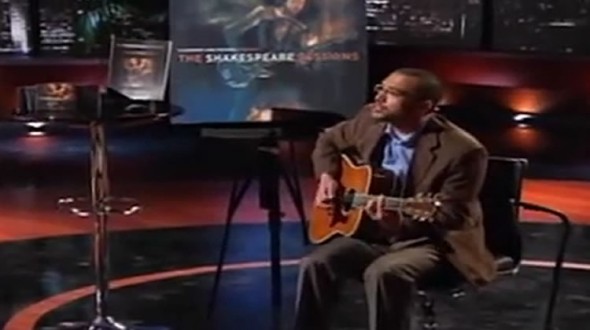
Marc Furigay presenting The Shakespeare Sessions. Image: ABC, via Shark Tank Blog.
What was Classroom Jams?
Classroom Jams combined music and educational publishing. Its Shakespeare project introduced characters and themes through contemporary songs, alongside material for classroom discussion.
| Product snapshot | Details |
|---|---|
| Creator | Marc Furigay |
| Project | The Shakespeare Sessions |
| Format | Songs and teacher resources |
| Literature covered | Hamlet, Macbeth, and Romeo and Juliet |
| Shark Tank appearance | Season 1, Episode 2 |
The creator’s official About page describes the album as an entry point into the plays. Its accompanying guide includes comparisons between lyrics and Shakespeare’s language, close-reading questions, vocabulary, and writing prompts.
Those descriptions explain the intended teaching approach. They are not independent evidence of improved grades or learning outcomes. No such performance claim is needed to understand the product.
What did all five Sharks offer?
Furigay’s opening proposal was a minority investment. The negotiation became more complicated when ownership of the creative work entered the discussion.
Shark Tank Blog’s account of the pitch describes the tension between investing in the business and controlling the song rights. Furigay ultimately accepted the group’s offer.
| Deal snapshot | On-air terms |
|---|---|
| Initial request | $250,000 for 10% |
| Accepted investment amount | $250,000 |
| Investors | Kevin O’Leary, Barbara Corcoran, Kevin Harrington, Robert Herjavec, and Daymond John |
| Ownership proposed for investors | 100% |
| Creator’s participation | 5% royalty and a route to regain equity |
| Verified legal closing | Not independently confirmed in this review |
A contemporary August 2009 report also describes the five-Shark agreement and the proposed use of royalty payments to recover an ownership interest.
The distinction between the request and the accepted offer is important. The initial $250,000-for-10% terms imply $2.5 million. That figure was the asking valuation, not the value established by the final proposal and not Furigay’s personal net worth.
How was the business supposed to earn money?
Classroom Jams’ commercial proposition was to package creative work into educational resources teachers could use.
That introduces two separate questions. Does the content engage students? And can the business persuade teachers or institutions to pay for it at a sustainable price?
The following table analyzes the model rather than reporting undisclosed financial results.
| Part of the model | Potential value | Commercial question |
|---|---|---|
| Original recordings | Provides a memorable introduction to a text | Will teachers use the songs in their lessons? |
| Teacher materials | Reduces preparation work | Are the activities useful enough to purchase? |
| Related content | Creates a reason to explore more than one play | Will buyers return for another resource? |
| Publishing or distribution partner | Could introduce the work to more schools | Can the product meet the partner’s requirements? |
Rights were especially important because the songs and materials formed the core product. An investment in a company and permission to use its creator’s work are connected, but they are not automatically the same agreement.
For a different example of rights affecting a Season 1 negotiation, LifeBelt’s founder declined offers for his invention’s patent rights. Both pitches underline why the object being sold matters as much as the headline investment amount.
What happened after Shark Tank?
Latest update — November 17, 2026: Furigay’s Shakespeare Sessions website is accessible and identifies him as the creator. Its store page describes delivery of downloads by email. This review did not test a purchase or verify current sales volume, ownership, or fulfillment.
The clearest present-day evidence is the creator’s own site. It carries the Classroom Jams name and provides navigation for the music, resources, store, and contact information.
The official store page instructs customers to check email folders for download links and provides a contact address if a link is missing. Those instructions establish how the site presents delivery. They do not confirm that an order placed now would be fulfilled.
That distinction allows a more accurate update than either “everything is gone” or “the company is thriving.”
What remains of the project?
| Question | Evidence found | Limit |
|---|---|---|
| Does the creator still have a project website? | The Shakespeare Sessions site is accessible | Accessibility alone does not establish active management |
| Is the educational concept documented? | The About page explains the album and guide | No independent outcome study was verified |
| Is there a store page? | Yes, with email-download instructions | Checkout and fulfillment were not tested |
| Did all five Sharks complete the investment? | The on-air agreement is documented in episode reporting | Final legal terms are not independently confirmed |
| Is the business generating substantial revenue? | No reliable current figures found | No sales or net-worth estimate is justified |
What about the publisher follow-up?
Specialist coverage reports a later meeting with educational publisher Houghton Mifflin and discussion of testing the product. That is a useful follow-up lead, but a proposed test is different from a completed national rollout.
This update does not claim that schools nationwide adopted the material or that a publisher study proved it effective. Those claims would require evidence of the completed program and its findings.
The same discipline applies to ownership. A broadcast agreement, a follow-up meeting, and an executed investment are different records. Without the final contract or a clear confirmation from the parties, detailed claims about the Sharks’ later holdings would be speculative.
A Perfect Pear’s post-show update illustrates how a financial filing can add evidence about investment. An equivalent record has not been verified here for Classroom Jams.
Can teachers still get The Shakespeare Sessions?
The creator’s website is the most direct place to explore the project. It offers descriptions of the music and teaching materials and includes a store section.
Teachers should check the current availability and delivery arrangements with the creator before relying on an order for a scheduled lesson. This update does not verify a current price or promise a working download purchase.
It is also worth distinguishing a continuing creative project from the original investment-backed business plan. A creator can keep resources online even when the original distribution strategy or ownership structure is no longer clear.
What can founders learn from Classroom Jams?
The pitch shows why creators should understand the difference between ownership, royalties, and distribution.
Ownership provides a stake in the business. A royalty provides a payment tied to an agreed use or sale. Distribution provides a route to customers. The exact contract determines how these arrangements interact.
For an educational product, a compelling demonstration is an opening. Repeat classroom use, purchasing decisions, and evidence of usefulness are the next questions.
Classroom Jams deserves an update that recognizes both its ambitious pitch and the resources that remain visible, without inventing a financial success or failure beyond the evidence.
Frequently asked questions
Who created Classroom Jams?
Marc Furigay, an educator and musician, created Classroom Jams and The Shakespeare Sessions.
Did all five Sharks make an offer?
Yes. Furigay accepted an on-air agreement involving all five members of the Season 1 panel. The final executed investment arrangements were not independently confirmed here.
Was Classroom Jams valued at $2.5 million?
That was the figure implied by Furigay’s initial request for $250,000 for 10%. It should not be presented as a current net worth or as the accepted deal valuation.
Is Classroom Jams completely gone?
Its creator’s Shakespeare Sessions site remains accessible. Current commercial operations and fulfillment are less clear, so a blanket claim that no website or resources exist would be inaccurate.
Did the music improve students’ test scores?
No independent results establishing that claim were verified for this update. The official site describes the intended teaching approach.
Can I buy the album now?
The official site has a store page, but this review did not test checkout or delivery. Confirm availability with the creator before making a classroom plan around a purchase.
The weekly question
From obsession to clarity — one original question every week.
We answer one noisy topic at a time, in full. No daily roundup, no thread bait — just the question, the principles, and the system.