A Perfect Pear Shark Tank Update: What Happened to the Deal?
Susan Knapp accepted a two-Shark offer. SEC records reveal a more complex funding story. Here is what is verified about A Perfect Pear.

A good food product can win over a customer in one taste. Building a business around it takes more: reliable production, enough cash to fill orders, and a route back to the shopper’s kitchen.
That was the challenge behind A Perfect Pear, Susan Knapp’s pear-based gourmet food range. Her appearance in Shark Tank’s first season ended with an offer from two investors. The more interesting question is what happened when the cameras stopped.
Some accounts say the deal never closed. A public company’s financial records complicate that explanation. They document an investment in A Perfect Pear, followed by a substantial loss in the value of that holding. Those records deserve a place in the story, even though they do not settle every detail of the television agreement.
For the wider context, our Shark Tank USA Season 1 guide covers all 64 pitches and separates on-air offers from verified later outcomes.
Quick answer: Susan Knapp asked for $500,000 for 15% of A Perfect Pear and accepted an on-air offer of $500,000 for 50% from Kevin Harrington and Robert Herjavec. The later funding story is less straightforward than a simple “deal fell through” summary. OmniReliant’s financial reporting documents an interest in the company, but does not establish that both Sharks completed the television agreement exactly as shown. Specialist coverage reports that the brand closed. A precise closure date and a reliable current valuation remain unverified. Current status: reported closed; no current official buying channel verified.
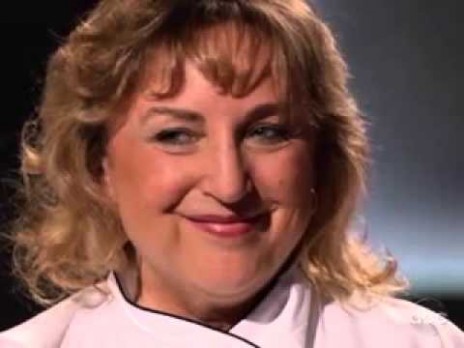
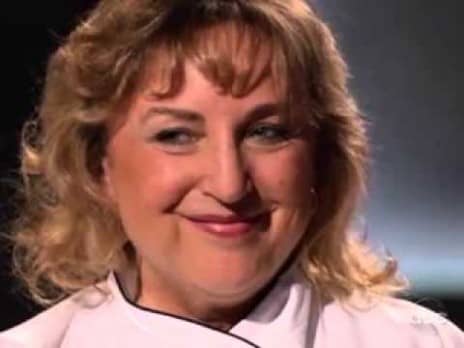
Susan Knapp on Shark Tank. Image: ABC, via Shark Tank Blog.
What was A Perfect Pear?
A Perfect Pear was a specialty food business built around pear-based products. It offered shoppers a way to use the fruit beyond eating it fresh, with products suited to pantry shelves and food gifts.
| Product snapshot | Details |
|---|---|
| Founder | Susan Knapp |
| Product category | Gourmet preserves and condiments |
| Brand identity | Pear-based foods |
| Location associated with the brand | Napa Valley, California |
| Shark Tank appearance | USA Season 1, Episode 2 |
An August 2009 announcement from retailer Planet Gift Baskets described Knapp developing cinnamon pear jelly after moving north of Napa Valley. It also advertised pear vinegar, pear ginger mustard, and chocolate pear sauces.
That announcement is useful because it shows a retailer promoting actual products around the time of the broadcast. Its praise was promotional, however. It does not independently prove that the company was the only business in its category.
What deal did Susan Knapp accept on Shark Tank?
Knapp’s proposal asked investors to put a sizeable amount of money into a specialty food company while taking a minority stake.
According to the Shark Tank Blog episode recap, Robert Herjavec and Kevin Harrington teamed up on the offer she accepted.
| Pitch detail | On-air outcome |
|---|---|
| Requested investment | $500,000 |
| Equity initially offered | 15% |
| Accepted investment offer | $500,000 |
| Equity in the accepted offer | 50% |
| Sharks making that offer | Kevin Harrington and Robert Herjavec |
The difference between 15% and 50% matters. The proposed cash stayed the same, while the ownership being offered grew substantially.
The asking terms imply a roughly $3.33 million valuation using the investment divided by the offered ownership. The accepted terms imply $1 million on that same basis. These are calculations from proposed deal terms, not audited business values or estimates of Knapp’s personal wealth.
How did the business model work?
The basic model was selling packaged specialty foods. The gift-basket retailer’s announcement provides one dated example of a route to customers outside Knapp’s own business.
The commercial appeal is easy to understand: a distinctive ingredient gives a food line a memorable identity. The challenge is turning that identity into repeat purchases at a sustainable margin.
The table below is an analysis of the model, rather than a statement of A Perfect Pear’s unpublished costs.
| Part of the model | Potential benefit | Question a food founder must answer |
|---|---|---|
| Recognizable ingredient | Makes the range easier to explain | Will shoppers buy it repeatedly? |
| Several related products | Creates more occasions to buy | Can every item justify its production costs? |
| Gift retail | Reaches customers through another seller | What margin remains after the retailer’s share? |
| Packaged goods | Allows products to travel beyond a local market | Can production and shipping keep pace with demand? |
Another first-season food founder, Mr. Tod of Mr. Tod’s Pie Factory, also faced the task of growing a food business beyond its original customer base. The products and outcomes differ, but both stories raise practical questions about financing growth.
What happened to A Perfect Pear after Shark Tank?
Latest update — November 17, 2026: A Perfect Pear is reported closed in specialist coverage. Public financial records establish an investment history, but the available evidence does not confirm a precise closure date or the execution of every term of the two-Shark television offer.
The strongest financial evidence is OmniReliant Holdings’ 2010 Form 10-K. Its investment disclosures list a 49.5% interest in A Perfect Pear and an investment cost of $494,084. The holding had a zero carrying value at June 30, 2010.
These figures establish documented corporate funding and a later accounting loss. They do not, by themselves, establish the exact terms completed by each television investor, the date the business legally dissolved, or the founder’s personal financial position.
That distinction changes how this update should be read. A statement that the company never received investment is too broad. A statement that the broadcast agreement closed exactly as shown would also go beyond the evidence.
What the evidence can and cannot tell us
| Question | Supported conclusion | Remaining uncertainty |
|---|---|---|
| Were products being marketed around the appearance? | A retailer advertised the range in August 2009 | The scale and profitability of those sales |
| Did the pitch end with an accepted offer? | Episode coverage records a two-Shark offer | The complete later contractual arrangement |
| Is there documentary evidence of investment? | Yes, in OmniReliant’s filing | How every television term mapped to that investment |
| Is the brand still trading? | Specialist coverage reports closure | A primary-source closure date |
The same care applies to business failures more broadly. An investor’s loss, a brand stopping sales, and a legal entity being dissolved are separate events. An update should not treat one document as proof of all three.
Ava the Elephant’s post-show story offers another reason to examine the later documents: licensing rights and a company sale are also different events that can become blurred in short recaps.
Can you still buy A Perfect Pear products?
No current official ordering channel was verified for this update. The 2009 gift-basket announcement is historical evidence, not a present-day shopping recommendation.
A similar name on a marketplace or a current food business does not establish a connection to Knapp’s brand. Readers looking for the original products should verify the manufacturer and seller rather than relying on the name alone.
There is also no reliable current net-worth figure for A Perfect Pear. The television valuations should not be relabeled as today’s company value.
What founders can learn from this pitch
A Perfect Pear’s story illustrates two useful lessons.
First, evaluate the ownership terms as carefully as the cash offered. Giving up half a business changes a founder’s position even when the investment amount stays constant.
Second, judge the outcome using records from after the appearance. An accepted offer is one milestone. Financing, trading performance, and the eventual status of the brand each need their own evidence.
For readers following the season company by company, this makes A Perfect Pear an especially useful case: the financial filing adds detail that a simple win-or-lose account of the pitch misses.
Frequently asked questions
Who founded A Perfect Pear?
Susan Knapp founded the pear-based gourmet food business featured on Shark Tank.
Did A Perfect Pear get a Shark Tank deal?
Knapp accepted an on-air offer from Kevin Harrington and Robert Herjavec. The exact execution of the televised agreement is not fully verified.
Is it accurate to say A Perfect Pear never received funding?
No. The documented corporate investment makes that blanket claim misleading. It should be distinguished from the separate question of whether every on-air deal term closed.
Is A Perfect Pear still in business?
Specialist coverage reports that it closed. This update did not verify a current official sales channel or a primary-source closure date.
What is Susan Knapp’s net worth?
There is no verified figure in the sources used here. Company investment figures cannot establish a founder’s personal wealth.
Why does this update avoid an exact closure date?
The available financial and secondary reporting supports a troubled investment outcome and reported closure, but does not establish a sufficiently reliable date for the business’s final shutdown.
The weekly question
From obsession to clarity — one original question every week.
We answer one noisy topic at a time, in full. No daily roundup, no thread bait — just the question, the principles, and the system.