TurboBaster Shark Tank Update: Did the Deal Ever Deliver?
Marian Cruz accepted Kevin Harrington’s offer, but what followed? The verified deal history, patent application, and TurboBaster’s status.


A bulb baster is a simple kitchen tool, but using one can be messy. Marian Cruz imagined a powered alternative that could draw up liquid, baste food, and inject marinades. TurboBaster was her attempt to combine those jobs in one appliance.
The idea attracted Kevin Harrington on Shark Tank. It also exposed a familiar problem for inventors: an appealing demonstration is not the same as a product ready for manufacturing.
Cruz accepted an offer on television, but a contemporary interview shows that negotiations were still unfinished afterward. Later reports describe a marketing-rights arrangement, while disagreeing about whether the product ever reached customers.
The most useful update therefore separates three questions: what the Sharks offered, what the inventor confirmed, and what can be verified about commercial availability. The evidence supports a compelling early-stage invention story, but not a precise sales total or a claim that the television agreement closed exactly as presented.
Quick answer: Marian Cruz accepted Kevin Harrington’s on-air offer of $35,000 for full ownership of TurboBaster, with a 2% royalty for her. In an August 2009 interview, however, Cruz said she had not signed a contract and still wanted to discuss the royalty. Specialist reports later described TV Goods acquiring marketing rights, but the original announcement and final agreement were not independently verified here. A commercial launch and current official sales channel also remain unverified. Current status: reported inactive; no verified current product availability.

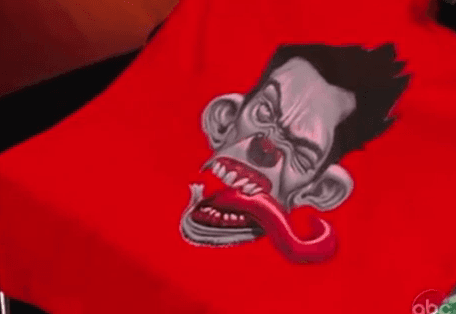
Marian Cruz on Shark Tank. Image: ABC, via Shark Tank Blog.
What was TurboBaster?
TurboBaster was a proposed powered kitchen tool for basting and applying marinades. The pitch involved a development-stage concept rather than a proven retail appliance.
| Product snapshot | Details |
|---|---|
| Inventor | Marian Cruz |
| Category | Kitchen tools |
| Intended function | Powered basting and marinade injection |
| Stage during the pitch | Development stage; no working model demonstrated |
| Appearance | Shark Tank USA Season 1, Episode 3 |
There is a public record behind the invention. Cruz’s powered-baster patent application was filed in December 2005 and published in June 2007. It describes a motor-driven plunger and interchangeable attachments.
That establishes an application for the design, not a granted patent, a tested retail product, or proof of sales. This distinction matters because some recaps reduce the pitch to an idea with no documented development work.
TurboBaster is one of the 64 businesses in our Shark Tank USA Season 1 guide.
What deal did Marian Cruz accept?
The recaps agree on the main accepted offer: $35,000 from Kevin Harrington for full ownership, with Cruz receiving a 2% royalty.
They are less consistent about her opening equity request. Published accounts give different percentages, so this update does not use that disputed figure to calculate an asking valuation.
| Deal detail | Supported account |
|---|---|
| Cash requested | $35,000 |
| Initial equity percentage | Conflicting recap figures; omitted here |
| Accepted on-air cash offer | $35,000 |
| Investor | Kevin Harrington |
| On-air ownership proposal | Full ownership |
| Inventor’s continuing participation | 2% royalty |
| Contract status shortly afterward | Not signed, according to Cruz’s August 2009 interview |
Shark Tank Blog’s episode account describes Daymond John making a competing offer and Cruz choosing Harrington for his experience selling kitchen products.
A royalty and an ownership stake are different ways to participate in a business. An owner holds equity. A royalty recipient receives payments under an agreement’s particular terms. The televised summary alone does not reveal every contractual definition or obligation.
What needed to happen before a launch?
The pitch left practical questions unanswered, including manufacturing costs and the development of a working product. For a powered food-preparation tool, those questions sit between an invention and a viable retail business.
The following table is an analysis of the development process, not a claim that TurboBaster completed these steps.
| Development task | Why it matters |
|---|---|
| Working prototype | Demonstrates that the proposed mechanism performs reliably |
| Cleaning design | Allows users to maintain a tool that handles food |
| Manufacturing estimate | Establishes whether the intended selling price can cover costs |
| Production plan | Turns an individual design into repeatable units |
| Customer testing | Shows whether buyers find the improvement worth paying for |
| Distribution agreement | Defines how finished products reach customers |
A television offer can help a founder pursue these tasks, but it does not complete them. The same separation is useful when reading about Ionic Ear’s unlaunched concept, although the proposed products were very different.
What happened after Shark Tank?
Latest update — November 17, 2026: No current official TurboBaster sales channel or reliable sales history was verified. The strongest immediate follow-up is Cruz’s own 2009 interview, which confirms that contract discussions continued after the televised handshake.
Cruz said the agreement was still unsigned
In Jason Cochran’s August 28, 2009 interview with Cruz, she said that she had not signed a contract and hoped to negotiate a higher percentage.
That is a dated statement about the position shortly after the broadcast. It should not be stretched into proof that no agreement was ever signed later.
It does, however, establish why “accepted a deal on television” and “completed the deal” should be separate fields in an update.
Later rights reports leave questions unanswered
Shark Tank Blog and Gazette Review’s follow-up report that Harrington’s TV Goods acquired rights to market TurboBaster. This review did not locate the original announcement or the final agreement.
Those reports are therefore attributed rather than treated as conclusive proof of every equity and royalty term. Marketing rights can concern a product’s sale and promotion without answering all questions about company ownership or payments.
There is also conflicting secondary reporting about a launch. Some accounts say the product never reached the market; others describe brief sales without supplying figures or primary documentation. This update does not adopt either version as an established sales history.
| Evidence | What it supports | What it does not establish |
|---|---|---|
| Published patent application | A documented powered-baster design | A granted patent or commercial launch |
| Aired offer | Harrington’s proposed terms were accepted | A completed legal agreement |
| Cruz’s August 2009 interview | No contract had been signed at that point | The outcome of every later negotiation |
| Later rights reports | A reported marketing arrangement | Verified sales, royalties, or final ownership |
| Current availability review | No official buying channel verified | A precise legal closure date |
The absence of a verified sales record also means there is no basis to claim exactly zero lifetime revenue. “Not verified” is more accurate than a number invented to fill a table.
Can you buy TurboBaster today?
No current official ordering channel was verified for the original product. A listing for another electric baster or marinade injector would not, by itself, establish a connection to Cruz’s invention.
There is no reliable current company valuation or founder net-worth figure in the evidence used here. The $35,000 offer was a proposed transaction amount, not a measure of Cruz’s personal wealth.
For another Season 1 case where the funding record complicates a simple recap, A Perfect Pear’s update examines a later corporate investment disclosure.
What can inventors learn from TurboBaster?
The useful lesson is to connect the concept, product, and economics before treating a proposed deal as a finished outcome.
A founder needs to explain how the product works, what it costs to make, and why customers will choose it. A prospective partner may help answer those questions, but they remain questions until the work is done.
The post-show interview also shows the value of reading dated evidence carefully. It provides a clear checkpoint in negotiations without pretending to describe the entire later history.
Frequently asked questions
Who invented TurboBaster?
Marian Cruz developed the powered-baster concept and presented it on Shark Tank.
Which Shark made the accepted offer?
Kevin Harrington offered $35,000 for full ownership with a 2% royalty for Cruz, according to episode reporting.
Did the deal close?
Cruz said in August 2009 that she had not signed a contract. Later marketing-rights reports exist, but the final agreement was not independently verified here.
Was TurboBaster patented?
A published patent application is documented. An application should not be described as a granted patent.
Did TurboBaster ever go on sale?
Secondary reports conflict, and a commercial launch was not independently verified. No reliable sales total is available.
Is TurboBaster still in business?
Retrospective sources describe it as inactive, and no current official sales channel was verified. A precise closure date remains unconfirmed.
The weekly question
From obsession to clarity — one original question every week.
We answer one noisy topic at a time, in full. No daily roundup, no thread bait — just the question, the principles, and the system.