LifeBelt Shark Tank Update: Why Its Founder Rejected $1 Million
Robert Allison rejected patent-buyout offers for LifeBelt. See the documented launch, later distribution plans and limits of current evidence.
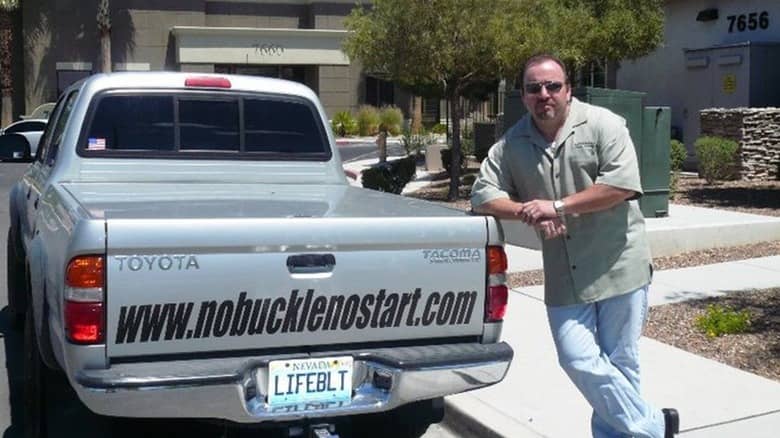
A reminder only works if the person hearing it responds. Robert Allison’s LifeBelt proposal took a different approach to seat-belt use: connect the buckle to whether the vehicle could start.
That made the invention easy to explain, but the business decision was more complicated. Allison wanted an investment in a company he would continue building. The Sharks who made offers wanted to buy the patent instead.
He declined. LifeBelt subsequently announced a commercial launch, and later international reporting described plans to distribute it in Qatar. Those are meaningful milestones, although neither proves current availability or a particular level of sales.
The story is often reduced to a rejected million-dollar offer followed by a supposed zero valuation. The evidence supports a more careful account. This case file separates the funding request, patent offers, launch announcement and later distribution plans. It also explains why current operations and the exact closure date remain unverified.
LifeBelt after Shark Tank: Quick Answer. Robert Allison asked for $500,000 for 10% in Season 1, Episode 2. He rejected offers to buy the patent outright and left without a deal. LifeBelt Inc. announced an online launch in November 2010. Current status: A verified current sales or installation channel was not established. Later reporting suggests inactivity, but an exact legal closure date is not confirmed. Claims of a multimillion-dollar Gillman Automotive contract lack the primary documentation needed to present the amount as fact. Neither the proposed $5 million valuation nor the patent offers establish present company value.
Product snapshot
| Detail | Information |
|---|---|
| Product | LifeBelt |
| Founder | Robert Allison |
| Concept | Seat-belt-linked vehicle ignition interlock |
| Industry | Automotive aftermarket |
| Appearance | Season 1, Episode 2 |
| Documented launch | Company announcement in November 2010 |
| Current availability | Not verified |
The pitch appears in our complete Shark Tank USA Season 1 guide.
What was LifeBelt?
LifeBelt was designed to prevent a vehicle from starting until the driver’s monitored seat belt was fastened. The company’s 2010 launch announcement described an aftermarket product, meaning it would be installed in an existing vehicle.
The announcement also described an alert if a belt was disengaged after the vehicle had started. This should not be rewritten as a claim that the system stopped a moving engine.
These are descriptions of the intended operation. A company announcement or television demonstration is not independent proof of reliability, crash outcomes or compatibility with every vehicle.
The commercial proposition was to add an intervention to an existing driving routine. That raises different practical questions from selling a simple reminder: who installs it, which vehicles it fits and who provides ongoing support?
Who founded LifeBelt?
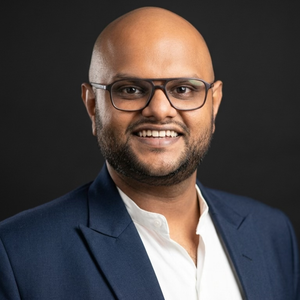
Robert Allison was the entrepreneur behind LifeBelt and the CEO named in the launch announcement.
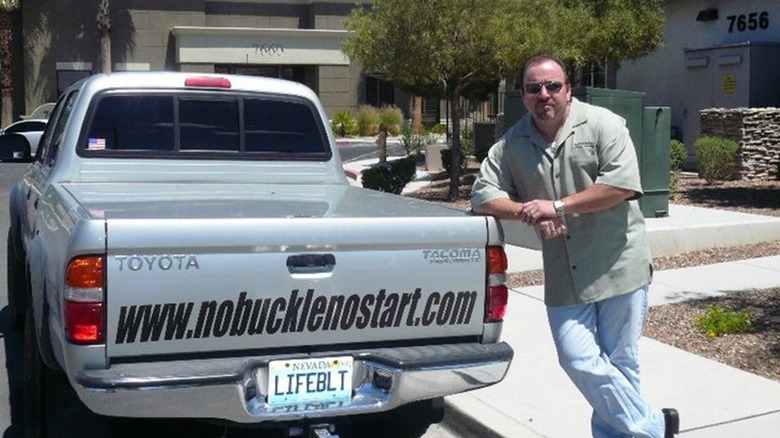
LifeBelt / Facebook, via SlashGear
His pitch focused on the product and the opportunity to build a business around it. The verified record is sufficient to identify him and the requested investment without inventing a current personal net-worth figure.
The distinction between inventor and business operator mattered during the negotiation. Allison wanted to retain an ongoing role and ownership interest, while the alternative offers focused on acquiring the intellectual property.
An inventor can reasonably value those options differently. Reporting the rejected offer as an obvious mistake would assume knowledge of later financial results that the public evidence does not provide.
What happened on Shark Tank?
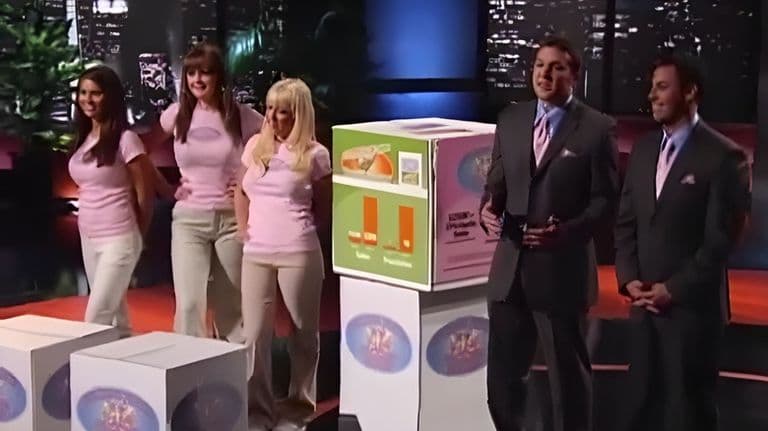
Allison requested $500,000 for 10%. Kevin O’Leary offered $500,000 for the patent, and Robert Herjavec offered $1 million for it. Allison declined both.
The 2016 account from 2Paragraphs records this distinction between equity investment and patent purchase.
Deal snapshot
| Proposal | Money | What was being offered or requested |
|---|---|---|
| Allison’s original request | $500,000 | 10% equity in the business |
| Kevin O’Leary’s proposal | $500,000 | Purchase of the patent |
| Robert Herjavec’s proposal | $1 million | Purchase of the patent |
| Final outcome | No transaction | Allison declined |
The original request implied a $5 million valuation. The patent offers valued a different asset, so they should not be compared as though each proposed buying the same percentage of the same company.
The distinction resembles the ownership question in College Foxes Packing Boxes: the money alone does not define the deal. What transfers to the investor matters just as much.
How was LifeBelt supposed to make money?
The documented launch presented LifeBelt as an aftermarket product sold online. Later reporting described a distributor’s plans in Qatar.
Those routes differ from selling the patent outright. One builds a product-and-service business; the other transfers an asset to a buyer.
Business model comparison
| Route | Potential income | Main operating question |
|---|---|---|
| Product sales | Payments for devices | Can supply and support meet customer needs? |
| Distribution partners | Sales through another commercial operator | What responsibilities and margins does each party retain? |
| Licensing | Payments for permission to use technology | What rights and performance obligations are agreed? |
| Patent sale | A negotiated asset-purchase payment | What future control and economic rights are surrendered? |
The licensing row explains an alternative commercial structure, not a claim that Allison completed a particular licensing contract.
A vehicle-related product has a customer experience beyond the purchase. Installation, compatibility and troubleshooting affect whether a sale is practical. The public sources reviewed here do not establish the costs or margins for those activities.
For that reason, a launch announcement cannot support an estimate of profit. Nor can a prospective distribution arrangement be counted as cash already received.
What happened after Shark Tank?
Latest update — November 17, 2026: No current LifeBelt order or installation channel was verified. Dated evidence supports a 2010 launch announcement and a 2016 report of planned distribution in Qatar. Current operations, revenue and valuation remain unconfirmed.
A commercial launch was announced in 2010
LifeBelt Inc. issued a November 24, 2010 announcement saying the product was available through Safety Mom Direct. This is primary evidence of the company’s announced route to market after the episode.
The announcement establishes what the company offered at that time. It does not disclose enough completed sales data to measure the launch’s financial success.
International plans appeared in 2016
In its October 9, 2016 edition, The Peninsula interviewed an Ajyal Tek executive about plans to market LifeBelt in Qatar.
The report explicitly connected the product to Allison and his Shark Tank appearance. It described intended distribution and talks with potential customers. Those were plans and attributed statements, not audited evidence of completed rollout.
This dated reporting is a reason to avoid a simplistic account that treats every activity as having definitively ended at an assumed point in 2016.
What remains uncertain?
A 2025 SlashGear retrospective found little evidence of continuing activity and questioned the documentation behind widely repeated dealership-deal claims.
The responsible conclusion is limited: present-day availability was not established. That is different from assigning a zero asset value or a precise dissolution date.
Current-status evidence audit
| Evidence | What it establishes | What it does not prove |
|---|---|---|
| Pitch reporting | Rejected patent offers and no deal | Later income from the invention |
| 2010 company announcement | An announced commercial launch | Sales volume or continuing supply |
| 2016 Qatar reporting | Distribution plans and attributed partner statements | Completed deployment at the proposed scale |
| Later retrospective | Limited signs of continued public activity | A legal closure date |
| Current review | No verified purchase route | A current value of zero |
Selected timeline
| Date | Milestone |
|---|---|
| August 2009 | Allison pitches LifeBelt in Season 1 |
| November 2010 | LifeBelt Inc. announces commercial availability |
| October 2016 | The Peninsula reports plans to market the device in Qatar |
| February 2025 | SlashGear revisits the venture and its uncertain status |
| November 2026 | Current operations remain unverified in this review |
Can you buy LifeBelt today?
A current, verified purchasing and installation route was not established. The historical seller mentioned in a 2010 release should not be treated as a live recommendation.
This article also does not recommend substituting a similarly named device. A matching name is not evidence of the same manufacturer, technology or support arrangement.
For a vehicle-related product, current documentation matters. Historical marketing material cannot establish whether a particular unit is appropriate for a particular vehicle.
Lessons from the LifeBelt pitch
Compare like with like. An equity investment, a licensing agreement and a patent sale have different consequences. A larger cheque does not automatically make one the better deal.
Preserve the difference between plans and delivery. A distributor’s intention to launch can be newsworthy without proving that the launch occurred as described.
Separate product purpose from measured performance. An invention can be designed around a worthwhile problem while its practical results still require evidence.
Do not confuse inactivity with a known valuation. The absence of a current shop does not establish the value of intellectual property or other assets.
The distinction between product demonstration and a proven commercial network also appears in WiSpots, another Season 1 technology pitch.
Frequently asked questions
Did LifeBelt get a Shark Tank deal?
No. Allison rejected the patent-purchase offers.
Was he offered $1 million?
Robert Herjavec offered $1 million for the patent, according to the pitch reporting. It was not a $1 million investment for 10% of the company.
Did LifeBelt launch after the show?
The company announced commercial availability in November 2010.
Was there a multimillion-dollar Gillman deal?
That figure is widely repeated, but primary documentation establishing the contract value was not verified here.
Did LifeBelt shut down in 2016?
A precise closure date was not established. October 2016 reporting still discussed planned international distribution.
What is LifeBelt worth today?
No reliable current valuation was established.
LifeBelt’s clearest lesson is about the kind of deal an inventor wants to make. The documented history goes beyond the rejected offer, while the financial outcome remains too uncertain for a confident net-worth claim.
The weekly question
From obsession to clarity — one original question every week.
We answer one noisy topic at a time, in full. No daily roundup, no thread bait — just the question, the principles, and the system.