Wee Can Shop Shark Tank Update: What Happened to the Kids' Gift Shop?
Wee Can Shop offered children a place to buy gifts. See its no-deal Shark Tank pitch, reported closure and what the surviving website does—and doesn't—show.

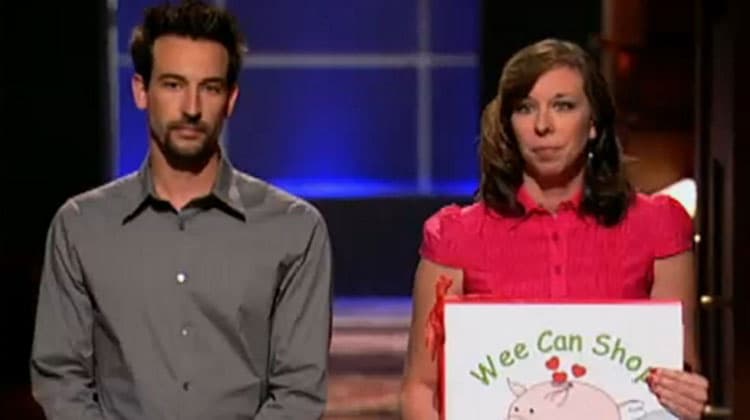
Choosing a present can mean more to a child when the decision feels like their own. Wee Can Shop was built around that experience: a small-scale shopping environment where children could select gifts for people they loved.
Kimberly and Matthew Foley brought the idea to Shark Tank hoping to expand it. The appeal was easy to understand, but the Sharks wanted evidence that the existing business could support a larger operation. Affection for the concept did not become an investment.
The later story is often muddled online. Some summaries turn Wee Can Shop into a supplier of miniature storefront installations, while others give conflicting dates for its closure. The original pitch concerned a retail and gift-shopping experience, and the available follow-up evidence does not justify a precise shutdown date.
There is also an old-style web page still using the name. Its existence should not be mistaken for confirmation that a family can visit the original shop or book a party today. This update explains the distinction. See our Shark Tank USA Season 1 guide for the full season.
Quick answer: What happened to Wee Can Shop?
Wee Can Shop left Shark Tank without a deal. Kimberly and Matthew Foley asked for $200,000 for 30% of a child-focused gift shop where young shoppers could choose presents independently. The Sharks questioned whether the existing financial performance supported expansion. Later accounts report that the store closed, but the dates differ and a primary closure announcement was not located. A page at the former business domain still contains historical shop descriptions; it does not establish current opening hours, bookings or ownership. No operating original location or verified relaunch was confirmed for this update. Current status: reported closed, with the exact closure date and any subsequent reopening unverified.
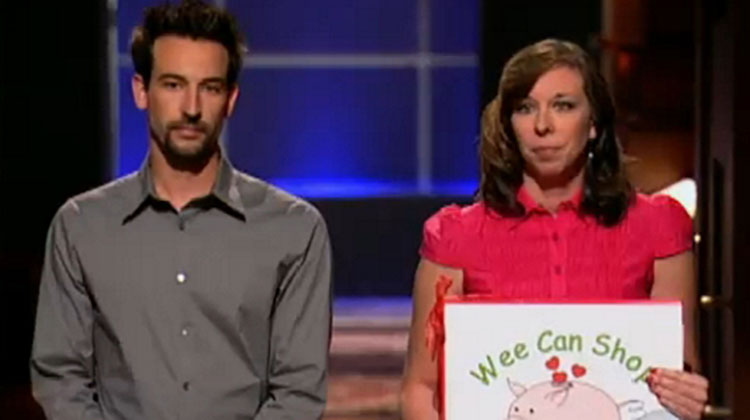
Shark Tank appearance, image via Shark Tank Blog.
What was Wee Can Shop?
Wee Can Shop created a shopping experience sized for children. Young customers could move through the space with small carts, choose gifts and take part in wrapping them.
All Shark Tank Products' account describes the store and the founders' hope of expanding the concept. The business was about children purchasing presents, not selling play-store equipment to schools.
That distinction changes the business analysis. A retailer depends on shoppers, merchandise and the economics of a location. A manufacturer of installations would have different customers, orders and production requirements.
| Element | Role in Wee Can Shop |
|---|---|
| Child-sized shopping environment | Make the visit accessible and engaging |
| Gifts for family and friends | Give children a purpose for shopping |
| Small carts and themed areas | Support the shopping experience |
| Gift wrapping | Complete the act of giving |
| Parties | A related experience described in historical materials |
The concept aimed to encourage thoughtfulness, but this update does not claim independently measured educational or developmental outcomes.
What happened on Shark Tank?
Kimberly and Matthew asked for $200,000 for 30%. The contemporary RealityWanted recap records the request and the no-deal result.
The Sharks questioned the business's financial performance and whether it was ready for expansion. A pleasant customer experience was not enough to settle the investment question.
| Pitch fact | Detail |
|---|---|
| Presenters | Kimberly and Matthew Foley |
| Business | A gift-shopping experience for children |
| Request | $200,000 for 30% |
| Implied asking valuation | About $666,667 |
| Outcome | No deal |
| Shark investor | None from the pitch |
The valuation above is simply the requested investment divided by the offered stake. It is not a verified appraisal or a measure of either founder's personal wealth.
The Romp n' Roll update covers another Season 1 business serving families, with current location evidence that can be checked separately from its original pitch.
Why was expansion difficult to justify?
A single location and a repeatable chain are different propositions. Before expansion, an investor would want to understand what makes the original site work: customer volume, spending per visit, staffing, rent, merchandise costs and repeat business.
A franchise plan adds another layer. The experience must be reproducible by someone other than the founders, with clear operations and enough financial room to support both parties.
| Expansion question | What it tests |
|---|---|
| Does one location work financially? | Whether there is a viable base to repeat |
| Do customers return? | Whether demand extends beyond novelty |
| Can another team deliver the experience? | Whether operations can be reproduced |
| What does a new location require? | The true cost of opening and running it |
These questions explain the commercial challenge. They do not prove that any particular rent level or management decision caused the eventual closure.
What happened to Wee Can Shop after Shark Tank?
Latest verified update: Secondary accounts describe the original store as closed. The former domain still displays historical Wee Can Shop material, but research for this November 2026 update did not establish a current operating location, bookable party service or verified reopening.
Shark Tank Blog's follow-up reports that the business continued for a period after the show and later closed. That supports a post-show history, rather than an immediate shutdown caused by the no-deal result.
The exact timing remains less secure. A 2022 retrospective gives 2012 and discusses an unverified later return. Other timelines place the end differently. Without a primary shutdown record, this article does not elevate one date into a definitive fact.
A page at the former Wee Can Shop domain still describes the Hawthorne, New Jersey shop and thanks viewers for support after Shark Tank. It also retains historical family and party descriptions. Those details help identify the old concept but do not establish present trading.
The page includes material unrelated to the original business, and current ownership was not verified. It is therefore linked as historical context, not recommended as a current booking or shopping destination.
| Source or observation | Supported conclusion |
|---|---|
| Contemporary pitch recap | The original business model and no-deal outcome |
| Later closure reporting | The store is reported to have stopped operating |
| Conflicting dates | The exact timeline remains unsettled |
| Surviving historical web material | The old concept remains visible online |
| No verified current location | A visit or booking cannot be recommended |
No reliable current revenue, franchise count or company valuation was established. In particular, a hoped-for national chain should not be written about as an achieved rollout.
The family connection also deserves precision. Historical site material mentions additional family members in the business story, but Kimberly and Matthew were the presenters documented in the pitch. Those are related facts, not interchangeable roles.
Can families visit Wee Can Shop now?
An operating original location was not verified. Parents should not plan a trip or pay for a party based solely on an old page describing the experience.
A genuine current service would need independently checkable location details, opening information and a way to confirm a booking with the operator. Those pieces were not established here.
| Before making plans | Evidence needed |
|---|---|
| Visiting a shop | Current address and opening confirmation |
| Booking a party | An active operator and clear booking terms |
| Buying online | A verified seller and current stock |
| Following a claimed relaunch | Confirmation connecting it to the original business |
What is the lesson from Wee Can Shop?
The founders offered an emotionally appealing experience. The investment decision still depended on the economics of delivering it repeatedly.
That makes the pitch a useful example of separating purpose from expansion readiness. A business can mean something to its customers while needing a more sustainable operating model before adding locations.
It also shows why retrospective reporting needs care. A no-deal pitch, an old website and a reported closure answer different questions. They should not be combined into an invented account of the company's final months.
The Factionist update offers another Season 1 story in which the founder's ambition and the investability of the original venture need to be considered separately.
Frequently asked questions
Who pitched Wee Can Shop?
Kimberly and Matthew Foley presented the business.
Was it a toy-store installation company?
The documented pitch was a child-focused gift-shopping experience. It was not a proposal to sell miniature shop installations to schools.
How much did the founders request?
They asked for $200,000 for 30% of the company.
Did Wee Can Shop get a deal?
No. All the Sharks declined.
When did Wee Can Shop close?
Later sources report closure, but the precise date is not independently established.
Has Wee Can Shop reopened?
No verified reopening or current original location was confirmed for this update. A surviving historical web page does not prove that the store is operating.
The weekly question
From obsession to clarity — one original question every week.
We answer one noisy topic at a time, in full. No daily roundup, no thread bait — just the question, the principles, and the system.