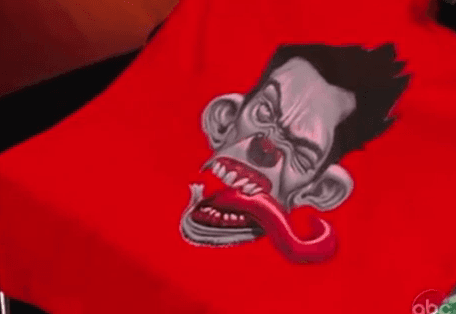
The Factionist Shark Tank Update: Nate Berkopec's Next Chapter
The Factionist got no Shark Tank deal. Nate Berkopec's own account explains the aftermath, while his current work points to a new career in software.

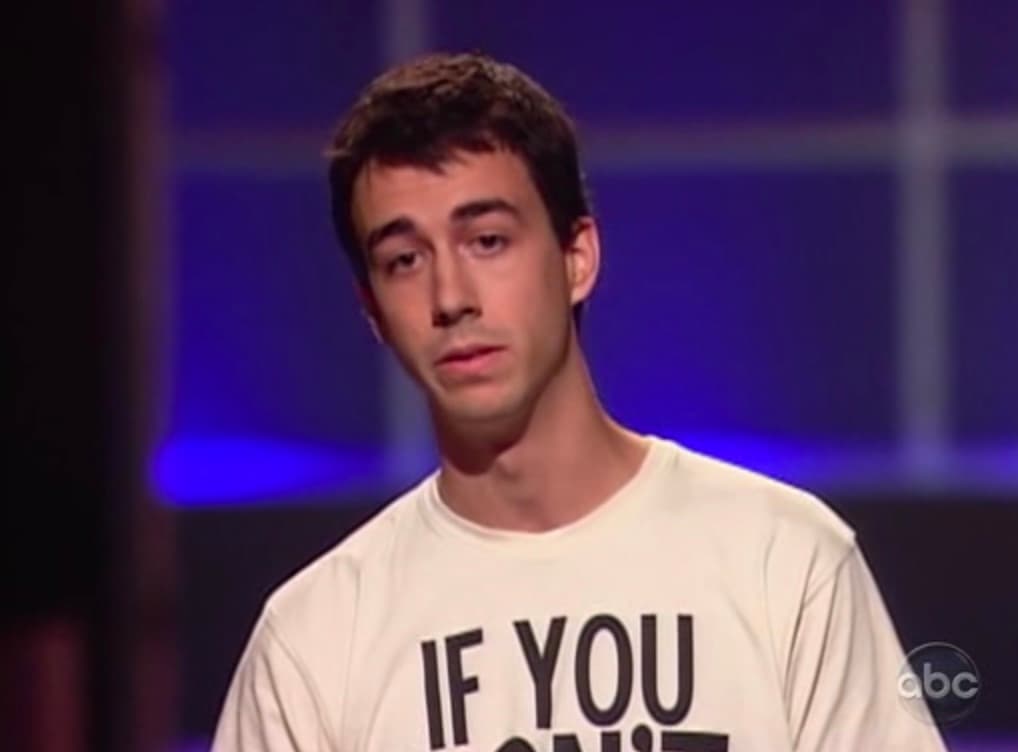
A T-shirt can communicate a belief in a few words. Turning that message into a durable clothing business takes much more: a recognizable brand, customers who return and a reason to choose one shirt over countless alternatives. The Factionist put that challenge in front of the Sharks.
Nate Berkopec was a college student when he pitched his socially conscious apparel concept in Season 1. He wanted the clothing to represent something bigger than a purchase. The Sharks questioned whether the business behind that ambition was developed enough to justify their money.
The result was no deal, and the clothing venture did not become the company Berkopec had imagined. But the most useful update comes from the founder himself. In a later personal essay, he revisited the experience and the meaning he had attached to it.
His subsequent work is in software, not a revived T-shirt line. This distinction lets us tell both parts of the story without turning later professional success into invented Factionist revenue. The brand is also included in our Shark Tank USA Season 1 guide.
Quick answer: What happened to The Factionist?
The Factionist received no Shark Tank deal. Nate Berkopec asked for $30,000 for 20% of his socially conscious clothing business, but the Sharks were not persuaded by its stage of development and competitive position. The apparel venture was discontinued. Berkopec later wrote publicly about the failed pitch and moved into software work. His current Speedshop website identifies him with a Ruby on Rails performance consultancy, which is a separate business from The Factionist. No current original clothing store or verified relaunch was found for this update, and no exact closure date is necessary to describe the available evidence. Current status: the clothing venture is discontinued; its founder has an active software career.
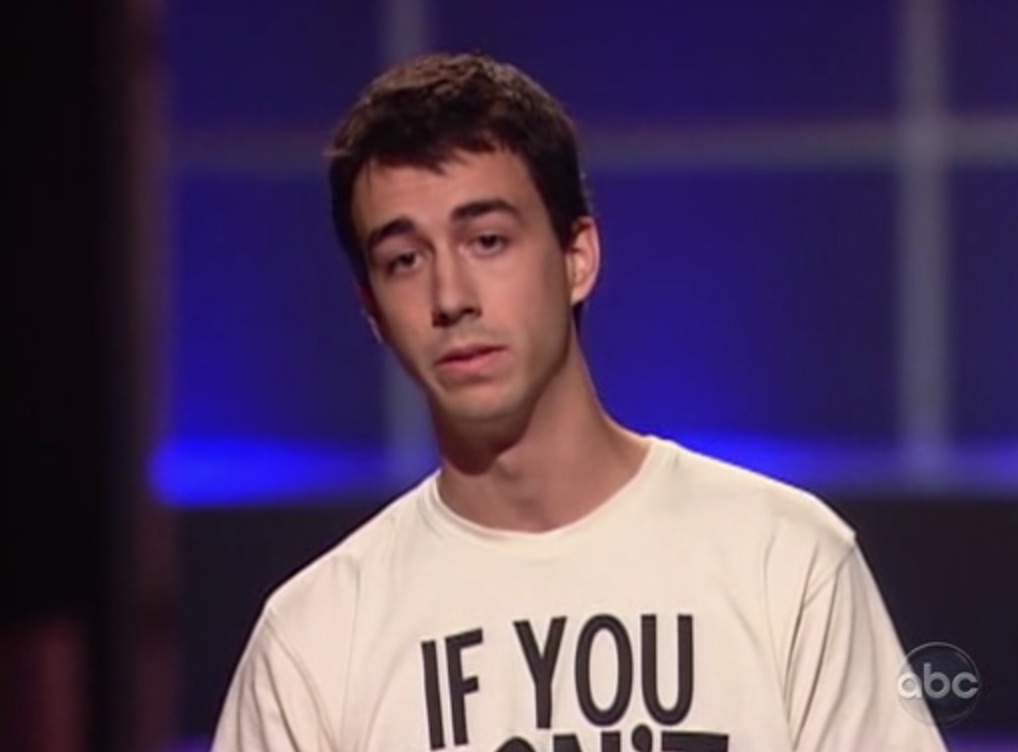
Shark Tank still published in Nate Berkopec's own retrospective.
What was The Factionist?
The Factionist sold T-shirts carrying messages about social and environmental issues. The proposition combined an everyday clothing item with a public statement of values.
The contemporary RealityWanted recap describes Berkopec as a 19-year-old student seeking to build an ethical, environmentally focused apparel brand. Those were the business's stated aims, rather than independently audited certifications supplied to this article.
| Part of the concept | Intended role |
|---|---|
| T-shirts | The physical product |
| Printed messages | A visible expression of values |
| Socially conscious positioning | A reason for customers to identify with the brand |
| Wider apparel ambition | A growth plan beyond individual shirt sales |
A message may give a customer a reason to like a shirt. It does not automatically make the company behind it memorable, easy to find or profitable. That was the gap the pitch exposed.
The Crooked Jaw update offers another Season 1 apparel comparison, with a different style but similar questions about building a brand.
Why did the Sharks decline?
Berkopec requested $30,000 for 20%, implying a $150,000 valuation at the time of the proposal. All the Sharks declined.
Shark Tank Blog's recap describes questions about differentiation, branding and the distance between the founder's ambition and the business he could demonstrate. The issue was not simply whether socially conscious clothing could exist. It was whether this particular venture had enough evidence behind its plan.
| Pitch detail | Result |
|---|---|
| Founder | Nate Berkopec |
| Request | $30,000 for 20% |
| Product | Message-led T-shirts |
| On-air result | No deal |
| Completed Shark investment | None established |
| Main commercial concern | An insufficiently developed, differentiated business |
The requested valuation was a negotiation figure. It should not be presented as Berkopec's wealth or as the current value of a discontinued brand.
What was the business model?
The basic transaction was selling a printed garment. The larger ambition depended on customers choosing The Factionist repeatedly, rather than buying a single slogan and forgetting who made it.
That creates several practical questions. Can a buyer recognize the company? Can a satisfied customer find it again? Does the price cover the garment, printing, shipping and the cost of attracting the order? Can a design be copied easily by another seller?
| Question for a clothing brand | Why it matters |
|---|---|
| Is the brand recognizable? | Helps buyers remember and recommend it |
| Is there a clear audience? | Makes marketing more focused |
| What differentiates the product? | Gives customers a reason to choose it |
| Does each sale leave enough margin? | Supports the operation beyond the first order |
These are business-model lessons, not claims about confidential Factionist accounts. No complete financial records were available for this update.
What happened to Nate Berkopec after Shark Tank?
Latest verified update: Berkopec's own retrospective describes moving on from the unsuccessful clothing venture. His current Speedshop site presents software performance consulting, training and technical publications, not a Factionist clothing relaunch.
In his first-person essay about Shark Tank, Berkopec explains that he began the shirt project while at New York University. Looking back, he separated confidence in himself from evidence that the business was ready. He also recalls working as an intern for Barbara Corcoran after the show.
That account adds an important distinction: a Shark could see promise in the person while declining to invest in the product. An internship is not a hidden equity deal, and it should not be entered in a company funding table as one.
His present professional work can be checked directly at Speedshop. The site describes Ruby on Rails performance consulting, ongoing support, books and training. It names Berkopec as part of the business and describes his software work.
Those offerings establish a separate professional direction. They do not mean The Factionist pivoted into a software company under the same ownership structure, and they do not supply a valuation for the old clothing brand.
| Evidence | What it tells us |
|---|---|
| Contemporary pitch coverage | The request and no-deal outcome |
| Founder retrospective | His account of the venture and subsequent direction |
| Current Speedshop website | A verifiable software-services business |
| No verified clothing relaunch | No basis to describe The Factionist as active |
The precise date the clothing project ended was not independently established. There is no need to invent one to make the timeline appear complete.
Likewise, earnings reported for books, consulting or later work belong to those activities. Combining them into “Factionist net worth” would confuse a founder's career with one discontinued project.
Can you buy original Factionist shirts today?
No current official store or verified original-stock seller was established in this research. An old photograph or historical mention demonstrates what existed, not what can be ordered now.
A secondhand item could appear without the original business having restarted. A new seller using similar phrases could also be unrelated. Neither situation would prove a relaunch.
| Listing type | What to check |
|---|---|
| Original secondhand shirt | Authenticity and condition |
| Old archived store page | Whether the listing is still actionable |
| Similar slogan from another seller | Whether there is any actual brand connection |
| Claimed relaunch | A current statement from the original founder or business |
What can entrepreneurs take from the story?
The pitch illustrates the difference between a product idea, early sales and a business ready for investment. Each can be a meaningful stage, but they are not interchangeable.
A useful founder response is to make the next test smaller and clearer: identify the audience, test whether customers return and determine what they remember about the brand. Confidence can support that work; it cannot replace it.
The later story also resists a simplistic “failed founder” label. A discontinued business is an outcome of one venture. Subsequent work can develop in a different field with different skills and customers.
For another early-season example where business evidence mattered more than enthusiasm alone, see the Ink Flip update.
Frequently asked questions
Who founded The Factionist?
Nate Berkopec created the clothing venture while a student.
Did The Factionist get a Shark Tank deal?
No. He asked for $30,000 for 20%, and all the Sharks declined.
Did Barbara Corcoran invest afterward?
No such investment was verified. Berkopec's own account describes an internship, which is different from funding the company.
Is The Factionist still selling clothes?
The venture is discontinued, and no current official store or verified relaunch was found.
What does Nate Berkopec do now?
The current Speedshop site identifies him with software performance consulting and technical educational products.
What is The Factionist worth?
No reliable present valuation was verified. Later software earnings should not be attributed to the clothing brand.
The weekly question
From obsession to clarity — one original question every week.
We answer one noisy topic at a time, in full. No daily roundup, no thread bait — just the question, the principles, and the system.