Treasure Chest Pets Shark Tank Update: Why the Toy Business Closed
What happened to Lisa Lloyd's Treasure Chest Pets? The Shark offer, QVC financing, closure and her later invention career explained.

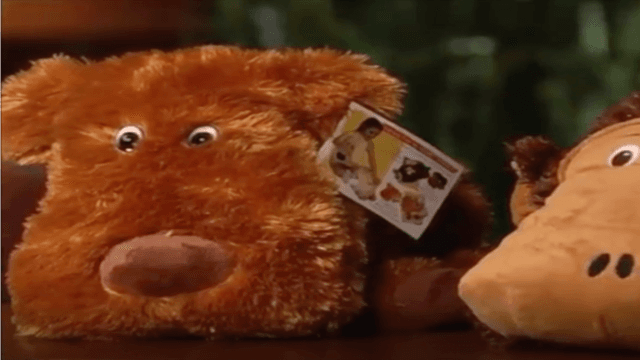
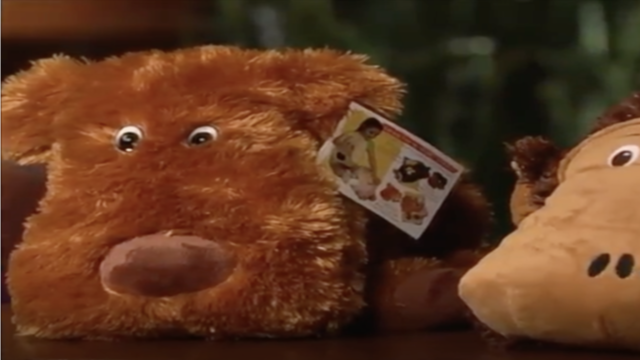
Children collect small treasures faster than most bedrooms can organize them. Lisa Lloyd's Treasure Chest Pets turned storage into part of the toy: soft animal characters with compartments for the things children wanted to keep nearby.
It was an easy idea to understand on Shark Tank. Yet the business behind the plush animals was much harder to sustain. Lloyd needed funding and help with production, and the accepted offer gave two Sharks a majority stake in the proposed arrangement.
What followed was more complicated than a simple success-or-failure verdict. Lloyd later described limited financing for a QVC order, pressure from rising costs and the eventual end of the business. A television follow-up also showed that the closure did not end her work as an inventor.
For viewers revisiting the pitch, the most useful questions are what the Sharks actually provided, why visibility did not solve the company's problems, and what Lloyd did next. Treasure Chest Pets is included in our complete Shark Tank USA Season 1 guide.
Quick answer: What happened to Treasure Chest Pets?
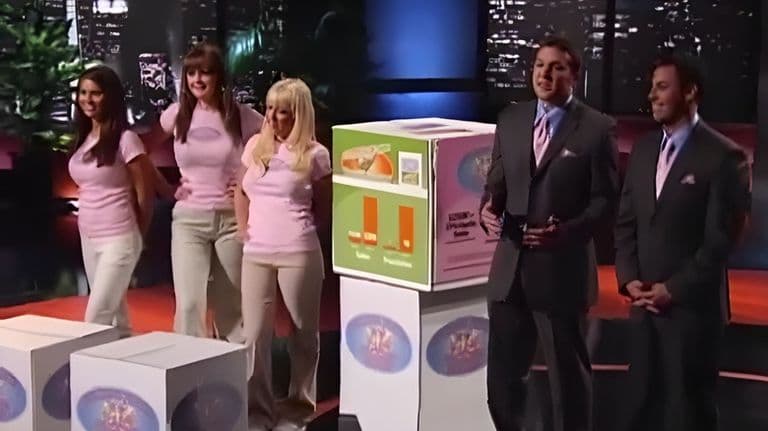
Lisa Lloyd asked for $150,000 for 20% of Treasure Chest Pets and accepted an on-air offer of $150,000 for 60% involving Daymond John and Barbara Corcoran. Her later account describes several months of due diligence and Daymond funding one QVC order, rather than full funding of the televised proposal. The business eventually closed. A recap of its Beyond the Tank follow-up gives 2012, while Lloyd later recalled shutting it down in 2014, so an exact closure year is not treated as settled here. Her subsequent work focused on invention and licensing support. Current status: Treasure Chest Pets is closed; a verified relaunch or current authorized retail operation was not found in this review.
Shark Tank / ABC, via Shark Tank Recap.
What were Treasure Chest Pets?
Treasure Chest Pets combined a stuffed animal with a place to keep small belongings. The storage function was built into the character, giving the product a second purpose beyond imaginative play.
That distinction made the pitch immediately understandable. A parent could see an organizing function, while a child could see a toy. The idea did not require customers to learn an unfamiliar activity or install anything.
| Feature | Purpose |
|---|---|
| Plush animal design | Made the product recognizable as a toy |
| Built-in compartments | Provided space for small possessions |
| Combined play and storage | Offered a reason to choose it over a conventional stuffed animal |
This describes the concept, not an independent safety assessment or a promise that it would make children tidier. Historical age recommendations and materials should not be applied automatically to an old item from an unknown seller.
Lloyd was already experienced in inventing and licensing products. The distinction with Treasure Chest Pets was her involvement in manufacturing and selling the product herself, as described in the later television follow-up. That changed the kinds of costs and operational decisions she had to manage.
What deal did Lisa Lloyd accept on Shark Tank?
The pitch recap records an initial request of $150,000 for 20%, followed by a joint accepted offer involving Daymond John and Barbara Corcoran.
| Pitch detail | Result |
|---|---|
| Entrepreneur | Lisa Lloyd |
| Product | Plush storage animals |
| Season | Shark Tank USA Season 1 |
| Initial ask | $150,000 for 20% |
| Accepted on-air terms | $150,000 for 60% |
| Sharks involved | Daymond John and Barbara Corcoran |
| Initial implied valuation | $750,000 |
The central change was ownership. The proposed investment increased the investors' share from the minority stake Lloyd initially offered to a majority position.
The $750,000 figure comes from the original asking terms. It is not a verified current valuation, accumulated profit or Lloyd's personal wealth.
The funding need was also practical. Producing stock and fulfilling orders require cash before a business necessarily receives payment. An appealing product can still be vulnerable if it cannot finance that gap.
What made the business difficult to scale?
Manufacturing a product and licensing an invention put different responsibilities on the founder. A licensing arrangement can assign production and distribution to another company. Operating a product business directly means dealing with those tasks and their financial consequences.
| Operating question | Why it matters |
|---|---|
| How much must be paid before an order ships? | Determines the cash needed to fulfill it |
| What happens when materials cost more? | Can reduce the margin available on each unit |
| How quickly does the retailer pay? | Affects how long the business must finance the order |
| Can the selling price rise? | Determines whether higher costs can be passed on |
| Who carries unsold inventory? | Determines where the downside remains |
These are the mechanics behind the case, rather than a reconstruction of confidential contracts.
Another Season 1 product, Coverplay, also needed support to grow a physical product business. Its founder's account of a completed investment makes a useful comparison with Lloyd's more limited description of the money Treasure Chest Pets received.
What happened after Shark Tank?
Latest verified status: Treasure Chest Pets closed, and Lisa Lloyd continued in invention-related work. Sources disagree on the shutdown year. Her later account describes a QVC order financed by Daymond, but does not establish receipt of the full televised investment.
Lloyd described order financing, not the full announced investment
In her And So, She Left interview, Lloyd recalled roughly four months of due diligence. She said Daymond financed one QVC order and nothing beyond it.
That is important evidence from the founder. It should not be stretched into a claim that she received the complete $150,000 on the ownership terms viewers saw.
Order financing addresses a particular obligation. It can help manufacture or supply goods for a purchase, but it is not necessarily unrestricted working capital for every part of a business. Without the underlying agreements, the two cannot be treated as equivalent.
Retail progress did not resolve the underlying pressure
The Beyond the Tank episode 205 recap described retail progress, followed by weaker sales and higher costs. It also reported that Daymond advised against continuing to put money into the struggling company.
The founder's later interview similarly described shrinking margins and increasing input costs. Her account supports an explanation centered on the economics of operating the business. It does not justify assigning a precise audited loss or a current debt balance.
A store placement is a distribution achievement. It is not proof that every order leaves enough money after manufacturing, freight and other expenses. The case shows why those questions need to be examined separately.
The exact closure date is disputed
The Beyond the Tank recap says Lloyd closed Treasure Chest Pets in 2012. In the later interview, Lloyd herself recalled a 2014 shutdown.
Both sources describe the business ending, but they do not agree on the year. This article therefore does not present one date as definitively established. The discrepancy may involve different stages of winding down, but that explanation has not been verified and should not be assumed.
The distinction does not change the current conclusion: no operating revival was verified. It does prevent a precise timeline from looking more certain than the evidence permits.
Lisa Lloyd's later career continued
The television follow-up described Lloyd helping other entrepreneurs after Treasure Chest Pets. Her Lloyd Marketing Group website now presents invention and licensing education, including the Invention Accelerator.
That is evidence of her subsequent professional focus, not proof that Treasure Chest Pets returned to production. The founder and the discontinued brand have separate later histories.
| Evidence | What it establishes | What it does not establish |
|---|---|---|
| Televised agreement | An accepted investment proposal | Final payment of all proposed funds |
| Founder interview | Her account of QVC order financing and business difficulties | Complete legal terms of the relationship |
| Beyond the Tank follow-up | Closure and subsequent work with entrepreneurs | An undisputed closure date |
| Current professional website | Invention and licensing services are promoted | A Treasure Chest Pets relaunch |
For another example of a founder continuing after an early venture changed direction, see My Therapy Journal. Product status and the founders' subsequent work need to be tracked independently.
Can you still buy Treasure Chest Pets?
A current authorized retail channel was not verified. Secondhand toys or remaining stock may appear in search results, but their presence would not establish ongoing manufacturing.
Anyone considering an older toy should check the actual item's condition, labeling and seller information. A historical review or television appearance does not establish the condition of a particular resale item.
There is also no verified present company value to attach to the brand. Labeling a closed business as having a precise zero-dollar net worth would require information about its remaining assets and obligations that is not available here.
What can founders learn from Treasure Chest Pets?
The case is a useful reminder that publicity and purchase orders do not automatically provide the cash needed to operate. They can create more work and financing needs before they produce usable profit.
It also shows why the kind of support matters. Advice, introductions, financing one order and investing general working capital each solve different problems. A business plan needs to identify which one is actually available.
Lloyd's continued invention work adds another dimension. A product's closure can inform a later career without turning the failed product into a success retrospectively. The useful lesson is in the operating decisions and financing constraints, not a simplified television ending.
Frequently asked questions
Who invented Treasure Chest Pets?
Lisa Lloyd created the plush animal storage product and presented it on Shark Tank.
Which Sharks made the accepted offer?
The televised agreement involved Daymond John and Barbara Corcoran, offering $150,000 for 60%.
Did the full Shark Tank investment close?
The full televised investment was not established in the evidence reviewed. Lloyd later described Daymond financing one QVC order.
When did Treasure Chest Pets close?
Sources disagree. A television follow-up recap says 2012; Lloyd later recalled 2014. The business is closed, but the exact year remains unresolved here.
What does Lisa Lloyd do now?
Her professional website promotes invention and licensing support through Lloyd Marketing Group and the Invention Accelerator.
Has Treasure Chest Pets relaunched?
No verified relaunch or active authorized sales channel was found during this review.
The weekly question
From obsession to clarity — one original question every week.
We answer one noisy topic at a time, in full. No daily roundup, no thread bait — just the question, the principles, and the system.