Ross Edgley, the Swimmer Who Made Britain a 157-Day Endurance Test
Ross Edgley swam around Great Britain in 157 days, turning endurance into a salty, brutal science experiment.
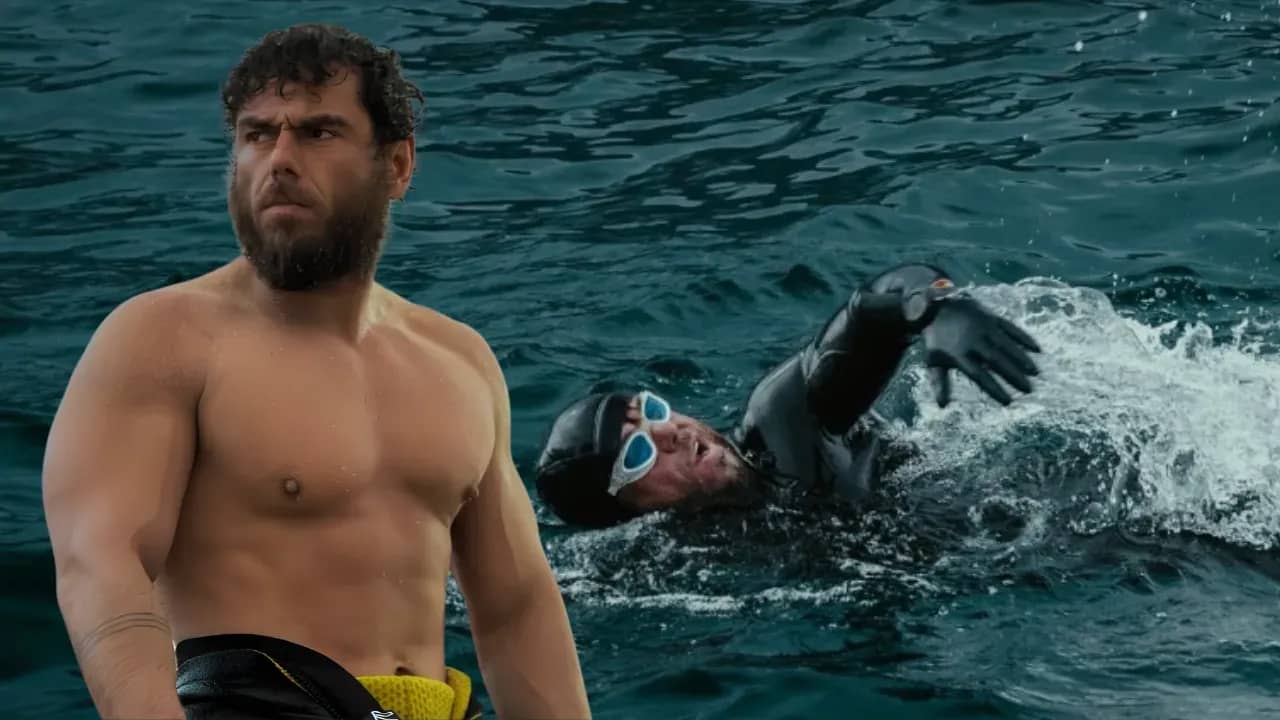
Ross Edgley did not just swim around Great Britain. From June 1 to Nov. 4, 2018, he turned the coastline into a 2,884-kilometer test of tides, cold, salt, logistics and stubborn preparation.
Guinness World Records lists Edgley as the first person to complete an assisted stage swim around Great Britain. He started and finished in Margate, Kent, wore a wetsuit, swam 209 legs and spent 157 days completing the route.
That official wording matters. This was not a pool record or a single uninterrupted sprint through the sea. It was an assisted, staged expedition, with a support boat, recorded positions and a daily rhythm that made the challenge feel less like one heroic moment and more like a floating endurance laboratory.
Fast Facts
- Who:
- Ross Edgley, a British adventurer, author and extreme endurance swimmer from Grantham, England.
- Geek Obsession:
- Adventure fitness, sports science, extreme swimming and testing how the body adapts under stress.
- Notable Feat:
- Completed the first assisted stage swim around Great Britain from June 1 to Nov. 4, 2018.
- Key Number:
- 209 swim legs over 157 days, covering 2,884 kilometers according to Guinness World Records.
- How It Worked:
- He swam in stages while a support crew tracked each stop and returned him to the same point.
- Reality Check:
- This was an assisted wetsuit stage swim, not an unassisted nonstop marathon swim.
The fitness geek who treated his body like an experiment
Edgley was already known as a British adventurer, author and fitness expert before the Great British Swim. His official biography says he was born in Grantham, England, studied sport and exercise science at Loughborough University and built a career around extreme physical challenges.
His obsession was not only swimming. It was adventure fitness: the idea that strength, endurance, nutrition, recovery and mental discipline could be tested in strange, difficult real-world conditions.
That is what makes his story fit beside other endurance athletes who turned performance into a system. Edgley’s swim was not just about being tough. It was about managing the body when the body had almost no normal conditions left.
What actually happened during the Great British Swim
Edgley entered the water at Margate on June 1, 2018. He returned to the same place on Nov. 4, 2018, after 157 days at sea.
According to Swim England, he completed 2.3 million strokes, burned 504,732 calories, spent 23 weeks at sea and was stung 37 times by jellyfish. He also ate between 10,000 and 15,000 calories per day to keep going.
The most surprising detail is that Edgley did not step on dry land during the attempt. He slept, ate and recovered aboard the support vessel Hecate. Each time he got out of the water, the crew recorded the exact location and returned him there for the next swim.
That system preserved the continuity of the route. It also created the deeper challenge: Edgley had to keep swimming while his skin, mouth, feet and sleep patterns were breaking down.
"Even a week in, it went from being a swim as most people consider it, as a sport, to being a survival exercise."
How the swim worked
The mechanics were simple to describe and brutal to repeat. Edgley swam in long sessions, rested on the boat, ate heavily, treated injuries and went back into the sea. The crew managed timing, route choices, weather windows and safety.
Swim England reported that he sometimes completed up to 40,000 strokes per day. His food had to be dense enough to replace huge energy losses, easy enough to eat while damaged by salt water and practical enough for life on a moving boat.
The swim was also a lesson in conditions. Britain’s coastline meant tides, cold water, storms, shipping lanes, wildlife and constantly changing currents. It was not enough to be fit. Edgley and his crew had to make daily decisions about when the sea was usable and when weather made progress too risky.
That planning connects his story to Nimsdai Purja’s system-driven mountain project: the public remembers the headline number, but the achievement depended on logistics, support and careful risk management.
Why it was harder than the headline makes it sound
The viral version is easy: a man swam around Great Britain in 157 days. The verified reality is more interesting. Edgley completed an assisted stage swim, wearing a wetsuit, with a support crew and vessel. That support did not weaken the achievement. It defines the record category.
Without that context, readers might imagine a traditional marathon swim with minimal equipment or no staged breaks. Guinness classifies the achievement as the first assisted stage swim around Great Britain, verified by the World Open Water Swimming Association.
The reality check also makes the feat more credible. Edgley was not pretending the sea was harmless. He needed a crew, a boat, nutrition planning, route tracking and weather judgment because the challenge was genuinely dangerous.
His body paid for it. Reports described salt damage to his mouth, severe chafing, trench foot, jellyfish stings, a suspected torn shoulder and fatigue from months of disrupted sleep. This is not a challenge ordinary swimmers should try to imitate. It belonged to a trained athlete with specialist support.
The moment he came back to land
When Edgley reached Margate again, hundreds of people were waiting. Swim England reported that about 400 swimmers from the Outdoor Swimming Society joined the final stretch.
The finish mattered because the record was not only personal. It had become a public story. People followed the weekly updates, watched the physical damage accumulate and saw an athlete keep solving one small problem after another.
"My feelings now are pride, tiredness and relief."
That short reaction says more than a victory speech would. After 157 days, the achievement was not neat triumph. It was exhaustion, gratitude and the strange business of learning to stand on land again.
What happened next
Edgley did not leave extreme swimming behind. In June 2024, Guinness World Records credited him with the longest distance assisted adventure swim after he covered 510.558 kilometers in the Yukon River, Canada.
In 2025, WOWSA published a ratification report for his assisted stage swim around Iceland. The WOWSA report lists the route at 1,446 kilometers, with a total cumulative time of 111 days, 16 hours and 53 minutes.
Those later swims show that Great Britain was not a one-off stunt. It became a template for Edgley’s larger obsession: using extreme open-water swimming as a way to test endurance, collect attention for environmental causes and push adventure sport into more carefully documented territory.
Why Ross Edgley matters
Edgley’s Great British Swim matters because it turns endurance into something visible. Most people see fitness as speed, muscle or a number on a watch. His swim showed a stranger version: fitness as adaptation.
He had to adapt to cold, salt, boredom, pain, food volume, broken sleep and the psychological weirdness of living between sea and boat for five months.
That is why his story belongs in the wider world of human-powered journeys that test more than muscle. The record is the clean part. The real story is the messy system underneath it.
Ross Edgley did not make swimming around Great Britain look easy. He made it understandable. A body, a boat, a coastline, a crew, a record book and 157 days of repeated decisions became one of the clearest modern examples of what obsession can do when it is organized carefully enough to survive the sea.
The weekly question
From obsession to clarity — one original question every week.
We answer one noisy topic at a time, in full. No daily roundup, no thread bait — just the question, the principles, and the system.